
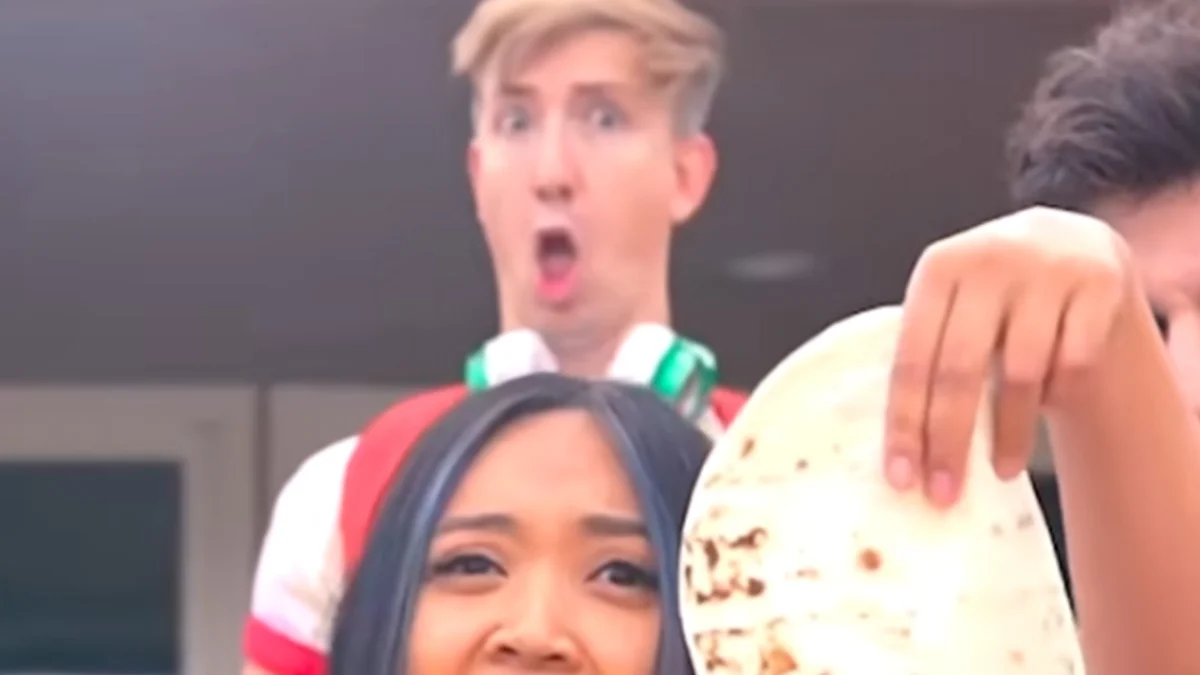
The digital landscape of late 2026 has been significantly influenced by the unexpected resurgence of a specific comedic reaction captured in a five-year-old YouTube music video, now colloquially known as the More Like a Quesadilla Guy meme. This phenomenon centers on Chad Wild Clay, a prominent content creator and co-founder of the Spy Ninjas entertainment brand, whose exaggerated facial expression during a specific lyrical sequence has become a cornerstone of TikTok humor and digital reenactment culture. The meme serves as a case study in how archival social media content can be repurposed through algorithmic amplification to achieve a second, often more pervasive, lifecycle years after its initial publication.
The Cultural Context of Spy Ninjas and Chad Wild Clay
To understand the weight of the "More Like a Quesadilla" meme, one must first examine the platform of its origin. Chad Wild Clay, born Chris William Chris, established himself as a major figure in the "YouTube-first" era of children’s and young adult entertainment. Alongside his wife, Vy Qwaint, and their team known as the Spy Ninjas, Clay developed an elaborate, serialized narrative involving mystery-solving, martial arts, and a recurring battle against a fictional hacking organization called Project Zorgo.
By 2021, the Spy Ninjas had transitioned from standard vloggers to a multi-media powerhouse, producing high-budget music videos that served as narrative milestones for their "lore." These videos were characterized by high production values, choreographed action, and lyrics tailored to a younger demographic. It was within this ecosystem that the music video for "Come Back Daniel" was released, a project intended to advance the group’s storyline regarding a missing member. At the time of its release, the video was a standard success for the channel, but its long-term cultural impact was not realized until the shifts in social media consumption patterns seen in 2026.
Chronology of the Original Footage
On May 8, 2021, the official Chad Wild Clay YouTube channel premiered the music video titled "Come Back Daniel Song – Spy Ninjas (Official Music Video)." The video was a significant event for the Spy Ninjas community, eventually amassing over 94 million views over the subsequent five years. The production features various members of the team performing verses that blend pop and hip-hop influences with the group’s established brand of humor.
The specific moment that would later ignite a global meme trend occurs at the 01:11 mark. During this sequence, Regina, a key member of the Spy Ninjas, delivers a "diss track" style lyric aimed at an unseen adversary. She sings, "Think you’re tough like a gorilla? Pshh, more like a quesadilla." As the camera focuses on Regina in the foreground, Chad Wild Clay is positioned in the background. Upon the delivery of the "quesadilla" punchline, Clay performs a highly stylized reaction, featuring wide eyes, a dropped jaw, and a look of mock disbelief or shock.
While the sequence was intended as a lighthearted background gag to emphasize the "burn" delivered by Regina, it remained a relatively obscure detail within the massive Spy Ninjas catalog for several years.
The 2026 Resurgence: From Archive to Viral Trend
The transformation of this clip into the "More Like a Quesadilla" meme began in the summer of 2026, driven by the cyclical nature of TikTok’s content discovery algorithm. On July 21, 2026, a TikTok user operating under the handle @thebiggestbird49 isolated the specific reaction shot and posted it with the caption, "I’m sobbing what is his problem." This initial post acted as the primary catalyst, garnering over 1.5 million views within four months and introducing the clip to an audience outside the core Spy Ninjas fanbase.
The humor derived from the clip is rooted in the "absurdist-reaction" trope. The juxtaposition of a relatively mild, food-based insult ("quesadilla") with Clay’s extreme, cinematic shock created a comedic dissonance that resonated with Gen Z and Gen Alpha users. By early November 2026, the clip had transitioned from a standalone joke into a structured meme format.
Categorization of the Meme Variants
As the trend reached its peak in November 2026, several distinct categories of the "More Like a Quesadilla" meme emerged, showcasing the creative ways users interact with viral templates.
Accuracy Reenactments
The most prominent sub-genre of the trend is the "accuracy reenactment." In these videos, creators attempt to mimic Chad Wild Clay’s facial contortions with surgical precision. On November 3, 2026, TikToker @frigginpacketjoe posted a reenactment that garnered 1.4 million views in just 48 hours. These videos are often judged by the community based on the creator’s ability to sync their facial movements with the audio and capture the specific "shocked" intensity of the original.
Lip Dubs and Narrative Contexts
Other creators utilized the audio as a backdrop for "lip dub" videos, applying the lyrics to various relatable or absurd scenarios. On November 3, 2026, TikToker @joieatthedisco integrated the audio into a comedic sketch, earning over 263,000 views. These iterations often focus on the "tough like a gorilla" setup, using the "quesadilla" payoff to highlight a person or situation that is less intimidating than they appear.
The "Drafts" Trend
A third variation involves creators using the reaction to represent their own "unhinged" or "weird" content. On November 1, 2026, TikToker @0la.marie posted a video using the face under the caption, "’Why don’t you post your drafts?’ My drafts:," suggesting that the face represents the private, eccentric side of content creators. This video became one of the most successful iterations of the trend, exceeding 3 million views in less than a week.
Statistical Analysis and Digital Reach
The "More Like a Quesadilla" guy phenomenon is supported by significant engagement metrics across multiple platforms. While the original YouTube video holds a massive 94-million-view count, the localized TikTok surge in November 2026 generated an estimated 50 million aggregate views across various hashtags including #morelikeaquesadilla, #chadwildclay, and #spyninjas.
Search interest data indicates a sharp vertical spike in queries related to "quesadilla guy" and "tough like a gorilla meme" starting in the first week of November. This spike correlates with the high-performing posts from influencers like @ilikeuncrider, whose November 4 recreation gained nearly 400,000 views in a single day. The data suggests a high level of cross-platform synergy, where a TikTok trend drives renewed traffic to the original YouTube source material, a phenomenon often referred to as "algorithmic recycling."
Implications for Brand Longevity and Digital Culture
The rise of the "More Like a Quesadilla" guy highlights several key trends in modern digital media. First, it underscores the longevity of "influencer" content. For Chad Wild Clay and the Spy Ninjas, the meme has provided a significant boost in brand relevance among a new demographic that may not have been active viewers in 2021. This "second wave" of popularity allows legacy creators to maintain high engagement rates without necessarily producing new viral hits every week.
Second, the meme demonstrates the power of "micro-moments." In a five-minute music video, a three-second background reaction became the most valuable asset of the entire production five years later. This suggests that modern content creation requires a layer of "meme-ability"—exaggerated expressions, unique phrasing, or visual cues—that can be easily extracted and repurposed by the audience.
Finally, the trend reflects the current preference for "meta-humor" and reenactment. The fact that millions of users are attempting to recreate a specific face indicates a shift toward participatory entertainment, where the audience is not just consuming a joke but actively performing it.
Conclusion
The "More Like a Quesadilla" Guy meme represents the intersection of archival YouTube history and the rapid-fire distribution of TikTok. Through a combination of nostalgic appeal, absurdist humor, and a highly replicable visual template, Chad Wild Clay’s 2021 reaction has been cemented as a defining cultural artifact of late 2026. As the trend continues to evolve, it remains a primary example of how the internet preserves and eventually celebrates the eccentricities of digital creators, turning a throwaway background gag into a global comedic standard.

