
The Genesis of a Digital Phenomenon
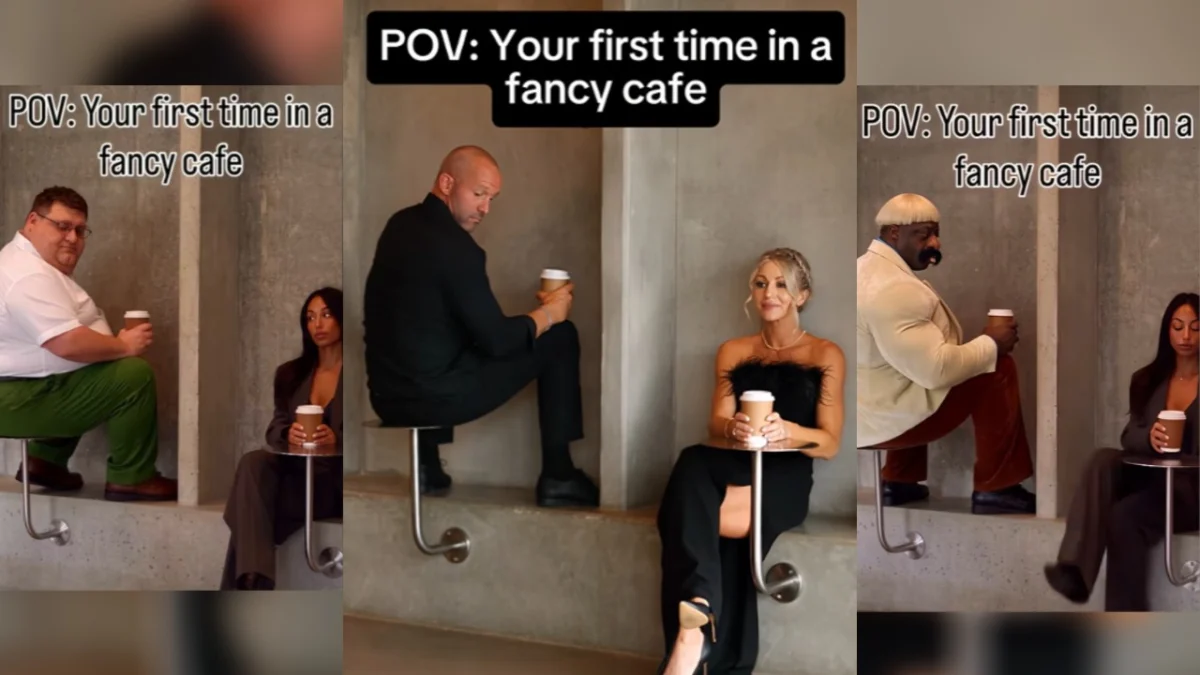
The "Your First Time In a Fancy Cafe" meme originated on November 1, 2026, when TikTok creator @leehoustonx uploaded an AI-generated video featuring a protagonist attempting to navigate the confusing layout of a contemporary espresso bar. Set to the smooth, rhythmic tracks of "Oh Yeah?" by Steve Lacy, the video depicts a man entering a cafe characterized by stark, industrial aesthetics—specifically concrete benches and sleek metal surfaces.
In the original skit, the man sits on what he perceives to be a modern chair, which is actually a low-slung metal table. The tension of the scene is resolved when a woman enters the frame and sits on a nearby concrete block, which is revealed to be the actual seating. The man, realizing his error, awkwardly adjusts himself, capturing a moment of profound social embarrassment. This initial post resonated deeply with audiences, garnering over 9.2 million views in just two days. The success of the original video is attributed to its high production value, which showcased the advancements in AI video consistency and temporal stability achieved by late 2026.
Rapid Proliferation and Viral Metrics
The transition from a single viral video to a standardized meme format occurred with unprecedented speed. By November 2, 2026, the template had migrated to Instagram, where user kevinwinnik posted a version that exceeded the original’s reach, securing over 14.5 million likes in a 24-hour period. This surge in engagement underscores the cross-platform viability of AI-generated humor.
Statistical analysis of the meme’s spread indicates a high "remix" rate. On TikTok, user @boby.biggsjohnson contributed to the momentum with a variation that reached 4.2 million views within a single day. The data suggests that the meme’s structure—a clear setup, a visual "reveal," and a relatable emotional payoff—makes it an ideal candidate for algorithmic promotion. Unlike traditional video memes that require physical sets and actors, the AI-generated nature of "Your First Time In a Fancy Cafe" allows creators to swap characters and backgrounds with minimal technical friction, leading to a saturated market of variations in record time.
Chronology of the Meme’s Evolution
The lifecycle of the meme can be traced through several distinct phases during the first week of November 2026:
- Phase 1: The Original Upload (Nov 1): @leehoustonx introduces the concept. The focus is on the novelty of AI video and the specific humor of minimalist furniture.
- Phase 2: Platform Migration (Nov 2): High-profile Instagram accounts repost and adapt the video, leading to the first wave of multi-million-like tallies.
- Phase 3: Satirical Personalization (Late Nov 2): Creators begin replacing the generic AI characters with recognizable public figures. A notable example from Instagram user skyneet_ replaced the original characters with AI-simulated versions of Jeffrey Epstein and Charlie Kirk. This version garnered 62,900 likes in a day, signaling the meme’s transition into political and dark humor.
- Phase 4: Meta-Commentary (Nov 3 and beyond): Users began discussing the "uncanny valley" aspects of the video, with the discourse shifting from the joke itself to the technical prowess required to generate such consistent AI performances.
Technical Context: AI Video in 2026
To understand the impact of "Your First Time In a Fancy Cafe," one must consider the technological landscape of 2026. Generative video tools have progressed beyond the flickering, distorted outputs of the early 2020s. The meme displays a level of "temporal consistency"—where the characters and environment remain stable throughout the shot—that was previously difficult to achieve.
The use of Steve Lacy’s "Oh Yeah?" provides a sonic anchor that masks the slight "dream-like" quality often found in AI media. The aesthetic of the "fancy cafe" itself—gray concrete, brushed steel, and harsh lighting—is particularly well-suited for AI generation, as these textures are easily rendered by neural networks compared to more complex, organic environments. This synergy between the subject matter and the limitations of the medium contributed to the meme’s visual "believability," which in turn fueled its virality.
Cultural Commentary and Social Satire
Beyond the technology, the meme functions as a critique of modern architectural and interior design trends. The "fancy cafe" depicted is a caricature of "hostile architecture" and extreme minimalism, where the function of an object is obscured by its form. The protagonist’s confusion mirrors a real-world frustration with high-end establishments that prioritize a "vibe" over user-friendliness.
Furthermore, the meme taps into the "imposter syndrome" often felt by individuals entering elite or gentrified spaces. The act of sitting on a table instead of a chair is a physical manifestation of the fear of "not belonging." By using AI to depict this scenario, creators add a layer of surrealism that enhances the comedic timing, as the AI characters often move with a slight, unnatural precision that heightens the awkwardness of the situation.
Variations and Notable Examples
The versatility of the "Your First Time In a Fancy Cafe" template has led to a diverse array of iterations. While the core joke remains the same, the "actors" vary significantly:
- Political Satire: As seen in the skyneet_ post, using controversial figures like Jeffrey Epstein or political commentators like Charlie Kirk adds a layer of "absurdist theater" to the meme. These versions often rely on the shock value of seeing such figures in a mundane, embarrassing situation.
- Fictional Characters: Some creators have used AI to place characters from popular film franchises or video games into the cafe setting, bridging the gap between fan culture and mainstream memes.
- Self-Referential AI Humor: A sub-genre of the meme features characters who realize they are in an AI video, using the chair/table confusion as a metaphor for the "glitches" in their own reality.
Broader Implications for Digital Media
The explosion of "Your First Time In a Fancy Cafe" serves as a case study for the future of content creation. We are entering an era where "skit" comedy no longer requires a camera or a physical location. This democratization of high-quality visual storytelling allows individuals with creative ideas but no production budget to compete with established studios.
However, the trend also raises questions regarding the "human element" in comedy. While the AI generates the visuals, the timing, music choice, and conceptual "hook" remain human-driven. The speed at which these memes are generated and discarded also points toward an increasingly rapid "content cycle," where a joke can reach global saturation and face obsolescence within 72 hours.
Public and Industry Reaction
While there have been no official statements from the platforms regarding this specific meme, the sheer volume of traffic has not gone unnoticed by digital marketing experts. Analysts suggest that the "Your First Time In a Fancy Cafe" trend represents a "gold standard" for AI engagement.
Public reaction has been largely positive, though a segment of the audience expresses a sense of "AI fatigue." Comments on the original @leehoustonx post range from praise for the "relatability of the struggle" to debates over whether the video was "too real to be comfortable." The meme has also sparked a minor resurgence in interest for Steve Lacy’s discography, proving that viral AI content can have a tangible impact on the music industry and streaming metrics.
In conclusion, Your First Time In a Fancy Cafe is more than a fleeting joke; it is a testament to the sophisticated state of generative AI in 2026 and its ability to capture complex human emotions like embarrassment and social anxiety. As creators continue to push the boundaries of what AI can simulate, the line between reality and generated content continues to blur, leaving audiences to wonder—much like the man in the cafe—exactly what they are looking at and where they are supposed to sit.

