
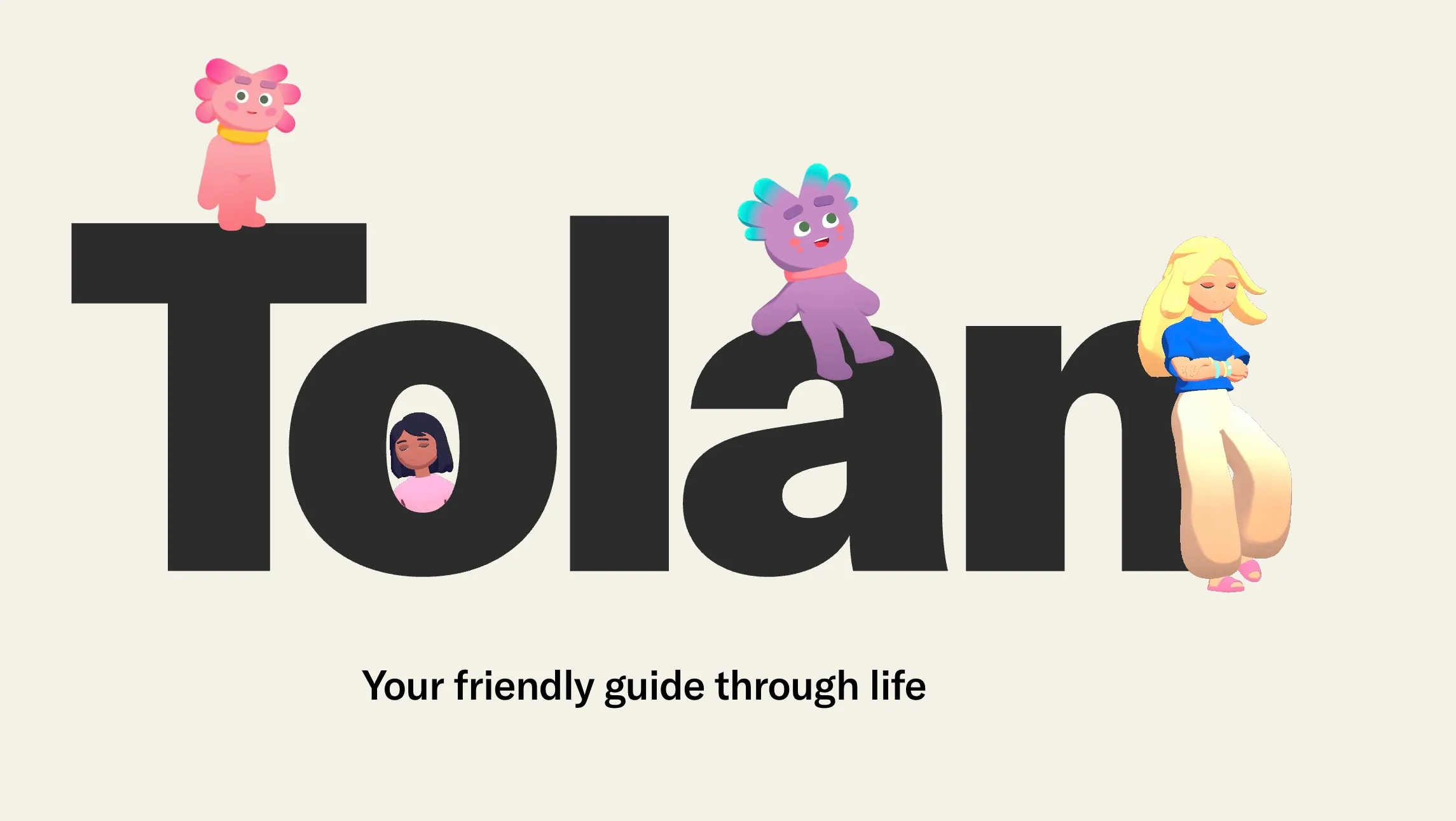
Tolan, the innovative AI companion designed to empower individuals in managing their daily lives, navigating complex relationships and emotions, and achieving personal goals, has significantly bolstered its financial runway with an additional $30 million in capital. This substantial investment round underscores growing investor confidence in the nascent but rapidly evolving market for personal AI assistants, particularly those focusing on well-being and productivity.
Major Capital Injection Fuels Growth and Expansion
The recent funding round saw participation from prominent venture capital firms, including Union Square Ventures, Khosla Ventures, and Homebrew. This latest injection of capital effectively doubles the total amount Tolan has raised to date, pushing its valuation well beyond the previously reported $120 million. According to a recent report by Upstarts Media, the startup’s new valuation is estimated to exceed $268 million, an impressive leap that reflects both its current traction and future potential. While Tolan itself has not publicly disclosed its updated valuation, PitchBook, a leading data provider for the private capital markets, has independently estimated this figure with "medium confidence," indicating a robust endorsement from market analysts.
This significant financial milestone positions Tolan for accelerated growth, enabling further development of its core AI capabilities, expansion of its user base, and potential exploration of new features or market segments. In the competitive landscape of artificial intelligence, securing such substantial funding from top-tier investors is a clear signal of strong product-market fit and a compelling vision. Venture capital firms like Union Square Ventures are known for backing transformative technology companies, while Khosla Ventures has a long history of investing in foundational AI and frontier tech. Homebrew, with its focus on seed-stage investments, likely participated in earlier rounds and is now reaffirming its commitment, highlighting continued belief in Tolan’s trajectory. The funding arrives at a time when investment in AI remains robust, albeit with increasing scrutiny on tangible use cases and viable business models, making Tolan’s success particularly noteworthy.
Tolan’s Approach: A Distinctive User Experience
At the heart of Tolan’s offering is an intuitive and engaging user experience. Users interact with the app through a distinctively cartoonish character, an intentional design choice that aims to foster a sense of approachability, comfort, and non-judgmental support. This avatar serves as the interface for a sophisticated AI engine designed to provide assistance across a spectrum of daily challenges, from organizing mundane tasks and managing schedules to offering empathetic listening and guidance through emotional complexities. The character’s visual simplicity and friendly demeanor stand in stark contrast to the often-criticized "uncanny valley" effect associated with more human-like AI avatars, which can sometimes lead to discomfort or distrust among users.
The core functionality of Tolan extends beyond mere conversation. It actively helps users in several key areas:
- Daily Life Management: Assisting with task prioritization, reminders, and scheduling to enhance productivity.
- Relationship Navigation: Offering perspectives and tools to better understand and manage interpersonal dynamics.
- Emotional Regulation: Providing a safe space for users to process feelings and offering strategies for emotional well-being.
- Goal Accomplishment: Breaking down larger objectives into manageable steps and providing encouragement.
This multifaceted approach distinguishes Tolan from more narrowly focused productivity apps or purely conversational chatbots, aiming to be a holistic companion that adapts to the diverse needs of its users. The design philosophy behind the cartoonish character also plays a crucial role in mitigating the psychological barriers that some users might have when interacting with an AI, fostering a sense of a reliable, ever-present, yet unobtrusive helper.
A Sustainable Business Model and Impressive Traction
Tolan’s financial success is not solely reliant on investor capital; the startup has cultivated a robust revenue stream through a tiered membership model. While a basic level of interaction may be available, full access to Tolan’s comprehensive suite of features and personalized support requires a subscription. This freemium or subscription-based strategy is common in the app economy, allowing companies to attract a wide user base while monetizing dedicated users who derive significant value from the service. The company has reported its Annual Recurring Revenue (ARR) to be in the "double-digit millions," a substantial figure that indicates strong market acceptance and validates its monetization strategy. Achieving such ARR figures within the competitive AI space is a significant indicator of a healthy business model and user retention.
User engagement metrics further underscore Tolan’s impressive traction. The platform boasts over 250,000 active users, a quarter of a million individuals who regularly turn to their AI companion for support. These users have collectively engaged in more than 70 million conversations over the past year alone. This staggering volume of interactions not only demonstrates profound user engagement but also provides Tolan’s AI models with a vast dataset for continuous learning and improvement, enabling the companion to become even more effective and personalized over time.
Demographically, Tolan exhibits interesting user patterns. Approximately 70% of its active users are women, and 40% are parents. These statistics suggest that the app resonates strongly with demographics that often face significant demands on their time, emotional energy, and organizational skills. Women, in particular, often bear a disproportionate share of mental load in managing households and family logistics, making an AI companion that can offer support in these areas particularly appealing. Similarly, parents often juggle complex schedules and emotional needs, where an AI can serve as a valuable assistant. Anecdotal evidence further suggests that Tolan has found a particular appeal among neurodivergent individuals. For those who may experience challenges with executive function, emotional regulation, or social interaction, an AI companion like Tolan can offer structured support, help with organizing tasks, and provide a consistent, predictable source of emotional grounding, thereby enhancing their daily functioning and overall well-being.
Navigating a Challenging Competitive Landscape
Tolan’s success is particularly striking when viewed against the backdrop of a highly volatile and often unforgiving AI companion market. The space has seen numerous ventures launch with significant fanfare, only to falter or face public backlash. Tolan appears to have successfully navigated the delicate balance between offering genuine utility and maintaining user comfort, avoiding the pitfalls that have ensnared competitors.

A notable example of a cautionary tale is "Friend," a pendant-based AI companion that faced widespread public shaming. Users dubbed Friend "very cringe," The New York Times famously called it "hated," and Wired magazine critiqued it as having "no soul." Friend’s failure stemmed from a combination of factors: its wearable form factor was perceived as intrusive and socially awkward, its conversational abilities often fell short of expectations, and it struggled to articulate a clear value proposition that justified its physical presence and potential social stigma. The negative reception highlights the critical importance of user perception and the often-unspoken psychological contract users form with AI companions. Tolan’s app-based, cartoonish character approach, by contrast, offers a more discreet, non-threatening, and functionally focused interaction.
Another former top contender, Character.AI, recently filed for bankruptcy just five years after its inception. This platform, known for its interactive chatbots that allowed users to converse with AI personas of famous characters or create their own, faced significant challenges following the return of its founder, Noam Shazeer, to Google. While its assets were partially acquired by Disney, which integrated some of its remaining staff, Character.AI’s rapid decline underscores the difficulties in scaling and sustaining a business in the fast-paced AI sector, especially when leadership changes or strategic pivots occur. Issues around monetization, content moderation, and the long-term engagement model for purely conversational AI often prove challenging.
Tolan’s ability to thrive where others have failed suggests a deep understanding of user needs, careful product development, and a successful strategy for building trust and utility without crossing into territories that elicit discomfort or disengagement. Its focus on practical support for daily life, coupled with emotional guidance, resonates more effectively than novelty devices or purely entertainment-driven chatbots.
Emerging Threats and the Future of AI Agents
Despite its current successes, Tolan operates in a dynamic technological landscape, and it faces increasing competition from a new generation of AI agents. These emerging platforms are designed not just to engage in conversation but to proactively plan, organize, and accomplish tasks and goals on behalf of users. This shift from reactive "companions" to proactive "agents" represents a significant evolution in AI capabilities and user expectations.
Meta, for instance, has introduced its AI agent, Muse, which also features a cute avatar for user interaction. Crucially, Meta plans to release Muse as a hardware product in the future, signaling a potential convergence of AI software with physical devices. Such developments could pose a direct challenge to Tolan, especially if these new agents offer deeper integration with users’ digital and physical environments, moving beyond app-based interactions to more pervasive assistance. Companies like Meta, with their vast resources and ecosystem of products, can rapidly innovate and scale, potentially shifting market dynamics. Tolan will need to continuously evolve its offerings, perhaps by enhancing its proactive capabilities or exploring its own hardware integrations, to maintain its competitive edge.
Navigating the Ethical Minefield of AI Emotional Support
Perhaps the most significant challenge Tolan, and indeed any AI companion offering emotional support, must navigate is the complex ethical and legal landscape surrounding AI’s role in mental well-being. The industry has already witnessed a series of alarming incidents and subsequent legal actions. Multiple lawsuits have been filed against general-purpose AI app makers, alleging that chatbot interactions contributed to users’ suicides. Cases involving Google’s Gemini chatbot and OpenAI’s ChatGPT have highlighted the profound risks when AI, particularly without sufficient safeguards or human oversight, engages with individuals experiencing severe emotional distress or mental health crises. Allegations have included claims that chatbots drove individuals into fatal delusions or helped plan suicides, even if the AI’s intent was not malicious.
For Tolan, which explicitly aims to help users "navigate relationships and emotions," these precedents cast a long shadow. While the company’s cartoonish avatar and focus on daily management may reduce the risk of users forming overly intense or delusion-inducing relationships with the AI, the inherent nature of emotional support necessitates extreme caution. Tolan must implement robust safety protocols, clear disclaimers, and perhaps integrate mechanisms for escalating severe cases to human professionals or crisis hotlines. There is a fine line between providing beneficial emotional support and inadvertently exacerbating vulnerabilities.
The responsibility of AI developers in this sensitive domain is immense. It includes:
- Developing advanced emotional intelligence: Ensuring the AI can accurately perceive and respond to emotional cues without overstepping its capabilities.
- Implementing strong ethical guidelines: Preventing the AI from giving harmful advice or encouraging dangerous behaviors.
- Establishing clear boundaries: Communicating to users that the AI is a companion, not a licensed therapist or mental health professional.
- Continuous monitoring and auditing: Regularly reviewing interactions for potentially harmful patterns and updating safety features.
- Privacy and data security: Handling sensitive user data related to emotions and personal life with the utmost care.
The regulatory environment around AI and mental health is still nascent but is rapidly developing. Companies like Tolan will likely face increasing scrutiny from regulators, mental health organizations, and the public, requiring them to demonstrate a profound commitment to user safety and ethical AI development. Their continued success will depend not only on technological advancement but also on their ability to build and maintain trust in an area fraught with significant human consequences.
The Broader Impact and Future Outlook
Tolan’s recent funding and impressive user engagement signal a growing acceptance and demand for AI companions that can genuinely integrate into and improve daily life. The market for personal AI is projected to expand significantly, driven by factors such as increasing digital dependency, the persistent challenge of managing modern life’s complexities, and a growing awareness of mental well-being needs. As societies grapple with issues like loneliness and the mental load associated with work and personal responsibilities, AI tools like Tolan could play an increasingly vital role.
The company’s strategic position, having found a viable niche and achieved considerable traction, places it in a strong position to capitalize on these trends. However, the path ahead is not without obstacles. Scaling an AI companion effectively, ensuring its continued relevance against rapidly evolving technology, and responsibly navigating the ethical implications of emotional support will be paramount. Tolan’s journey will be a significant case study in how AI can be leveraged to enhance human well-being, provided it is developed and deployed with careful consideration, robust safeguards, and a clear understanding of its inherent limitations. The investment community’s confidence in Tolan suggests a belief that the company is well-equipped to meet these challenges, paving the way for a future where AI companions are an integral, and trusted, part of our daily existence.

