
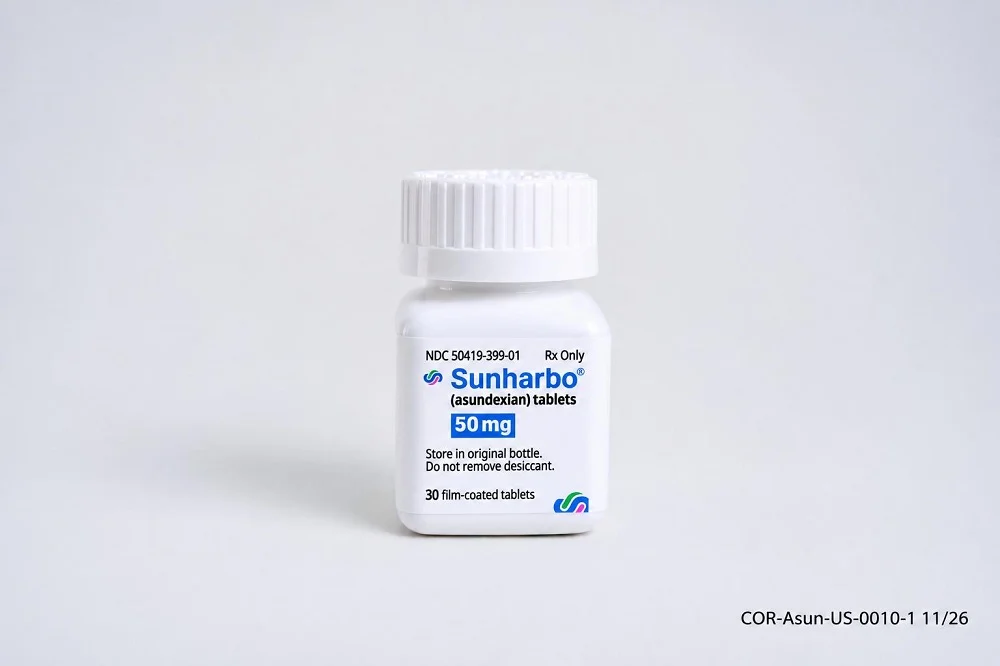
The U.S. Food and Drug Administration (FDA) has granted approval to Sunharbo (asundexian), a groundbreaking medication developed by Bayer, marking the arrival of the first-ever Factor XIa inhibitor designed to reduce the risk of recurrent stroke in high-risk adult patients. This regulatory milestone, announced late Monday, introduces a novel mechanism of action to the field of antithrombotic therapy, specifically targeting patients who have recently experienced a non-cardioembolic ischemic stroke or a high-risk transient ischemic attack (TIA). As a once-daily oral medication, Sunharbo is scheduled for a commercial launch in the United States in mid-November, providing a new therapeutic avenue for a patient population that remains at significant risk for secondary neurological events.
The approval of Sunharbo represents a pivotal shift in the management of secondary stroke prevention. For decades, the pharmaceutical industry has sought the "holy grail" of anticoagulation: a treatment that can effectively prevent the formation of pathological blood clots (thrombosis) without compromising the body’s natural ability to stop bleeding (hemostasis). While traditional blood thinners, including Vitamin K antagonists and Factor Xa inhibitors, have been effective in reducing stroke risk, they carry an inherent and often dose-limiting risk of major bleeding complications. By targeting Factor XIa, Bayer aims to decouple the prevention of thrombosis from the risk of clinical hemorrhage.
The Science of Factor XIa Inhibition
To understand the significance of Sunharbo, it is essential to examine the coagulation cascade. Traditional anticoagulants generally target the "common pathway" of coagulation, specifically Factor Xa or thrombin (Factor IIa). While effective at preventing clots, these targets are also vital for normal wound healing and the prevention of bleeding after injury. When these factors are inhibited, the patient’s entire clotting system is dampened, leading to the well-documented side effects of internal bleeding, bruising, and hemorrhagic stroke.
In contrast, Factor XIa plays a more specialized role. It is primarily involved in the amplification of the coagulation cascade and the stabilization of a clot once it has begun to form, particularly in the high-shear environment of the arteries. Clinical observations of individuals with a genetic deficiency in Factor XI (Hemophilia C) have shown that these individuals have a significantly lower risk of ischemic stroke and venous thromboembolism but rarely suffer from spontaneous major bleeding. This biological "proof of concept" led researchers to believe that inhibiting Factor XIa could prevent the runaway clot formation that causes strokes while leaving the primary hemostatic pathways largely intact. Sunharbo is the first small-molecule drug to successfully navigate the regulatory process using this specific biological logic.
Clinical Trial Results and Safety Profile
The FDA’s decision was underpinned by data from a comprehensive Phase 3 clinical program that evaluated the efficacy and safety of asundexian in a real-world setting. The pivotal trial focused on patients who had recently suffered an ischemic stroke—specifically those not caused by an embolus from the heart (non-cardioembolic)—or a high-risk TIA. These patients are traditionally treated with antiplatelet therapies, such as aspirin or clopidogrel, yet many still go on to suffer a second, often more debilitating, stroke within the first year of the initial event.
In the Phase 3 study, Sunharbo was administered at a 50 mg dose once daily in combination with standard-of-care antiplatelet therapy. The results demonstrated a 26% relative risk reduction in the occurrence of any stroke compared to the control group, which received a placebo alongside standard antiplatelet treatment. Perhaps most significantly, this reduction in stroke risk was achieved without a statistically significant increase in major or life-threatening bleeding. The bleeding rates in the Sunharbo arm were found to be comparable to the placebo arm, a finding that validates the hypothesis that Factor XIa inhibition provides a wider therapeutic window than previous generations of anticoagulants.
Regarding the drug’s tolerability, the most frequently reported adverse reaction among trial participants was diarrhea. However, the discontinuation rate due to adverse events remained low, suggesting that the once-daily pill is well-tolerated for long-term use. The detailed findings of these trials were presented at the International Stroke Conference in February 2026 and subsequently published in the New England Journal of Medicine in April, where the academic community noted the potential for asundexian to redefine the standard of care.
Strategic Importance and Market Competition
The approval of Sunharbo is a major victory for Bayer’s pharmaceutical division, which has faced significant pressure to bolster its pipeline as the patent protection for its blockbuster anticoagulant, Xarelto (rivaroxaban), nears expiration. Sunharbo was discovered and developed entirely within Bayer’s internal laboratories, emphasizing the company’s long-standing expertise in cardiovascular medicine.
While Bayer is the first to cross the finish line with a Factor XIa inhibitor, the competitive landscape is rapidly evolving. A partnership between Bristol Myers Squibb (BMS) and Johnson & Johnson (J&J) is currently advancing milvexian, another Factor XIa inhibitor. Milvexian is expected to release its own Phase 3 data in secondary stroke prevention by the end of 2026. However, industry analysts have pointed out a key differentiation: milvexian is currently being studied as a twice-daily regimen, whereas Sunharbo offers the convenience of once-daily dosing.
David Risinger, an analyst at Leerink Partners, noted in a recent research brief that the dosing frequency could be a decisive factor for market adoption. "A twice-daily pill faces a higher bar for adherence and physician preference," Risinger stated. "For milvexian to compete effectively against Sunharbo’s first-mover advantage and once-daily profile, it likely needs to demonstrate a stroke risk reduction of 30% or greater."
Furthermore, the Factor XIa space is attracting interest from other therapeutic modalities. Novartis is currently developing an antibody-based Factor XI inhibitor, which would likely be administered via injection rather than an oral pill. Meanwhile, ADARx Pharmaceuticals is exploring the use of small interfering RNA (siRNA) to silence the production of Factor XI in the liver, potentially offering a long-acting treatment option that could be administered once every few months.
A Recovery from Previous Setbacks
The path to FDA approval for Sunharbo was not without its challenges. Three years ago, the drug faced a significant setback when it failed to meet its primary endpoints in a Phase 3 trial for atrial fibrillation (AFib). In that study, asundexian failed to show superiority or non-inferiority to Eliquis (apixaban) in preventing strokes in patients with AFib. This failure led to a sharp decline in Bayer’s stock price and raised questions about the viability of the Factor XIa class.
However, Bayer executives remained steadfast, arguing that the pathophysiology of stroke in AFib (which involves clots forming in the heart) is fundamentally different from the pathophysiology of non-cardioembolic stroke (which involves atherosclerotic plaque and arterial thrombosis). Stefan Oelrich, head of Bayer’s pharmaceuticals division, addressed this during a third-quarter financial call.
"We have always maintained that the secondary stroke prevention data was our strongest asset," Oelrich said. "The FDA approval validates our focus. We believe we have an extremely solid data set, and while we acknowledge the potential for future competition, Sunharbo’s one-year head start and robust clinical differentiation put us in a very strong position."
Global Regulatory Status and Future Indications
The United States is the second major market to authorize the use of Sunharbo. China’s regulatory authorities were the first to grant approval late last month, recognizing the high burden of stroke in the Chinese population. The drug remains under active review by the European Medicines Agency (EMA) and the Japanese Pharmaceuticals and Medical Devices Agency (PMDA), with decisions expected in the first half of 2027.
Looking forward, Bayer has indicated that it is exploring the use of Sunharbo in other vascular conditions. While specific new indications have not yet been disclosed, the mechanism of Factor XIa inhibition has potential applications in the prevention of heart attacks, the management of peripheral artery disease, and the treatment of patients with end-stage renal disease who require dialysis—a group that currently faces extremely high risks of both clotting and bleeding.
Implications for Healthcare Providers and Patients
For neurologists and vascular specialists, the approval of Sunharbo provides a much-needed tool for managing "high-risk" patients. Current protocols for secondary stroke prevention often involve a delicate balancing act. If a patient is perceived to have a high risk of bleeding, clinicians may be hesitant to prescribe aggressive antithrombotic regimens, leaving the patient vulnerable to a recurrent stroke. Sunharbo’s safety profile may alleviate these concerns, allowing for more consistent protection across a broader range of patient profiles.
The mid-November launch will include a comprehensive educational rollout by Bayer to familiarize healthcare providers with the nuances of Factor XIa inhibition. As the medical community transitions toward this new class of medication, the focus will likely shift to real-world evidence and long-term outcomes, monitoring whether the impressive results from clinical trials translate into a meaningful reduction in the global burden of stroke.
In conclusion, the FDA approval of Sunharbo marks the beginning of a new era in cardiovascular medicine. By successfully targeting Factor XIa, Bayer has not only brought a first-in-class therapy to market but has also provided a blueprint for future drug development aimed at separating the benefits of anticoagulation from the dangers of hemorrhage. For the thousands of patients who survive a stroke each year, this approval offers a new level of hope for a future free from the fear of recurrence.

