
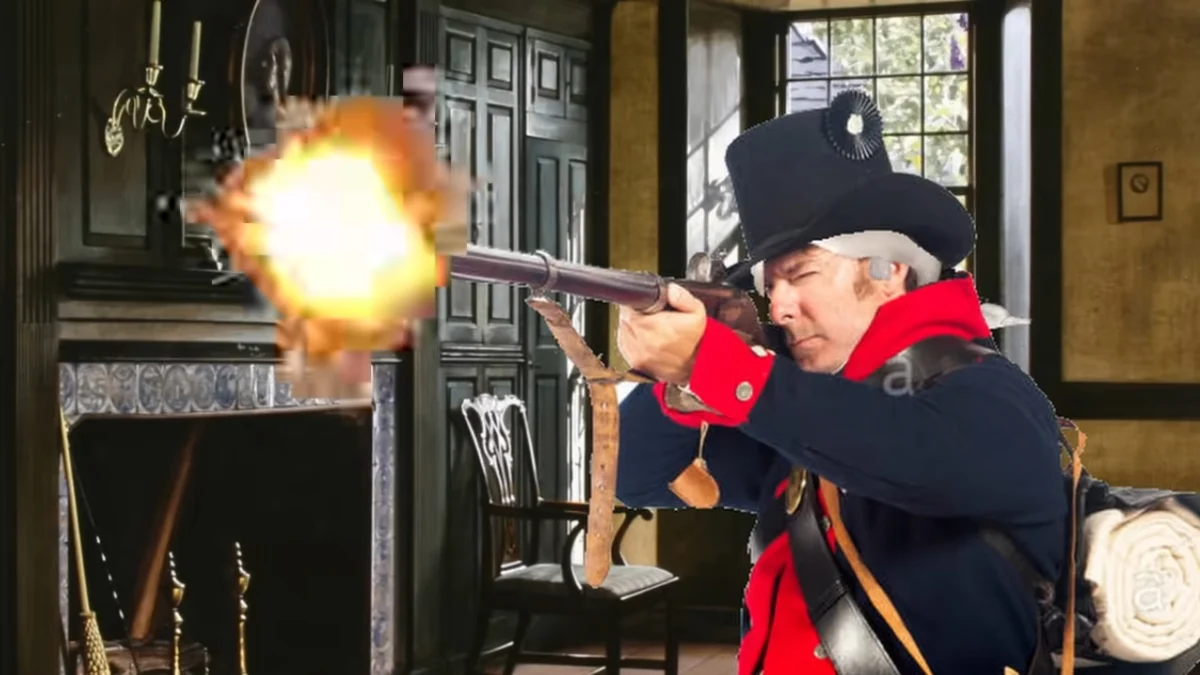
The digital landscape is frequently characterized by the rapid ascent and eventual decline of viral content; however, few artifacts of internet folklore have demonstrated the enduring resonance of the "Own a Musket for Home Defense" copypasta. Often referred to by its concluding refrain, "Just as the founding fathers intended," this satirical narrative has transcended its origins on anonymous imageboards to become a cornerstone of modern cultural commentary. By juxtaposing the grim realities of home invasion with the absurd impracticality of 18th-century weaponry, the text serves as both a comedic masterpiece and a pointed critique of originalist interpretations of constitutional law.
The Genesis of a Digital Legend: The 2014 4chan Threads
The narrative’s history traces back to the "weapons" board (/k/) of the anonymous imageboard 4chan, a community known for its idiosyncratic blend of technical firearm expertise and subversive humor. On November 14, 2014, an anonymous user initiated a discussion by posing a seemingly earnest question regarding the efficacy of a musket for residential security. The inquiry, "serious question: how good is a musket for home defense?" prompted a creative response from a fellow user who drafted a "greentext" story.
This initial iteration featured a protagonist donning a powdered wig and a hussar-style aesthetic, defending his home against two intruders. The story established several tropes that would define the meme: the use of a bayonet, the "Tally Ho" battle cry, and the devastating, albeit exaggerated, physical impact of large-caliber black powder projectiles. The post concluded with the protagonist offering tea to the responding police officers, cementing the "gentlemanly" absurdity of the scenario.
While the November 14 post laid the groundwork, the version of the copypasta that achieved global ubiquity appeared later. On June 27, 2016, a refined and expanded version was posted to /k/, introducing the "four ruffians" and the "cannon mounted at the top of the stairs." This iteration streamlined the humor, focusing on the chaotic escalation of force and the unintended collateral damage inherent in using antique military hardware in a suburban setting.
Anatomy of the Narrative: Satire and Historical Anachronism
The "Own a Musket for Home Defense" copypasta is structured as a first-person account of a home defense scenario executed with strict adherence to 18th-century technology. The humor is derived from several distinct linguistic and thematic layers:
- Linguistic Contrast: The use of archaic terminology such as "ruffians," "rapscallions," and "what the devil" stands in stark contrast to the violent modern context of a home invasion.
- The Smoothbore Fallacy: A central comedic beat involves the protagonist firing a flintlock pistol at a second intruder, only to "miss him entirely because it’s smoothbore and nails the neighbor’s dog." This highlights the technical limitations of early firearms—specifically their lack of rifling, which made them notoriously inaccurate at distance.
- Escalation of Force: The narrative reaches its crescendo with the deployment of a "cannon mounted at the top of the stairs loaded with grapeshot." The description of the blast shredding two men and setting off car alarms emphasizes the total overkill and the lack of "tactical" precision.
- The Triangular Bayonet Myth: The story concludes with a bayonet charge against the final survivor. The text notes that the intruder "bleeds out waiting on the police to arrive since triangular bayonet wounds are impossible to stitch up." This references a long-standing piece of military lore regarding the lethality of the 17th and 18th-century "plug" or "socket" bayonets.
Chronology of Viral Proliferation and Platform Migration
Following its refinement on 4chan, the copypasta migrated to more mainstream social media platforms, where its popularity increased exponentially. On December 8, 2014, a screenshot of the early version was shared on the /r/4chan subreddit by user iBleeedorange. The post garnered over 14,000 upvotes, signaling the content’s potential for cross-platform appeal.
The "definitive" version of the text found a permanent home on the /r/copypasta subreddit on October 29, 2018, when user Green272 posted it for a new generation of users. This post served as a catalyst, resulting in over 30,000 upvotes and solidifying the text as a "canonical" piece of internet literature. From Reddit, the text spread to Facebook and Twitter (now X), where it was frequently used as a "copypasta" response to debates regarding the Second Amendment of the U.S. Constitution.

By 2019, the meme entered its multimedia phase. YouTube creators began producing dramatic readings and high-quality animations of the text. On February 10, 2019, YouTuber Mousey Poo released a comedic reading that gained tens of thousands of views. This was followed by a landmark animation by user Gearhead on November 5, 2020. Gearhead’s video, which featured a visual representation of the "powdered wig" protagonist and the "basketball-sized hole," has since amassed over 2.1 million views, representing the peak of the meme’s cultural visibility.
Technical Analysis: Fact-Checking the Absurdity
To understand the meme’s effectiveness, one must analyze the historical and technical realities of the weapons described. While the copypasta is satirical, it is rooted in actual ballistic history.
- The Kentucky Rifle: Unlike the smoothbore muskets used by infantry, the Kentucky (or Pennsylvania) rifle featured rifled barrels, making them exceptionally accurate for the time. However, their slow reload speed—often taking up to a minute for a single shot—makes the idea of defending against four intruders highly improbable.
- Grapeshot: Grapeshot consists of a cluster of small iron balls fired from a cannon. Historically used as an anti-personnel weapon in open-field battles or naval engagements, the use of such a weapon in a residential hallway would, as the meme suggests, result in catastrophic structural damage and massive collateral effects.
- Triangular Bayonets: The claim that triangular wounds are "impossible to stitch" is a common myth. While the three-edged blades of the era did create wounds that were difficult to close compared to a clean incision from a flat knife, modern surgery could certainly address them. The myth persists largely because, in the 18th century, any deep puncture wound was likely to become infected and prove fatal, regardless of the blade’s shape.
Sociopolitical Context and Implications
The enduring popularity of "Own a Musket for Home Defense" is inextricably linked to the ongoing American debate over gun rights and the Second Amendment. The meme functions as a "reductio ad absurdum" of the argument that the Constitution should be interpreted exactly as it was understood in the late 1700s.
Critics of broad firearm access often argue that the Founding Fathers could not have envisioned modern semi-automatic rifles. The copypasta satirizes the counter-argument by depicting a citizen who takes the "original intent" to its literal extreme. By showing the carnage and chaos caused by "intended" weaponry, the text forces the reader to confront the disconnect between 18th-century technology and modern civilian life.
Conversely, some firearm enthusiasts have adopted the meme as a form of self-deprecating humor. In this context, the "Tally Ho" attitude is seen as a defiant embrace of the Second Amendment, regardless of how "outdated" or "absurd" the weaponry might seem to outsiders. This dual-utility—serving both as a critique and a badge of subcultural identity—is a hallmark of successful internet memes.
Broad Impact and Digital Legacy
As the 2020s progress, the "Own a Musket" copypasta has achieved a level of "evergreen" status. It is frequently referenced in video game communities, historical reenactment circles, and political discussion boards. The linguistic style of the meme—the specific cadence of "Just as the founding fathers intended"—has become a shorthand for any situation involving historical anachronism or excessive adherence to tradition.
The meme’s transition from text to high-definition animation and AI-generated voiceovers demonstrates the evolving nature of digital content. What began as a simple text post on a niche imageboard has evolved into a multi-sensory experience that continues to generate millions of impressions.
In conclusion, "Own a Musket for Home Defense" is more than a simple joke. It is a sophisticated piece of social satire that utilizes historical trivia and dark humor to navigate complex contemporary issues. Its longevity is a testament to the power of anonymous collective creativity and the unique ways in which the internet processes history, law, and violence. As long as the debate over constitutional originalism remains a fixture of the American landscape, the "ruffians" will continue to break in, the "cannon" will remain primed at the top of the stairs, and the "neighbor’s dog" will remain perpetually at risk from a smoothbore flintlock.

