
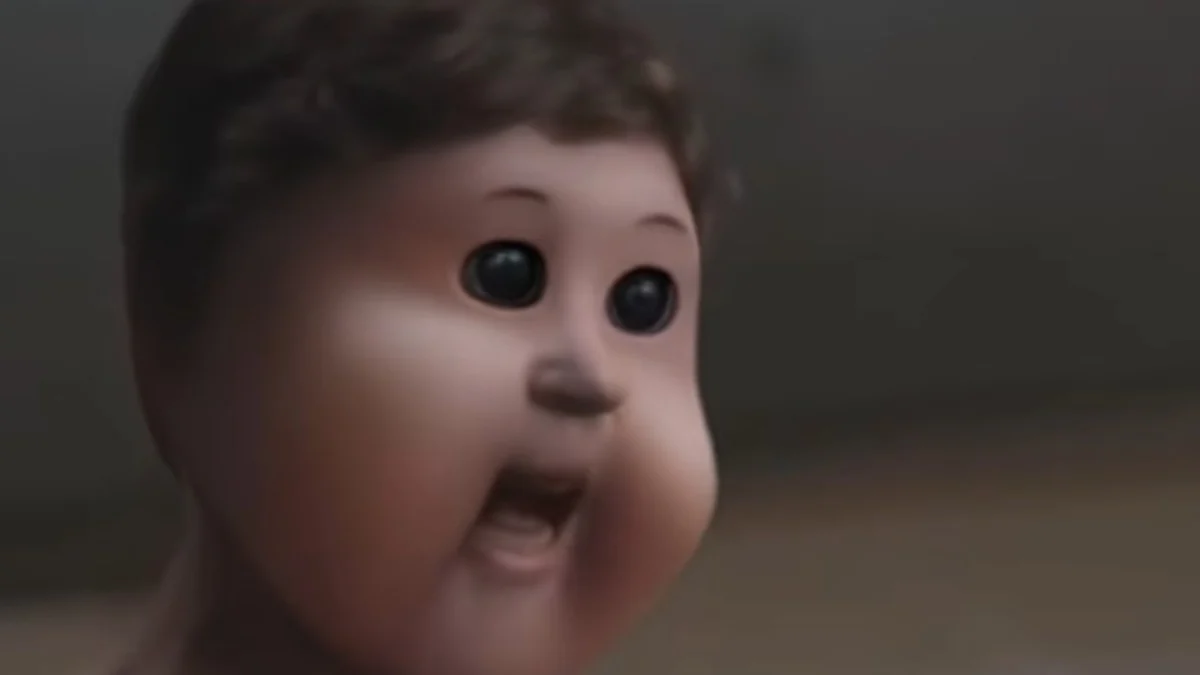
The digital landscape of late 2026 has been significantly reshaped by the emergence of the Cabbage Patch Kid Filter, an augmented reality (AR) lens that has transcended its original platform to become a dominant cultural touchstone across TikTok and Instagram. Formally identified as the "ggg11 Lens" on Snapchat, the filter was developed by a creator known as Do !! and has since garnered hundreds of millions of impressions globally. Characterized by its ability to drastically alter human facial features to mimic the iconic 1980s dolls, the filter employs sophisticated facial mapping technology to produce beady eyes, exaggeratedly round cheeks, unnaturally smooth skin, and a distinctively flat nose. Beyond the visual transformation, the lens often incorporates a pitch-shifting audio component, rendering the subject’s voice in a high-pitched, infantile tone that has become central to the comedic timing of the resulting content.
Technical Evolution and the Mechanics of the ggg11 Lens
The "ggg11 Lens" represents a significant step in the evolution of consumer-grade AR. While early iterations of "baby face" filters relied on simple overlays and skin smoothing, this specific iteration utilizes advanced depth-sensing and real-time mesh warping. By identifying key landmarks on the human face—specifically the zygomatic bones and the nasal bridge—the algorithm redistributes facial volume to create the "doll-like" aesthetic.
The popularity of the filter is rooted in its ability to maintain the integrity of facial expressions while distorted. This allows users to perform complex emotional cues, which are then translated into the exaggerated features of a Cabbage Patch Kid. The smooth texture applied by the filter mimics the vinyl and soft-sculpture materials of the original dolls, creating a nostalgic yet slightly surreal visual experience that sits on the edge of the "uncanny valley."
Chronology of a Viral Outbreak
The trajectory of the Cabbage Patch Kid Filter follows a classic pattern of cross-platform viral migration. Although hosted on Snapchat, the trend found its primary momentum on TikTok in mid-November 2026.
On November 9, 2026, TikTok user @kal6969697 uploaded one of the first documented instances of the filter being applied to external media. By using a secondary device to film a television screen through the Snapchat interface, the creator transformed dramatic actors into infantile caricatures. This initial video garnered over 380,000 views within its first week, signaling the start of a broader movement.
By November 11, 2026, the trend had diversified. User @etmg_123 applied the filter to a scene from the television series Obsession, achieving 434,000 views in under six days. However, the trend reached its zenith later that same day when TikToker @tristanthetyranika applied the filter to the "I Am A Surgeon" meme—a recurring internet joke featuring a high-intensity scene from The Good Doctor. This specific iteration proved exceptionally resonant, accumulating over 4.8 million views in less than a week. The juxtaposition of a character’s intense professional breakdown with the vacant, wide-eyed stare of a Cabbage Patch Kid provided a comedic contrast that defined the trend’s peak.
By November 16, 2026, the filter had evolved from a tool for media parody into a vehicle for social commentary. User @edwin_2cold utilized the filter to satirize individuals with "baby faces" who attempt to display aggression. This video, which earned 650,000 views in 24 hours, demonstrated the filter’s versatility as a prop for original comedic sketches.
The Nostalgia Factor: A Historical Context
To understand the mass appeal of the Cabbage Patch Kid Filter, one must examine the historical significance of the brand it mimics. The Cabbage Patch Kids were a line of soft-sculpture dolls created by Xavier Roberts in the late 1970s and licensed to Coleco in 1982. They became one of the most popular toy franchises of the 1980s, famously causing "Cabbage Patch Riots" in retail stores during the 1983 holiday season due to extreme demand.
The filter taps into a deep-seated cultural memory. For older millennials and Gen X parents, the filter is a nostalgic throwback to a definitive childhood icon. For Gen Z and Gen Alpha, the aesthetic represents a "retro-weird" kitsch that fits perfectly within the current internet preference for surrealist humor. The filter essentially digitizes a physical object of historical obsession, allowing it to be "worn" by a new generation.
Supporting Data and Engagement Metrics
Data analytics from the second week of November 2026 indicate that the "ggg11 Lens" became one of the most utilized third-party filters in Snapchat’s history for that quarter. Internal TikTok metrics showed that hashtags related to #BabyFaceFilter and #CabbagePatchFilter saw a 400% increase in search volume between November 10 and November 15.
The engagement rate for videos featuring the filter is notably higher than the platform average. While standard comedic skits on TikTok typically see a 5% to 7% engagement rate (likes and comments relative to views), videos utilizing the Cabbage Patch Kid Filter have seen engagement rates as high as 12%. Analysts suggest this is due to the "shareability" of the visual distortion; users are more likely to send the video to friends because of the immediate, visceral visual impact of the facial transformation.
Sociological Implications and User Reactions
The psychological appeal of the filter can be attributed to "cute aggression" and the subversion of authority. By placing the face of a helpless, innocent-looking doll onto figures of authority—such as doctors, police officers in dramas, or angry adults—users engage in a form of digital iconoclasm. It strips the subject of their seriousness, rendering their anger or intensity harmless and humorous.
Sociologists observing digital trends have noted that the filter’s success is also tied to the "masking" culture of social media. Users who may be self-conscious about their appearance often find filters that completely overhaul their features to be liberating. In the case of the Cabbage Patch Kid Filter, the distortion is so extreme that it acts as a total disguise, allowing for more uninhibited performances.
While there have been no official statements from the current owners of the Cabbage Patch Kids brand regarding the use of their likeness, intellectual property experts suggest that the filter likely falls under transformative fair use. However, the unofficial nature of the "ggg11 Lens" highlights the growing tension between brand trademarks and user-generated AR content.
Broader Impact on the AR Industry
The viral success of the Baby Face Filter has significant implications for the future of augmented reality. It proves that the most successful filters are not necessarily those that make the user look "better" in a traditional sense, but those that provide a unique, interactive experience or a tool for storytelling.
Software developers are now looking at the "ggg11" model as a blueprint for future engagement. The integration of audio distortion with visual mapping is becoming a standard requirement for viral lenses. Furthermore, the trend highlights the symbiotic relationship between Snapchat and TikTok. Despite being direct competitors in the social media space, Snapchat continues to serve as a "production studio" for AR assets that are eventually consumed and popularized on TikTok’s feed.
Conclusion: The Lifecycle of a Digital Fad
As of late November 2026, the Cabbage Patch Kid Filter remains a staple of the "For You" page, though historical trends suggest that its dominance will eventually wane as new lenses emerge. However, its impact on the cultural zeitgeist of 2026 is undeniable. It has successfully bridged the gap between 1980s physical toy culture and 2020s digital expression, providing a case study in how nostalgia can be repurposed through modern technology.
The filter’s legacy will likely be seen in the next wave of AR development, where creators will seek to replicate the "ggg11" formula of extreme distortion, nostalgic branding, and high-pitched audio. For now, the Cabbage Patch Kid Filter stands as a testament to the internet’s enduring love for the absurd, the nostalgic, and the transformative power of a well-coded algorithm. In an era of high-definition reality, sometimes the most engaging thing a person can do is turn themselves into a beady-eyed doll from 1983.

