
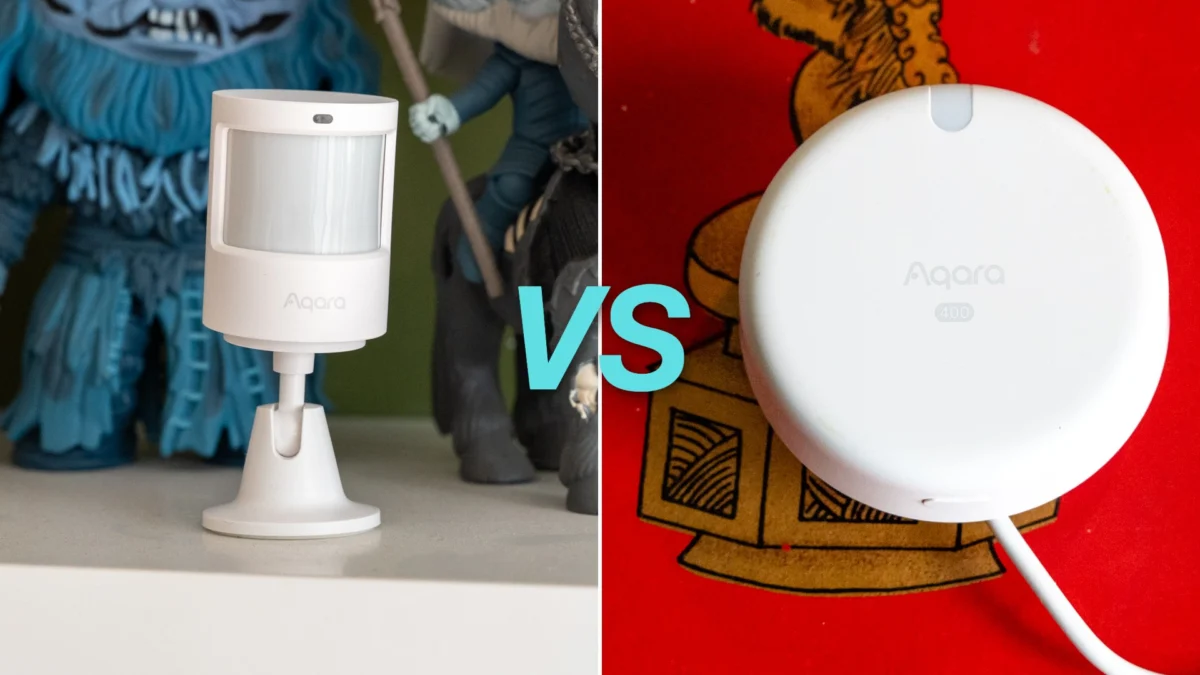
The pursuit of a truly automated smart home hinges on its ability to anticipate and respond to our needs seamlessly, often without explicit commands. At the heart of this intelligent ecosystem lies the humble sensor, a silent guardian that perceives our presence and actions. For years, the prevailing technology for this critical function has been the Passive Infrared (PIR) motion sensor, a stalwart of security systems. However, a new generation of sensors, leveraging millimetre-wave (mmWave) technology, is emerging, promising a more nuanced and sophisticated understanding of occupancy. This evolution presents consumers with a crucial decision: which sensing technology is best suited for their smart home aspirations?
PIR sensors, the long-standing workhorses of motion detection, operate by identifying fluctuations in infrared energy, essentially detecting heat signatures. When a warm body moves within their field of view, the change in thermal radiation triggers an alert or action. Their widespread adoption is largely attributable to their cost-effectiveness and simplicity. Typically, PIR sensors are battery-powered, allowing for years of operation between replacements, and their setup is generally straightforward, enabling rapid integration into existing smart home systems. Devices like the Aqara Motion Sensor P1 exemplify this category, offering a reliable and accessible entry point into motion-activated automation.
Despite their ubiquity, PIR sensors possess inherent limitations that can lead to suboptimal smart home experiences. A primary drawback is their susceptibility to false triggers. While designed to detect human or animal heat, they can be easily fooled by other heat sources or even rapid changes in ambient temperature. This means that a radiator kicking in, direct sunlight streaming through a window, or even the playful antics of a pet can inadvertently activate a routine. In a domestic setting, this can translate to lights turning on unexpectedly or, conversely, turning off prematurely. The latter scenario is particularly common; if a user remains stationary for an extended period – whether reading a book, working at a desk, or relaxing on the sofa – the PIR sensor will eventually register a lack of movement. Consequently, automated lighting systems designed to conserve energy can extinguish the lights, plunging the user into darkness, precisely when they are still present. Furthermore, PIR sensors are most effective at detecting motion across their field of view; movement directly towards or away from the sensor can be less reliably detected.
The emergence of mmWave presence sensors marks a significant advancement in smart home sensing capabilities. Unlike PIR sensors, which rely on thermal changes, mmWave sensors utilize millimetre-wave radio signals, typically operating at frequencies of 24GHz or 60GHz. These sensors emit radio waves and analyze the reflections that return, enabling them to detect even the most subtle movements. This sensitivity is so profound that it can register the imperceptible rise and fall of a person’s chest during breathing. This fundamental difference in detection mechanism allows mmWave sensors to ascertain occupancy with a far greater degree of accuracy, irrespective of overt movement.
This capability unlocks a new level of smart home automation. For instance, an mmWave sensor can ensure that lights remain on as long as a person is in the room, even if they are sedentary. This eliminates the frustrating experience of lights switching off while you’re engrossed in an activity. Beyond simple occupancy detection, many mmWave sensors offer advanced features such as distance measurement, enabling users to define specific detection ranges within a room. This allows for the creation of "zones," where different actions can be triggered based on a person’s location. For example, a smart home system could be configured to turn on the main room lights when someone enters the space, but only activate a reading lamp when the sensor detects them positioned in their favorite armchair. The Aqara Spatial Multi-Sensor FP400 Kit exemplifies this advanced functionality, allowing for granular control over automation based on precise room positioning. Some high-end mmWave sensors can even track the movement of individuals within a room, offering a comprehensive understanding of occupancy patterns.
However, mmWave technology is not without its own set of considerations. These sensors generally require more power than their PIR counterparts, often necessitating a mains or USB power connection, although battery-powered options are becoming increasingly available. Their extreme sensitivity, while a powerful advantage, can also lead to false detections if not properly configured. Environmental factors such as moving fans, fluttering curtains, the movement of houseplants, or even the subtle vibrations from adjacent rooms can be misinterpreted as occupancy. To mitigate this, most mmWave sensors incorporate artificial intelligence (AI) algorithms designed to learn and adapt to the environment, helping to filter out non-human movements. Some advanced mmWave sensors even integrate PIR sensors as a complementary technology. In such hybrid devices, the PIR sensor can provide an initial, rapid detection of significant movement, prompting the mmWave sensor to engage for more precise and continuous presence monitoring.

A comparative analysis highlights the distinct strengths and weaknesses of each technology:
| Feature | PIR Sensor | mmWave Sensor |
|---|---|---|
| Detection Method | Changes in infrared energy (heat) | Millimetre-wave radio waves (radar) and their reflections |
| Detected Phenomena | Movement only | Movement and presence (including subtle physiological indicators) |
| Stationary Occupants | Cannot detect, leading to premature light shut-off | Reliably detects, ensuring continuous illumination |
| Sensitivity | Best for lateral movement; weaker for direct approach | Extremely high, capable of detecting millimetre-scale movements |
| Material Penetration | Blocked by glass and most opaque objects | Can pass through thin, non-metallic materials (e.g., plasterboard) |
| Common False Triggers | Radiators, sunlight, pets | Fans, curtains, plants, pets, neighbouring room activity |
| Zoning/Tracking | Limited to basic motion detection | Supports distance limits, detection zones, and some position tracking |
| Clear Time | Requires longer timeouts to account for inactivity | Clears quickly and accurately upon room vacancy |
| Power Consumption | Very low, enabling long battery life | Higher, often requiring wired power (battery options emerging) |
| Setup Complexity | Generally plug-and-play | May require sensitivity and zone tuning for optimal performance |
| Cost | Typically under £20 | Ranges from £25 to £60+ |
| Ideal Use Cases | Hallways, stairs, entrances (areas of transit) | Living rooms, offices, bathrooms (areas of prolonged occupancy) |
The choice between PIR and mmWave sensors ultimately depends on the intended application within the smart home. For areas characterized by consistent movement, such as hallways, staircases, and entryways, where the primary function is to detect passage, PIR sensors remain a pragmatic and cost-effective solution. Their ability to trigger actions upon entry and exit is generally sufficient for these transitional spaces.
Conversely, mmWave sensors excel in environments where sustained presence needs to be reliably detected. This includes living rooms, home offices, bedrooms, and bathrooms – spaces where individuals are likely to spend extended periods without significant movement. The assurance that lights will remain on and automation will continue to function while occupants are still is a significant advantage. For example, in a home office, an mmWave sensor can ensure that ambient lighting and climate control remain active throughout a work session, without the interruption of lights switching off due to a lack of perceived motion.
In essence, the guiding principle for selection is simple: utilize PIR sensors for areas of transit and mmWave sensors for areas of residence.
Background Context and Timeline
The development of motion detection technology for consumer applications has evolved significantly over the past few decades. PIR sensors, first introduced in security systems in the mid-20th century, became a cornerstone of home automation with the advent of affordable smart home hubs in the early 2000s. Their integration into smart lighting, security, and climate control systems democratized automated responses to human presence. The market for motion sensors, encompassing both PIR and emerging technologies, has seen steady growth, driven by increasing consumer adoption of smart home devices. Industry analysts project the global smart home market, including sensors, to reach hundreds of billions of dollars in the coming years, underscoring the importance of these foundational components.
The exploration of mmWave technology for sensing applications has a longer history in military and industrial contexts. However, recent advancements in miniaturization and cost reduction have made it increasingly viable for consumer electronics. Companies began introducing mmWave presence sensors for the smart home market approximately three to five years ago, with a notable increase in product offerings and refinement of the technology in the last two years. This rapid development cycle is indicative of the technology’s potential to redefine smart home automation.

Analysis of Implications
The widespread adoption of mmWave presence sensors has several significant implications for the smart home landscape. Firstly, it promises to enhance user experience by reducing instances of "automation failure" where systems fail to respond as expected due to static occupants. This can lead to greater user satisfaction and a more intuitive interaction with smart home technology. Secondly, the enhanced accuracy of mmWave sensors could lead to more efficient energy management. By accurately detecting true occupancy, systems can avoid unnecessary energy consumption that might occur with less precise detection methods. For instance, heating and cooling systems could be more finely tuned to the actual presence of individuals, leading to measurable energy savings.
Furthermore, the ability of mmWave sensors to detect subtle movements and potentially track location opens doors for more sophisticated health and wellness applications within the smart home. Imagine a system that can monitor sleep patterns through breathing detection or alert caregivers if an elderly individual has fallen and is unable to move. While these applications are still in their nascent stages, the underlying technology holds immense potential.
Frequently Asked Questions
Can mmWave sensors see through walls?
mmWave sensors possess the capability to penetrate thin, non-metallic materials such as plasterboard, plastic, and fabric. This means a sensor placed in one room can potentially detect movement in an adjacent space if the dividing wall is constructed from these materials. However, solid barriers like brick, concrete, and metal will block the radio waves. To mitigate unwanted detection from neighboring rooms, users can strategically position sensors away from shared walls or utilize the distance and zone settings to define the sensor’s active area within the intended room.
Are mmWave sensors safe?

Yes, mmWave sensors are considered safe for consumer use. They operate at very low power levels, well within the established safety exposure limits for all consumer radio frequency equipment. Crucially, these sensors do not capture images or any form of visual data; they solely process the radio wave reflections to determine presence and movement.
Do pets set off motion sensors?
Both PIR and mmWave sensors can be triggered by pets. Some PIR sensors offer "pet-immune" modes that are calibrated to ignore smaller heat signatures, thereby reducing false alarms. For mmWave sensors, the most effective approach to managing pet-induced false triggers is through the use of detection zones. By configuring these zones to exclude areas such as pet beds or common pet pathways, users can minimize unnecessary activations.
Can mmWave replace PIR sensors?
In many scenarios, mmWave sensors can effectively replace PIR sensors, particularly in areas where precise presence detection is paramount, such as living rooms and offices. However, PIR sensors retain their value in specific applications due to their lower cost and simpler configuration, making them ideal for basic motion detection in high-traffic areas like hallways where detailed presence monitoring is less critical. The decision often comes down to a balance of cost, desired functionality, and the specific environmental context.

