
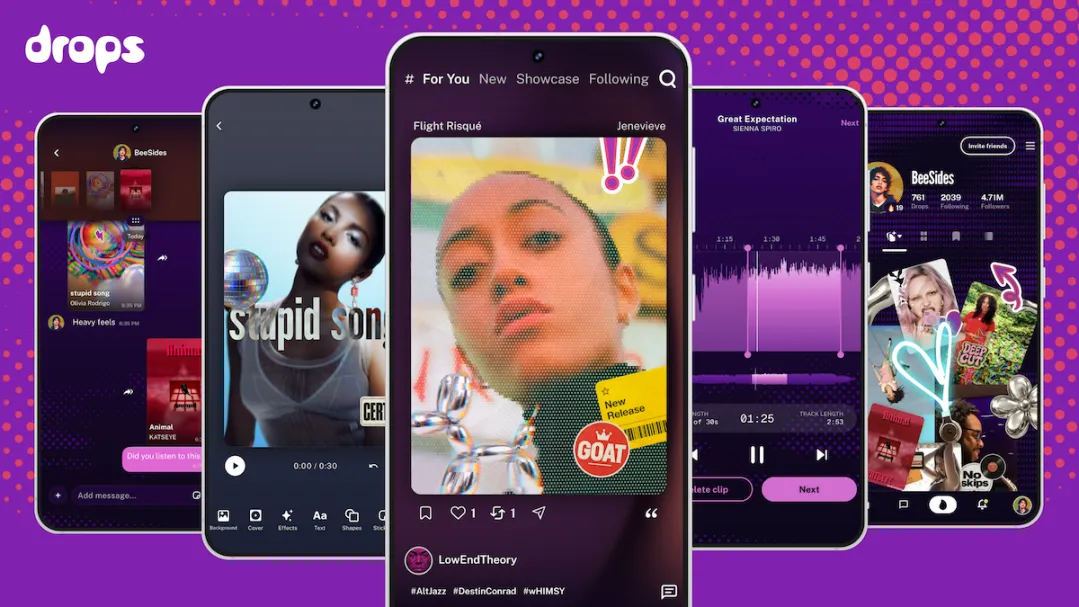
The landscape of music discovery is undergoing another significant transformation with the introduction of "Drops," a novel application launched by Harman, a wholly-owned subsidiary of Samsung Electronics. Departing from the conventional algorithmic recommendations that dominate popular streaming platforms, Drops offers a fresh, interactive approach inspired by the highly engaging, endlessly scrolling vertical feed popularized by TikTok. However, instead of video content, users of Drops navigate through brief, impactful audio clips of songs, accompanied by rich visual and lyrical context, in a bid to unearth their next musical obsession and foster a more communal discovery process.
Launched on Monday and currently available on iOS and Android devices within the United States via an invite-only waitlist, Drops is designed to inject a much-needed social dimension back into the often-isolated experience of modern music consumption. The app allows users to seamlessly swipe through 10- to 30-second snippets of tracks, carefully selected to showcase the most compelling parts – be it a memorable lyric, an irresistible hook, or a captivating beat. Each snippet is enriched with essential metadata, including lyrics, official album artwork, licensed artist photography, and user-generated captions, providing a holistic glimpse into the track’s essence. This focused approach aims to provide just enough exposure to pique a listener’s interest, encouraging them to delve deeper into a song or artist.
The Genesis of Drops: A Return to Social Discovery
The conceptualization of Drops stems from a desire to recapture the organic, communal spirit of music discovery that predates the pervasive influence of personalized algorithms. In earlier eras, new music often spread through word-of-mouth recommendations, shared mixtapes, dedicated music blogs, or vibrant online communities. Drops endeavors to replicate and modernize this experience, transforming discovery from a solitary act into a shared journey.
Clare Hunter, General Manager of Drops, articulated this vision, drawing a poignant parallel to past traditions. "You send a friend a song and say, ‘You have to hear this.’ Then you end up texting, ‘Skip to 1:47, that’s the best part.’ The part that hits usually isn’t the first few seconds, and there wasn’t a good way to share just that moment," Hunter explained, highlighting a common frustration in contemporary music sharing. Drops directly addresses this by allowing users to spotlight and share these specific, impactful moments, making the act of recommendation more precise and engaging.
Hunter further elaborated on the inspiration, stating, "I used to spend hours making mixtapes for my friends, picking the songs, the order, and decorating the cover. Drops is the version of that I always wanted." This nostalgic sentiment underscores the app’s core philosophy: to combine the intimacy and personalization of a mixtape with the instantaneous connectivity of modern digital platforms. The idea for Drops began taking concrete shape following Harman’s acquisition of Roon, a popular multi-device, multi-room audio technology platform, in 2023. While Roon is renowned for its audiophile-grade music management and discovery features catering to discerning listeners, the strategic acquisition likely provided Harman with valuable insights into user behavior, metadata management, and the complexities of integrating diverse music libraries, all of which could inform the development of a user-friendly, socially-oriented platform like Drops.
Diving Deeper into the User Experience
The user interface of Drops is designed for intuitive navigation and seamless interaction. Key tabs, including "For You," "New," "Showcase," and "Following," alongside relevant and trending hashtags, allow users to explore music tailored to their tastes, discover fresh releases, explore curated content, or follow the activity of friends and tastemakers.
Beyond passive listening, Drops encourages active engagement through a suite of social functionalities. Users can "like," "comment," "repost," and "share" tracks, mirroring the interactive features found on leading social media platforms. A unique feature is the ability to save favored snippets into personalized "Droplists," essentially digital mixtapes that users can curate and share. Direct messaging capabilities facilitate private conversations and song exchanges, fostering a sense of community. Users can also follow other profiles, transforming the app into a hub for discovering music through trusted sources and like-minded individuals.
Crucially, Drops is not positioned as a replacement for existing music streaming subscriptions but rather as a complementary discovery tool. For users who find a snippet compelling enough to warrant a full listen, the app offers direct integrations with major streaming services, including Apple Music, Qobuz, and TIDAL. This seamless transition allows users to jump directly into the full version of a song via their connected streaming platform, ensuring a frictionless journey from discovery to consumption. This approach respects the established ecosystem of music streaming while carving out a niche for enhanced discovery.
Addressing Modern Music Industry Challenges: Authenticity and Artist Compensation
In an era increasingly grappling with the proliferation of generative AI content, Drops makes a deliberate and significant stand for authenticity. The company explicitly states that it does not utilize generative AI for audio or visuals within the app. All songs appear as they were originally released, featuring official album artwork and licensed artist photography. This commitment to genuine artistic representation is a powerful differentiator at a time when AI-generated music and visuals, often referred to as "AI slop," are becoming harder to discern and are raising ethical concerns within the creative industries. For many users and artists alike, this dedication to authenticity will likely be a compelling appeal, ensuring that the music discovered is a true reflection of the artist’s original intent.
Furthermore, Drops has proactively addressed the critical issue of artist compensation and rights management, a cornerstone of sustainable growth within the music industry. The company confirms that it pays rights holders for the music featured on its platform and accurately reports plays back to its extensive network of partners. These partners include major industry players such as Universal Music Group, along with significant independent labels and distributors like Beggars Group, Empire, Symphonic Distribution, and UnitedMasters. This commitment ensures that artists and creators are fairly compensated for their work, even for the short snippets played on Drops. Moreover, plays on Drops count toward official stream counts on these partner services, reinforcing the app’s role as an additive, rather than competitive, force within the existing music economy. This transparent and ethical approach to compensation is vital for fostering trust and securing robust content partnerships.
The Evolving Landscape of Music Discovery: A Chronological Perspective

The methods by which humans discover new music have undergone a fascinating evolution, adapting with technological advancements and cultural shifts. In the pre-digital era, discovery was largely organic and community-driven. Radio airwaves, music television channels like MTV, and the tactile experience of browsing record store aisles were primary conduits. Word-of-mouth recommendations, often solidified through the thoughtful creation of mixtapes for friends, formed the bedrock of personal music exploration.
The dawn of the internet ushered in the early digital age of discovery. Music blogs, online forums, and platforms like MySpace Music became crucial hubs where enthusiasts could share and discuss emerging artists. Peer-to-peer file-sharing services, despite their controversial nature, undeniably broadened access to a vast catalog of music, albeit often outside legitimate channels.
The streaming era, commencing in the mid-2000s, revolutionized access. Services like Pandora introduced algorithmic radio based on genre and mood, while Spotify, launched in 2008, pioneered hyper-personalized playlists such as "Discover Weekly," which leveraged sophisticated algorithms to introduce users to new artists based on their listening habits. Apple Music followed suit with a blend of algorithmic recommendations and human curation. While incredibly efficient, these algorithmic approaches, though powerful, have also been criticized for potentially creating "echo chambers," limiting exposure to genuinely novel sounds outside a user’s established preferences, or overwhelming users with sheer volume, leading to a "discovery deficit" where quality curation is lost amidst quantity.
More recently, the meteoric rise of TikTok fundamentally reshaped music promotion and discovery. The platform’s short-form video format transformed specific "moments" within songs into viral phenomena, launching countless tracks and artists into global stardom. TikTok demonstrated the immense power of brief, engaging content to capture attention and drive mainstream success. Drops, in many ways, is a direct heir to this lesson, learning from TikTok’s highly effective engagement model but applying it specifically to the audio realm. By focusing on compelling song snippets and fostering social sharing, Drops aims to capture the virality of TikTok while re-emphasizing the social and curated aspects often diminished by purely algorithmic approaches.
Market Potential and Competitive Analysis
The global music streaming market continues its robust expansion, projected to reach significant revenues in the hundreds of billions of dollars within the next few years, driven by increasing subscriber numbers and diverse content offerings. Within this burgeoning market, the need for effective music discovery remains paramount. While giants like Spotify, Apple Music, and YouTube Music offer their own discovery tools, their primary focus remains on extensive libraries and personalized playback. Niche platforms like SoundCloud cater to independent artists, and genre-specific radio apps exist, but few combine the social virality of TikTok with a dedicated, audio-first approach to curated discovery.
Drops enters this competitive landscape with a clear differentiation. Its audio-first, social-centric model sets it apart from video-heavy platforms like TikTok and algorithm-heavy streaming services. Its target audience likely includes users fatigued by generic algorithmic recommendations, those actively seeking deeper engagement with new music, and emerging artists looking for innovative promotional channels that highlight their work’s most impactful elements without requiring full video productions.
For Harman, a company renowned for its audio expertise and diverse portfolio of connected technologies, the launch of Drops represents a strategic expansion. As a Samsung subsidiary, this move allows Harman to diversify its revenue streams, leverage its deep understanding of audio fidelity and user experience, and establish a stronger presence within the burgeoning digital content ecosystem. The earlier acquisition of Roon, with its sophisticated metadata handling and focus on high-fidelity audio, provides a strong technological foundation and philosophical alignment for a platform aiming to elevate the music discovery experience.
The invite-only launch strategy for Drops is a calculated move to build hype, manage initial user load, and gather crucial feedback from early adopters. This controlled rollout allows Harman to refine the app’s features, optimize performance, and cultivate a core community of engaged users before a broader public release. This exclusivity can generate significant buzz and attract a dedicated user base eager to shape the platform’s early development.
Broader Implications for Artists, Labels, and the User Experience
The introduction of Drops carries significant implications across the music industry ecosystem. For artists, particularly emerging talents, Drops presents a powerful new avenue for exposure. It democratizes the discovery process by allowing artists to highlight the most compelling 10-30 seconds of their tracks, potentially leading to viral moments without the demanding overhead of full-length music video production. The platform could serve as a vital springboard, driving listeners to full tracks on integrated streaming services and, consequently, boosting stream counts and potential revenue.
For labels – both major and independent – Drops offers an additional, engaging channel for promoting new releases and cultivating interest in their extensive back catalogs. The detailed engagement data generated by users interacting with snippets could provide valuable insights into what resonates with audiences, informing future marketing strategies and artist development.
For users, Drops promises a refreshingly human-curated and socially-driven music discovery experience. It moves beyond the often-impersonal algorithmic recommendations, fostering a sense of community and shared exploration. The ease with which specific song moments can be shared and discussed could reignite the joy of musical connection, reminiscent of the mixtape era but amplified by modern technology.
However, challenges remain. Drops will need to effectively scale user acquisition against established giants, maintain the quality and diversity of its content, prevent spam or low-quality uploads as it grows, and ensure its "social" aspect remains genuinely engaging and free from the pitfalls that have plagued other social platforms.
In conclusion, Drops represents a compelling evolution in music discovery, cleverly merging the addictive engagement mechanics of platforms like TikTok with a renewed focus on authentic audio experiences and social connection. By addressing key pain points in modern music consumption – the desire for genuine discovery, the need for fair artist compensation, and the preference for authentic content – Harman’s new app positions itself as a significant player in shaping the future of how we find and share the music we love. As it transitions from an invite-only launch to wider availability, the industry will keenly observe its impact on artists, labels, and the ever-evolving landscape of digital music.

