
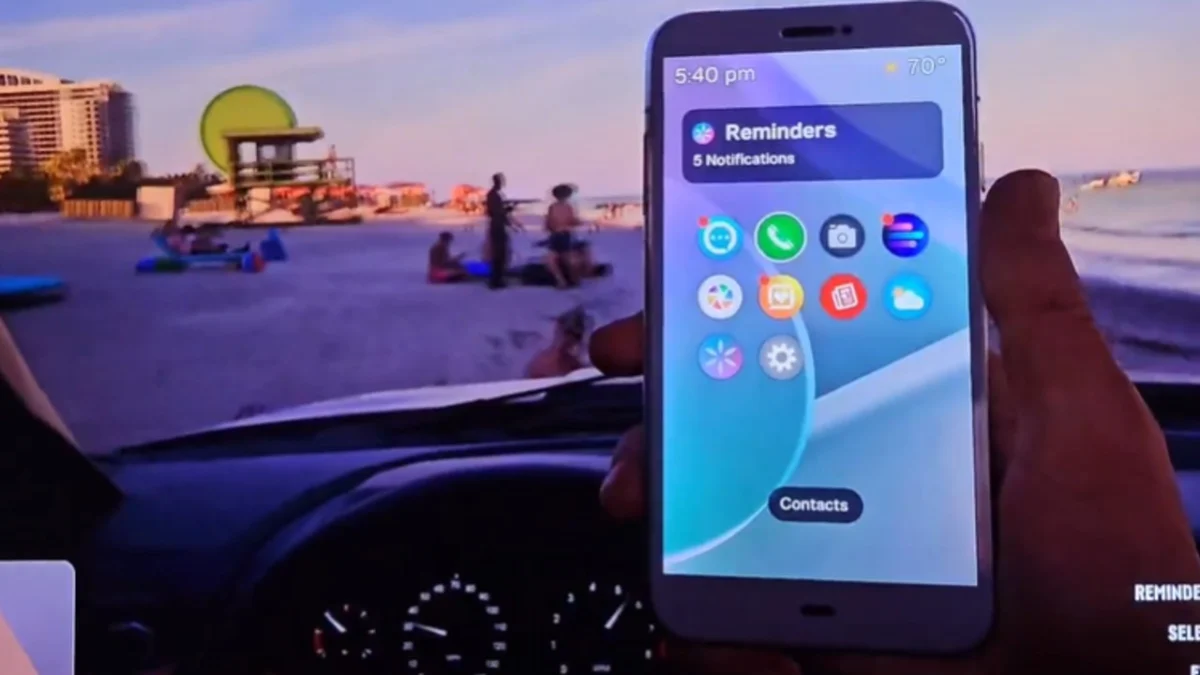
The digital landscape of late 2026 has been significantly altered by the long-anticipated release of Rockstar Games’ Grand Theft Auto VI (GTA 6), a title that has not only broken sales records but has also become a primary engine for contemporary internet culture. Among the most prominent phenomena to emerge from the game’s initial launch window is the viral video trend known as Holding Phone While Driving Over People On the Beach, alternatively referred to as the GTA 6 Running People Over While On Phone Meme. This specific exploitable format utilizes high-fidelity gameplay footage to satirize modern digital consumption habits, specifically the "brain rot" aesthetic characterized by split-screen content and shortened attention spans. By juxtaposing the extreme, albeit virtual, violence of a vehicle plowing through a crowded beach with the mundane act of scrolling through a smartphone, the meme has captured a unique cross-section of social commentary and absurdist humor.
The Genesis of a Virtual Phenomenon
The origin of the trend can be traced precisely to November 18, 2026, a date coinciding with the peak of the game’s global release fervor. The initial footage was uploaded to the social media platform X (formerly Twitter) by user @Dark_SpaceYT. The video featured a first-person perspective from within a vehicle traversing the sun-drenched sands of Leonida—the fictionalized version of Florida featured in the game. The player character is seen holding an in-game smartphone in the foreground, obscuring a portion of the windshield, while the vehicle accelerates through dense crowds of NPCs (non-player characters) sunbathing on the shore.
The caption accompanying the original post, "There has never been anything like this," was intended to highlight the technical sophistication and emergent gameplay possibilities of the new title. However, the internet community quickly pivoted the context from a technical showcase to a comedic template. The visual of a driver being completely oblivious to a chaotic, high-stakes situation because they are occupied with a handheld device resonated with users as a parody of real-world distracted driving and the pervasive nature of mobile technology.
Evolution into an Exploitable Format
Within hours of the original post, the footage underwent a transformation from a standalone clip into a versatile "green-screen" template. On the same day, November 18, X user @Nimorp released a modified version of the video where the in-game phone screen was replaced with a bright green overlay, signaling to content creators that the space was available for custom edits. This was followed shortly by a more refined version from @MurdoinkGS, a creator known for producing high-quality green-screen assets. Murdoink’s version included motion tracking patterns, allowing for more seamless integration of external video content onto the virtual phone’s screen.
This technical accessibility lowered the barrier to entry for creators, leading to an explosion of "remixes." By November 19 and 20, 2026, the format had achieved saturation across X, TikTok, and Instagram. The "exploitable" nature of the meme allowed users to insert any video or image onto the phone, creating a narrative where the driver is watching anything from historical documentaries and cartoons to controversial political commentary while committing acts of digital mayhem.
Notable Iterations and Subcultural Crossover
The diversity of the edits illustrates the broad appeal of the format across various internet subcultures. One of the earliest successful iterations came from user @McKean_enjoyer, who edited the footage to show the driver watching a video by conservative commentator Abigail Shapiro. This edit leaned into the "ironic viewing" trope, where the absurdity of the driver’s actions is heightened by the specific nature of the content they are consuming.
Other creators utilized the template to reference older or concurrent memes. For instance, user @deadrosesaf integrated Pokémon GO gameplay onto the phone screen, a nod to the 2016 craze that was frequently criticized for causing distracted walking and driving in the real world. Another significant edit by @SLBysusparidas referenced the "Dude Those Animals Are So Funny" meme, further layering the meta-commentary by nesting memes within memes.
Perhaps the most culturally relevant edits involved "tea" or drama accounts. On November 20, @RSTYCG posted a version featuring Hila Klein discussing personal matters regarding her husband, Ethan Klein. This iteration highlighted a growing trend in digital media where users consume high-conflict or high-emotion social commentary as "background noise" while engaging in other tasks, a behavior the GTA 6 meme parodies through its extreme gameplay context.
Technical and Psychological Context
The success of the Holding Phone While Driving Over People On the Beach meme is deeply rooted in the current state of digital media consumption. In recent years, platforms like TikTok and YouTube Shorts have popularized a "split-screen" format where a primary video (often gameplay from titles like Subway Surfers or Minecraft) runs alongside a secondary video (such as a movie clip or a person speaking). This is often done to bypass copyright filters or to cater to viewers who require constant visual stimulation.
The GTA 6 meme acts as a satirical reflection of this "Subway Surfers" aesthetic. By placing the phone—the source of secondary stimulation—directly in the line of sight of a high-octane, violent event, the meme mocks the desensitization of the modern viewer. The driver’s refusal to look at the "real" world (the beach) in favor of the "digital" world (the phone) serves as a poignant, if exaggerated, critique of the 2020s attention economy.
Furthermore, the technical fidelity of GTA 6 itself plays a crucial role. The realism of the NPC reactions, the physics of the vehicle, and the lighting of the Leonida coastline provide a stark contrast to whatever often low-quality or nonsensical content is placed on the phone screen. This "uncanny valley" of realism versus absurdity is a hallmark of successful viral content in the late 2020s.
Reception and Community Impact
The reaction from the gaming community has been largely positive, with many praising the meme for its creativity and its ability to highlight the game’s immersive mechanics in an unconventional way. Rockstar Games has historically embraced the chaotic and satirical nature of its player base, and while no official statement has been released regarding this specific meme, the game’s design—which allows for such seamless interaction with in-game technology—suggests that the developers anticipated players would find humor in these juxtapositions.
Industry analysts suggest that memes of this nature serve as a form of "organic marketing." While the content of the meme involves simulated violence, the sheer reach of the format ensures that GTA 6 remains at the center of the cultural conversation. Data from social media analytics firms indicate that the various iterations of the "phone driving" meme have collectively garnered tens of millions of views and hundreds of thousands of engagements within the first week of the game’s launch.
Broader Implications for Digital Satire
The Holding Phone While Driving Over People On the Beach trend signifies a shift in how audiences interact with AAA video game releases. No longer are games merely played; they are treated as "engines" for content creation. The game world provides the stage, the assets, and the physics, while the community provides the narrative and the humor.
This meme also underscores the continuing evolution of the "exploitable" format. Unlike static image memes of the 2010s, the memes of 2026 are dynamic, video-based, and highly modular. The speed with which the community moved from a raw gameplay clip to a sophisticated green-screen template reflects a high level of digital literacy among modern internet users.
As GTA 6 continues its lifecycle, it is expected that more "in-game" behaviors will be codified into meme formats. However, the "phone driving" meme remains a standout for its ability to condense complex themes of technology addiction, desensitization, and the "brain rot" era of the internet into a single, easily digestible, and infinitely repeatable visual gag. It stands as a definitive artifact of the cultural moment surrounding the most significant entertainment release of the mid-2020s.

