
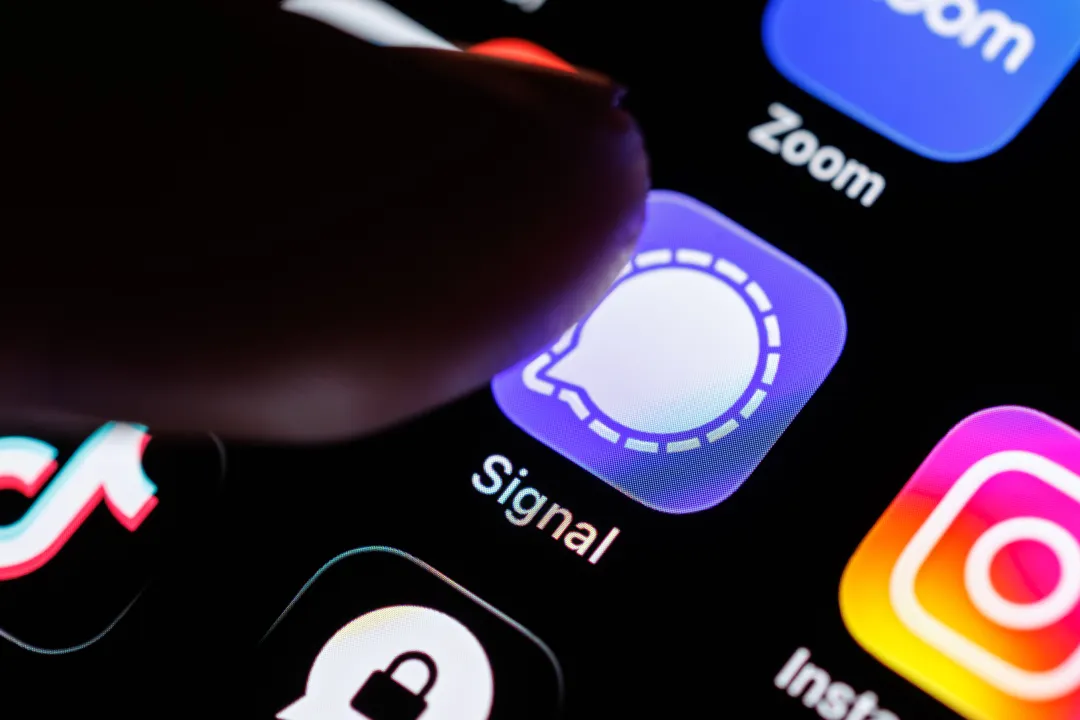
Signal, the acclaimed secure messaging application, announced a significant enhancement to its privacy safeguards on Friday, November 21, 2026, by implementing widespread restrictions on users’ ability to take screenshots within the app across Android, iOS, and its desktop client. This move, detailed in a blog post by Signal President Meredith Whittaker, represents a proactive defense against what the organization describes as the "existential threat" posed by the increasing integration of "agentic AI" into modern operating systems. The decision underscores a growing tension between the convenience offered by advanced AI functionalities and the foundational principles of user privacy and data security that Signal has long championed.
Whittaker articulated Signal’s concerns, stating that by empowering AI agents with the capability to "scan" and process information displayed on users’ screens, major operating systems—including Windows, Android, and macOS/iOS—are "undermining Signal’s ability to independently guarantee privacy." This direct challenge to the integrity of secure communication platforms stems from the inherent design of these new AI capabilities, which often operate at an OS level, granting them pervasive access to user data that bypasses application-specific security measures.
"Now, in service of AI agentic capabilities, your sensitive data is being captured, stored, and made accessible to whatever local database or remote server an OS-level AI agent is using at that moment," Whittaker explained. She further emphasized the profound implications of this architectural shift: "All of this is outside of Signal’s control once the data has been captured, and imperils the privacy of all the participants in a conversation." This highlights a critical paradigm shift in digital security, where the threat vector is no longer solely external or network-based but originates from the very core of the user’s device.
The Evolving Threat Landscape: AI Agents and Pervasive Surveillance
The emergence of "agentic AI" refers to sophisticated artificial intelligence systems integrated deeply into operating systems, designed to proactively assist users by understanding context, anticipating needs, and performing tasks across applications. Examples include advanced versions of virtual assistants like Microsoft Copilot, Apple’s rumored next-generation AI, and Google’s Gemini-powered features on Android, which are increasingly moving beyond simple voice commands to contextual awareness based on screen content. These agents are engineered to analyze on-screen text, images, and user interactions to offer summaries, generate content, or automate workflows. While presented as beneficial productivity tools, their underlying mechanism involves capturing and processing vast amounts of data that appear on a user’s display, creating a potential loophole for unintended data exposure.
Signal’s latest update extends a measure already in place for its Windows application, which by default blocks screenshots. The implementation of similar restrictions on Android and iOS now ensures a more consistent privacy posture across its ecosystem. On a technical level, these restrictions often leverage operating system-level flags or APIs that inform the OS not to allow screen capture for specific application windows or views. For instance, on Android, the FLAG_SECURE can be set for a window, preventing its content from appearing in screenshots or non-secure display surfaces. iOS offers similar functionalities for developers to restrict screen recording and capturing.
Despite these efforts, Whittaker conceded that the screenshot blocking is an "incomplete" solution. While users retain the option to disable this setting, doing so would, in Signal’s view, "break our privacy guarantees." More critically, she acknowledged that this measure "doesn’t address other more sneaky ways AI agents could potentially access application data." These "sneaky ways" could include advanced screen recording capabilities not blocked by screenshot flags, optical character recognition (OCR) on screen elements by background processes, accessibility services co-opted for data extraction, or even direct memory access in highly sophisticated attack scenarios. This admission underscores the ongoing arms race between privacy-enhancing technologies and increasingly powerful, integrated AI systems.
Signal’s Unwavering Commitment to Privacy: A Historical Perspective
Signal’s move is deeply rooted in its long-standing mission to provide genuinely private communication. Founded on principles of end-to-end encryption (E2EE), open-source development, and minimal data collection, Signal has consistently positioned itself as a bulwark against mass surveillance and data exploitation. Its encryption protocol, widely regarded as one of the strongest available, secures messages, voice, and video calls, ensuring that only the sender and intended recipient can read or listen to their conversations. This commitment has earned it the trust of journalists, activists, and privacy-conscious individuals worldwide.
Over the years, Signal has repeatedly demonstrated its resolve to protect user privacy, often challenging governmental requests for data. A notable instance occurred in 2016 when the FBI issued a subpoena for Signal user data; the company famously responded that it could only provide the time an account was created and the last time it connected to the service, possessing no other information, including message content, contact lists, or group memberships, due to its architecture. This incident, among others, cemented Signal’s reputation as a leader in digital privacy.

The current challenge posed by agentic AI represents a new frontier in this ongoing battle. While traditional threats focused on intercepting data in transit or compromising servers, AI agents operating at the OS level target data at the endpoint—on the user’s own device, after it has been decrypted for display. This shifts the locus of control and vulnerability, requiring privacy-focused applications to adapt their strategies beyond mere encryption.
A Chronology of AI Integration and Escalating Privacy Concerns
The journey towards pervasive OS-level AI agents has been gradual yet accelerating.
- Early 2010s: Basic virtual assistants like Siri and Google Now emerge, primarily relying on voice commands and limited contextual awareness.
- Mid-2010s: Microsoft introduces Cortana, deepening the integration of AI into Windows, though still largely command-driven. Google further enhances Android’s predictive capabilities.
- Late 2010s: Machine learning capabilities improve significantly. OS features begin to offer more proactive suggestions based on user behavior and app usage, hinting at deeper data access.
- Early 2020s: Generative AI models (like GPT-3, LaMDA) demonstrate unprecedented capabilities in understanding and generating human-like text and content. This sparks intense interest in integrating these powerful models directly into user interfaces.
- 2024-2025: Major tech companies, notably Microsoft with Copilot, announce and begin rolling out deeply integrated AI assistants into their operating systems. These agents are explicitly designed to "understand" and "act upon" content visible on the screen across various applications. Apple and Google also intensify their efforts to embed sophisticated AI features into iOS/macOS and Android, respectively, often highlighting "on-device intelligence" to assuage privacy concerns, though the extent of data processed and stored locally or remotely remains a point of contention.
- November 21, 2026: Signal announces its screenshot restrictions, directly citing the threat from these increasingly pervasive OS-level AI agents. This marks a pivotal moment where a major privacy-focused app directly confronts the implications of ubiquitous AI for user data security.
This timeline illustrates a rapid evolution from reactive, command-based AI to proactive, context-aware agents that inherently require broad access to user data streams, setting the stage for Signal’s defensive posture.
Reactions and Broader Implications
Signal’s decision is expected to elicit a range of reactions from various stakeholders:
- Signal Users: Many privacy-conscious users are likely to welcome the move, viewing it as a necessary step to protect their sensitive communications in an increasingly AI-driven world. For these users, the slight inconvenience of not being able to screenshot is a small price to pay for enhanced security. However, some users, particularly those accustomed to the ease of sharing information via screenshots, might experience frustration, especially in situations where legitimate sharing is desired (e.g., sharing a funny message with a friend not in the conversation, or saving important information). This highlights the perpetual tension between usability and stringent security.
- Privacy Advocates and NGOs: Groups dedicated to digital rights and privacy are almost certainly to laud Signal’s proactive stance. They will likely view this as a crucial validation of their long-standing warnings about data sprawl and the potential for surveillance by design in modern technology. This move could also empower them to press other technology companies and policymakers to address the privacy implications of OS-level AI more rigorously. They might call for greater transparency from OS developers about how AI agents access, process, and store user data, and advocate for stronger user controls and independent audits.
- Operating System Developers (Microsoft, Apple, Google): While unlikely to directly comment on Signal’s specific actions, these companies often emphasize user control and privacy within their own ecosystems when introducing AI features. They typically highlight on-device processing and anonymized data collection where applicable. However, Signal’s announcement casts a critical light on the de facto access granted to AI agents regardless of stated intentions, potentially forcing OS developers to either acknowledge these privacy gaps or develop more robust, application-specific privacy APIs that give developers greater control. This could accelerate the development of "privacy-preserving AI" architectures that minimize raw data exposure.
- Other Messaging Applications: The move by Signal could place pressure on other secure messaging apps, even those with end-to-end encryption like WhatsApp and Telegram. While their encryption protects data in transit, they too face the same endpoint vulnerability from OS-level AI. This might prompt them to evaluate similar screenshot restrictions or explore alternative defenses, though their differing business models and user bases might influence their approach. For instance, WhatsApp, owned by Meta, navigates a different set of privacy expectations and integrates more deeply with broader social ecosystems.
The Future of Digital Privacy in an AI-Dominated World
Signal’s latest update is more than just a feature change; it represents a significant marker in the ongoing evolution of digital privacy. It signals a fundamental shift in the security paradigm, moving the battleground from network infrastructure and server farms to the very devices users hold in their hands. The "existential threat" described by Meredith Whittaker is not merely hyperbolic; it points to a future where the operating system itself, through its embedded AI, could become the primary vector for data exfiltration, regardless of how robust application-level encryption might be.
This development prompts several critical questions for the technology industry and society at large:
- Redefining "Privacy by Design": How will "privacy by design" principles adapt to an environment where AI agents inherently require broad data access to function effectively? Developers and OS makers will need to find innovative ways to deliver AI benefits without compromising fundamental privacy.
- Regulatory Scrutiny: Will this incident catalyze increased regulatory scrutiny on AI development and deployment, particularly regarding data access and user consent at the operating system level? Governments and data protection agencies might need to develop new frameworks to address these emerging threats.
- User Empowerment: How can users be genuinely empowered to understand and control the data access privileges of OS-level AI agents? Simple toggles might not suffice if the underlying architecture inherently shares data.
- The "Privacy Premium": Will applications like Signal, which aggressively defend privacy, become niche products for the highly privacy-conscious, or will their actions force a broader industry shift towards more robust privacy safeguards in AI-integrated systems?
In conclusion, Signal’s decision to restrict in-app screenshots is a stark acknowledgment of the profound privacy challenges posed by the rapid integration of agentic AI into our core computing platforms. It underscores that while end-to-end encryption remains vital, the battle for digital privacy has expanded to encompass the very operating systems that host our applications. As AI continues its pervasive march, the tension between technological convenience and fundamental human rights to privacy will only intensify, forcing a re-evaluation of how our digital lives are designed and secured.

