

The e-commerce sector is experiencing a significant wave of innovation as companies across the globe roll out a comprehensive suite of new services designed to empower merchants, enhance customer experiences, and drive revenue growth. This surge in development spans artificial intelligence, payment solutions, marketing automation, product discovery, and customer loyalty programs, signaling a robust evolution in how businesses operate online and engage with their clientele. Merchants are presented with an unprecedented array of tools aimed at streamlining operations, optimizing marketing spend, and deepening customer relationships in an increasingly competitive digital marketplace.
AI Agents and Agentic Commerce Take Center Stage
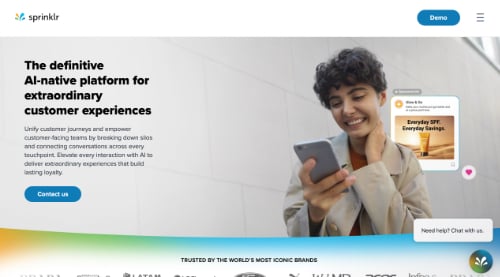
Artificial intelligence continues to be a dominant force, with several key players launching advanced AI-powered solutions. Sprinklr has entered the fray with the beta release of its Marketing AI Agents. This suite, encompassing Ideation, Creative, Campaign Execution, Compliance, Community, and Budget Optimization, is designed to help enterprise marketers transition from data insights to actionable strategies. By leveraging these AI agents, businesses can purportedly identify crucial market moments with greater speed, scale and personalize content across diverse channels, automate repetitive campaign tasks, enforce brand governance more effectively, and make more data-driven budget allocations. The implications for marketing departments are substantial, promising increased efficiency and the ability to respond more dynamically to market shifts.

Shopify is also heavily investing in the AI revolution with its Fall ’26 Edition, codenamed "Exponential." This update introduces robust tools for AI-driven shopping, payments, and merchant operations. A significant development is the integration of AI agents through Shopify Connectors, allowing merchants to seamlessly link their existing AI platforms to manage critical aspects of their business, including product catalogs, inventory levels, order fulfillment, and performance analytics. This move towards "agentic commerce" suggests a future where AI assistants proactively manage and optimize various facets of an e-commerce business, freeing up human resources for more strategic endeavors. The company also announced expanded Shopify Payments with seven new local payment methods, including Alipay and WeChat Pay, and enhanced security features with Shopify Protect to combat fraud and manage chargebacks.
Virid is further pushing the boundaries with its marketAgility MCP connector. This innovative tool bridges Virid’s marketAgility stores with leading AI platforms such as Claude and ChatGPT, provided they support custom MCP connectors. This integration empowers retailers to manage product listings, inventory, orders, and promotions, and even search for crucial data points through natural language commands. The benefit for retailers lies in their ability to utilize their preferred AI platforms without the need for complex custom integrations, significantly reducing development overhead and accelerating the adoption of AI-driven store management.
Omnichat, a platform focused on marketing and customer experience, has secured $10 million in Series A funding led by Openspace Capital. This capital injection is earmarked for scaling its agentic AI platform, accelerating global expansion, and intensifying research and development efforts. The company’s AI agents are designed to cover marketing, sales, and customer service functions, complemented by an AI business analyst named OmniClaw. This substantial funding underscores the growing investor confidence in AI-powered solutions for customer engagement and operational efficiency.
Streamlining Payments and Financial Operations
The complexities of business-to-business (B2B) payments are being addressed by several innovative solutions. Stripe has launched Stripe Pay, a free instant B2B payment plugin for eligible U.S. and U.K. companies. This service allows businesses to leverage their Stripe profiles for immediate money transfers, provided they have a funded Stripe Treasury financial account. Recipients also need a Treasury financial account or a payout-enabled bank account linked to their Stripe profile. The availability of this feature through the Stripe dashboard and command-line interface offers a streamlined and cost-effective alternative for inter-business transactions, potentially reducing transaction fees and settlement times.
Amazon Business is enhancing its procurement offerings with the introduction of Value Intelligence. This new feature aims to quantify cost savings, operational efficiency, and purchase compliance by providing a comprehensive view derived from a company’s Amazon Business data, benchmarked against independent third-party data. The transparency of its inputs allows users to scrutinize and adjust metrics. Value Intelligence is positioned to help procurement leaders not only measure cost savings but also demonstrate the broader strategic value of their purchasing strategies, moving beyond simple cost-cutting to holistic value realization.
Enhancing Marketing and Advertising Strategies
Marketers are gaining new capabilities to measure and optimize their campaigns with enhanced precision. Adobe has unveiled Marketing Campaign Analytics, an application designed to unify marketing measurement and planning. This tool seeks to provide marketers with a clear understanding of incremental campaign impact, allowing for real-time budget adjustments based on performance and evolving market conditions. Adobe claims the application can isolate the unique contribution of marketing efforts from external factors like seasonality or market trends, while also quantifying cross-channel synergies. This level of detailed attribution is critical for maximizing marketing ROI and ensuring efficient allocation of advertising budgets.

Pinterest is expanding its advertising ecosystem with the launch of Programmatic Deals in select global markets. This feature allows advertisers to purchase display and video inventory on Pinterest programmatically, integrating it with their broader advertising campaigns managed through various supply-side and demand-side platforms, including Google Display & Video 360 and Yahoo DSP. Magnite provides the underlying infrastructure for these transactions. The move signifies Pinterest’s commitment to offering advertisers more sophisticated and integrated buying options, aligning with industry trends toward automated media procurement.
AnyMind Group and Meta are forging a partnership to bridge social discovery with live commerce. This collaboration aims to enable businesses to leverage Facebook and Instagram video ads to drive audiences to live shopping streams. Flexible checkout options will be available, allowing customers to purchase directly through the brand’s website or app, a marketplace store, or via business messaging. While Facebook Live video ads will see these integrations by late 2026, Instagram is slated for early 2027. This initiative taps into the growing trend of social commerce and live shopping, seeking to convert social engagement into tangible sales.
Omnisend, an email and SMS marketing platform for e-commerce, has introduced new features aimed at boosting subscriber acquisition and retention, particularly for the upcoming holiday season. Social Capture allows merchants to convert Instagram engagement into email subscribers, while Forms+ offers gamified popups to engage new visitors. Additionally, Send Time Optimization leverages individual customer behavior to deliver emails at the most opportune moments for engagement and conversion. These tools address the critical need for effective multichannel marketing and personalized customer communication.

Shopify has also rolled out an update for WhatsApp messaging automations, enabling merchants to automatically engage customers through timed WhatsApp messages. Merchants can utilize the Shopify Messaging app to create marketing automations based on customer actions like cart abandonment or newsletter sign-ups. Pre-built templates for abandoned browse, cart, and checkout are available, along with the option to integrate WhatsApp into custom automation workflows. This feature capitalizes on the widespread adoption of WhatsApp for direct communication and marketing.
Invoca is launching Messaging Agents for Google Ads, aiming to capture high-stakes purchase moments. These agents can respond to customer inquiries, qualify leads, and book appointments for consumers who message brands directly from Google Ads. This tool provides marketers with visibility into which ads drive conversations and ultimately lead to sales, enabling them to tie Google ad clicks to customer interactions and revenue, and feed this data back to Google Ads for campaign optimization.
Optimizing Product Discovery and Customer Experience
Improving how customers find products is a key focus for several new service offerings. Fast Simon has unveiled its commerce-native AI model, designed to optimize product discovery. This AI integrates shopper intent, merchant objectives, and real-time commerce conditions, leveraging catalog intelligence and user behavior to dynamically adjust product rankings and recommendations. Fast Simon claims this approach combines merchandising, personalization, and optimization to drive revenue growth while maintaining merchant control over their brand strategy.

NielsenIQ is expanding its Shopper Experience Platform with new optimization capabilities supported by its ContentOne Framework. This framework helps assess product content and imagery for its suitability in AI-powered shopping experiences, including discovery, comparison, and recommendations. Brands can use these capabilities to evaluate their product content against retailer requirements and category expectations, identify content gaps, and prioritize improvements that enhance product discovery. This is particularly relevant as AI becomes more central to how consumers search for and discover products online.
The Trust Search, a Denmark-based platform, has launched a service focused on verified reviews and transparent business ratings. The platform aims to connect consumers with highly-rated businesses by ensuring the authenticity and transparency of customer feedback through rigorous data analysis and cross-referencing. In an era where online reviews significantly influence purchasing decisions, The Trust Search’s emphasis on verified feedback provides a crucial layer of trust for consumers.
Expanding Distribution and Multichannel Strategies
TopDawg, a U.S.-based wholesale dropshipping and e-commerce technology platform, has integrated with Faire, a B2B wholesale marketplace. This integration aims to expand distribution channels for U.S. manufacturers, wholesalers, and brands seeking to reach independent retailers. It is part of TopDawg’s broader multichannel distribution hub, which consolidates product catalog management, inventory control, and distribution workflows into a single portal. This move supports businesses looking to diversify their sales channels and reach a wider retail audience.

Enhancing Loyalty Programs and Customer Insights
The implementation of effective loyalty programs is being modernized with new data-driven approaches. DNA Payments, in partnership with Zeal, has launched a loyalty and real-time customer insights service in the U.K. This offering allows physical retailers to combine point-of-sale transaction data from DNA Payments with Zeal’s customer-level loyalty and reporting capabilities. This integration aims to bridge the analytics gap often associated with in-person payments, enabling merchants to identify customers, award loyalty points, and gain insights into customer patterns to drive repeat sales. The use of AI to make loyalty programs smarter is a growing trend, and this partnership directly addresses that.
Amazon’s Streamlined Returns in Europe
Amazon is enhancing its seller experience in Europe by expanding its Returnless Resolutions feature. Sellers in Germany, Italy, France, Spain, and the U.K. using Fulfillment by Amazon can now offer refunds without requiring customers to return the item. Merchants can set a maximum item price threshold for this feature, ranging from €1 to €75. This initiative aims to improve customer satisfaction by simplifying the refund process and potentially reducing the logistical burden and costs associated with processing returns for lower-value items. This also has implications for how businesses manage inventory and customer service expectations.
The rapid proliferation of these new services underscores a dynamic and competitive e-commerce ecosystem. Merchants who strategically adopt these innovative tools are poised to gain a significant advantage, enhancing their operational efficiency, deepening customer engagement, and ultimately driving sustainable growth in the evolving digital marketplace. The overarching trend points towards a more intelligent, automated, and customer-centric future for e-commerce.

