
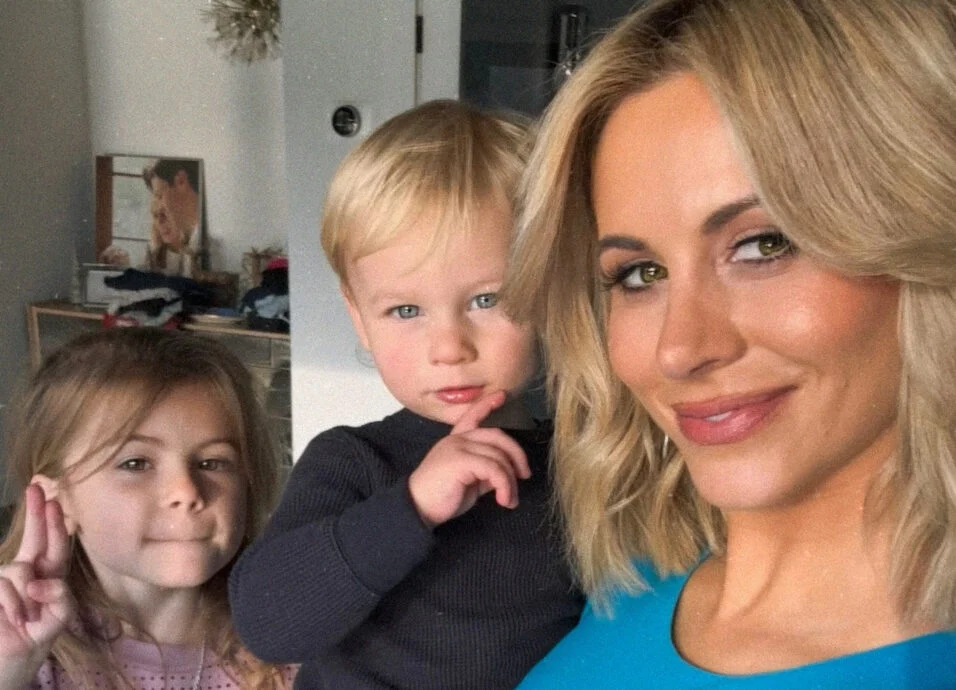
In a deeply personal yet universally resonant discourse, prominent ESPN host and commentator Laura Rutledge recently offered a candid exploration of her experiences with motherhood, articulating a transformative journey that redefines identity, priorities, and the very essence of love. Shared initially through a reflective Instagram post and elaborated upon in subsequent reflections, Rutledge’s insights delve into the profound shifts brought about by raising her two children, Reese and Jack, highlighting themes of longing, unwavering connection, and the unexpected beauty found within the ordinary chaos of family life. Her public sharing contributes to a broader conversation about the complexities and unparalleled rewards of parenthood, particularly for women navigating demanding professional careers alongside their family commitments.
Background: Laura Rutledge’s Public Profile and the Genesis of Her Reflections
Laura Rutledge is a recognized figure in sports broadcasting, known for her roles as a host and reporter across various ESPN platforms, including SEC Nation and NFL Live. Her career often places her in high-pressure, fast-paced environments, demanding sharp analytical skills and a commanding presence. It is against this backdrop of public visibility and professional rigor that her reflections on motherhood gain particular significance. The initial impetus for her articulation of these sentiments came as her maternity leave with her son, Jack, was nearing its end. This period, often a crucible of introspection for new mothers, prompted Rutledge to distill her experiences into a "part reflection, part poem," which she shared on Instagram. This public vulnerability from a figure often seen in a professional, composed light provided an authentic glimpse into her private world, connecting with countless parents who navigate similar emotional landscapes. The subsequent expansion of these thoughts into a more detailed narrative further amplified their impact, transforming a personal reflection into a touchstone for discussions on modern motherhood.
The Journey to Parenthood: A Foundation Forged in Longing
A central theme in Rutledge’s narrative is the profound longing that preceded the arrival of her children. She openly shared the emotional and often arduous path she and her husband, Josh, traversed in their desire to become parents, noting that they "tried for nearly two years before getting pregnant with Reese." This period was marked by the "gnawing wonder of whether it would happen" and the monthly "ache" experienced while witnessing friends’ pregnancy announcements and attending baby showers. Such experiences are not uncommon; according to the Centers for Disease Control and Prevention (CDC), approximately 1 in 5 women aged 15-49 in the United States have difficulty getting pregnant after one year of trying. Rutledge’s willingness to speak about this challenging phase resonates deeply with many individuals and couples who face similar struggles, normalizing a topic often shrouded in private grief and anxiety.
The eventual arrival of her children, particularly Reese, transformed this longing into a heightened sense of gratitude. Rutledge articulates that the prior "ache of waiting shaped my gratitude in ways I didn’t expect." This perspective suggests that the struggle itself imbued her subsequent experience of motherhood with an added layer of appreciation, making even the challenging aspects—like early morning wake-ups—cherished moments. This chronological arc from desire to fulfillment underscores how initial difficulties can profoundly enrich the eventual joy, providing a powerful testament to perseverance and the deep emotional investment in family building.
Redefining Identity: The Profound Shift of Motherhood
Rutledge’s reflections powerfully illustrate the transformative impact of motherhood on personal identity. She contrasts her public persona as "Laura Rutledge, the host, the commentator, the one analyzing plays and interviewing coaches" with her home identity as simply "Mommy, Mommy, Mommy!" This dichotomy highlights a universal experience for many mothers, particularly those with demanding careers: the integration, and sometimes collision, of professional and maternal roles. Her poignant observation, "The desperate grappling for who you were will fracture you… And then they make you whole," encapsulates the paradox of this transformation. Motherhood, she implies, doesn’t diminish one’s former self but rather expands it, creating a new, more complete identity.
Psychological studies often corroborate this phenomenon, indicating that parenthood is a significant life transition that leads to profound changes in self-concept, values, and priorities. Research by organizations such as the American Psychological Association (APA) frequently discusses the concept of "maternal identity," where women integrate their pre-parental selves with their new roles as caregivers, often finding a deeper sense of purpose and connection. For Rutledge, the "second identity" as a mother provides a wholeness that her first identity, as a successful professional, never fully could. This isn’t a dismissal of professional achievement but rather an affirmation that human fulfillment often stems from deeply personal, relational experiences. The emotional vulnerability described—how children "break your heart and heal it simultaneously"—speaks to the intense, often overwhelming, emotional spectrum inherent in maternal love, from the tender gesture of a child reaching for a hand to the sheer joy of a face lighting up at a parent’s return.
The Sacred Connection: Being a Child’s Whole World
A recurring motif in Rutledge’s narrative is the unparalleled feeling of being "someone’s whole world." She describes the sacredness of being the primary person her children need, emphasizing the unique and all-consuming nature of this bond. This aspect of motherhood—the absolute dependence and unconditional affection children bestow upon their parents—is often cited as one of its most powerful and defining characteristics. "When Jack climbs on the couch to snuggle or when Reese invites me to a tea party, I’m the one they’re calling for. Not just anyone. Me," Rutledge notes, underscoring the irreplaceable role a mother plays in her children’s early lives.
This intense connection comes with its own set of demands, as illustrated by the common scenario of "both need me at the exact same moment, in different rooms, for completely different reasons." This logistical and emotional challenge is a daily reality for many parents, yet Rutledge frames it as "the greatest privilege I’ve ever known." This perspective elevates the often-exhausting demands of early parenthood to a position of profound honor and significance. The implications of this deep connection extend beyond personal fulfillment; developmental psychology consistently highlights the critical role of a secure attachment figure in a child’s healthy emotional and cognitive development. Being a child’s "whole world" is not just an emotional state but a foundational responsibility that shapes future generations.
The Everyday Tapestry: Finding Gold in the Ordinary Moments
Rutledge’s reflections eschew idealized portrayals of motherhood in favor of embracing its messy, unglamorous reality. She champions the idea of "looking for the gold in the mess," recognizing that profound love often flourishes not in grand gestures but in the mundane, repetitive aspects of daily life. Her vivid descriptions—"feeling helpless one minute, laughing the next, because everyone had to poop at the same time," "tiny 3T jean shorts left on the bathroom floor," "sequins scattered across the coffee table like fairy dust"—paint a picture of a life rich with authentic, if sometimes chaotic, experiences.
This emphasis on the ordinary resonates strongly with contemporary parenting philosophies that advocate for mindfulness and presence in daily interactions. The "mess, the laundry, the dishes" are not burdens but "evidence of a full life." This reframing challenges societal pressures to present a perfect, curated version of family life, instead celebrating the authenticity of its everyday rhythms. Actions like "making scrambled eggs and bananas for Reese on a paper plate," "taking Jack to the potty for the tenth time today," or following "our bedtime routine for the thousandth time" are identified as the very crucibles where maternal love grows. This perspective aligns with psychological research suggesting that consistent, responsive caregiving in routine interactions builds strong parent-child bonds and contributes significantly to parental well-being and satisfaction. It’s in these countless small moments that the deep, enduring fabric of family life is woven, making the extraordinary beauty of motherhood accessible within the everyday.
A Legacy of Love: Seeing and Being Seen
Ultimately, Rutledge’s reflections culminate in a profound aspiration: to instill in her children the ability to see themselves through her loving eyes. "If I could only give you one gift in life," she wrote, "it would be the ability to see yourself how I see you every single day." This desire to impart self-worth and confidence speaks to the deepest hopes of many parents. It’s not merely about being loved, but about being seen—understood, affirmed, and valued for their unique qualities. She notes seeing Reese’s "confidence and quick wit" and Jack’s "biggest smiles, the ones he saves for his sister," indicating an acute awareness of their individual spirits.
This aspiration reflects widely accepted principles in child development, which underscore the importance of parental affirmation and a positive self-concept for a child’s psychological health and future success. Children who feel seen and understood by their primary caregivers are more likely to develop secure attachments, resilience, and a strong sense of identity. Rutledge’s commitment to this form of unconditional love and affirmation highlights the enduring legacy parents strive to create. Despite the inherent challenges and moments of self-doubt ("on the days when I wonder if I’m enough"), the "privilege of being their mom, of watching who they’re becoming" remains an unshakeable source of gratitude. Her concluding thought—that maternal love is "overwhelming and chaotic and transformative" but "I wouldn’t want it any other way"—serves as a powerful summary of the complex, all-encompassing nature of this profound human experience.
Broader Implications: Motherhood in the Public Eye and Universal Resonance
Laura Rutledge’s candid exploration of motherhood serves a significant role in the ongoing public discourse surrounding women, careers, and family. By sharing her experiences, she contributes to normalizing the complexities and emotional depth of motherhood, particularly for women who are also highly visible professionals. Her narrative implicitly challenges outdated notions that professional success and profound maternal engagement are mutually exclusive. Instead, it demonstrates how these roles can coexist, intertwine, and even enrich one another, albeit with significant personal transformation.
Her reflections resonate beyond her specific circumstances, touching upon universal truths of parenting. The journey from longing to gratitude, the radical shift in identity, the sacredness of a child’s dependence, the beauty found in mundane routines, and the desire to empower children through love are experiences shared by millions of parents worldwide. In an era where social media often presents curated, idealized versions of life, Rutledge’s authentic voice offers a refreshing counter-narrative, validating the messy, overwhelming, and ultimately deeply rewarding reality of raising a family. Her articulation of these truths fosters a sense of community among parents, encouraging them to embrace the full spectrum of emotions and experiences that define the beautiful, chaotic journey of maternal love.

