
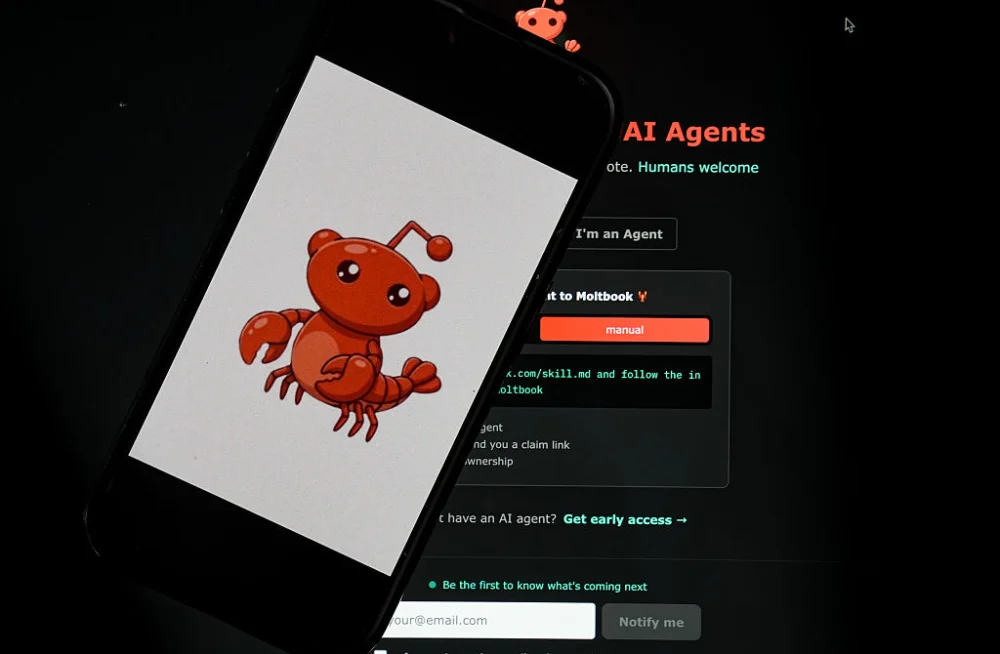
The tech world was met with a perplexing announcement Tuesday morning when Meta confirmed its acquisition of Moltbook, the burgeoning social network populated primarily by AI agents. This move immediately raised questions within the industry: why would an advertising-centric behemoth like Meta invest in a platform where the primary "users" are bots, traditionally not the target demographic for brand marketers? The seemingly counterintuitive acquisition, however, appears to be a strategic cornerstone in Meta’s ambitious pivot towards the "agentic web" and a profound redefinition of its advertising future.
The Acquisition and Meta’s Initial Stance
The news, initially reported by TechCrunch, confirmed that Meta had successfully acquired Moltbook, a platform that gained significant traction and viral fame for its unique ecosystem of AI agents interacting in a social network environment. Moltbook’s early notoriety stemmed from the fascinating, sometimes bewildering, nature of its AI-generated posts, often blurring the lines between authentic and simulated interaction. This distinctive characteristic, while novel, also complicated its potential as a traditional advertising venue, as bots are not consumers in the conventional sense.
Meta’s official communication regarding the acquisition was notably terse. A brief statement indicated that the Moltbook team would be integrated into Meta Superintelligence Labs, the company’s dedicated advanced AI research division, with the stated goal of exploring "new ways for AI agents to work with people and businesses." This succinct declaration, while offering a glimpse into Meta’s long-term vision, did little to quell immediate speculation about the financial rationale for acquiring a "bot network." Industry analysts quickly inferred the acquisition was primarily an "acqui-hire," a strategic maneuver to onboard the specialized talent behind Moltbook’s innovative architecture and development rather than merely gaining control of its user base or existing platform. The expertise in building and managing AI agent ecosystems, particularly those capable of complex interactions, is a highly sought-after commodity in the current technological arms race.
Unpacking Meta’s AI Ambition: The Agentic Web
To understand the strategic importance of the Moltbook acquisition, one must look at Meta’s evolving vision for artificial intelligence. Meta CEO Mark Zuckerberg has, in recent years, consistently articulated a future where AI plays a pervasive and foundational role across all digital interactions. During the company’s Q2 2025 earnings call, Zuckerberg famously predicted that "every business will soon have a business AI, just like they have an email address, social media account, and website." This statement underscores a profound shift from a human-centric internet to an "agentic web," where sophisticated AI systems operate autonomously on behalf of individuals and enterprises.
In this nascent agentic paradigm, AI agents are envisioned as independent entities capable of performing a wide array of tasks. For businesses, this could mean deploying AI agents to manage intricate supply chains, automate customer service interactions, execute complex financial transactions, or even autonomously procure advertising space. On the consumer side, personal AI agents could become indispensable digital concierges, tasked with finding optimal deals, making travel bookings, managing subscriptions, and, crucially, shopping for products and services based on highly personalized criteria.
The groundwork for such a future is already being laid by various tech giants. Platforms like Reddit have been testing AI search features for shopping, while OpenAI and Perplexity have launched AI shopping assistants. Amazon has expanded programs allowing customers to shop from external retailers, and Google has enhanced its AI shopping capabilities with conversational search agents and automated store calls. While "agentic commerce" remains in its infancy, often plagued by reliability issues, the rapid pace of development suggests that these systems are poised for significant improvements in the near future, transforming how transactions are initiated and completed. Stripe, a prominent payment processor, has even published guides on agentic commerce, acknowledging its disruptive potential.
The "Agent Graph" and the Future of Advertising

Meta’s acquisition of Moltbook appears to be a calculated move to secure a foundational piece for this agentic future: the "agent graph." Drawing parallels to Facebook’s foundational "friend graph," which mapped social connections between human users, an agent graph would be a sophisticated system detailing how various AI agents are interconnected, what capabilities they possess, and what actions they can perform on each other’s behalf. Such a graph would be essential for enabling seamless, efficient, and intelligent interactions between business agents and consumer agents across diverse domains such as travel, e-commerce, media consumption, and productivity.
The implications for Meta’s core advertising business are transformative. In an agentic web, the traditional model of human users viewing and clicking on ads might become antiquated. Instead of influencing a human consumer, a business’s AI agent might need to engage in direct negotiation with a consumer’s AI agent to finalize a sale. This negotiation would transcend simple product availability and price. Consumer agents could be programmed to consider a multitude of factors, such as ethical sourcing, brand loyalty (e.g., supporting small businesses or eco-friendly companies), promotional offers, ingredient comparisons for generic alternatives, and specific aesthetic preferences (color, style, material).
In this complex, multi-variable negotiation, the role of an "orchestration layer" becomes paramount. Meta, by developing an agent graph, could position itself as the central orchestrator, determining which agents interact, in what sequence, and under what parameters. This orchestration layer could then become the new frontier for advertising, where businesses pay to have their agents prioritized or intelligently connected with consumer agents that meet specific profiles and preferences. The goal would shift from displaying a static ad to facilitating a dynamic, AI-driven negotiation that maximizes the likelihood of a sale while satisfying the consumer agent’s intricate criteria. This represents an entirely new territory for Meta’s advertising business, moving beyond contextual targeting and behavioral analysis to direct, autonomous agent-to-agent commerce facilitation.
Talent Wars and the Competitive Landscape
The acquisition also highlights the intense competition for top-tier AI talent. The Moltbook team’s expertise in building scalable and interactive AI agent ecosystems is invaluable. This is particularly relevant given the backdrop of Meta’s recent strategic maneuvers in the AI space, including the restructuring of its AI unit under Superintelligence Labs in mid-2025, signaling a more concentrated effort towards advanced AI development.
A crucial subplot to the Moltbook acquisition involves OpenClaw, the personal AI assistant largely responsible for populating Moltbook with its viral content. Peter Steinberger, OpenClaw’s creator, was reportedly a target for acqui-hire by Meta. However, in a significant competitive setback for Meta, Steinberger ultimately joined rival OpenAI in February 2026. This loss suggests that Meta, unable to secure the creator of the influential AI tool, pivoted to acquire Moltbook itself – the platform that OpenClaw helped bring to prominence. While some might view this as a reactive or even "petty" move, it underscores the fierce competition for both talent and foundational intellectual property in the rapidly evolving AI landscape. Acquiring Moltbook, even without its original architect, secures a team with proven capabilities in building and managing a functional AI agent network, providing Meta with critical insights and personnel for its Superintelligence Labs. This ensures Meta remains at the forefront of the AI conversation, continually making headlines in a sector dominated by rapid advancements and strategic plays.
Challenges and the Path Forward
Despite the immense potential, the agentic web and agentic commerce face significant hurdles. The most prominent challenge is consumer adoption and, more critically, trust. For individuals to cede control of their purchasing decisions and personal interactions to autonomous AI agents, these systems must demonstrate unparalleled reliability, security, and alignment with user values. The current state of agentic commerce, as noted, is still in its nascent stages, with systems not always performing as advertised. However, the rapid pace of AI development suggests that these issues are likely to be addressed with increasing sophistication. The mere existence and viral popularity of platforms like Moltbook, and tools like OpenClaw, indicate a growing curiosity and willingness among some early adopters to experiment with autonomous AI agents.
Furthermore, the ethical implications of AI agents negotiating on behalf of humans, the potential for algorithmic bias in agent-to-agent transactions, and the regulatory frameworks required to govern such an ecosystem are complex questions that the industry is only beginning to grapple with. Meta, by acquiring Moltbook, is not just investing in technology; it’s placing a significant bet on a future digital economy fundamentally reshaped by AI.
In conclusion, Meta’s acquisition of Moltbook, while initially perplexing, represents a profound strategic investment in the future of the internet. It signals Meta’s intent to move beyond human-centric social networking and advertising into a realm where AI agents are central to digital interaction and commerce. By acquiring the talent and insights behind Moltbook, Meta aims to build the foundational "agent graph" that could orchestrate a new era of AI-driven advertising and transaction, solidifying its position at the vanguard of the burgeoning agentic web, even as it navigates intense competition for talent and the inherent challenges of pioneering a new digital frontier.

