
AltStore PAL, an emerging alternative app store for iOS, has announced a groundbreaking integration with the open social web, commonly known as the fediverse. This strategic move, made possible by new regulatory frameworks in key markets like the European Union and Japan, positions AltStore PAL as the world’s first federated app marketplace. The company confirmed on Wednesday its full support for the fediverse, leveraging the ActivityPub protocol that underpins a growing ecosystem of decentralized social applications such as Mastodon, Flipboard, PeerTube, and Threads.
This integration signifies a pivotal moment in the evolution of app distribution and developer-user interaction. By launching its own Mastodon server, AltStore PAL is not merely adopting a new communication channel but is fundamentally rethinking how an app store can function within a more open, interconnected digital landscape. This initiative is a direct response to, and an innovative application of, the new regulatory environment fostering greater competition and user choice in mobile ecosystems.
The Dawn of Federated App Distribution
The core of AltStore PAL’s announcement lies in its embrace of the fediverse. For the uninitiated, the fediverse is a collective of independent, interoperable servers that communicate using open standards, primarily ActivityPub. Users on this open social web join specific instances (servers) that can "federate" with others, allowing for seamless communication, content sharing, and interaction across diverse platforms. This contrasts sharply with traditional, siloed social media platforms, offering users greater control over their data, content, and experience.
With its dedicated Mastodon server, AltStore PAL aims to create a dynamic communication hub for app developers. This server will serve as a direct conduit for developers to disseminate news, updates, and critical alerts about their applications. The power of federation ensures that these posts are not confined to a single platform but can be seen, liked, and interacted with by users across the entire open social web. This includes popular fediverse-compatible platforms like Mastodon, Meta’s Threads (which has adopted ActivityPub), and even Bluesky, provided users have bridged their accounts to enable fediverse accessibility.
Riley Testut, co-founder of AltStore PAL, elucidated the vision last fall when the company first teased these plans alongside its $6 million Series A funding announcement. "So that means, like, if you have a Mastodon account or Threads account, you could follow these accounts. You could follow the source from our Mastodon server, and then, in your timeline, you would see when there was an app update," Testut explained to TechCrunch. This direct-to-timeline approach promises to significantly enhance app discoverability and user engagement, bypassing traditional app store notification systems that can often be overlooked or overly centralized.
Beyond mere broadcasting, the integration extends to direct user interaction within the AltStore PAL application itself. Users will have the ability to sign in with their existing Mastodon or Bluesky accounts to engage with app-related content directly. This means liking apps, responding to update announcements, and interacting with news alerts right from within the app marketplace interface. This deep integration fosters a sense of community and transparency, allowing developers to receive real-time feedback and cultivate a more direct relationship with their user base.
A New Regulatory Era: The Digital Markets Act and Its Ripple Effects
This groundbreaking move by AltStore PAL is inextricably linked to the seismic shifts occurring in the global regulatory landscape, particularly with the enforcement of the European Union’s Digital Markets Act (DMA). The DMA, which came into full effect in March 2024, is a landmark piece of legislation designed to curb the power of "gatekeeper" platforms – large online companies like Apple that control access to significant digital services. For Apple, this has meant being compelled to open its iOS ecosystem to alternative app stores, sideloading, and alternative payment systems within the EU.

Historically, Apple has maintained a tightly controlled "walled garden" approach, asserting that its singular App Store model is crucial for security, privacy, and a consistent user experience. For over a decade, developers and users alike had no official recourse but to operate within Apple’s stringent guidelines and commission structures. This monopoly, however, has increasingly faced scrutiny from antitrust regulators worldwide, who argue it stifles competition and innovation, ultimately harming consumers.
The DMA represents a direct challenge to this model, forcing Apple to allow third-party app marketplaces and different payment processing options. Japan has also followed suit with similar legislation aimed at opening up mobile ecosystems. These regulatory pressures have created an unprecedented opportunity for entities like AltStore PAL, which previously operated in a legal gray area offering sideloading solutions, to emerge as legitimate and regulated alternative distribution channels. AltStore PAL was among the first to launch under these new EU rules, signaling a new era for iOS app distribution.
AltStore PAL’s Journey: From Sideloading to Legitimacy
AltStore has a notable history in the iOS community. Before the DMA, it gained popularity as a workaround for installing unofficial or emulated apps on iOS devices without jailbreaking. It achieved this by leveraging Apple’s developer provisioning system, allowing users to "sideload" apps by essentially signing them with a personal developer certificate. This technical ingenuity demonstrated a strong demand for alternatives to Apple’s official App Store, even in the face of significant technical hurdles and potential instability.
The transition to AltStore PAL (PAL standing for "Provisioning and Loading") marks its official entry into the regulated app store ecosystem. This evolution is not just a name change but a fundamental shift from a technically clever workaround to a compliant, legitimate marketplace. The company’s ability to secure $6 million in Series A funding, announced alongside its fediverse plans last fall (Fall 2025), underscores investor confidence in its vision and its potential within this newly opened market. This capital infusion provides the necessary resources to scale operations, enhance its platform, and aggressively pursue its innovative strategies, such as the fediverse integration.
Developer Engagement and the Core Technology Fee Conundrum
The integration with the fediverse offers a compelling new paradigm for developer engagement. For years, developers have struggled with app discoverability and direct communication with their user base within the confines of traditional app stores. Search algorithms, featured sections, and limited communication channels often left smaller developers at a disadvantage. By federating their updates and news, developers gain a direct, unfiltered line to interested users across a broad and growing decentralized network. This could revolutionize how indie developers, in particular, market and support their applications.
However, the path to a truly open and competitive iOS ecosystem remains fraught with challenges, primarily stemming from Apple’s revised fee structures. While the DMA mandates alternative app stores, Apple introduced a "Core Technology Fee" (CTF) for apps distributed outside its official App Store. This fee, initially set at €0.50 per first annual install per user over a certain threshold, drew significant criticism from developers and regulators alike. Critics argued that the CTF could make alternative distribution economically unviable for many developers, especially those with free apps or small user bases.
The original article mentions that some larger apps are delaying their launch on federated marketplaces until changes to Apple’s commission structure are finalized. This refers to Apple’s decision, made after considerable pushback from regulators and the developer community, to replace the controversial CTF with a "Core Technology Commission" (CTC). This revised approach aims to address some of the liability issues over payments and the potential financial burden on developers. The exact details and long-term implications of the CTC are still being assessed, but the hesitancy of larger developers highlights the ongoing complexity and the delicate balance between regulatory compliance and commercial viability. The future success of alternative app stores like AltStore PAL heavily depends on Apple’s final, and hopefully more equitable, fee structure.
Initial Participants and the Vision for Expansion
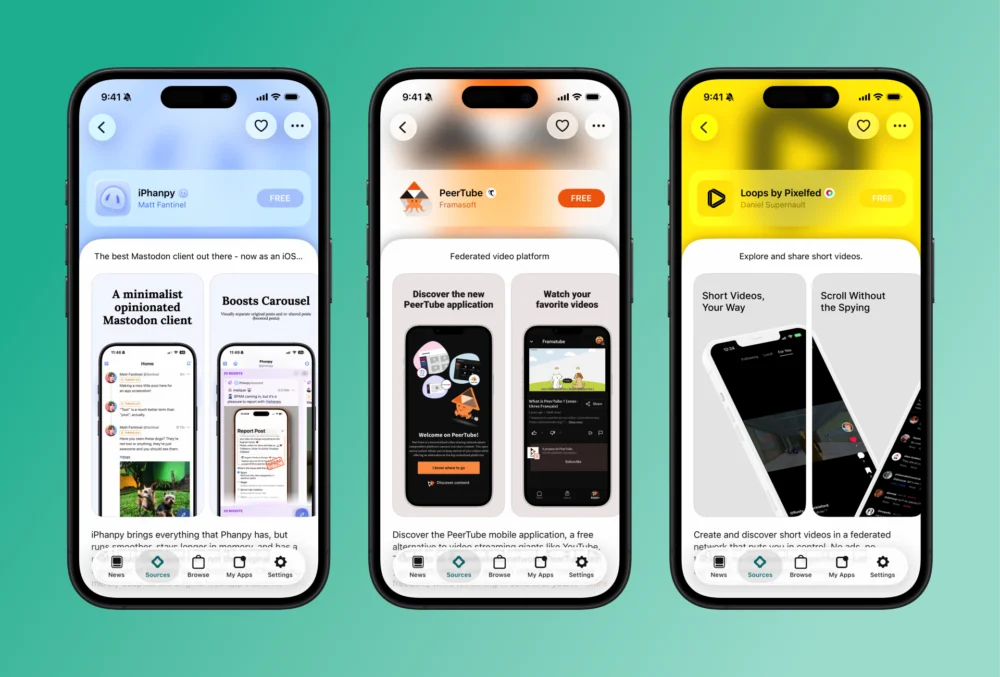
At its launch, AltStore PAL’s federated marketplace already features a diverse set of pioneering applications. These early adopters embody the spirit of decentralization and open-source collaboration that the fediverse champions. Among the participating apps are:

- Loops: A federated short-form video application, offering a decentralized alternative to popular video platforms.
- PeerTube: A federated video hosting platform, akin to a decentralized YouTube, emphasizing community control and open standards.
- iPhanpy: A Mastodon client developed by indie developer Matt Fantinel, further cementing the fediverse’s presence within the AltStore ecosystem.
These initial offerings demonstrate the practical application of AltStore PAL’s vision, providing users with alternative applications that align with the fediverse’s principles. The company anticipates that more developers, including those from larger organizations, will join once Apple’s fee structures stabilize, allowing for clearer financial planning and reduced liability concerns.
Users keen to explore this new federated landscape can access AltStore PAL’s Mastodon server directly at fosstodon.org/@altstore. Additionally, the AltStore PAL explore page, located at explore.alt.store, serves as a gateway for discovering new apps and sources within the marketplace. In conjunction with this significant update, the AltStore PAL app itself has received a design refresh, featuring an iOS 26 Liquid Glass aesthetic and an updated icon, signaling a commitment to a modern and user-friendly experience.
Broader Implications and the Future of App Ecosystems
AltStore PAL’s integration with the fediverse is more than just a new feature; it represents a significant step towards a more open, decentralized, and user-centric digital future. This move has several profound implications:
Enhanced Discoverability and Developer Empowerment: By leveraging the fediverse, AltStore PAL offers a unique solution to the perennial problem of app discoverability. Developers gain a powerful, direct channel to communicate with potential and existing users, fostering more engaged communities and potentially reducing reliance on costly marketing campaigns or opaque app store algorithms. This empowers smaller developers and indie creators, who often struggle to gain visibility in crowded marketplaces.
A Catalyst for Decentralization: This initiative could serve as a powerful catalyst for the broader adoption of decentralized technologies. As mainstream platforms like Threads embrace ActivityPub, and now an app store like AltStore PAL integrates with the fediverse, the concept of an open social web moves further into the mainstream consciousness. This could accelerate the development of more decentralized applications and services, offering users genuine alternatives to centralized tech giants.
Increased Competition and Innovation: The regulatory push for alternative app stores, coupled with innovative approaches like federation, is fostering a genuinely competitive environment. This competition is likely to spur innovation, forcing all players, including Apple, to refine their offerings, improve developer relations, and provide better value to users. The long-term outcome could be a more diverse, vibrant, and responsive app ecosystem.
Challenges Ahead: Despite its promise, AltStore PAL and the broader alternative app store movement face challenges. User adoption rates for alternative stores need to grow significantly, and developers must be convinced that the benefits outweigh any complexities or costs associated with new distribution channels. The ongoing evolution of Apple’s fee structure remains a critical factor. Furthermore, the fediverse, while growing, still has hurdles regarding user onboarding, content moderation, and mainstream awareness.
In conclusion, AltStore PAL’s pioneering integration with the fediverse marks a landmark moment in the post-DMA era. It embodies a vision where app distribution is not merely a transaction but an interconnected, community-driven experience. As regulators continue to push for openness and competition, and as decentralized technologies gain traction, AltStore PAL’s federated marketplace could well be a blueprint for the next generation of digital platforms, fostering greater user autonomy and developer innovation across the mobile landscape.

