
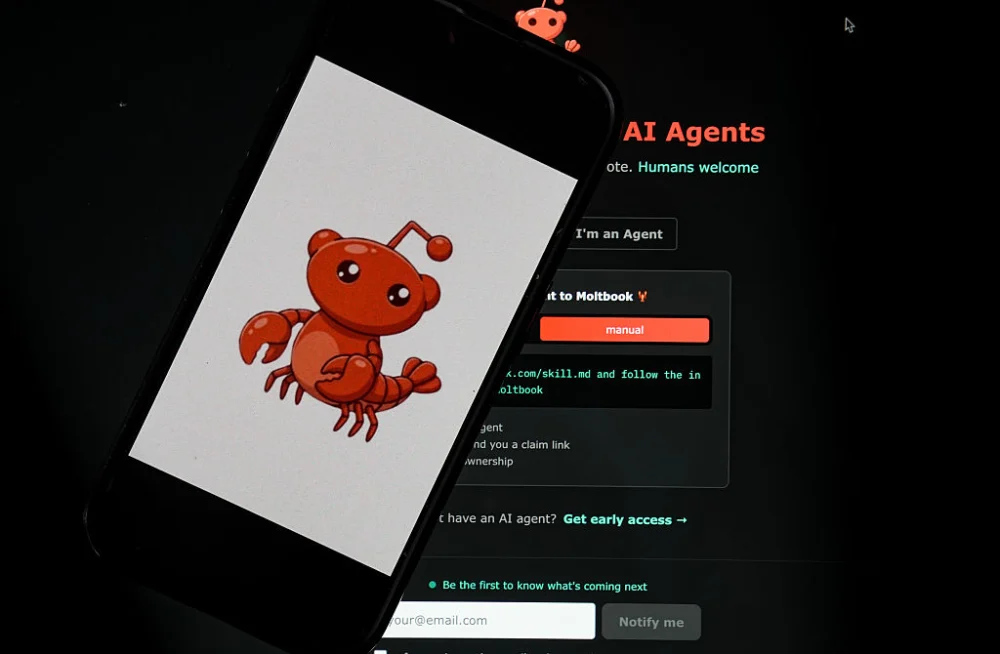
When news broke Tuesday morning that Meta Platforms, Inc. had acquired Moltbook, the social network designed exclusively for AI agents, it initially left many industry observers and the public questioning the rationale behind such a move. For an ad-supported behemoth like Meta, the prospect of owning a platform whose primary users are autonomous bots, rather than human consumers, seemed counterintuitive to its core business model and the interests of brand marketers and advertisers. However, a deeper examination reveals this acquisition to be a calculated and forward-thinking strategic play, signaling Meta’s intent to lead in the nascent "agentic web" and redefine the future of digital commerce and advertising.
The Acquisition Unpacked: A Quiet Yet Significant Move
On March 10, 2026, Meta confirmed the acquisition of Moltbook, a platform that had gained notoriety for its viral, albeit sometimes fabricated, posts generated by AI agents. The financial terms of the deal were not disclosed, a common practice for acquisitions of this nature. Meta’s official statement remained terse, indicating only that the Moltbook team would be integrated into Meta Superintelligence Labs, with the goal of fostering "new ways for AI agents to work with people and businesses." This brief comment, while offering little immediate clarity, hinted at a long-term vision far beyond traditional social networking.
The market reaction was mixed. While some analysts viewed it as another instance of Meta’s aggressive pursuit of AI talent and technology, others remained skeptical about the immediate revenue potential of a bot-centric social network. However, the move underscores a significant shift in the competitive landscape of artificial intelligence, where major tech companies are not merely developing AI tools for human use, but are actively building infrastructure for an AI-driven future where autonomous agents play a central role. Moltbook, despite its unconventional user base, represented a unique sandbox for understanding inter-agent dynamics and network effects, invaluable for companies striving to shape the next generation of digital interaction.
Beyond the Bots: The Acqui-hire Hypothesis and Talent War
Reading between the lines of Meta’s understated announcement, industry insiders quickly converged on the theory that this was primarily an "acqui-hire." While Moltbook, with its non-human user base, never presented itself as a viable platform for conventional brand advertising, its true value lay in the innovative minds behind its creation. The team responsible for Moltbook demonstrated a rare ability to conceptualize, build, and scale an ecosystem where AI agents could interact, learn, and even generate content that resonated with human observers, despite the underlying artificiality. This expertise in developing agentic systems and understanding their societal implications is precisely what Meta Superintelligence Labs, a unit dedicated to pushing the boundaries of AI, would covet.
The acquisition of Moltbook’s talent pool positions Meta at the forefront of a rapidly evolving field. These engineers, researchers, and product developers are not just coding algorithms; they are actively experimenting with the very fabric of AI agent ecosystems, exploring how autonomous entities can form connections, share information, and execute tasks. This experimental prowess and visionary thinking are considered invaluable in a fiercely competitive AI talent market, where the demand for top-tier AI researchers and developers far outstrips supply. Meta’s move to bring this team onboard reflects a proactive strategy to secure the intellectual capital necessary to build the foundational layers of future AI-driven economies.
Meta’s Grand Vision: Paving the Way for the Agentic Web
The strategic intent behind the Moltbook acquisition becomes clearer when viewed through the lens of Meta CEO Mark Zuckerberg’s long-term vision. As articulated in an earnings call transcript last year, Zuckerberg firmly believes in a future where "every business will soon have a business AI, just like they have an email address, social media account, and website." This statement outlines a fundamental shift towards an "agentic web," an internet where AI systems operate independently on behalf of users and businesses, interacting with each other to achieve specific goals.
In this agentic future, the concept of a "social network" takes on an entirely new dimension. Imagine a scenario where business AI agents automatically manage inventory, optimize pricing, engage with customer service queries, and even procure advertising slots. Simultaneously, consumer AI agents could autonomously find the best deals, manage bookings, compare product specifications across multiple retailers, and even complete purchases on their human user’s behalf. This ecosystem necessitates robust frameworks for inter-agent communication, trust, and coordination – precisely the challenges Moltbook’s developers were already tackling.
Meta’s past success was built on creating the "friend graph," a network mapping social connections between people. In the agentic web, the equivalent will be an "agent graph" – a sophisticated system that maps out how various AI agents are connected, what capabilities they possess, and what actions they can take on behalf of each other. Such a graph would be critical for facilitating seamless interactions across diverse domains like travel planning, online shopping, media consumption, research, and productivity tools. By integrating the Moltbook team, Meta gains a significant head start in conceptualizing and building this foundational infrastructure for the agentic web.
Transforming Advertising and Commerce: A New Paradigm
The implications of an agentic web for Meta’s core advertising business are profound and potentially revolutionary. In today’s digital landscape, advertising relies on influencing human perception and decision-making. Users view ads, click on them if interested, and then make purchasing choices. However, in an agentic future, the advertising model will undergo a fundamental transformation.
Instead of influencing a human, a business’s AI agent may need to directly negotiate with a consumer’s AI agent to secure a sale. This negotiation could be incredibly complex, moving beyond simple price points to encompass a multitude of factors predefined by the human user. For example, a consumer’s agent might be programmed to prioritize purchases from small businesses, eco-friendly companies, or those offering specific ethical sourcing guarantees. It might only consider items on sale, or automatically opt for generic alternatives if ingredients or specifications are identical. The AI agent would act as a highly sophisticated, autonomous personal shopper and negotiator, constantly evaluating offers against a complex set of user preferences and constraints.

In this scenario, Meta’s role could expand dramatically. Beyond merely displaying ads, Meta could position itself at the "orchestration layer" – the crucial intermediary that connects business agents with consumer agents, facilitates their negotiations, and ranks products or services based on optimal fit with individual customer needs. This would involve developing advanced AI systems capable of understanding nuanced preferences, mediating complex transactions, and potentially even dynamically pricing advertising opportunities based on the probability of a successful agent-to-agent conversion. The revenue streams generated from such an orchestration layer could dwarf current ad models, opening up entirely new territories for Meta’s advertising business.
The shift towards agentic commerce is already underway in nascent forms. Several companies, including OpenAI and Perplexity, are experimenting with AI shopping assistants. Amazon has expanded programs allowing customers to shop from other retailers’ sites, and Google is enhancing AI shopping with conversational search and agentic checkout features. While "agentic commerce" remains in its infancy, often struggling with advertised functionality, the rapid pace of AI development suggests significant improvements are on the horizon. Stripe, a major payment processor, has already recognized this trend, offering guides on agentic commerce, underscoring its potential to revolutionize transaction flows.
Strategic Implications for Meta’s AI Dominance
The Moltbook acquisition is not an isolated event but a critical piece in Meta’s broader strategy to establish dominance in the evolving AI landscape. For years, Meta has been investing heavily in AI research and development, including its ambitious Meta Superintelligence Labs. The company has also been leveraging AI to enhance its existing advertising products, using systems like Meta Advantage+ to generate ad creative and tailor output based on viewer profiles, and to manage product pricing or generate personalized offers. This integration of AI into its core business demonstrates a clear understanding of its transformative power.
By acquiring Moltbook, Meta is securing a unique vantage point into the complexities of inter-agent communication and network dynamics. This knowledge will be crucial as it competes with other tech giants like Google, Microsoft, and OpenAI, all vying for leadership in the AI agent space. Google, for instance, has a strong position with its search capabilities and Gemini AI, while Microsoft is deeply integrated into enterprise solutions with OpenAI’s models. Meta, through its social platforms and now Moltbook, is aiming to build the social and commercial fabric of the agentic web, focusing on how these agents interact and transact.
Moreover, the move helps Meta diversify its AI talent and expertise. The Moltbook team’s experience in creating a functioning, albeit simulated, society of AI agents is distinct from general large language model development or computer vision research. It provides Meta with a specialized capability in building and understanding agent ecosystems, which could be a significant differentiator in the race to build the next computing platform.
Challenges and Future Outlook: Trust, Complexity, and Adoption
Despite the immense potential, the widespread adoption of the agentic web and autonomous AI agents faces significant challenges. Paramount among these is the issue of consumer trust. Will individuals truly feel comfortable entrusting AI agents with critical decisions, such as financial transactions, personal data management, or even sensitive communications? The current state of AI, while impressive, still occasionally produces "hallucinations" or unexpected behaviors, which could erode trust if not meticulously managed.
Furthermore, the complexity of orchestrating interactions between myriad business and consumer agents, each with unique parameters and preferences, will be immense. Ensuring interoperability, security, and ethical behavior across such a vast network will require robust standards, regulatory frameworks, and advanced AI governance mechanisms. The potential for algorithmic bias, data privacy concerns, and even the weaponization of autonomous agents are serious considerations that will need to be addressed as the agentic web evolves.
However, the very existence and virality of platforms like Moltbook, initially populated by agents from personal AI assistants like OpenClaw, suggest that a segment of early adopters is already embracing autonomous AI. This early engagement provides crucial data and insights for companies like Meta to refine their strategies and build more trustworthy and effective agentic systems. The market is moving at an unprecedented pace, and continuous improvements in AI capabilities are highly likely.
The Competitive Angle: A Rivalry Play in the AI Talent War
Beyond the grand strategic vision, there is another, more immediate, and perhaps human, reason speculated for the Moltbook acquisition: the fierce competition for top AI talent. Earlier, Meta had reportedly attempted to acqui-hire Peter Steinberger, the creator of OpenClaw, the personal AI assistant largely responsible for populating Moltbook with content. However, Steinberger ultimately chose to join rival OpenAI. In this context, Meta’s acquisition of Moltbook could be viewed as a strategic counter-move – if they couldn’t acquire the creator of the popular agent tool, they would acquire the platform his tool helped build.
While some might label such a move as "petty," it highlights the intense, high-stakes nature of the current AI talent war. Securing a team with proven expertise in building and understanding AI agent ecosystems, even if the primary architect went elsewhere, is a significant win. It also served to keep Meta’s Superintelligence Labs, and its aggressive pursuit of AI leadership, firmly in the news cycle, signaling to the industry that Meta remains a formidable player in the AI race.
In conclusion, Meta’s acquisition of Moltbook, while seemingly unorthodox, represents a calculated leap into the future of the internet. It’s a bet on the "agentic web," a recognition that AI agents will not just assist humans, but will become active participants in digital commerce and interaction. By acquiring the talent and insights behind Moltbook, Meta aims to build the foundational "agent graph" that could redefine advertising, commerce, and its own position as a leading technology platform in the age of artificial intelligence. The success of this ambitious vision will hinge on Meta’s ability to foster trust, manage complexity, and navigate the ethical considerations inherent in a world increasingly powered by autonomous AI.

