
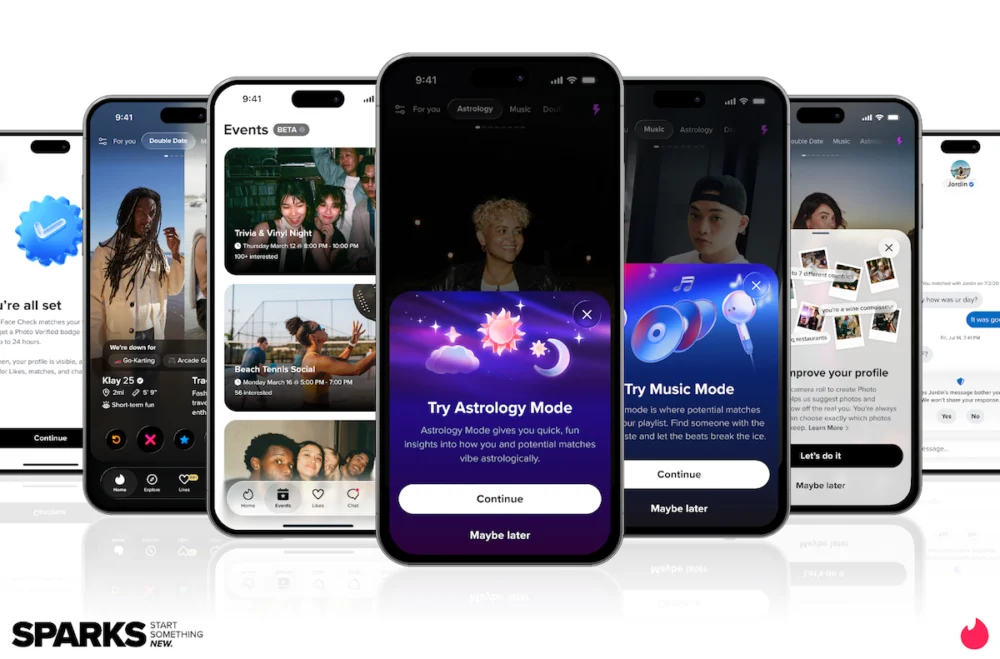
Tinder, the world’s most popular dating application, held its inaugural product keynote on Thursday, unveiling a comprehensive and ambitious suite of updates designed to fundamentally reinvigorate its product, bolster user safety, and harness the power of artificial intelligence. This strategic overhaul comes in the wake of Match Group’s significant $50 million investment in product development, a commitment first announced in August 2025, as the parent company endeavors to re-engage its expansive user base and, critically, win over the discerning demographic of younger Gen Z daters who are increasingly seeking more authentic and varied connection experiences.
A Strategic Pivot: Addressing Evolving User Demands and Market Dynamics
The decision by Match Group, the digital dating conglomerate owning Tinder, Hinge, OkCupid, and others, to inject substantial capital into Tinder’s product development underscores a pivotal moment for the industry leader. While Match Group reported a positive earnings result in Q4 2025, with revenue reaching $878 million, the company has contended with consecutive quarters of declining paying subscribers. This trend, coupled with an increasingly fragmented and competitive dating app market, has placed considerable pressure on Tinder to innovate, adapt, and demonstrate a clear path to growth and sustained user engagement. The landscape of online dating has been shifting, with many users, particularly those in younger generations, expressing "swipe fatigue" – a weariness with the endless, often superficial, cycle of swiping left or right without leading to meaningful connections.
Gen Z, a demographic highly valued for its future market potential, has shown a distinct preference for real-world encounters and more organic methods of meeting potential partners, often gravitating towards apps that facilitate social connections rather than explicit dating. This demographic’s skepticism towards traditional dating app models has been a significant driver behind Tinder’s strategic pivot, aiming to bridge the gap between digital interaction and tangible, in-person experiences. The keynote’s announcements reflect a concerted effort to align Tinder’s offerings with these evolving user preferences, moving beyond its foundational "swipe-and-match" mechanism to foster a more holistic and community-driven approach to dating.
Embracing Real-World Connections: The Events Tab and the IRL Renaissance
At the forefront of Tinder’s new direction is the innovative "Events tab," a feature poised to transform how users discover and engage with potential matches. Slated for a beta launch in Los Angeles in late May or early June, this tab will allow users to explore a curated selection of local events, ranging from intimate speakeasy gatherings and competitive bowling nights to high-energy raves and creative pottery classes. The core premise is to facilitate organic, in-person connections within shared social contexts, directly addressing Gen Z’s growing appetite for authentic offline experiences.

This move is a direct acknowledgment of a broader industry trend, often dubbed the "IRL (in-real-life) renaissance" in dating. For years, the digital realm has dominated the initial stages of dating, but a noticeable shift has seen young people actively seeking avenues that prioritize face-to-face interaction from the outset. This sentiment has fueled the rise of other apps like Breeze, 222, Timeleft, and Thursday, which have built their models around facilitating offline meetings, event-based dating, or group activities. Tinder’s entry into this space with its Events tab signifies a mainstream embrace of this trend by the industry’s largest player.
Hillary Paine, Senior Vice President of Product at Tinder, articulated this vision, telling TechCrunch, "We’re really trying to tap into meeting younger users at the places where they’re already hanging out. You can go to an event with your friend and have a good time, or you could meet somebody new. Instead of asking users to choose between their dating life and their social life, we’re trying to blend these things together and create a more social community first experience." This statement highlights Tinder’s intent to integrate dating seamlessly into users’ existing social lives, fostering a sense of community that can alleviate the pressure and artificiality often associated with direct dating app interactions.
A particularly intriguing aspect of the Events tab is the "Missed Connections" inspired functionality. After attending an event, users will have access to profiles of other attendees on the app, allowing them to "like" and "swipe through" individuals they may have noticed but didn’t approach, or simply missed the opportunity to connect with in person. This feature cleverly leverages the digital platform to enhance, rather than replace, real-world interactions, offering a second chance for potential connections that might otherwise have been lost. This mechanism adds a layer of comfort and reduces the social anxiety often associated with initiating contact in person, providing a digital safety net for nascent connections.
Reimagining First Impressions: The Resurgence of Virtual Speed Dating
In parallel with its push for IRL events, Tinder is also tapping into another resurgent trend: speed dating. The company revealed it is piloting a new video speed dating experience in Los Angeles, allowing users to join scheduled three-minute video chats with potential matches. This feature is envisioned as a "vibe check," offering a low-stakes, efficient way for individuals to gauge chemistry and personality before committing to a more involved in-person meeting. Users will have the option to extend promising conversations beyond the initial three minutes, and a verified profile photo will be a prerequisite for participation, ensuring a degree of authenticity and safety.
The return of speed dating, albeit in a virtual format, reflects a broader desire among daters to move past endless text exchanges and experience a more dynamic interaction early on. Historically, Tinder had ventured into video interactions during the COVID-19 pandemic with its "Face-to-Face" feature, which was later discontinued due to declining interest as lockdowns eased. This previous experience raises questions about the potential success of the new video speed dating pilot. However, the current iteration is framed differently – not as a primary mode of communication but as a focused "vibe check" designed for brevity and pre-screening, potentially mitigating the video chat fatigue experienced during the pandemic. The scheduled nature and time limits are key differentiators, aiming to create a more intentional and less burdensome experience than continuous video calls.
The AI Core: Smarter Matching, Enhanced Personalization, and Fortified Safety

Artificial intelligence emerged as a major thematic pillar of Tinder’s keynote, signaling a profound commitment to leveraging cutting-edge technology to improve every facet of the user experience. Tinder is deepening its investment in AI across matching algorithms, personalization, and, crucially, user safety.
Personalized Matching with "Chemistry" and "Learning Mode"
A significant AI-driven update is the expansion of Tinder’s "Chemistry" feature. Utilizing advanced AI, Chemistry aims to learn about users not just through their explicit preferences but also through nuanced questions and, with explicit user permission, analysis of their camera rolls. This comprehensive data gathering allows the feature to curate daily matches tailored to individual tastes, directly combating "swipe fatigue" and dating app burnout by presenting more relevant and potentially compatible profiles. Following successful initial testing in Australia and New Zealand, Chemistry is now rolling out across the U.S. and Canada. Looking ahead, Tinder envisions Chemistry evolving beyond a standalone feature to fundamentally shape the entire Tinder experience, making it deeply personalized and intuitive.
Complementing Chemistry is the introduction of a new "Learning Mode." Historically, Tinder’s algorithm required multiple swiping sessions to gather sufficient signals for effective personalization. Learning Mode, however, is designed to rapidly glean insights into what users seek in potential matches, adapting recommendations much faster. According to Hillary Paine, this means the system can begin to understand a user from their very first session or upon returning to the app after a hiatus. "We’re hoping that this is something that makes Tinder really feel like it understands you from the very first time you use it, or if you’re returning to Tinder after some time away, it feels like it gets me, and I don’t have to spend a lot of time telling Tinder what I’m looking for again," Paine elaborated. This accelerated learning promises a more engaging and less frustrating onboarding experience, potentially boosting user retention and satisfaction by delivering better matches sooner.
Fortifying User Safety with Advanced AI
Recognizing the paramount importance of user safety in the online dating sphere, Tinder is significantly enhancing its safety features through AI. The existing "Does This Bother You?" feature, which prompts users about potentially offensive messages, will now utilize large language models (LLMs) to more accurately detect harmful content. This advancement will enable the system to automatically blur disrespectful or inappropriate content, preventing users from being exposed to it unless they choose to view it. Similarly, the "Are You Sure?" prompts, designed to encourage users to reconsider sending potentially harmful messages, are being fine-tuned to more precisely identify and flag problematic interactions before they occur. These AI-powered safety measures underscore Tinder’s commitment to creating a safer and more respectful environment, addressing critical concerns about online harassment and abuse that have long plagued dating platforms. The proactive use of AI to moderate content and nudge users towards more constructive communication represents a significant step forward in digital safety for dating apps.
Aesthetic Evolution and Deeper Personalization: Redesign and New Modes

Beyond functionality, Tinder is also receiving a sleek visual redesign, featuring edge-to-edge profile photos, a subtle blur effect, and a sophisticated "Liquid Glass" aesthetic for the iconic Like and Nope bar. These aesthetic updates aim to provide a more modern, immersive, and visually appealing user interface, enhancing the overall user experience.
Further enriching personalization, Tinder is introducing new modes that cater to diverse interests and preferences. "Music Mode" will allow users to auto-populate their profiles with up to 20 Spotify songs, offering a dynamic way to express personality and find common ground through shared musical tastes. "Astrology Mode" will enable users to add their birth details to unlock their Sun, Moon, and Rising signs, providing insights into their astrological profile and checking compatibility with potential matches – a feature likely to resonate strongly with younger demographics who often engage with astrology as a tool for self-understanding and relationship insights. These additions follow the recent launch of "Double Date Mode" and "College Mode," indicating a broader strategy to offer specialized experiences that cater to different social contexts and user demographics.
Industry Implications and Future Outlook
The comprehensive slew of announcements from Tinder’s inaugural product keynote signals a pivotal and potentially transformative shift in the platform’s approach. This strategic pivot is not merely about adding new features; it represents a fundamental re-evaluation of how Tinder engages with its users, particularly in the context of declining subscriber numbers and fierce competition. The $50 million investment from Match Group is a clear testament to the urgency and importance of these changes.
For the broader online dating industry, Tinder’s moves are likely to set new benchmarks and influence competitor strategies. The aggressive push into IRL events, the re-introduction of virtual speed dating, and the deep integration of AI for personalization and safety reflect a future where dating apps are less about passive swiping and more about active engagement, community building, and curated experiences. This evolution acknowledges the growing demand for authenticity, safety, and efficiency in the search for connections.
While Match Group’s outlook has remained cautious, acknowledging changing user preferences and heightened competition, these updates position Tinder to potentially reclaim its dominant position and re-energize its user base. The success of these initiatives will hinge on their execution and, ultimately, on how well they resonate with users, particularly Gen Z. The challenge will be to maintain daters’ interest in an app that has, for years, defined a certain style of casual dating, now attempting to evolve into a more multifaceted social and connection platform.
One thing is unequivocally clear: Tinder is making a significant, calculated commitment to the future of dating. By shifting away from solely relying on its signature swiping mechanism and proactively adapting to what it believes its young users genuinely desire – more real-world interactions, deeper personalization, and enhanced safety – Tinder is attempting to redefine its legacy and secure its relevance in an ever-evolving digital landscape. The coming months will reveal whether this bold strategy successfully reignites growth and solidifies its place at the forefront of the global dating scene.

