
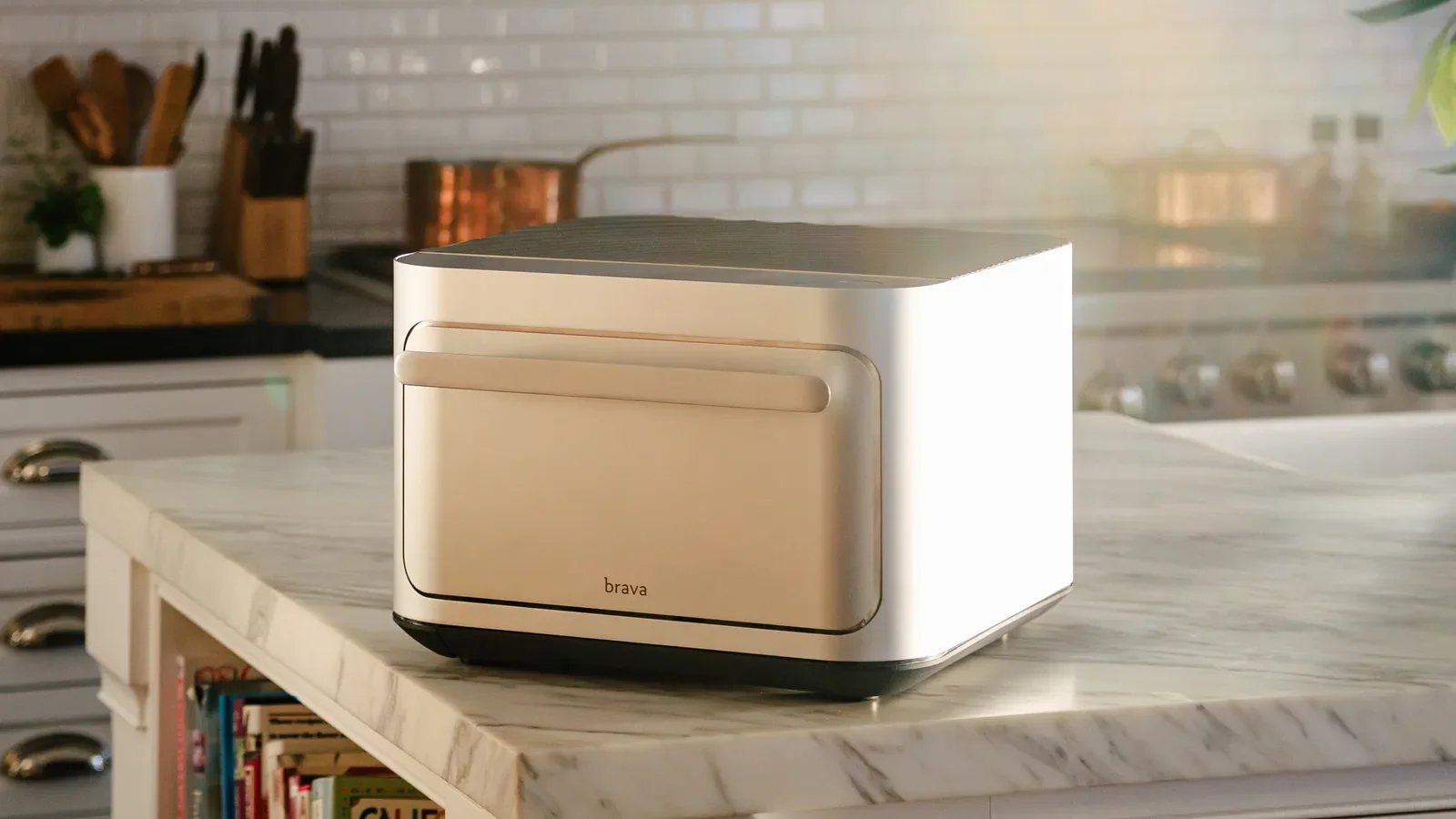
The ambitious pursuit of revolutionizing home cooking through advanced technology has encountered another significant hurdle with the announcement that Brava, a company lauded for its innovative light-based countertop ovens, has officially ceased operations as of March 6, 2026. This development casts a long shadow over the burgeoning smart kitchen appliance sector, particularly for companies venturing beyond conventional heating methods. Brava’s distinct approach, utilizing infrared light for precise and rapid cooking, promised a paradigm shift in culinary preparation, but ultimately failed to achieve sustainable commercial viability in a fiercely competitive and rapidly evolving market. The company’s closure not only signifies the end of new product sales and feature development but also raises critical questions about the long-term support and functionality of the devices already in consumers’ homes.
Brava’s core innovation lay in its proprietary "Smart Oven" technology, which employed a sophisticated array of infrared lamps to directly heat food ingredients. This method offered distinct advantages over traditional convection or microwave ovens, enabling significantly faster cooking times and an unparalleled level of temperature precision. The direct energy transfer meant that heat was applied precisely where it was needed, minimizing preheating delays and allowing for more nuanced control over the cooking process. This technological differentiation was a cornerstone of Brava’s marketing and product appeal, positioning it as a premium appliance for home cooks seeking both convenience and culinary excellence. The company’s product line, which included various countertop oven models, was designed to cater to a wide range of cooking tasks, from toasting and baking to searing and air frying, all within a single, compact unit.
The cessation of Brava’s operations has immediate and profound implications for its existing customer base. The company has confirmed that it will no longer be manufacturing new units, precluding any future expansion of its product ecosystem. More critically, the discontinuation of software updates means that existing Brava ovens will not benefit from future recipe additions, performance enhancements, or crucial accessibility improvements. This lack of ongoing software support directly impacts the long-term usability and potential obsolescence of these sophisticated devices. As the digital landscape of smart appliances evolves, devices reliant on connected services without ongoing updates risk becoming increasingly dysfunctional or incompatible with newer network standards and security protocols.
Uncertainty Looms for Existing Brava Devices
Brava has acknowledged the potential future limitations of its cloud-based infrastructure and online recipe library, stating that these services will remain operational "for now." However, the company has also cautioned that their availability and functionality may be subject to future constraints, dependent on the allocation of available resources. This pronouncement underscores a pervasive trend within the smart appliance industry: an increasing reliance on cloud connectivity for core functionalities. Unlike traditional appliances that operate autonomously, many modern smart devices depend on a constant connection to remote servers for recipe databases, software updates, and even basic operational commands. When a company shutters its operations, these vital cloud services are often among the first to be scaled back or terminated, leaving users with increasingly inert hardware.
The practical ramifications for Brava owners are stark. Customer support channels, repair services, and the availability of replacement parts are all slated for a limited duration. This finite window of support means that the long-term viability of Brava ovens is now intrinsically linked to the company’s remaining financial resources and its commitment to fulfilling these post-operational obligations. For consumers who invested in Brava’s premium technology, this situation creates a significant degree of uncertainty and potential financial risk, as repairs or replacements may become prohibitively expensive or impossible to secure once these services are fully wound down.
This scenario is not an isolated incident within the smart appliance sector. It mirrors the experiences of users of other innovative, but ultimately unsuccessful, connected kitchen devices. A notable parallel can be drawn to Weber’s June Oven, another ambitious smart oven project that faced similar challenges. Following the winding down of its backend services, June Oven users expressed significant concerns about the longevity and continued functionality of their devices. The Brava situation serves as a potent reminder of the inherent risks associated with investing in smart appliances that rely heavily on proprietary cloud infrastructure that may not endure indefinitely.
A Shrinking Landscape for Innovative Smart Ovens
Brava’s departure from the market further emphasizes the challenges faced by companies attempting to introduce fundamentally new cooking methodologies within the smart oven category. The field of truly disruptive kitchen technology, particularly in ovens, appears to be narrowing. While several brands continue to operate and innovate, many are doing so by refining existing cooking paradigms rather than introducing entirely novel heating systems.
Companies such as Anova, Tovala, and Suvie remain active players in the smart oven space. However, their business models often lean heavily on subscription-based meal delivery services, where the appliance is a gateway to a recurring revenue stream, or they employ hybrid cooking approaches that combine conventional heating methods with smart connectivity. While these strategies have proven more commercially resilient, they do not represent the same level of technological reinvention that Brava championed.
Other established manufacturers, including Breville and Chef IQ, have introduced connected ovens that offer app integration and advanced control features. These devices enhance the user experience through digital interfaces and recipe guidance, but their underlying cooking technology typically adheres to well-established principles of convection, radiant, or microwave heating. They represent an evolution of existing technology rather than a revolution.
The future of truly novel cooking technologies in the smart oven market remains uncertain, but not entirely devoid of potential. Products like Revolution Cooking’s upcoming "Macrowave" are exploring similar infrared-based heating concepts, aiming to replicate some of the rapid and precise cooking capabilities that Brava sought to deliver. However, widespread adoption of such advanced technologies hinges on overcoming the same commercial and consumer adoption hurdles that ultimately proved insurmountable for Brava. The success of these future endeavors will likely depend on their ability to demonstrate not only technological superiority but also a robust and sustainable business model that ensures long-term product support and value for consumers.
Analyzing the Market Dynamics and Consumer Trust
The repeated instances of innovative smart appliance companies ceasing operations raise critical questions about the underlying market dynamics and consumer trust in this sector. Several factors may contribute to these failures:
-
High Development and Manufacturing Costs: Developing proprietary heating technologies and integrating them into sophisticated smart appliances requires substantial investment. The costs associated with research, development, manufacturing, and marketing can be exceptionally high, placing significant pressure on companies to achieve rapid sales volume.
-
Consumer Adoption Curve: While there is growing interest in smart home technology, the adoption of high-ticket, technologically advanced kitchen appliances can be slower than for more accessible smart devices like speakers or lighting. Consumers may be hesitant to invest heavily in new cooking methods that deviate significantly from their established routines and expectations.
-
The "Ecosystem Trap": As Brava’s situation illustrates, an over-reliance on cloud-based services can create a vulnerability. If the company that controls the ecosystem fails, the entire value proposition of the product can erode. This creates a perceived risk for consumers, who may question the long-term security and functionality of their investment.
-
Competition from Established Players: Traditional appliance manufacturers, while slower to innovate with entirely new technologies, possess significant brand recognition, established distribution channels, and vast resources. They can gradually incorporate smart features into their proven product lines, offering a less risky proposition for many consumers.
-
The Challenge of Demonstrating Tangible Benefits: For technologies like Brava’s light-based cooking, clearly articulating and demonstrating the tangible benefits to the average consumer is crucial. While chefs and early adopters may appreciate the precision, conveying the value of faster cooking and superior results in a way that resonates with a broad audience can be challenging.
The closure of Brava represents more than just the end of a company; it is a cautionary tale for the entire smart kitchen industry. It highlights the delicate balance between innovation and commercial viability, and the critical importance of building sustainable business models that prioritize long-term customer support. As the market continues to mature, companies that can successfully navigate these complexities, foster consumer trust, and deliver genuine, lasting value are more likely to thrive. The path forward for truly disruptive kitchen technology will likely involve a greater emphasis on transparent long-term support strategies, robust hardware design that minimizes reliance on ephemeral cloud services, and effective communication of the practical advantages of their innovations to a wider consumer base. The quest for the future of cooking continues, but the lessons learned from Brava’s journey underscore the significant challenges that lie ahead.

