
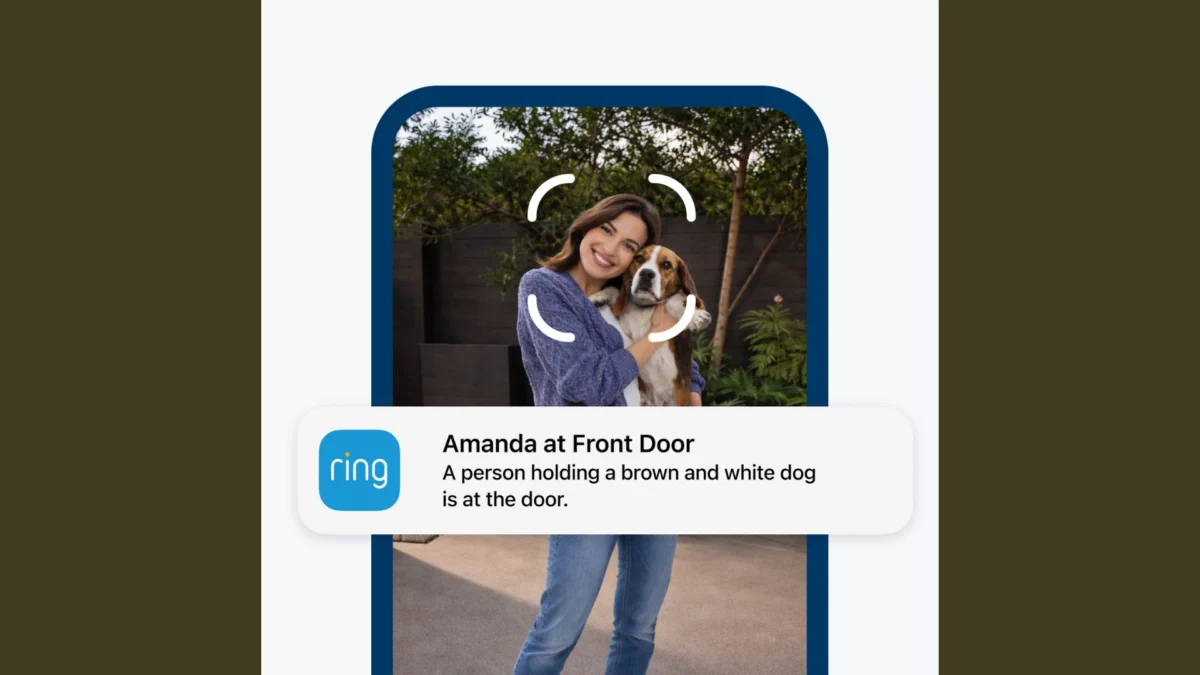
Ring is taking a significant stride towards enhancing the contextual awareness of smart home security with the introduction of its new "Familiar Faces" feature. This innovative update, currently rolling out to select users in the United Kingdom, aims to transform generic motion detection alerts into more personalized and actionable notifications, informing homeowners precisely who is at their doorstep. This development builds upon Ring’s established motion detection capabilities by integrating advanced facial recognition technology, ushering in an era of more proactive and ambient smart home experiences.
The Evolution of Smart Home Notifications: From Generic to Personal
For years, smart home security devices, particularly video doorbells and cameras, have primarily relied on motion detection to alert homeowners to activity. While effective in signaling presence, these alerts often lacked crucial context. A notification stating "Motion detected at the front door" could originate from a delivery person, a family member returning home, or even a passing pedestrian. This ambiguity frequently necessitated immediate manual verification via live video feeds, a process that could be time-consuming and, at times, unnecessary.
Ring’s Familiar Faces feature directly addresses this limitation. By enabling this new functionality, users can now receive highly specific alerts such as "Mum at Front Door" or "Alex at Doorbell." This immediate identification eliminates the guesswork and allows homeowners to respond appropriately without needing to access the live feed, streamlining the user experience and reducing notification fatigue. This subtle yet impactful shift aligns with a broader industry trend towards smart home devices that not only detect events but also understand and communicate the meaning of those events.
How Familiar Faces Works: Private, Personalized Recognition
The core of the Familiar Faces feature lies in its ability to recognize individuals captured by Ring doorbells and cameras. The system allows users to actively teach the device by assigning names to recognized individuals. Through a continuous learning process, the Ring system builds a private and personalized directory of up to 50 familiar faces. This directory can encompass a wide range of individuals, from immediate family members and close friends to recurring visitors such as dog walkers, babysitters, or regular delivery personnel.
The technology works by analyzing facial features from video footage. When a face is detected that matches an individual previously identified and named by the user, the alert is personalized. If the detected face does not match any in the user’s private directory, it will be flagged as an unknown visitor, prompting a standard alert. This dual approach ensures that users are informed about both known and unknown individuals approaching their property, offering a comprehensive security overview.
Addressing Real-World Annoyances and Enhancing Security
Beyond the novelty of personalized alerts, Familiar Faces is strategically designed to solve common frustrations associated with smart home notifications. One significant benefit is the ability to manage alert preferences based on individual recognition. For instance, users can choose to mute notifications for individuals who frequently come and go from the property, such as household members. This means that while the system still registers their presence, it won’t trigger an alert every time a family member enters or leaves. Crucially, however, alerts for unknown visitors will remain active, ensuring that genuine security events are not missed. This selective notification system promises to significantly reduce the number of unnecessary pings, allowing users to focus on what truly matters.
Furthermore, the feature provides a subtle yet powerful layer of passive reassurance. Knowing instantly and accurately that a child has safely arrived home from school, or that a trusted caregiver has arrived for their scheduled visit, can offer significant peace of mind. This immediate clarity reduces the need for constant manual checking of cameras or the anxiety that can arise from unanswered questions about who is at the door. In a family setting, this can be particularly valuable, providing parents with real-time updates on their children’s comings and goings without intrusive monitoring.
Navigating Privacy Concerns: User Control and Data Security
The implementation of facial recognition technology in a domestic setting inevitably raises significant privacy concerns. Ring has proactively addressed these concerns by prioritizing user control and data security. The Familiar Faces feature is entirely opt-in, meaning users must manually enable it within the Ring app. This ensures that individuals are aware of and consent to the use of facial recognition on their property.
Ring emphasizes that face data is encrypted and is exclusively tied to the user’s account. There is no sharing of this data with third parties or even with Amazon beyond what is necessary for the feature’s operation. The system also incorporates a crucial prompt for users to ensure they have obtained appropriate consent from individuals before identifying them within their private directory. This is particularly relevant in regions with stringent data protection laws, such as the UK and other European countries, where the General Data Protection Regulation (GDPR) mandates strict guidelines for the collection and processing of personal data, including biometric information.
To further mitigate data accumulation and maintain privacy, unnamed faces detected by the system are automatically deleted after 30 days. This measure prevents the indefinite storage of data pertaining to individuals who are not formally recognized or added to a user’s directory, thereby limiting the digital footprint associated with the feature.
Rollout and Requirements: Availability and Subscription Tiers
The Familiar Faces feature is currently being rolled out to compatible Ring devices in the United Kingdom. Specifically, the feature is available on Ring doorbells and cameras that support 2K, 4K, and select HD video resolutions. This includes popular models such as the Ring Video Doorbell Pro 2, Ring Video Doorbell Elite, and various Ring Stick Up Cam and Spotlight Cam models.
A key requirement for utilizing Familiar Faces is an active Ring subscription. The feature is accessible to users who subscribe to either the Ring Protect Pro or Ring Protect Pro Intelligence tiers. These subscription plans offer advanced features beyond basic motion recording, including enhanced video storage, Person Detection, and now, Familiar Faces. The inclusion of this advanced feature within higher subscription tiers is a common strategy in the smart home industry, allowing manufacturers to offer more sophisticated functionalities to a dedicated customer base while supporting ongoing development and cloud-based processing.
As with many of Ring’s newer technological advancements, it is anticipated that the Familiar Faces feature will gradually expand to other geographical regions over time. However, for the present, its availability remains geographically limited to the UK. This phased rollout allows Ring to gather user feedback, refine the technology, and ensure a smooth and secure deployment in new markets.
Broader Implications for the Smart Home Ecosystem
The introduction of Familiar Faces by Ring represents a significant step forward in the evolution of the smart home ecosystem. It underscores a growing demand for devices that offer not just security, but also intelligence and convenience. By moving beyond basic event detection to personalized identification, Ring is setting a precedent for how smart home security can become more integrated into daily life, offering tangible benefits that enhance both peace of mind and user experience.
The success and adoption of this feature could also influence competitors in the smart home security market. As consumers become accustomed to more contextual and personalized alerts, other manufacturers may feel compelled to develop similar facial recognition capabilities. This competitive pressure could accelerate innovation across the industry, leading to more sophisticated and user-friendly smart home security solutions.
However, the widespread adoption of facial recognition in homes also necessitates ongoing dialogue and robust regulatory frameworks surrounding data privacy and ethical use. As these technologies become more commonplace, it will be crucial for manufacturers, regulators, and consumers alike to engage in thoughtful discussions about the balance between security, convenience, and the fundamental right to privacy. Ring’s emphasis on user control and data encryption is a positive indicator, but the long-term implications will depend on continued commitment to these principles and adaptation to evolving privacy standards.
In conclusion, Ring’s Familiar Faces feature marks a pivotal moment in the development of smart home security. By providing personalized and contextual alerts, it addresses a long-standing user need for more intelligent and less intrusive notifications. While privacy considerations remain paramount, Ring’s approach, emphasizing user opt-in and robust data protection, suggests a responsible integration of advanced technology into the home environment. The ongoing rollout and eventual expansion of this feature will undoubtedly shape the future of how we interact with and perceive our smart home security systems.

