
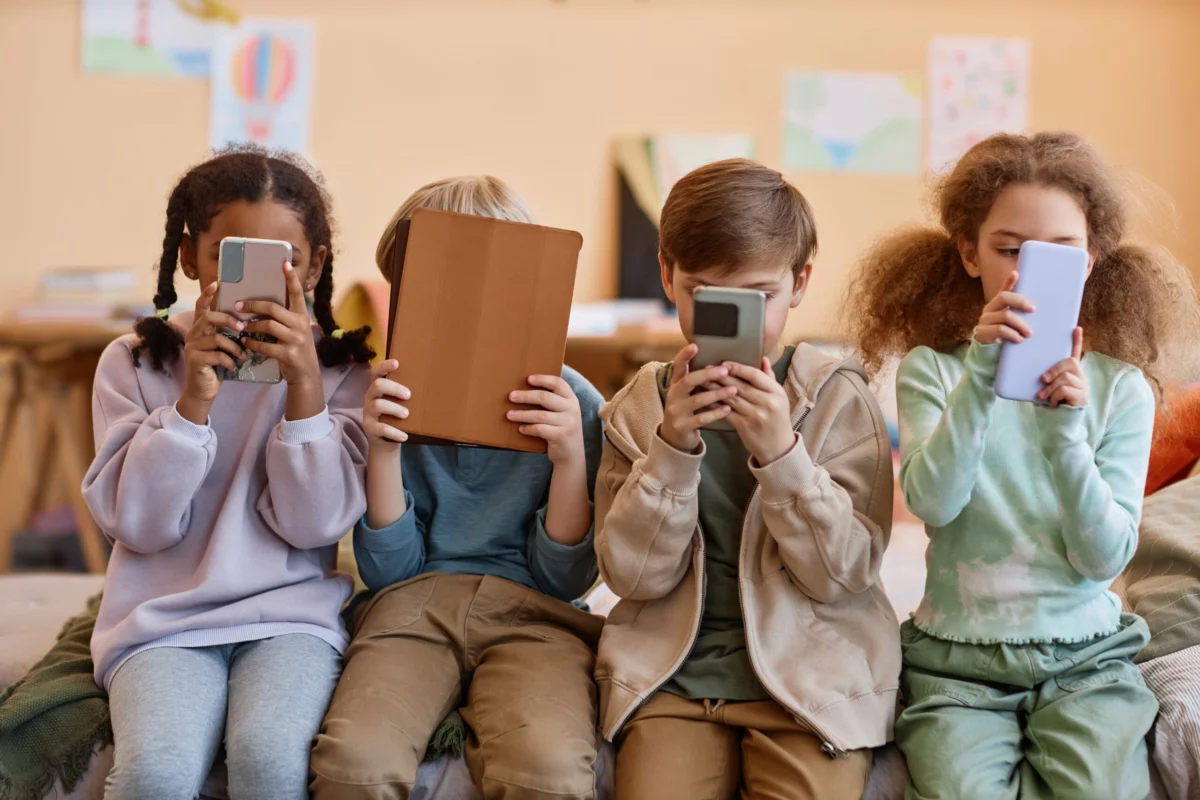
The landscape of childhood has been irrevocably altered by the pervasive presence of digital screens, extending far beyond mere entertainment to profoundly influence children’s language, behavior, self-perception, and cognitive development. What often begins with seemingly innocuous "family-friendly" programming can introduce vocabulary or attitudes that challenge parental values, as exemplified by an 8-year-old recently using a borderline expletive, learned directly from a television character, underscoring a significant disconnect between network content ratings and parental expectations for age-appropriate material. This incident is not isolated but indicative of a broader phenomenon where media, even when labeled suitable for general audiences, acts as a powerful, often unnoticed, curriculum shaping young minds.
The Pervasive Influence of Screen Time: Beyond Passive Consumption
For decades, researchers have studied the impact of media on youth, but the digital age has intensified this scrutiny. Unlike previous generations that primarily consumed broadcast television at set times, today’s children engage with an always-on, on-demand stream of content across multiple platforms, including streaming services, YouTube, video games, and social media. This constant exposure means that screens are not merely neutral background noise but active teachers, subtly imparting lessons on social norms, emotional responses, and even fundamental aspects of identity. The American Academy of Pediatrics (AAP) and other child development organizations have long cautioned about the quantity of screen time, but increasingly, the focus has shifted to the quality of content and its implicit messages. The average child aged 8-12 spends 4-6 hours a day on screens, while teens can spend up to 9 hours, according to a 2019 Common Sense Media report, making the content consumed a critical factor in their developmental trajectory.
1. Fostering a Culture of Comparison: The Idealized Digital Life
One of the most insidious effects of ubiquitous screen time is the normalization of an idealized "comparison culture." Children, inherently keen observers, constantly calibrate their understanding of "normal" against the narratives presented on screens. This phenomenon is not limited to social media’s curated perfection; even seemingly harmless children’s programs, movies, and YouTube channels frequently depict families with grand adventures, bedrooms overflowing with toys, or characters with impeccably flawless appearances. These portrayals, while designed for entertainment, can inadvertently set unrealistic benchmarks for young viewers.
When a child’s everyday reality — with its imperfections, mundane routines, and typical challenges — fails to align with these polished digital representations, a sense of inadequacy or "missing out" can emerge. Developmental psychologists suggest that this constant exposure to idealized lifestyles can contribute to lower self-esteem, increased anxiety, and even depressive symptoms in children and adolescents. A 2018 study published in JAMA Psychiatry found a direct correlation between increased social media use (a form of screen time particularly rife with comparison culture) and higher rates of depression and anxiety among adolescents. Experts like Dr. Jean Twenge, a professor of psychology, have extensively documented the rise of "iGen" and its struggles with mental health, linking it partly to the pressures of digital comparison. Parents are encouraged to counteract this by emphasizing gratitude and celebrating the unique, often messy, beauty of their child’s own life, pointing out the simple joys in shared family moments, creativity, and personal achievements, thereby cultivating resilience against the digital illusion of perfection.
2. Scripting Behavior: The Imitation Game
Children are natural mimics, and screen characters often serve as powerful, albeit often unintended, behavioral scripts. Even content marketed as "harmless" can subtly introduce undesirable behaviors into a child’s repertoire. Characters who habitually roll their eyes at authority figures, engage in sibling rivalry portrayed as comedic, or default to sarcastic responses might be written to entertain adults or to create relatable conflict, but they inadvertently model specific interpersonal dynamics for young viewers.
Observational learning, a concept pioneered by psychologist Albert Bandura, posits that individuals learn behaviors by watching others. For children, who are still developing their social and emotional frameworks, screen characters can become significant "teachers." When a child frequently witnesses a character resolve conflict through yelling, manipulation, or passive aggression, they are more likely to internalize these as acceptable, or even effective, strategies. Studies on media violence, for instance, consistently show that exposure to aggressive behavior on screen can lead to increased aggression in children, though the direct causality remains complex and multi-faceted. Furthermore, the casual use of disrespectful language, mild defiance, or even minor acts of mischief can quickly transition from the screen to the living room. Parents and educators frequently report children adopting specific phrases, gestures, or attitudes directly from popular shows. To mitigate this, intentional redirection and positive reinforcement are crucial. When undesirable behaviors are mimicked, clearly articulating family values — "In our family, we share our toys," or "We use kind words" — helps set boundaries. Equally important is highlighting and praising desired behaviors, reinforcing the social scripts parents wish their children to adopt.
3. The Shifting Baseline: Normalization of Undesirable Content
Repeated exposure to certain types of content on screens gradually recalibrates a child’s internal barometer for what is considered normal or acceptable. Content that technically fits within "kid-friendly" parameters can still feature casual put-downs, subtle forms of bullying, mild violence, or language that, while not overtly profane, may make a parent wince. The more frequently children encounter these elements, the more normalized they become in their perception.
Research, such as a study published in the Journal of Adolescence (2004), indicates that children who are repeatedly exposed to aggressive or insensitive behavior on screen can become desensitized to it. This desensitization can manifest as a reduced emotional response to real-world aggression or a diminished capacity for empathy. A character who routinely refers to siblings as "twerps" or a show where minor injuries are played for laughs can subtly erode a child’s understanding of respectful communication and the impact of physical harm. Over time, these behaviors and forms of language lose their shock value and begin to appear acceptable, or even amusing, to repeat. This erosion of sensitivity has broader implications for social development, potentially hindering a child’s ability to recognize and respond appropriately to the feelings of others. To counter this, fostering empathy through critical viewing is essential. Parents can engage children in discussions by asking, "How do you think that character felt?" or "Would that be okay if it happened to you?" Such questions not only promote emotional literacy but also introduce early concepts of media literacy, teaching children to critically evaluate and question the messages they receive from screens.
4. Identity Formation: Screen Characters as Unofficial Mentors
Beyond immediate behaviors, screen time significantly influences a child’s developing sense of identity. Children naturally seek role models, and alongside parents and caregivers, screen characters often become some of their most consistent "mentors." They observe these characters’ traits, actions, and reactions, beginning to imagine themselves in similar roles or adopting aspects of these personas. Screens subtly shape their understanding of what it means to be "cool," "brave," "funny," or even the characteristics associated with gender.
The swagger of a popular YouTube creator, the assertive independence of a cartoon superhero, or the problem-solving approach of a Disney princess can all contribute to a child’s self-perception and aspirations. If a character achieves their goals through pouting, manipulation, or defiance of parental figures, a child might internalize this as an effective strategy for navigating their own world. This influence is particularly potent during critical developmental stages when children are actively constructing their self-concept. The proliferation of diverse characters can be a positive influence, offering varied representations, but it also necessitates careful curation to ensure children are exposed to models embodying positive values. Parenting experts recommend actively pointing children towards real-life heroes, whether they are community figures, family members, or historical personalities, who exemplify admirable qualities like perseverance, kindness, or integrity. By discussing what makes these real-world individuals commendable, parents can help anchor a child’s identity in tangible, positive examples, providing a counterbalance to the often superficial or stylized portrayals found on screens.
5. Cognitive Impact: Shortened Attention Spans and the Craving for Stimulation
The rapid-fire pacing, constant visual stimulation, and dynamic sound effects characteristic of much children’s digital content are highly effective at capturing attention. However, this design also trains developing brains to expect and crave constant, intense stimulation. The neurological impact of such content is a growing area of concern. The rapid cuts, quick scene changes, and continuous sensory input literally rewire neural pathways, adjusting the brain’s processing speed and its capacity for sustained attention.
When brains become accustomed to this accelerated pace, real-life experiences — which are inherently slower and less intensely stimulating — can feel comparatively dull, leading to boredom and restlessness. This "overstimulation hypothesis" suggests that excessive exposure to fast-paced media can hinder the development of executive functions, including impulse control, working memory, and cognitive flexibility. Studies, including those from the Archives of Pediatrics & Adolescent Medicine, have linked early exposure to fast-paced television to attention problems later in childhood. The implications extend to academic performance, as classrooms often require sustained focus on less stimulating tasks, and to social interactions, which demand patience and the ability to process information at a natural human pace. To counteract this, experts advocate for incorporating "slow-paced downtime" into children’s routines. Activities like reading, building with blocks, finger painting, engaging in imaginative play, or simply quiet conversations allow a child’s nervous system to decompress and retrain its capacity for sustained, focused attention in a gentler, more natural environment. These activities promote deeper engagement and cultivate a tolerance for boredom, which is a crucial skill for creativity and problem-solving.
Industry Responses and the Path Forward
The challenges posed by screen time are not lost on the media industry. Content rating systems, such as the TV Parental Guidelines in the U.S. (TV-G, TV-PG, etc.), were established precisely to help parents navigate content. However, as the initial anecdote highlights, the application and interpretation of these ratings can vary widely, and the nuances of implicit messaging often go unaddressed. Streaming services and platforms have introduced parental control features, allowing families to filter content based on ratings or specific keywords. Yet, the sheer volume of new content and the algorithmic nature of recommendations mean that vigilance remains paramount for parents.
Organizations like Common Sense Media play a crucial role, offering detailed reviews and age recommendations for movies, TV shows, apps, and games, often providing a more granular assessment than official ratings alone. There is a growing call for media creators to be more mindful of the developmental impact of their content, particularly concerning the subtle messages embedded in character behavior, narrative resolution, and aspirational lifestyles.
Conclusion: Intentionality in a Digital Age
Screens are an indelible part of modern life and are not likely to disappear. Therefore, the critical imperative for parents, educators, and society at large is to move beyond simply limiting screen time to fostering intentionality about what children consume and how they interact with digital media. This involves a multi-pronged approach: active parental guidance and co-viewing, critical media literacy education from an early age, advocating for higher standards in children’s programming, and consciously balancing digital engagement with real-world experiences that promote holistic development. By actively shaping the voices, values, and role models that influence children, society can help them navigate the digital landscape with resilience, empathy, and a strong sense of self, ensuring that screens serve as tools for enrichment rather than silent shapers of unintended curricula.

