
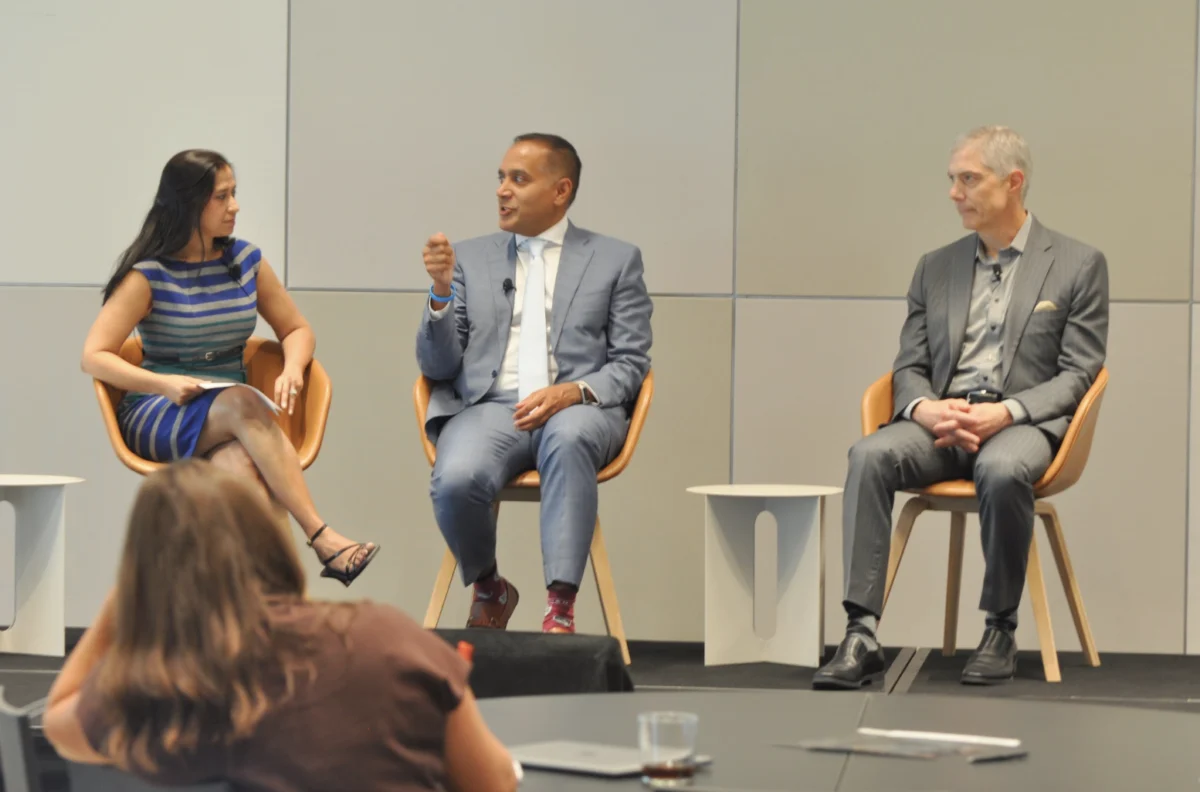
The current state of the United States healthcare system is frequently characterized by its inefficiencies, ranging from a stubborn reliance on legacy technologies like fax machines to a complex web of perverse financial incentives that often prioritize volume over value. During the MedCity News Bullseye event held in Chicago, a rare moment of industry self-reflection occurred when two prominent health insurance executives addressed the fundamental question of who is responsible for the systemic failures currently plaguing American medicine. When Arundhati Parmar, Editor-in-Chief of MedCity News, asked which stakeholders were to blame for the "broken" state of the industry, the response from the stage was immediate and uncharacteristically blunt.
Sachin Jain, the Chief Executive Officer of SCAN Health Plan, offered a succinct three-word admission: "We did it." This statement, referring to the collective body of professionals and organizations operating within the healthcare sector, set the tone for a discussion centered on the normalization of suboptimal standards and the ethical responsibilities of leadership. Jain argued that those within the industry have become accustomed to accepting a quality of service for the general public that they would never tolerate for their own families. This disconnect, he suggested, is facilitated by the fact that industry insiders often utilize "back doors"—personal connections and professional networks—to bypass the very hurdles that the average patient must face.
The Infrastructure of Inequity and the Back-Door Privilege
The "back-door" phenomenon described by Jain highlights a significant disparity in the American healthcare experience. While the average member of a plan like SCAN must navigate a labyrinth of prior authorizations, network restrictions, and administrative delays, executives and clinicians often have the ability to call a hospital president or a department head to expedite care or resolve billing disputes. Jain noted that this privilege allows those with the power to change the system to remain insulated from its most frustrating failures. By having the ability to "make it work" through personal intervention, the urgency to fix the underlying structural issues is diminished.
The reality for the nearly 300,000 members of SCAN Health Plan—a nonprofit Medicare Advantage organization—is often far different. These individuals are subject to a system that Jain admits is "far from optimal." This admission is backed by broader industry data. According to the Centers for Medicare & Medicaid Services (CMS), national healthcare spending reached $4.5 trillion in 2022, yet the U.S. continues to lag behind other high-income nations in terms of life expectancy and chronic disease management. The administrative burden alone is a significant factor; studies have estimated that roughly 15% to 30% of U.S. healthcare spending is directed toward administrative costs, much of which is driven by the very "broken" processes discussed at the Bullseye event.
Administrative Stagnation and the Role of Nonprofits
Paul Markovich, CEO of Ascendiun—the nonprofit parent company of Blue Shield of California—echoed Jain’s sentiments, placing the blame squarely on the collective industry. Markovich emphasized that health plans, in particular, hold a unique position of influence because they establish the rules of engagement. They determine how providers are reimbursed, what administrative burdens are placed on clinics, and whether the industry continues to rely on 1980s-era technology like fax machines or transitions to modern digital interoperability.
Markovich’s organization, Ascendiun, operates as a nonprofit, a structural choice he believes is essential for driving systemic change. He argued that nonprofit health plans have a greater capacity to focus on long-term outcomes rather than short-term quarterly earnings. However, the conversation also touched upon the limitations of scale. While SCAN and Blue Shield of California are significant regional players, they lack the massive market capitalization of for-profit giants like UnitedHealthcare, CVS Health (Aetna), and Elevance Health. This disparity raises the question of whether a handful of mission-driven nonprofits can truly move the needle when the majority of the market is beholden to shareholder interests.
The For-Profit vs. Nonprofit Debate
The debate over the morality of for-profit insurance remains one of the most contentious issues in health policy. Arundhati Parmar questioned the panelists on whether insurance companies should even be allowed to operate as for-profit entities. Markovich admitted to being conflicted on the matter. While he suggested that the system might benefit from a higher concentration of nonprofit insurers, he acknowledged that tax status is not always a perfect proxy for mission-driven behavior.
To illustrate this, Markovich pointed to Devoted Health, a for-profit Medicare Advantage company that has earned a reputation for being highly patient-centric. Conversely, he noted that nonprofit status does not exempt an organization from scrutiny. He referenced the recent $55.6 million settlement reached by Kaiser Permanente affiliates to resolve allegations under the False Claims Act related to risk adjustment data. This serves as a reminder that the "broken" elements of the system—such as the manipulation of diagnostic codes to increase government payments—can permeate both nonprofit and for-profit models.
Leadership as a Catalyst for Moral Change
Sachin Jain argued that the distinction between "good" and "bad" organizations often comes down to leadership rather than corporate structure alone. He cited CVS Health’s 2014 decision to stop selling tobacco products as a landmark example of a for-profit corporation acting as a "moral entity." At the time, CVS estimated the move would cost the company approximately $2 billion in annual revenue. However, subsequent public health data indicated that the decision led to a measurable decrease in cigarette pack sales in states where CVS had a significant market share, suggesting that corporate decisions can have a direct impact on population health.
Jain’s critique of the modern corporate environment was sharp. He suggested that many healthcare organizations have become "slaves" to quarterly earnings and the immediate demands of incentives, losing sight of the fact that they deal with human lives every day. He called for a shift in the conversation, moving away from purely financial metrics toward a framework of moral accountability.
Case Study in Reform: Reimagining the PBM Model
Despite their smaller scale compared to national carriers, Jain and Markovich argued that regional and nonprofit plans can serve as laboratories for innovation that eventually influence federal policy and industry standards. Markovich highlighted Blue Shield of California’s "Pharmacy Reimagined" initiative as a prime example. This program seeks to dismantle the traditional Pharmacy Benefit Manager (PBM) model, which has been criticized for a lack of transparency and for creating incentives that drive up list prices for medications.
By unbundling the responsibilities of a traditional PBM and partnering with multiple specialized entities—including Amazon Pharmacy for home delivery and Mark Cuban Cost Plus Drug Company for transparent pricing—Blue Shield of California aimed to prove that a different model was viable. Markovich noted that this initiative not only garnered significant industry attention but also resonated with members of Congress who are currently exploring PBM transparency legislation. The success of such "proof of concept" programs suggests that scale is not the only way to exert influence; leadership and a willingness to challenge the status quo can also drive broader market shifts.
Confronting the "Hypocrisy" of the Industry
The most poignant moment of the discussion arrived when Jain called for a radical level of honesty among healthcare executives. He asserted that the path to a functional system begins with the acknowledgment of hypocrisy. According to Jain, almost every organization in the healthcare sector is "fundamentally hypocritical" because their public-facing mission statements often stand in stark contrast to their operational realities and financial priorities.
"I am a hypocrite. I don’t want to be a hypocrite anymore," Jain declared, urging his peers to join him in this admission. He argued that until leaders are willing to say out loud that the system they manage is failing the people it is meant to serve, true reform will remain elusive. This "journey of honesty" is proposed as the first step in a long-term cultural shift within the industry.
Analysis of Implications and the Future Outlook
The admissions made at the MedCity Bullseye event reflect a growing trend of "insider activism" within healthcare. As the cost of care continues to rise—outpacing inflation and wage growth—the pressure on insurance executives to justify their value proposition is intensifying. The call for a more "moral" approach to healthcare delivery is not merely a philosophical exercise; it is a response to a shifting regulatory and social landscape.
In the coming years, the industry is likely to see increased tension between traditional for-profit models and emerging value-based care initiatives. The success of leaders like Jain and Markovich in implementing transparent, patient-first strategies will serve as a litmus test for the industry’s ability to self-correct. Furthermore, as digital health technologies continue to evolve, the excuse of "outdated infrastructure" will become increasingly difficult to maintain.
Ultimately, the MedCity News event served as a reminder that the "broken" healthcare system is not a force of nature, but a result of specific choices made by those within it. By taking ownership of the problem, these CEOs have opened a door for a more rigorous and honest debate about how to rebuild the system into one that healthcare leaders would be proud to offer to their own families. The transition from acknowledging hypocrisy to implementing systemic change remains the industry’s greatest challenge.

