
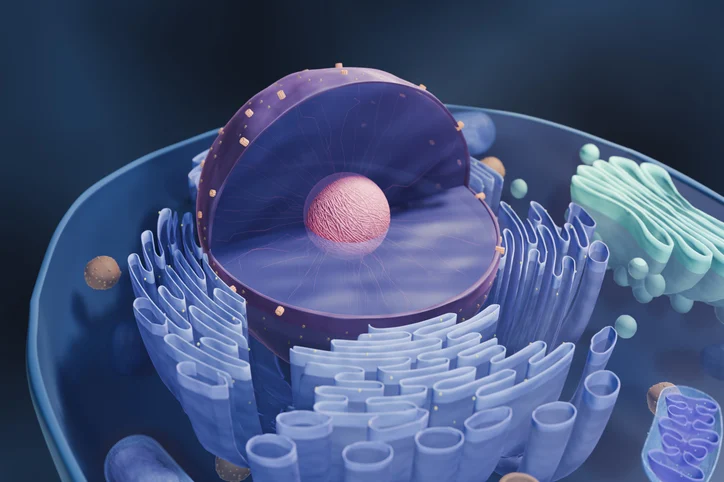
New York-based biotechnology startup Nula Therapeutics has officially emerged from stealth, announcing a strategic mission to pioneer a new class of medicines that target the nuclear envelope, a cellular component long considered a passive barrier but now recognized as a critical regulator of gene expression. The company’s public debut is bolstered by a substantial financial commitment of up to $20 million from the Advanced Research Projects Agency for Health (ARPA-H), alongside approximately $10 million in venture capital from Apollo Health Ventures. This combined funding will accelerate the development of Nula’s lead drug candidate, NLT-101, which is positioned to enter human clinical trials later this year for metabolic disorders, including metabolic dysfunction-associated steatohepatitis (MASH).
The launch represents a significant pivot in how drug developers view the architecture of the cell. For decades, the nuclear envelope—the double-layered membrane that encases the nucleus and its genetic material—was viewed by the scientific community as little more than a protective bag. However, Chris Shepard, CEO and co-founder of Nula Therapeutics and a venture partner at Apollo Health Ventures, explains that emerging research has fundamentally shifted this paradigm. The nuclear envelope acts as a sophisticated scaffolding system that organizes genetic material, ensuring that genes are correctly positioned to be activated or silenced. When this scaffolding degrades due to age or chronic metabolic stress, the resulting genetic dysregulation can trigger a cascade of pathologies.
The Evolution of Nuclear Envelope Science
The scientific foundation of Nula Therapeutics is rooted in over a decade of research into the structural integrity of the cell. In healthy cells, the nuclear envelope maintains a precise arrangement of chromatin, the mixture of DNA and proteins that forms chromosomes. This spatial organization is essential for "transcriptional fidelity"—the process of ensuring the right genes are turned on at the right time.
As organisms age or experience chronic metabolic insults, such as the persistent caloric excess associated with modern diets, the nuclear envelope begins to lose its structural coherence. This degradation leads to "nuclear leakage" or the improper tethering of genes, which in turn causes the misexpression of inflammatory markers and metabolic enzymes. In the liver, this process is particularly pronounced. Metabolic stress forces the liver to work harder to process lipids, leading to a breakdown in the nuclear architecture of hepatocytes (liver cells). This breakdown is a precursor to MASH, a severe form of fatty liver disease characterized by inflammation and cellular damage, which can progress to cirrhosis or liver cancer.
Nula’s approach focuses on restoring the functional integrity of this membrane. Unlike traditional therapies that might target a single enzyme or receptor downstream of a disease process, Nula intends to address the "upstream" structural failures that allow disease-state gene expression to take hold.
NLT-101: A Small Molecule with Systemic Ambitions
The company’s lead asset, NLT-101, is a small molecule designed to stabilize the nuclear envelope and restore its regulatory capacity. While Shepard has kept specific details regarding the molecule’s mechanism of action proprietary for the time being, he confirmed that the drug has shown promise in preclinical models of metabolic dysfunction.
Nula is currently preparing to present detailed data on NLT-101 at the American Association for the Study of Liver Diseases (AASLD) annual conference this fall. The presentation is expected to highlight the molecule’s ability to reverse markers of liver damage and improve lipid metabolism by reinforcing the nuclear scaffold. Following the disclosure of this data, the company aims to initiate a Phase 1 clinical trial before the end of 2024. This initial human study will focus on safety, tolerability, and pharmacokinetics in patients with metabolic dysfunction, with preliminary efficacy results anticipated by mid-2027.
The focus on MASH is a strategic entry point for Nula. MASH has become a focal point of the pharmaceutical industry, particularly following the recent FDA approval of the first-ever treatment for the condition. However, Nula believes its mechanism—targeting the nuclear envelope—could offer a complementary or superior approach to existing metabolic therapies, such as GLP-1 agonists, by directly addressing the cellular structural failures caused by chronic overnutrition.
The ARPA-H Award and the Biology of Resilience
While metabolic disease is the immediate clinical target, Nula’s long-term vision encompasses the broader field of longevity and geroscience. This ambition is reflected in the up to $20 million award from ARPA-H, an agency within the U.S. Department of Health and Human Services modeled after DARPA to drive "high-risk, high-reward" medical breakthroughs.
The award falls under the ARPA-H Proactive Solutions for Prolonging Resilience (PROSPR) program. The PROSPR initiative is designed to move healthcare away from reactive treatments toward proactive interventions that maintain "intrinsic capacity"—a composite measure of an individual’s physical, cognitive, sensory, and psychological functions. As humans age, their intrinsic capacity naturally declines, often due to the same cellular degradation Nula is working to prevent.
Under the ARPA-H agreement, Nula will conduct preclinical research to determine how NLT-101 can preserve or restore intrinsic capacity across multiple organ systems. If successful, this research could pave the way for a landmark placebo-controlled clinical trial in healthy older adults, aiming to prove that stabilizing the nuclear envelope can delay the onset of age-related decline. This marks a departure from the traditional "one disease, one drug" model, moving toward a "geroprotective" strategy that treats aging as a modifiable biological process.
Foundations in NIH Longevity Research
Nula’s origins are closely tied to findings from the National Institute on Aging (NIA), a division of the National Institutes of Health (NIH). Specifically, the company was inspired by the NIA’s Interventions Testing Program (ITP), which screens compounds for their ability to extend the lifespan of genetically diverse mice.
One of the standout successes of the ITP was 17α-estradiol, a non-feminizing estrogen. In repeated trials, 17α-estradiol was shown to extend the median lifespan of male mice by approximately 19%, while also improving metabolic health and reducing age-related inflammation. Shepard noted that Nula was founded in 2021 with the goal of translating the biological insights gained from these longevity studies into a new class of medicines. By identifying the nuclear envelope as a key site of action for such life-extending effects, Nula has developed NLT-101 to capture those benefits in a targeted, pharmaceutical-grade small molecule.
Strategic Funding and Market Context
The financing for Nula Therapeutics reflects a growing interest among investors in the "longevity economy." Apollo Health Ventures, the primary venture backer, specializes in "geroscience," a field that seeks to treat the underlying biological causes of aging rather than just the symptoms of individual diseases.
"The nuclear envelope is the next frontier in cellular medicine," Shepard stated. "By securing both private venture capital and federal support through ARPA-H, we are positioned to explore the full potential of NLT-101 across a spectrum of diseases that have historically been treated in isolation."
The $30 million in total initial capital provides Nula with a significant runway to complete its Phase 1 trials and expand its pipeline. Beyond metabolic disease and aging, Shepard highlighted two other major areas of interest: neurodegeneration and oncology. In neurodegenerative diseases like Alzheimer’s and Parkinson’s, the breakdown of the nuclear envelope in neurons has been linked to the accumulation of toxic proteins. Similarly, in cancer, the "blebbing" or deformation of the nucleus is a hallmark of many aggressive tumors, suggesting that restoring nuclear stability could potentially slow or stop the progression of certain malignancies.
Timeline and Future Milestones
As Nula Therapeutics transitions from a stealth startup to an active clinical-stage player, the industry will be watching several key milestones over the next 36 months:
- Late 2024: Presentation of preclinical data for NLT-101 at the AASLD annual conference.
- Late 2024: Commencement of the Phase 1 clinical trial for metabolic dysfunction.
- 2025-2026: Execution of ARPA-H funded studies on "intrinsic capacity" and systemic resilience.
- Mid-2027: Release of preliminary Phase 1 data, which will determine the direction of larger Phase 2 efficacy trials.
The launch of Nula comes at a time when the biotechnology sector is increasingly focused on high-science, platform-based approaches. By targeting a fundamental structural component like the nuclear envelope, Nula is betting that it can unlock treatments for some of the most pervasive and difficult-to-treat conditions of the 21st century.
Analysis of Implications
The emergence of Nula Therapeutics signals a maturing of the longevity science sector. For years, aging research was relegated to the fringes of academia, but the involvement of agencies like ARPA-H and sophisticated venture firms like Apollo Health Ventures suggests a shift into the mainstream.
If NLT-101 proves successful in stabilizing the nuclear envelope, it could redefine the standard of care for metabolic diseases. Rather than just managing blood sugar or reducing liver fat through metabolic shifts, doctors might one day prescribe "nuclear stabilizers" to maintain the structural health of cells, effectively preventing the genetic "noise" that leads to chronic illness. Furthermore, the focus on "intrinsic capacity" through the ARPA-H partnership could set a regulatory precedent for how anti-aging medicines are evaluated by the FDA, moving the needle toward preventative geriatric medicine.

