
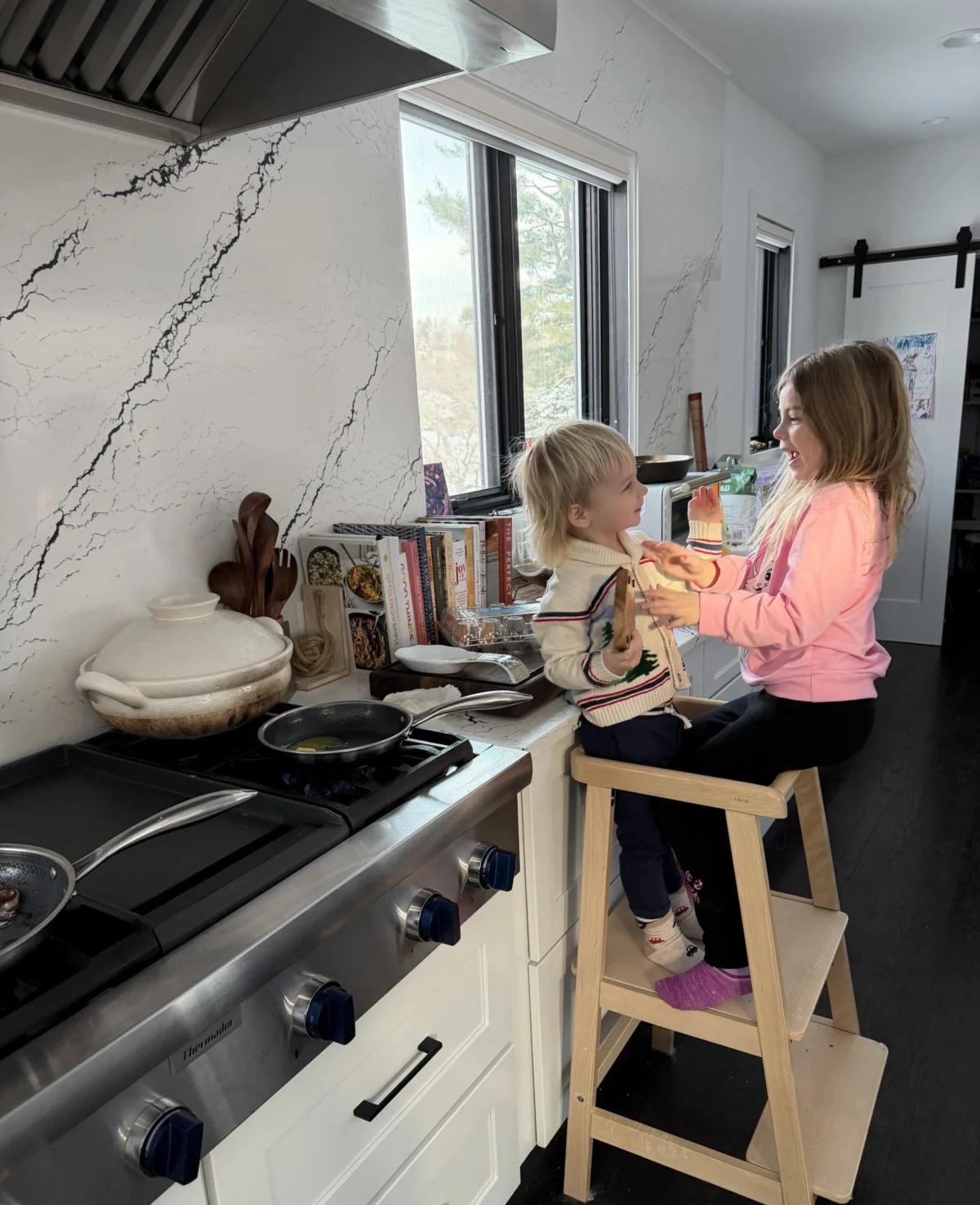
In an increasingly fast-paced world where family schedules are often fragmented, the seemingly simple act of cooking together is emerging as a powerful catalyst for child development, stronger family bonds, and the acquisition of invaluable life skills. ESPN anchor Laura Rutledge, known for her demanding career covering high-stakes sports, has shared compelling insights into how the kitchen, despite its inherent chaos with young children, has become a cherished and profoundly beneficial space for her family. Her reflections underscore a growing recognition among parents and developmental experts alike that shared culinary experiences offer far more than just a meal; they provide a fertile ground for learning, connection, and growth.
The modern family often grapples with the challenge of finding authentic, unstructured quality time amidst a myriad of commitments. Rutledge’s journey into family cooking began out of necessity, with her earliest memories involving preparing meals almost entirely one-handed while cradling her infants, Reese and Jack, on her hip. This initial adaptation quickly evolved into a foundational routine, transforming the kitchen into the heart of their home where presence and participation were paramount from the very beginning. This organic integration of children into daily household tasks stands in contrast to a societal trend where children’s involvement in domestic duties has, for various reasons, diminished.
The Evolution of a Family Tradition: From Necessity to Cherished Ritual
For a professional like Rutledge, whose career demands quick thinking and constant readiness, the idea of adding a time-consuming, potentially messy activity to an already packed schedule might seem counterintuitive. She openly acknowledges that after anchoring "NFL Live" or emerging from extensive production meetings, cooking can often feel like the last thing she wants to do. Yet, it has paradoxically become one of her most anticipated and favorite routines. This transformation highlights a crucial aspect of engaged parenting: recognizing that the perceived inefficiencies of involving children often yield disproportionately greater returns in developmental and emotional benefits. The acceptance of a slower pace, inevitable spills, and the general disarray that accompanies cooking with toddlers and preschoolers, becomes a conscious choice, reframing "mundane" tasks into extraordinary moments of connection.
This perspective aligns with a broader movement advocating for mindfulness in parenting and the intentional creation of shared experiences that de-emphasize perfection in favor of process and presence. Rutledge’s account serves as a practical illustration of how, even in the busiest of lives, dedicating time to activities like cooking can provide a much-needed counterbalance to professional pressures, grounding individuals in the immediate, tangible joys of family life. Her experiences, structured into five key lessons, offer a compelling argument for embracing the culinary journey with children, valuing the lessons learned and the bonds forged over immaculate countertops or restaurant-quality outcomes.
1. Cultivating Natural Quality Time and Unpressured Communication
One of the most significant benefits Rutledge identifies is the creation of quality time that feels inherently natural and unforced. Standing side-by-side at the kitchen counter, with Jack on his step stool and Reese meticulously measuring ingredients, sparks organic conversations. These discussions range from recounting the day’s events to sharing imaginative ideas or humorous anecdotes about their family pet, George. This environment, devoid of pressure or a predefined agenda, allows for genuine interaction, fostering open communication lines that might be harder to establish in more structured settings.
Research consistently supports the profound benefits of shared family activities, particularly those that are unstructured and collaborative. Studies from institutions like the National Center on Addiction and Substance Abuse have repeatedly linked frequent family meal times to improved academic performance, enhanced emotional well-being, and reduced engagement in high-risk behaviors among adolescents. While Rutledge’s children are younger, the foundation for these positive outcomes is laid in early childhood through consistent, low-stress interactions. The shared purpose of creating a meal together, punctuated by spontaneous "song and dance moves," as Rutledge describes, promotes a relaxed atmosphere where children feel comfortable expressing themselves, strengthening familial bonds in an authentic manner. The departure from the expectation of culinary perfection is key here; once the pressure to produce a flawless meal is lifted, both parent and child can fully immerse themselves in the joy of the process.
2. Enhancing Dietary Acceptance Through Ownership and Involvement
A common challenge for parents is encouraging children to try and enjoy a variety of foods, particularly vegetables. Rutledge candidly admits to previously expending considerable energy trying to convince Reese and Jack to eat what she prepared. However, a significant shift occurred when she realized that involving her children in the meal preparation process dramatically increased their willingness to eat the finished product. This observation is supported by psychological principles related to ownership bias and the endowment effect, where individuals, even young children, place a higher value on items they perceive as their own or have invested effort in creating.
By assigning children age-appropriate tasks—whether it’s stirring soup, sprinkling cheese, or carefully pouring pasta—parents can empower them with a sense of agency over their food choices. This hands-on involvement transforms passive consumption into active participation. Nutritionists and child development specialists frequently advocate for involving children in cooking as a practical strategy to combat picky eating and encourage healthier dietary habits. When children contribute to making a dish, they are not just eating a meal; they are consuming the fruits of their labor, making them more invested and open to new flavors and textures. The anecdotal evidence of a child who previously "swore they didn’t like vegetables" eagerly consuming a dish they helped prepare is a powerful testament to the efficacy of this approach.
3. Integrating Essential Life Skills and Cognitive Development
Beyond the immediate benefits of bonding and improved eating habits, cooking with children serves as an informal yet highly effective classroom for developing a wide array of real-life skills. Rutledge observes her children naturally picking up crucial cognitive, motor, and socio-emotional abilities without even realizing they are learning. Tasks such as measuring ingredients introduce foundational mathematical concepts (fractions, volume); following a recipe sequential thinking and problem-solving; and mixing, pouring, and stirring enhance fine motor skills and hand-eye coordination.
Examples like Jack learning gentleness while cracking an egg, even if it initially results in crumbled shells, illustrate the iterative nature of skill acquisition. Reese, through following recipes and contributing to family meals, develops confidence in her abilities and a sense of competence. Child development experts emphasize the importance of practical life skills in fostering independence and self-efficacy. Cooking provides a rich, multi-sensory learning environment that supports executive functions like planning, organization, and working memory. Furthermore, investing in child-safe tools—such as blunt knives, sturdy mixing bowls, and reliable step stools—transforms the kitchen into a manageable and secure learning space, allowing parents to focus on guidance rather than constant safety concerns. This shift in parental mindset, from worrying about every potential hazard to embracing the shared experience, unlocks the full potential of culinary education within the home.
4. Fostering Mindfulness and a Slower Pace in a High-Speed World
In an era defined by relentless demands and the pressure to operate at peak efficiency, Rutledge highlights how cooking with her children provides a vital counterpoint to her professional life. Her career at ESPN necessitates rapid decision-making and constant preparedness. However, the kitchen with her children demands the opposite: patience, presence, and an embrace of slowness. "You cannot rush a toddler who is very seriously spooning tomato sauce into a pot one tiny spoonful at a time," she notes.
This enforced deceleration is, for Rutledge, a welcome and necessary reset. Following Jack’s pace and celebrating small achievements, like his remembering to "stir slowly," pulls her away from the urgent concerns of her professional life—the next segment, an unanswered email—and firmly into the present moment. This practice of mindfulness, where attention is deliberately focused on the current activity and interactions, is increasingly recognized for its mental health benefits, including stress reduction and improved emotional regulation. These "tiny wins"—a new food tried, a small skill mastered—become cherished moments, documented and reflected upon, serving as anchors in a busy life. The acknowledgment that cooking with kids is "chaos" and "a mess" but ultimately "so dang fun" encapsulates the transformative power of embracing imperfection and finding joy in the present. This perspective aligns with therapeutic approaches that advocate for engaging in activities that ground individuals and encourage a break from constant mental acceleration.
5. Building Self-Esteem Through Authentic Contribution
Perhaps one of the most profound benefits for children is the genuine sense of importance and contribution they derive from participating in meal preparation. Rutledge observes the visible pride in her children when they engage in real tasks: Reese slicing fruit or Jack enthusiastically squeezing tomatoes for sauce. These are not pretend games; they are tangible contributions to a fundamental family activity—making a meal. This authentic involvement is critical for building a child’s self-esteem and confidence.
Allowing children to "own their task completely," even if the outcome isn’t perfectly aligned with adult standards, is a deliberate pedagogical choice. A plate of "slightly overcooked scrambled eggs made by a child who is beaming with pride" becomes a meal of immeasurable value, transcending culinary critique. Child development theories, such as Erik Erikson’s stages of psychosocial development, emphasize the importance of children developing a sense of initiative and industry. Providing real responsibilities, rather than merely superficial ones, allows children to experience competence and the satisfaction of contributing meaningfully to their family unit. The kitchen, with its practical tasks and immediate, edible results, emerges as an ideal environment for fostering this crucial aspect of development, laying the groundwork for confident, capable individuals.
Broader Implications and The Culinary Classroom
The insights shared by Laura Rutledge resonate with a broader movement recognizing the kitchen as an invaluable educational and developmental space. Beyond the immediate family unit, the implications of fostering culinary engagement in children extend to public health, education, and societal well-being. Childhood obesity rates remain a significant concern globally, and early exposure to diverse ingredients and hands-on cooking can instill healthier eating habits that last a lifetime. Educational programs in schools are increasingly incorporating cooking classes to teach not only nutrition but also practical life skills, basic science, and cultural appreciation.
The "kid-friendly spaghetti carbonara" Rutledge mentions as a staple in her kitchen is indicative of how simple, accessible recipes can serve as entry points for children into the world of cooking. These experiences empower children with a sense of self-sufficiency, reducing reliance on pre-packaged or convenience foods as they grow older. Moreover, the act of cooking together reinforces family values, promoting cooperation, communication, and shared responsibility. In a world that often prioritizes academic achievement and extracurricular specialization, the kitchen offers a refreshing return to fundamental, holistic development—a space where sticky fingers, flour-dusted surfaces, and slightly imperfect meals are not just tolerated but celebrated as essential ingredients in the recipe for a well-rounded childhood and a strongly connected family. The lessons learned and the bonds forged over a bubbling pot or a mixing bowl truly enrich the lives of both parent and child, proving that the heart of the home often beats strongest in its kitchen.

