
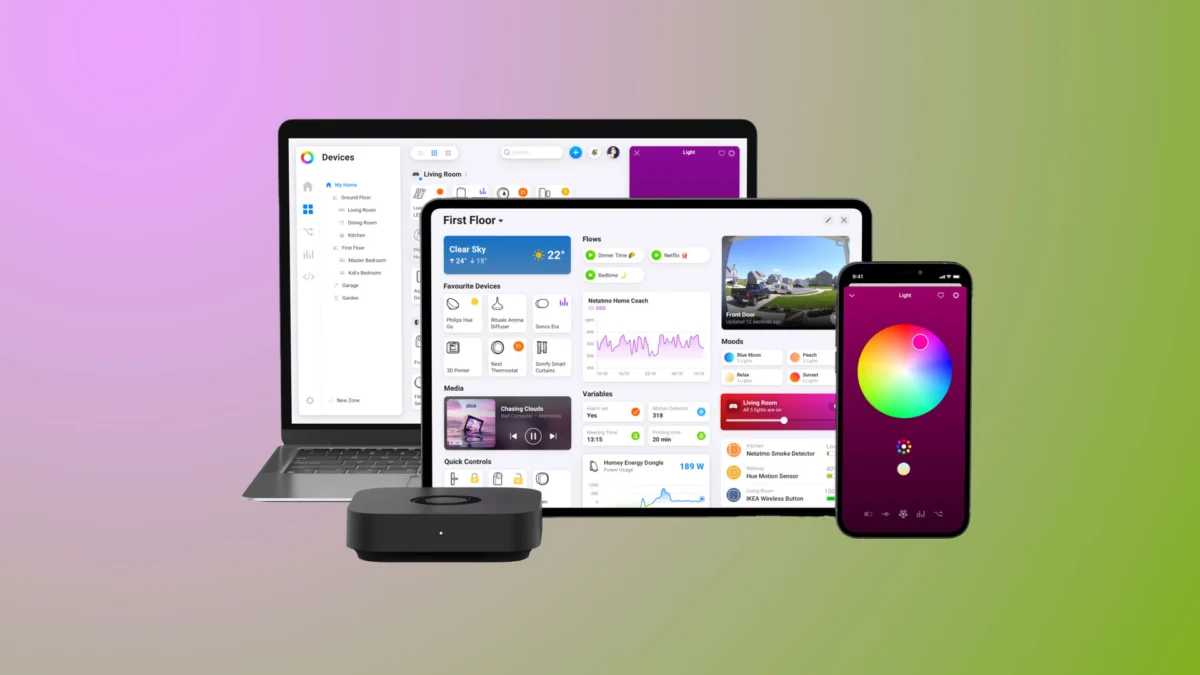
The smart home hub manufacturer Homey has announced a significant milestone in its commitment to interoperability and expanded smart home functionality, achieving Matter 1.5 certification for its entire current product line. This certification, which covers Homey Pro models manufactured between 2023 and 2026, the Homey Pro mini, and the Homey Self-Hosted Server, represents a unified software component across these devices, ensuring a consistent and advanced smart home experience. The update is particularly noteworthy for its inclusion of new device categories, notably EV chargers and solar panels, alongside heat pumps, major appliances, and existing support for lighting, locks, sensors, and more. This move positions Homey at the forefront of a growing trend within the smart home industry to extend the capabilities of the Matter standard beyond basic control and into the complex realm of energy management.
The integration of Matter 1.5 support signifies more than just an update to existing capabilities; it marks a strategic evolution for Homey and a broader shift in the smart home landscape. Matter, a connectivity standard developed by the Connectivity Standards Alliance (CSA), aims to simplify smart home device integration by creating a universal language that devices from different manufacturers can use to communicate. Prior to Matter, consumers often faced compatibility issues, with devices from one brand refusing to work with hubs or apps from another. The Matter 1.5 specification, released in late 2023, builds upon previous iterations by expanding the range of supported device types, a crucial step towards a truly comprehensive smart home.
Expanding the Smart Home Horizon: New Device Categories Under Matter 1.5
The most impactful aspect of Homey’s Matter 1.5 certification lies in the expanded range of device categories it now natively supports. The addition of EV chargers, heat pumps, solar panels, and major appliances means that Homey users can now seamlessly integrate and control these crucial elements of a modern, energy-conscious home. This move directly addresses a growing consumer interest in managing home energy consumption and production.
For example, the ability to control EV chargers through the Matter standard opens up new possibilities for smart charging. Users can schedule charging sessions to take advantage of off-peak electricity rates, synchronize charging with solar panel output to maximize the use of renewable energy, or even integrate charging status into broader home automation routines. Similarly, controlling heat pumps, which are increasingly being adopted for their energy efficiency in heating and cooling, allows for more sophisticated climate control strategies. This could involve pre-heating or pre-cooling a home based on occupancy schedules or weather forecasts, all managed through a single, unified interface.
The inclusion of solar panels within the Matter ecosystem, even if primarily for monitoring and integration with energy management systems rather than direct control, is also a significant development. As more homes adopt solar power, the ability to track energy generation, understand consumption patterns, and potentially integrate with battery storage systems becomes increasingly valuable. Homey’s support for these categories places it in direct competition with established players like Apple Home and Google Home, both of which have been steadily expanding their own Matter support, but Homey’s proactive integration of energy management devices highlights a strategic focus on this burgeoning market segment. According to recent market research from Statista, the global smart home market is projected to reach over $200 billion by 2027, with energy management solutions being a key growth driver.
Bridging the Gap: Homey’s Matter Bridge for Legacy Devices
A critical challenge in the widespread adoption of new smart home standards like Matter is the vast number of existing smart devices that do not natively support the protocol. These devices, often connected via Zigbee, Z-Wave, infrared, Bluetooth, 433MHz, Wi-Fi, or proprietary manufacturer APIs, represent a significant investment for consumers. Homey addresses this limitation head-on with its innovative Matter Bridge app.
This app functions as a sophisticated translator, allowing devices already connected to Homey through these diverse protocols to appear as standard Matter accessories within other Matter-compatible ecosystems. This means that a user’s existing collection of lights, smart plugs, thermostats, door locks, window coverings, and sensors, regardless of their original communication method, can be exposed to other Matter controllers such as Apple Home, Google Home, Amazon Alexa, Samsung SmartThings, and Home Assistant.
The implications of this bridging capability are substantial. It effectively future-proofs existing smart home investments, ensuring that consumers do not need to replace their entire device inventory to benefit from the advantages of Matter. Users can continue to enjoy the convenience and interoperability of Matter without sacrificing the functionality of their established devices. Critically, Homey retains full control over the original device, meaning that while it may appear as a Matter accessory elsewhere, its advanced features and direct integrations managed by Homey remain fully accessible. This dual functionality provides a seamless transition path for users and a compelling reason to adopt Homey as their central smart home controller.
A Strategic Vision for Interoperability and Longevity
Athom CEO Stefan Witkamp has been a vocal proponent of the Matter standard, emphasizing its role in simplifying consumer choice and ensuring the longevity of smart home investments. His perspective aligns with the core philosophy behind Homey’s development: to create a truly universal and user-friendly smart home experience.
"Matter is making it easier than ever for consumers to choose smart home products across brands," Witkamp stated. "However, we recognize that the vast majority of people already own smart devices that will never speak Matter natively. Our goal with the Matter Bridge is to ensure that these devices remain just as usable and integrated as anything bought new, providing a smooth and cost-effective upgrade path for everyone."
This sentiment underscores Homey’s commitment to backward compatibility and future-proofing. The company’s history further reinforces this dedication to innovation and broad integration. Founded in the Netherlands in 2014, Athom has consistently focused on building a robust platform that supports a wide array of devices. The acquisition by LG Electronics in 2024 is a testament to the value and potential of the Homey platform, signaling increased resources and a broader reach for future development. Currently, Homey boasts support for over 50,000 devices from more than 1,000 different brands, a remarkable ecosystem that the Matter 1.5 certification further solidifies and expands.
Availability and Technical Details
The Matter 1.5 support is available immediately for Homey Pro, Homey Pro mini, and Homey Self-Hosted Server users. For users of the Homey Pro and Homey Pro mini, a built-in Thread Border Router is included, which is essential for enabling Matter-over-Thread devices to connect to the network. Thread is a low-power, low-data-rate wireless networking protocol that is a cornerstone of the Matter standard, facilitating reliable and secure device communication.
Users of the Homey Self-Hosted Server will require a separate Thread Border Router on their network to enable Matter-over-Thread functionality. This requirement is standard for many self-hosted solutions and allows users greater flexibility in configuring their network infrastructure.
The official certification for Matter 1.5 was issued on June 29, 2026, for firmware version 13.3.0. This precise issuance date highlights the rigorous testing and compliance processes involved in achieving Matter certification. Crucially, Homey maintains backward compatibility with devices certified under earlier versions of Matter. This ensures that existing Matter setups will continue to function seamlessly as the standard evolves, providing users with peace of mind and a stable smart home environment.
Broader Implications for the Smart Home Industry
Homey’s achievement of Matter 1.5 certification and its strategic expansion into energy management devices carry significant implications for the broader smart home industry.
Firstly, it sets a new benchmark for interoperability. By offering a unified platform that supports a vast array of legacy devices alongside the latest Matter advancements, Homey demonstrates a clear path towards a truly integrated smart home for all consumers, regardless of their existing device ecosystem. This approach is likely to encourage other manufacturers to follow suit, prioritizing backward compatibility and bridging solutions.
Secondly, the emphasis on energy management devices signals a crucial shift in the smart home market. As energy costs rise and environmental consciousness grows, consumers are increasingly looking for ways to optimize their energy consumption and production. Homey’s early and comprehensive support for EV chargers, solar panels, and heat pumps positions it as a leader in this critical segment. This will likely accelerate the development and adoption of similar energy-focused smart home products from other companies.
Thirdly, Homey’s success underscores the importance of open standards like Matter. The collaborative nature of the CSA and the development of Matter are crucial for breaking down proprietary silos and fostering innovation. Homey’s active participation and achievement of certification demonstrate the tangible benefits of this approach for both manufacturers and consumers.
The evolution of the smart home is no longer solely about convenience; it is increasingly about efficiency, sustainability, and seamless integration. Homey’s latest certification and product expansion are not just incremental updates; they represent a significant leap forward in realizing the full potential of a connected, intelligent, and energy-conscious home. As the Matter standard continues to mature and gain wider adoption, companies like Homey, with their forward-thinking approach to interoperability and expanded functionality, are poised to shape the future of smart living.

