
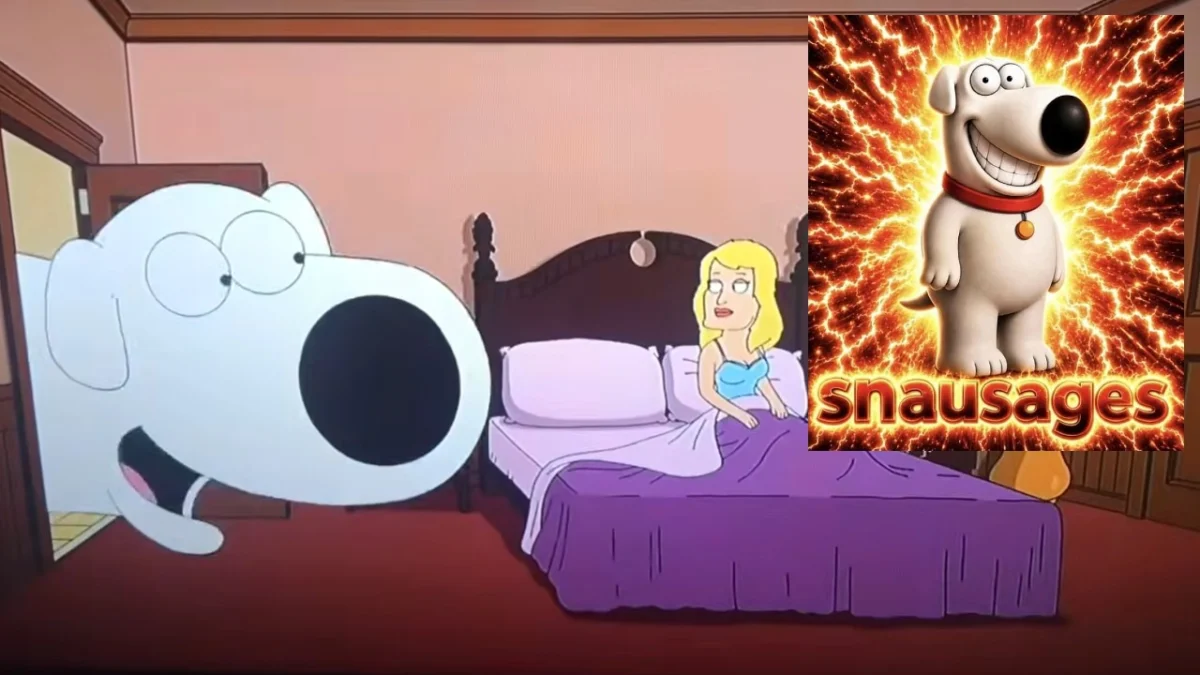
The digital landscape of mid-2026 has been significantly reshaped by a peculiar resurgence of animated surrealism, most notably characterized by the "Brian Griffin Snausages" phenomenon. This trend, which classifies itself within the "brainrot" subgenre of internet culture, leverages a specific moment from the long-running animated sitcom Family Guy to create a series of high-energy, often distorted, and AI-augmented media pieces. By blending 1980s commercial nostalgia with contemporary audiovisual editing techniques, the meme has captured the attention of millions on platforms such as TikTok, illustrating the cyclical nature of media consumption and the evolving tastes of Gen Alpha and Gen Z audiences.
The core of the meme involves a brief sequence where the character Brian Griffin, the anthropomorphic family dog, emerges from a bathroom with an unnaturally enlarged head to exclaim the word "Snausages." This single-word exclamation serves as a direct reference to a classic 1984 television advertisement for Ken-L Ration brand dog treats. While the original Family Guy episode aired years prior, its sudden transformation into a viral "brainrot" staple in July 2026 highlights a broader trend where legacy media is deconstructed and repurposed for a new era of algorithmic consumption.
Historical Context: From 1984 to 2019
To understand the current cultural impact of the Brian Griffin Snausages meme, one must first examine its dual origins in American advertising and television history. The term "Snausages" entered the public consciousness in 1984 through a marketing campaign for Ken-L Ration. The commercials featured a small dog that would pop out of unexpected locations—such as a kitchen cabinet or a laundry basket—and excitedly bark the product’s name. The campaign was highly successful, cementing the word as a recognizable "earworm" for the Gen X and Boomer demographics.
Thirty-five years later, Seth MacFarlane and the writers of Family Guy utilized this cultural touchstone in the Season 18 episode titled "Bri-Da," which originally aired on October 6, 2019. The narrative context of the scene involves Brian Griffin hiding in a hotel bathroom to avoid being seen by Ida Davis, the transgender mother of Glenn Quagmire, with whom Brian has been spending time. When a room service attendant knocks and announces the arrival of "Snausages and eggs," Brian’s biological instincts override his social anxieties. His head swells to a grotesque size as he bursts through the door to repeat the iconic commercial line.
At the time of its broadcast in 2019, the scene was viewed as a standard Family Guy cutaway-style gag—a brief, absurdist nod to vintage Americana. It remained a minor point of reference within the show’s massive catalog until the summer of 2026, when the specific aesthetics of the scene aligned perfectly with the emerging "brainrot" content movement.
The 2026 Viral Resurgence: A Chronology
The transition of the "Snausages" clip from a television gag to a viral digital epidemic began in mid-July 2026. The resurgence is largely credited to the TikTok ecosystem, where creators began applying modern "brainrot" editing styles to the footage. This style typically involves high-contrast filters, extreme saturation, distorted audio, and the integration of unrelated, high-stimulation imagery.
On July 21, 2026, a TikTok user known as @poker_man5 uploaded what is considered one of the foundational edits of the current trend. This video introduced an AI-generated reaction image of Brian Griffin featuring an exaggerated, wide-toothed smile. The use of artificial intelligence to alter the character’s features added an "uncanny valley" effect that resonated with users seeking surreal humor. The video garnered over 128,000 views within its first week, signaling the start of a rapid upward trajectory for the meme.
By July 25, the trend had evolved. A creator under the handle @realsnausages posted a "brainrot" edit that further abstracted the original scene, incorporating chaotic transitions and rapid-fire visual cues. This iteration achieved over 234,000 views in just four days. The following day, July 26, the meme entered its musical phase when TikToker @zenziko6 produced a "phonk" remix of the audio. Phonk, a subgenre of electronic dance music characterized by heavy bass and cowbell melodies, has become the unofficial soundtrack of 2020s internet culture. The juxtaposition of Brian’s high-pitched "Snausages" vocal with aggressive, rhythmic beats created a viral soundbite that reached 206,000 views in 72 hours.
The peak of the initial wave occurred on July 28, 2026, when @mikeczarnuchskibidicski uploaded a highly polished brainrot edit. This version amassed more than 522,000 views in a single day, cementing "Snausages" as a dominant trend on the platform’s "For You" page (FYP).
Analysis of the "Brainrot" Aesthetic
The classification of the Brian Griffin Snausages meme as "brainrot" is essential to understanding its appeal. In the context of 2026 digital culture, "brainrot" refers to a genre of content that is intentionally over-stimulating, nonsensical, and repetitive. It is designed to cater to shorter attention spans and the desire for "lo-fi" yet high-impact entertainment.
The "Snausages" meme fits this criteria through several key elements:
- Repetition: The singular word "Snausages" is looped and distorted, losing its linguistic meaning and becoming a purely rhythmic or tonal element.
- Visual Distortion: The use of AI to warp Brian Griffin’s face or enlarge his head beyond the original animation’s proportions creates a sense of visual chaos.
- Intertextuality: The meme assumes a level of "meta-knowledge." It relies on the viewer recognizing Brian Griffin while simultaneously being confused or amused by the 1984 reference, which many younger viewers may only know through the meme itself.
- Nihilistic Humor: There is no traditional "joke" or punchline in these edits. The humor is derived from the absurdity of the presentation and the sheer overwhelming nature of the audiovisual input.
Technological Drivers: AI and Algorithmic Amplification
The role of technology in the spread of the Brian Griffin Snausages meme cannot be overstated. Unlike memes of previous decades, which relied on static images or simple video clips, the 2026 iteration utilizes sophisticated AI image generation tools. Creators use these tools to generate hyper-realistic or disturbingly altered versions of Brian Griffin, which are then integrated into video templates.
Furthermore, TikTok’s recommendation algorithm has played a pivotal role. The "Snausages" soundbite became a "trend signal," meaning that as more creators used the audio, the algorithm increasingly pushed those videos to users who had previously engaged with similar content. This created a feedback loop where the meme’s ubiquity became self-sustaining. The inclusion of various hashtags, such as #wiedlak and #andrzejwiedlak, suggests that the meme may have also found a strong foothold in specific regional or linguistic subcommunities, further diversifying its reach.
Cultural Impact and Industry Reactions
While Seth MacFarlane and the production team at Family Guy have not issued a formal statement regarding the 2026 viral surge of the "Snausages" clip, the trend reflects a broader reality for modern content creators: the loss of control over intellectual property in the age of remix culture. A scene intended for a 22-minute television episode has been stripped of its narrative context and transformed into a 6-second unit of digital currency.
From a marketing perspective, the meme has provided an unexpected—and free—boost in brand recognition for the Snausages treat brand, which is currently owned by Post Holdings (following its acquisition from Big Heart Pet Brands). While the brand’s original 1984 audience is now in their 50s and 60s, a new generation of consumers is being introduced to the name through a distorted, AI-filtered cartoon dog. This "accidental marketing" is a phenomenon that brands are increasingly trying to harness, though the unpredictable and often irreverent nature of "brainrot" content makes official brand participation a risky endeavor.
Future Implications
The Brian Griffin Snausages trend serves as a case study for the future of internet memes. It demonstrates that any piece of media, regardless of its age or original intent, can be revived and repurposed if it possesses the right "viral DNA"—in this case, a combination of nostalgia, absurdity, and a catchy, repetitive vocal hook.
As AI tools become more accessible, we can expect to see an increase in these types of "synthetic memes," where the line between original animation and user-generated distortion becomes blurred. The "Snausages" phenomenon is likely a precursor to a more permanent shift in entertainment, where "brainrot" moves from the fringes of the internet to a primary mode of cultural expression.
In conclusion, Brian Griffin Snausages is more than just a fleeting internet joke; it is a complex intersection of advertising history, television satire, and the relentless evolution of digital aesthetics. As the summer of 2026 progresses, the meme continues to mutate, proving that in the modern attention economy, a giant-headed dog shouting about dog treats is a powerful—and perhaps inevitable—cultural force.

