
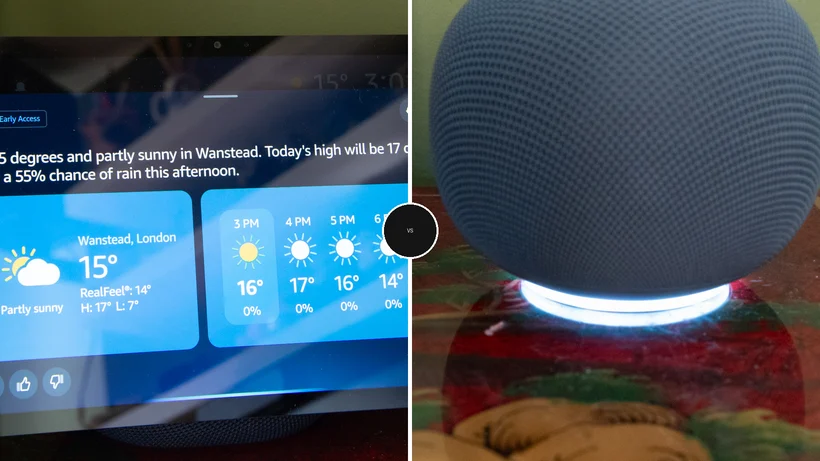
The evolution of voice assistants has reached a pivotal moment, with the integration of Generative AI promising to transform them from simple command-takers into truly intelligent home companions. For years, voice assistants struggled with natural language processing, often requiring users to adhere to rigid command structures and proving incapable of handling anything beyond rudimentary queries. This limitation led to a noticeable decline in their perceived utility, with many users relegating them to basic tasks like setting timers or checking the weather. However, the advent of Generative AI, exemplified by the latest offerings from tech giants Amazon and Google, is poised to redefine user expectations. The primary contenders in this burgeoning market are Amazon Alexa+ and Google Gemini for Home, each vying to establish dominance in the smart home ecosystem. While hardware compatibility, particularly smart speaker ownership, plays a role in initial user choice, a deeper examination of their current capabilities and future potential reveals a complex competitive landscape.
The current accessibility of these advanced voice assistants offers a stark contrast. Google Gemini for Home has begun a phased rollout, with users receiving email invitations to sign up. This sophisticated AI is designed to be compatible with a wide array of Google’s smart home devices released over the past seven years, including popular models like the Nest Mini, Nest Audio, both Nest Hub iterations, and the recently introduced Google Home Speaker. This broad compatibility ensures that a significant portion of existing Google smart home users can readily adopt Gemini.
Amazon’s approach with Alexa+ is considerably more restrictive at present. The enhanced AI is currently accessible only through an invite-only Early Access program. Prospective users can register their interest, but are subject to the company’s invitation queue. Amazon is incentivizing early adoption by offering priority invitations to individuals who purchase new smart speakers, such as the Echo Show 11, Echo Studio, or Echo Dot Max. This strategy aims to drive hardware sales while gradually expanding the user base for Alexa+.
Pricing models also differentiate the two offerings. Upon its wider launch, Alexa+ will be available free of charge to Amazon Prime subscribers, a significant perk for a large segment of Amazon’s customer base. For non-Prime members, a monthly subscription fee of $19.99 (or £19.99) will be implemented. Google Gemini for Home offers a free basic tier, but also provides tiered paid subscriptions that extend beyond voice assistant functionality, incorporating cloud storage and advanced camera features. The Google Home Premium Standard plan, priced at $10 (£8) per month or $100 (£80) annually, includes 30 days of video history, intelligent alerts, Gemini Live capabilities, and in-app assistance for automation creation. The higher-tier Google Home Premium Advanced plan, at $20 (£16) per month or $200 (£160) annually, enhances video history to 60 days and adds 24/7 recording for wired devices, AI-powered video search, and descriptive notifications.
The core distinction between the two platforms lies in their conversational abilities and general information retrieval. Alexa+ has been meticulously engineered with conversational fluidity as a paramount objective. It demonstrates a remarkable capacity to handle follow-up questions without faltering and exhibits a robust memory of user-provided personal details. For instance, if a user specifies a family member’s dietary preference (e.g., vegetarian), Alexa+ will incorporate this information when generating recipe recommendations. Furthermore, Alexa+ allows users to customize its personality over time, enabling adjustments for response length or the avoidance of specific language. This adaptive learning capability suggests a system that improves with sustained interaction. In terms of general knowledge, Alexa+ performs admirably, adeptly answering queries about movie casts, public transportation status, or optimal times for outdoor activities. Its regional tuning is also noteworthy, with specific adaptations for dialects, tone, and measurement units in different locales, such as the UK.
Google Gemini for Home, while also proficient in basic conversational interactions and natural language understanding, exhibits some inconsistencies. It can answer general questions effectively, mirroring Alexa+’s capabilities. However, its regional tuning appears less sophisticated. An example cited involved a UK user being advised to set their thermostat to 72 degrees, a temperature that, without explicit clarification, could be misinterpreted as Celsius rather than Fahrenheit, leading to potentially uncomfortable or unsafe conditions. Reliability issues have also been reported, with instances of Gemini forgetting previously provided information, such as dietary preferences. More concerning are the reported instances of nonsensical responses to seemingly straightforward questions. When asked about the number of "Ms" in the word "mammal," Gemini responded by referencing "megaseconds" and elaborating on time measurements, demonstrating a peculiar inability to parse the context of the query. This tendency to double down on illogical answers, even when pressed for clarification, suggests a potential underlying fragility in its reasoning capabilities, a critical drawback for an AI intended for widespread home use.
Conversational Prowess and General Knowledge: A Closer Look
The development trajectory of Alexa+ clearly prioritizes nuanced conversational experiences. Amazon’s investment in natural language processing and context retention is evident in its ability to seamlessly manage multi-turn dialogues. This is crucial for creating a sense of genuine interaction, moving beyond the transactional nature of older voice assistants. The ability to recall and apply personal information, such as dietary restrictions for family members, transforms the assistant from a mere information retrieval tool into a personalized helper. The adaptive personality feature is a significant differentiator, allowing users to mold the assistant’s communication style to their preferences. This anthropomorphic aspect, while sometimes debated in its necessity, can significantly enhance user comfort and engagement. For instance, the ability to request shorter, more concise answers or to exclude certain colloquialisms, as observed in the UK context with the term "mate," demonstrates a commitment to user-centric customization. In terms of factual recall, Alexa+ excels across a broad spectrum of topics, from pop culture to practical daily information. Its localized language models, particularly noted in the UK, underscore a strategic effort to resonate with diverse user bases through culturally relevant language and understanding of regional nuances.
Google Gemini for Home, while a significant leap forward for Google’s AI offerings, faces challenges in matching Alexa+’s conversational depth and reliability. While it comprehends natural language and can engage in basic dialogue, the instances of factual misinterpretations and memory lapses are a notable concern. The thermostat example, where a common unit of temperature could be misconstrued, highlights the importance of robust regional calibration. This is not merely an inconvenience; in a smart home context, such errors could have practical implications for comfort and energy management. The "megasecond" anecdote, while perhaps illustrative of a system still in development, points to a potential for logical disconnects that could undermine user trust. The ability of an AI to confidently assert incorrect information and then defend it further erodes its credibility. This stands in contrast to Alexa+’s apparent ability to learn from correction and adapt its responses. The implication is that while Gemini may be quicker to integrate into existing hardware, its foundational understanding and consistent performance in complex conversational scenarios may lag behind its primary competitor.
Local Business Search: Navigating Your Neighborhood
When it comes to discovering local businesses, the performance of these AI assistants diverges significantly. Alexa+ currently struggles with maintaining an up-to-date database of local establishments. In testing, it recommended a French restaurant that was not only further away than other viable options but had also ceased operations in 2023. While Alexa+ partially redeems itself through integration with OpenTable, allowing for voice-activated table bookings and even diary slot checking, it does not support reservations for establishments requiring card deposits, limiting its utility for a subset of dining experiences.
Google Gemini for Home demonstrates a superior understanding of local business information, boasting a more current and accurate database. Users are more likely to receive relevant and available options when searching for nearby services. However, it currently lacks the direct booking functionality offered by Alexa+ through OpenTable, meaning users must resort to manual booking processes after receiving recommendations.
Documents, Calendars, and Enhanced Productivity
The area where Alexa+ clearly establishes a commanding lead is in its ability to process and leverage personal documents and calendar information. Users can upload PDFs or photos, or even email them to Alexa+, which can then extract and interpret the contained data. This capability enables sophisticated actions, such as automatically creating calendar entries for school closure days or compiling a list of items for a trip based on uploaded itineraries. The ability to query uploaded documents, such as appliance manuals, and receive specific instructions is a particularly impressive feature, showcasing a deep level of contextual understanding. Alexa+ supports integration with both Google and Microsoft calendars, though it is limited to free accounts and does not currently support work or enterprise versions.
Google Gemini for Home, while capable of basic calendar management, such as creating entries or checking schedules, falls short when it comes to document processing. When prompted to read a PDF, it suggested the user read it aloud to the device, an unhelpful response for a voice-activated assistant. This lack of document comprehension renders Gemini significantly less useful for users seeking to integrate their personal digital information beyond basic calendar events.
Smart Home Integration: Orchestrating Your Environment
In the realm of smart home control, Alexa+ once again demonstrates a distinct advantage. It excels at interpreting nuanced and contextual commands. For instance, saying "It’s cold in here" can trigger the heating system to activate. Alexa+ also adeptly handles multiple commands within a single utterance and facilitates the creation of custom routines, both regular and one-off, based on voice prompts. This level of intuitive control streamlines the management of connected home devices.
Google Gemini for Home manages basic smart home functions adequately. It can execute a few simple simultaneous requests. However, its performance deteriorates rapidly with more complex commands or sequences. Commands can experience noticeable delays in implementation, and the creation of custom routines is not currently supported. Furthermore, Gemini has been observed to exhibit confusion, such as activating air conditioning units in an unrelated room when instructed that it was hot. This unreliability and lack of advanced automation capabilities place it at a disadvantage for users seeking comprehensive smart home management.
Comparative Analysis: Key Specifications
| Feature | Amazon Alexa+ | Google Gemini for Home |
|---|---|---|
| Subscription Cost | £19.99/$19.99 per month; Free with Prime | $10/£8 per month (Standard); $20/£16 per month (Advanced) |
| PDF/Photo Data Extraction | Supported | Not Supported |
| Calendar Support (Free) | Supported (Google, Microsoft) | Supported (Google) |
| Calendar Support (Paid) | Not Supported | Not Supported |
| Local Business Accuracy | Poor (recommended closed restaurant) | Better (recommended open restaurant) |
| Restaurant Booking | Supported (via OpenTable) | Not Supported |
| Document Querying | Supported | Not Supported |
| Routine Creation | Supported | Not Supported |
| Contextual Smart Home | Strong | Moderate |
| Multi-Command Handling | Excellent | Limited |
Implications and Future Outlook
The current competitive landscape positions Amazon Alexa+ as the more mature and capable Generative AI-powered voice assistant for home integration. Its superior performance in conversational depth, document and calendar management, and smart home control suggests a product that is more aligned with the vision of a truly intelligent home companion. The ability to seamlessly integrate personal data and orchestrate complex home environments provides a significant advantage for users prioritizing functionality and advanced automation. The early access model, while restrictive, allows Amazon to refine the product based on a controlled user base, potentially leading to a more robust and polished public release.
Google Gemini for Home, while benefiting from wider hardware compatibility at launch, exhibits significant shortcomings in key areas. Its reliability issues, particularly concerning factual accuracy and contextual understanding, raise concerns about its suitability for widespread adoption as a primary home assistant. While Google’s commitment to AI research is undeniable, Gemini for Home appears to be in an earlier stage of development compared to Alexa+. The broader implications of this competition extend beyond individual consumer choice. The success of these advanced voice assistants will shape the future of the smart home market, influencing the development of new hardware, software integrations, and user expectations. As Generative AI continues to evolve, the capabilities of these voice assistants are expected to expand exponentially, potentially leading to even more sophisticated and integrated home environments. The ongoing development and competitive pressures between Amazon and Google will likely accelerate innovation, pushing the boundaries of what is possible with AI in the home.
The Road Ahead: User Adoption and Technological Advancement
The availability and performance of these advanced voice assistants have direct implications for consumer adoption rates. Google’s broader initial rollout may capture a significant user base due to the ease of access for existing Google hardware owners. However, the reported inconsistencies in Gemini’s performance could lead to user frustration and a potential shift towards Alexa+ once its early access program widens. Amazon’s strategy of bundling early access with new hardware purchases, while potentially limiting initial reach, could foster a more dedicated and engaged user base, particularly among early adopters of their smart home ecosystem.
The future of voice assistants hinges on continuous technological advancement. For both Amazon and Google, the ongoing refinement of their large language models, the improvement of contextual understanding, and the enhancement of multimodal interactions (combining voice, vision, and touch) will be critical. The integration of Generative AI is not a singular event but an ongoing process of evolution. As these systems become more adept at understanding complex human intent, managing intricate tasks, and learning from user interactions, the concept of a truly "smart" home will move closer to reality. The competition between Alexa+ and Google Gemini for Home is thus not just about current features, but about the long-term vision for how AI will integrate into the fabric of our daily lives. The coming months and years will reveal which platform best navigates the complexities of artificial intelligence to deliver a truly intelligent and indispensable home assistant.

