
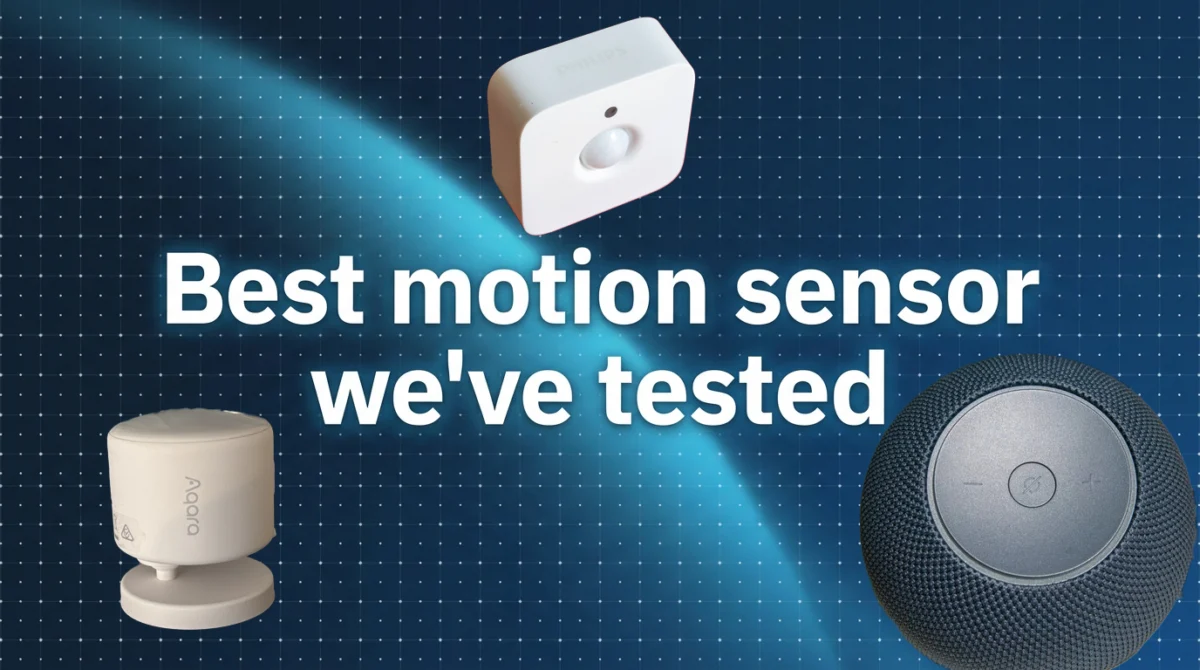
A truly intelligent smart home operates seamlessly in the background, simplifying daily life without demanding constant user intervention. Achieving this level of effortless automation hinges significantly on the sophisticated capabilities of motion and presence sensors. These devices act as the eyes and ears of a connected dwelling, automatically detecting human activity to trigger a cascade of pre-programmed actions. From illuminating a pathway upon entering a dark room at night to optimizing energy consumption by adjusting heating in unoccupied spaces, these sensors are fundamental to a responsive and efficient smart home ecosystem. This comprehensive guide delves into the leading sensors currently available, meticulously tested and reviewed by our team, with a commitment to continuous updates as new technologies emerge.
Understanding the Nuances: Motion vs. Presence Sensors
Before exploring specific product recommendations, it is crucial to distinguish between the two primary types of sensors: motion sensors and presence sensors. Motion sensors, the more established technology, typically employ Passive Infrared (PIR) technology. PIR sensors detect changes in heat signatures caused by movement. While effective for general activity detection, they often require a noticeable shift to trigger an alert. This can lead to limitations in scenarios where individuals remain stationary for extended periods, such as watching television or working at a desk, potentially resulting in the sensor misinterpreting a room as empty.
In contrast, presence sensors represent a significant advancement in detection accuracy. Utilizing millimeter-wave (mmWave) radar technology, these sensors can identify even the subtlest micro-movements, including the natural rhythm of breathing or the faint movements associated with typing. This enhanced sensitivity ensures continuous detection of occupancy, making them ideal for environments where static activity is common. For instance, a presence sensor would prevent the heating from shutting off while a person is engrossed in a film, a scenario that might occur with a basic motion sensor. However, this heightened accuracy comes with certain trade-offs. Presence sensors generally require more intricate configuration and precise placement to mitigate false positives. They also tend to be more expensive than their motion sensor counterparts, and their battery life can be shorter due to the continuous operation of more advanced detection methods.
Key Considerations for Smart Sensor Integration
Beyond the fundamental differences between motion and presence detection, several critical factors influence the optimal choice for any smart home setup. Foremost among these is compatibility with your existing smart home ecosystem. The emergence of Matter, a new industry-standard connectivity protocol, offers a promising path toward enhanced interoperability. Devices supporting Matter, whether directly via Thread or through a Matter bridge, can facilitate faster response times and broader compatibility across different brands and platforms. This universality is becoming increasingly important as the smart home market matures and users seek to avoid vendor lock-in.
The principle of sensor reuse also presents a compelling opportunity for cost-effectiveness and streamlined installation. For example, a Philips Hue Motion Sensor, while primarily designed for seamless integration with Hue lighting systems, can also function as a general-purpose motion sensor through its Matter compatibility. This multi-functionality allows users to leverage existing hardware for diverse automation needs, reducing the need for redundant devices.
Furthermore, many modern sensors offer integrated environmental monitoring capabilities. Some devices incorporate temperature and light sensors, expanding the possibilities for sophisticated automation. This allows for the creation of complex rules that combine multiple sensor inputs. For instance, a user could program lights to activate only when motion is detected and the ambient light levels fall below a certain threshold, creating a more context-aware and energy-efficient lighting system.

Our rigorous testing methodology involved our team of reviewers living with each device in real-world smart home environments. We meticulously evaluated their reliability in detecting motion and presence, the speed at which they triggered connected devices and routines, the simplicity of the setup process, and their overall build quality and durability over extended periods of use. Sensors that consistently generated false alerts or exhibited integration challenges with popular smart home platforms were excluded from our recommendations, regardless of their price point.
Leading Smart Home Sensors in Review
Aqara Presence Multi-Sensor FP300: The Vanguard of Presence Detection
The Aqara Presence Multi-Sensor FP300 marks a significant milestone as the first battery-powered presence sensor tested to integrate both mmWave radar and PIR motion detection. This dual-technology approach ensures a comprehensive understanding of room occupancy, capturing both general movement and the subtle physiological cues that standard motion detectors often miss. The result is a highly accurate and reliable assessment of who is present in a space.
Connectivity is another strong suit for the FP300, offering support for Thread, Zigbee, and Matter. This broad compatibility ensures it can integrate smoothly into a wide array of smart home setups. Direct connection to a smart home system via Thread and Matter simplifies the setup process. However, to unlock the sensor’s full suite of advanced features, including AI spatial learning, motion type selection, and environmental sensitivity adjustments, Zigbee connectivity is required, necessitating the use of an Aqara hub.
While Aqara’s wired presence sensors offer superior capabilities in room mapping and zone control, the battery-powered FP300 excels in flexibility, particularly in locations where running power cables is impractical. The primary consideration for this model is its battery life, which can last up to two years, though this duration may decrease when operating in mmWave-only mode, which provides the highest level of precision. This trade-off is an important factor to weigh for users prioritizing maximum accuracy.
In terms of performance, the FP300 truly shines. Its detection capabilities are consistently reliable and near-instantaneous, boasting a 120-degree field of view and a 6-meter range, with no instances of false triggers observed during our testing. A practical application demonstrated its efficacy: a nighttime routine that activated lights upon entry and deactivated them upon exit was executed with unwavering consistency. While basic motion detectors suffice for simple on/off lighting tasks, the Aqara FP300 stands out for its genuine presence detection and superior versatility, making it an exceptional choice for advanced smart home automation.
Philips Hue Motion Sensor: Precision Lighting Control
Primarily engineered for the Philips Hue lighting system and requiring a Hue Bridge, the Philips Hue Motion Sensor commands a premium price for a PIR motion sensor. This cost reflects not just the hardware but the deeply integrated and nuanced lighting control it enables. Beyond simple on/off triggers, this sensor offers granular control over lighting behavior through programmable time slots, allowing for different actions to occur at various times of the day. Furthermore, it intelligently combines motion detection with ambient light sensing.

This integration allows for sophisticated lighting scenarios. For instance, during daylight hours, brighter lights can be activated if a room becomes unexpectedly dark, such as on a heavily overcast winter day. Conversely, at night, a gentler, more subdued illumination can be employed. The sensor also features a timeout period after which lights can be turned off or returned to their previous state, a functionality that significantly enhances user experience.
A key advantage of the Hue Motion Sensor lies in its ability to prevent unintended overrides of manual lighting settings. In general operation, the sensor typically only activates lights if they are currently off. It avoids altering lights that have been manually set to a specific scene, ensuring that user-defined ambiance is preserved.
The "previous state logic" offers an even more advanced control mechanism. Under this setting, the sensor will adjust lights regardless of their current state when motion is detected. Crucially, after the inactivity timeout, the lights revert to their prior setting. This is invaluable for creating subtle lighting effects, such as a dim nightlight in a hallway that brightens significantly when motion is detected, guiding the way, and then gracefully dims back to its original low setting.
Motion detection is highly accurate, with a 5-meter range and a 100-degree field of view. The sensor is straightforward to install, and its dual AAA batteries offer remarkable longevity; one unit has been in continuous operation for years without requiring a battery change.
When integrated into a Matter-enabled smart home system, the Philips Hue Motion Sensor presents itself as both a motion sensor and a light meter (measuring in Lux), facilitating automations across different platforms. While it may be an expensive option for general-purpose motion sensing, its unparalleled capability for fine-tuned lighting control, coupled with its potential for broader use within a Matter ecosystem, makes it a highly commendable investment for users prioritizing sophisticated lighting automation.
Amazon Echo Dot Max: Integrated Presence Detection
The Amazon Echo Dot Max, a recent addition to Amazon’s Echo speaker lineup, represents a significant upgrade over its predecessors. Its inclusion on this list stems from its innovative built-in ultrasound presence detection sensor, a feature also present in the more premium Echo Studio (2025). This technology employs high-frequency sound waves to ascertain the presence of individuals within a room. Similar to mmWave sensors, ultrasound detection can identify people even when they are not actively moving.
A primary consideration with this integrated approach is the placement of the speaker itself. Unlike standalone sensors that can be strategically positioned for optimal coverage, the Echo Dot Max’s detection capabilities are inherently tied to its audio function, which may not always align with ideal sensor placement.
Another significant limitation is the exclusive availability of the ultrasound motion sensor’s data for Amazon Alexa routines. Users of alternative smart home platforms such as Homey or Apple Home will find this particular feature inaccessible.

However, for users deeply invested in the Amazon Alexa ecosystem and utilizing it for their routines, the Echo Dot Max’s ultrasound presence sensor performs exceptionally well. Setup is user-friendly, and our testing confirmed its reliable performance, consistently detecting occupants even during prolonged periods of stillness. For existing owners of the Echo Dot Max or Echo Studio who leverage Amazon Alexa for their automations, exploring the integrated presence sensor is a prudent step before considering the purchase of external devices.
Ring Alarm (2nd-gen): Repurposing Security Sensors for Automation
The Ring Alarm (2nd-gen) system stands out as a leading DIY smart alarm solution, offering a compelling example of how security sensors can be repurposed for broader smart home automation. Given the likelihood of motion sensors being strategically placed throughout a home as part of the alarm system, leveraging these existing devices for other automation tasks can be highly efficient.
Third-party integration with the Ring Alarm system is primarily facilitated through Amazon Alexa, although unofficial integrations with platforms like Homey are also available. It is important to note that all connections are cloud-based, which can introduce some latency and a reliance on a stable internet connection. This might limit its suitability for time-sensitive automations, such as instant light activation.
However, for less critical automations, the system performs reliably. In our tests, a routine was established using Amazon Alexa and a Ring motion sensor to automatically deactivate a Dyson fan heater after 10 minutes of detected motion, resulting in demonstrable energy savings. The sensor’s 90-degree field of view proved sufficient for covering most rooms, especially when positioned in a corner.
For scenarios requiring immediate motion-triggered light activation, dedicated sensors like the Philips Hue Motion Sensor or presence sensors connected via Thread would offer a more responsive solution. Nevertheless, for users already equipped with a Ring Alarm system and utilizing Amazon Alexa, repurposing the existing motion sensors for broader automation presents a cost-effective strategy and avoids the need for additional hardware.
Final Thoughts: The Evolving Landscape of Smart Home Sensing
The era of basic PIR motion sensors, which often falter when occupants remain stationary, is gradually giving way to more advanced presence detection technologies. The proliferation of mmWave sensors, capable of accurately identifying human presence through subtle movements, is revolutionizing smart home automation. The optimal choice ultimately depends on individual needs and existing infrastructure.
For discerning users seeking the most detailed and effective presence detection, the Aqara FP300 emerges as the top performer in our evaluation. Its dual-sensor technology and robust connectivity options provide unparalleled accuracy and flexibility.

For Echo Dot Max or Echo Studio owners already integrated into the Amazon Alexa ecosystem, the built-in ultrasound presence sensor offers a convenient and effective solution for home automation without the need for additional hardware purchases.
The ability to reuse existing sensors presents a pragmatic approach for many users. The Philips Hue Motion Sensor excels in automating Hue lighting systems with exceptional speed and reliability, while also offering broader utility as a Matter-compatible sensor. For those with a Ring Alarm system, repurposing its motion sensors within Alexa routines can yield significant cost savings and streamline home automation efforts, albeit with the inherent limitations of cloud-based connectivity.
Frequently Asked Questions
How much should I budget for a motion sensor?
Basic, standalone motion sensors suitable for simple alerts or single-room monitoring typically range from $20 to $30. For enhanced smart home integration, advanced automation triggers, or extended detection ranges, expect to invest between $40 and $80 for a reliable and durable unit.
What is the most critical feature to consider in a motion sensor?
In practical application, detection range and field of view are paramount. A sensor with a narrow detection angle can leave blind spots, even in smaller rooms. It is advisable to select sensors with a horizontal field of view of at least 90 degrees, paired with a range that adequately covers the intended area.
Will a motion sensor integrate with my current smart home setup?
Compatibility is dictated by the sensor’s communication protocol, with Zigbee, Z-Wave, and the emerging Matter standard (via Thread or a bridge) being the most prevalent. Prior to purchase, verify whether the sensor connects directly to your existing hub or app, or if an additional bridge is required, as this can influence overall cost and system complexity.
What is the typical battery life for motion sensors?
Battery longevity varies significantly based on the frequency of sensor activation. Generally, presence sensors can be expected to last around two years, while PIR motion sensors may offer even longer operational periods between battery replacements.
Our Testing Methodology
Our evaluation process involves subjecting all motion and presence sensors to rigorous testing within authentic home environments. These devices are integrated into real-world automations across a spectrum of smart home systems, including Apple Home, Amazon Alexa, and Homey. For each sensor, we meticulously assess the ease of setup and the consistency and accuracy of motion and presence detection. Our testing environment is deliberately complex, incorporating elements like fans and other potential sources of movement, to gauge the sensors’ ability to avoid false triggers and maintain reliable performance under challenging conditions.

