
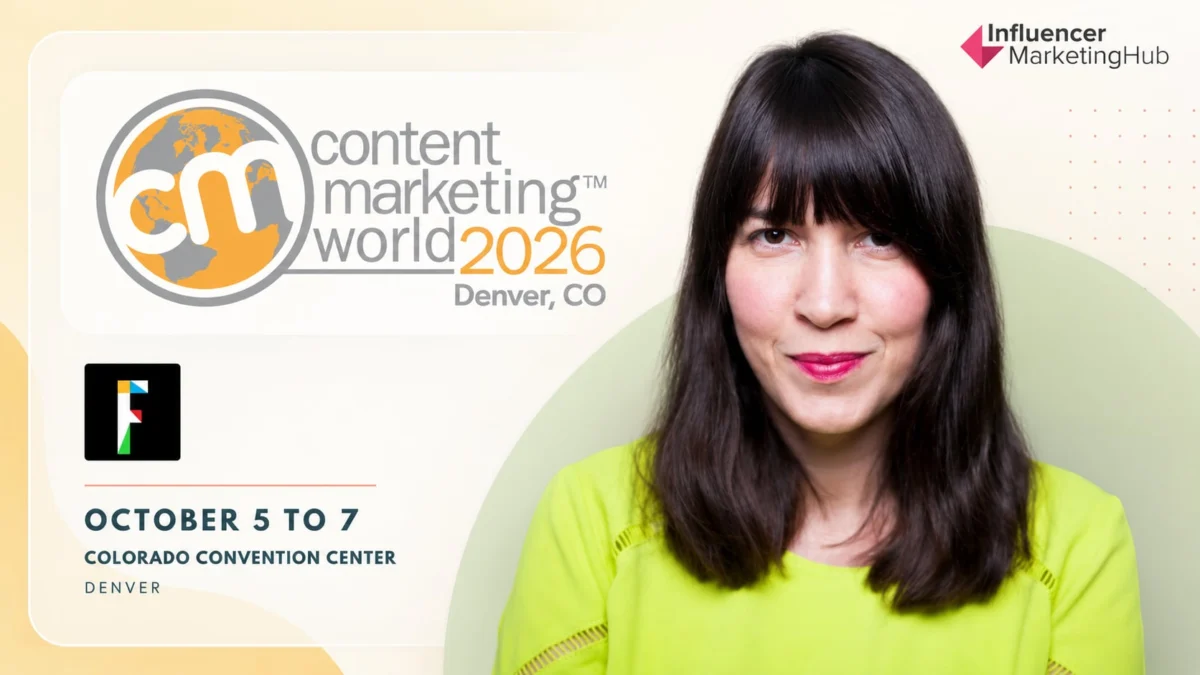
Fortune Brand Studio Vice President Megan Gilbert and Burson Senior Vice President Natasha Whitling are poised to deliver a seminal breakout session at Content Marketing World 2026, scheduled for October 5-7 at the Colorado Convention Center in Denver. Their presentation, titled "Real Thought Leadership in a World of AI Slop: Putting the Human Back into Thought Leadership," will delve into strategies for cultivating brand trust amidst an increasingly saturated and AI-driven media landscape, emphasizing the irreplaceable value of human expertise, strategic publisher alliances, and the accumulation of reputation capital.
The proliferation of artificial intelligence tools has dramatically accelerated content creation, enabling marketing teams to research, produce, and distribute material at unprecedented speeds. While this efficiency offers undeniable advantages, it has also led to a digital environment overflowing with content that often shares similar language, structural patterns, and conclusions. This surge in automated output, often colloquially termed "AI slop," presents a significant challenge for brands striving to differentiate themselves and establish genuine authority. Against this backdrop, the session by Gilbert and Whitling, scheduled for October 6 from 2:00 PM to 2:30 PM, promises to be a critical exploration of how human perspectives, innovative communication strategies, and robust publisher collaborations can forge lasting brand credibility and trust.
The Evolving Landscape of Content Creation and Trust
The digital ecosystem has undergone a profound transformation with the advent of advanced AI. Tools capable of generating text, images, and even video at scale have democratized content production, lowering barriers to entry and enabling businesses of all sizes to maintain a robust online presence. However, this ease of creation comes with a caveat: the sheer volume of content now competing for audience attention makes it increasingly difficult for brands to cut through the noise. Industry reports from 2024-2025 have consistently indicated a growing skepticism among consumers regarding the authenticity and originality of digital information, with some surveys suggesting that over 65% of internet users express concerns about distinguishing between human-authored and AI-generated content. This erosion of trust is a pressing issue for marketers, as it directly impacts brand perception, engagement rates, and ultimately, commercial success.
Content Marketing World (CMWorld), historically a leading global event for content marketing professionals, recognizes this paradigm shift. For over a decade, CMWorld has served as a crucial forum for discussing the latest trends, technologies, and strategies in the industry. Its 2026 iteration, co-located with The Market Research Event and featuring programming from Effie, WARC, and Contagious, underscores the deepening integration of audience intelligence with creative impact. The inclusion of Gilbert and Whitling’s session highlights the event’s commitment to addressing the most pertinent challenges facing marketers today, particularly the nuanced interplay between technological advancement and human-centric approaches.
Reasserting Human Expertise: The Core of Authentic Thought Leadership
Traditional thought leadership has long been a cornerstone of effective content strategy, allowing executives and specialists to translate their profound knowledge into actionable insights for their target audiences. While AI can streamline the mechanical aspects of this process—from initial research and drafting to optimization and distribution—it cannot replicate the intrinsic qualities that define genuine expertise. Gilbert and Whitling’s session will meticulously examine these human-centric attributes.
At its heart, professional judgment stems from direct experience and the crucible of real-world decision-making. It is the ability to interpret complex developments, anticipate market shifts, and understand their specific implications for a particular industry, customer segment, or organization. This original interpretation, forged through years of practice, provides a depth of insight that algorithmic generation simply cannot mimic. Furthermore, personal experience imbues an idea with context, lending credibility to the speaker’s perspective and establishing a relatable connection with the audience. These qualities allow audiences to link information to a credible individual who can not only explain and defend it but also expand upon it with nuance and authority.
The human source also introduces a vital element: accountability. Readers and consumers can investigate a speaker’s background, evaluate their past work, and assess the consistency and reliability of their ideas. This transparency fosters trust, empowering audiences to make informed decisions about the confidence they place in a given perspective. As automated content becomes ubiquitous, identifiable human expertise emerges as a potent differentiator, offering brands a clear pathway to stand out in an increasingly homogenized digital landscape. This emphasis on verifiable human input aligns with Google’s evolving E-E-A-T (Experience, Expertise, Authoritativeness, Trustworthiness) guidelines, which increasingly prioritize content backed by demonstrable real-world experience and human oversight.
Strategic Implications for Answer Engine Optimization (AEO)
The role of human expertise extends significantly into the realm of answer engine optimization (AEO). Modern search and answer engines, such as those integrated into AI chatbots and voice assistants, synthesize responses from a vast array of online sources, including websites, publisher platforms, social media channels, and research reports. For brands seeking visibility and accurate representation within these concise, direct answers, clear evidence of their knowledge and the provenance of their authority are paramount.
Gilbert and Whitling will articulate how human-driven expertise effectively "feeds" this new answer engine model. A well-crafted executive article articulating a distinct position, original research presenting novel evidence, or specialist commentary connecting company experience to a timely industry issue all serve as invaluable assets. These diverse content formats provide answer engines with richer, more useful information for understanding a brand’s specific domain of expertise. Critically, attribution remains central to this process. Expertise gains greater weight and credibility when explicitly linked to a named professional with relevant qualifications and published through a reputable environment. The ultimate goal transcends merely appearing in an answer; brands aspire to have their expertise accurately represented and robustly associated with the subjects they genuinely master, thereby influencing the very fabric of knowledge retrieval.
Reputation Capital: A Tangible Asset in the Digital Age
A cornerstone of Gilbert and Whitling’s presentation will be the introduction and exploration of "reputation capital." This concept describes the cumulative trust, recognition, and authority that a company and its leadership accrue through their consistent actions and communications. Every insightful contribution, every credible public appearance, every meticulously conducted research project, and every meaningful audience interaction contributes to this invaluable reserve.
While a single article might generate momentary awareness, a consistent and thoughtful body of work has the power to profoundly shape how customers, partners, journalists, employees, and industry peers perceive and understand an organization. This accumulated trust is not merely an abstract ideal; it possesses tangible commercial value. It can significantly bolster sales conversations, attract favorable media attention, enhance executive visibility, and instill greater confidence in a brand’s expertise among its audience.
The strategic importance of reputation capital becomes acutely apparent during periods of scrutiny or crisis. Brands that have meticulously built an established record of transparent, useful, and consistent communication provide audiences with a wider, more credible body of evidence through which to evaluate a difficult situation. In such scenarios, content functions as a critical tool: it establishes expertise proactively, offers leaders a credible channel for their response during the crisis, and facilitates the rebuilding of confidence through sustained, honest communication in its aftermath. This long-term view of content as an investment in reputation, rather than merely a short-term marketing tactic, is a key takeaway from the session.
The Power of Publisher Partnerships in Amplifying Authority
Publisher partnerships represent a potent strategy for brands to augment their reputation capital and extend their authority. A respected publisher brings a confluence of invaluable assets: deep audience knowledge, sophisticated editorial strategy, rigorous production standards, and established distribution channels. The content resulting from such collaborations seamlessly blends the brand’s unique expertise with an environment that audiences already trust and recognize.
Megan Gilbert’s extensive background in this segment of the media industry lends particular weight to this aspect of the session. As Vice President and Executive Editorial Director of Fortune Brand Studio, she spearheads editorial strategy, program management, and branded content production across a diverse array of platforms, including digital, audio, video, social, and print. The studio’s impressive roster of clients, including Salesforce, PayPal, Zurich Insurance, AWS, and Accenture, attests to its reach and impact. Recent accolades, such as Fortune Brand Studio receiving 37 Telly Awards for 13 distinct brand partnerships – its largest Telly Awards result to date – underscore the scale and quality of their collaborative work.
Gilbert’s broader career in branded content is equally distinguished, encompassing pivotal roles at Gawker and Gizmodo, Fusion and Univision, The Washington Post, Slate, and VICE. Her academic contributions include teaching branded content at New York University, and she has served as a respected judge for prestigious industry programs like the Webby Awards, Signal Awards, Anthem Awards, and Telly Awards. This rich professional tapestry provides the Content Marketing World session with an editorial perspective deeply rooted in both rigorous publisher standards and the art of commercial storytelling, offering attendees practical insights into forging successful and impactful brand-publisher alliances.
The Unique Impact of In-Person Thought Leadership
In a world increasingly dominated by digital interactions, Gilbert and Whitling will also illuminate the distinctive value of human-centered, in-person thought leadership. Live appearances offer audiences an unparalleled opportunity to experience expertise "in motion." A speaker’s ability to respond spontaneously to questions, adapt an argument in real-time, clarify complex concepts, and reveal the nuanced judgment behind a polished idea creates a powerful, immediate connection that static digital content often struggles to replicate.
These live interactions are not isolated events; they can serve as foundational moments for a broader, multi-channel content system. A compelling conference session can be meticulously documented and subsequently transformed into a series of articles, a video highlights reel, a podcast discussion, an executive social media campaign, a newsletter feature, or even a source for future media commentary. The initial value derived from the direct, personal interaction is amplified exponentially through strategic distribution across various platforms. For brands, this creates a crucial bridge between the personal authority of their experts and the scalability of their content marketing efforts. The expert provides the unique perspective and insights, while the marketing team develops and disseminates formats that carry this valuable knowledge to vast audiences, maximizing reach and impact.
Measuring Thought Leadership: A Holistic Approach
A critical component of the session will address the often-challenging task of measuring the true value of creative communication and thought leadership. Beyond immediate reach metrics, a comprehensive evaluation must encompass a wider array of indicators. These include the quality of engagement, the enhancement of executive visibility, shifts in brand sentiment, the generation of media interest, increases in branded search queries, references within answer engines, analysis of audience composition, and, ultimately, the impact on commercial conversations.
The measurement framework, Gilbert and Whitling will argue, must be meticulously aligned with the overarching reputation objective. For instance, a program designed to establish an executive as a recognized industry authority might prioritize metrics such as speaking invitations, media citations, and engagement levels from relevant decision-makers. Conversely, a program focused on improving brand understanding might center on message association, the generation of qualified traffic, and audience sentiment shifts. The most robust measurement framework is one that directly correlates content performance with demonstrable changes in how the market perceives and trusts the brand, thereby linking content strategy directly to tangible business outcomes and the growth of reputation capital.
Content Marketing World 2026: Navigating the Future of Marketing
Content Marketing World 2026 is set to host over 100 sessions in Denver, covering a comprehensive spectrum of topics vital to modern marketing. Attendees will gain insights into cutting-edge content strategy, advanced thought leadership techniques, compelling storytelling, the practical applications of artificial intelligence, sophisticated analytics, audience development strategies, and overall marketing effectiveness. The co-location with The Market Research Event, coupled with programming from influential organizations like Effie, WARC, and Contagious, further enriches the experience by connecting deep audience intelligence with the pursuit of creative impact.
Gilbert and Whitling’s session adds a particularly timely and profound question to this already packed agenda: as technology relentlessly increases the sheer volume of content brands are capable of producing, what inherent qualities ultimately confer authority and trust upon that content? Their answer, distilled to its essence, firmly centers on people. Human expertise provides the original judgment, the unique insights, and the lived experience that AI cannot replicate. Creative communication then transforms that judgment into a compelling, resonant narrative. Finally, credible publisher environments provide the essential platform for that story to earn widespread recognition and cement its place in the collective consciousness.
At Content Marketing World 2026, Megan Gilbert, alongside Natasha Whitling, will not merely present a theory but will illustrate a practical blueprint. They will demonstrate how these crucial human elements—original thought, strategic communication, and trusted partnerships—synergistically combine to build enduring reputation capital and ensure that genuine thought leadership remains firmly connected to the very individuals who possess the unique capacity to lead and shape critical industry conversations. Their insights are expected to arm marketers with the necessary tools to navigate the complexities of an AI-saturated world, transforming challenges into opportunities for deeper engagement and lasting brand loyalty.

