
In the ever-shifting landscape of digital marketing and search engine optimization (SEO), the humble meta description has undergone a significant transformation. Once a cornerstone of organic search snippet generation, these short text summaries are now viewed with a more nuanced perspective, prompting a re-evaluation of their necessity and efficacy. While Google, the dominant force in search, has publicly stated its continued, albeit conditional, use of meta descriptions, the reality on the ground suggests a more complex interplay between algorithmically generated snippets and manually crafted descriptions. This evolution carries substantial implications for website owners, content creators, and SEO professionals alike, demanding a strategic approach to ensure optimal visibility in search engine results pages (SERPs).
The Historical Dominance and Current Shift
For many years, meta descriptions were an exclusive tool for webmasters to influence how their pages appeared in Google’s organic search results. The primary objective was straightforward: craft compelling, keyword-rich descriptions that would entice searchers to click on a link, thereby driving traffic to a website. This era saw meta descriptions meticulously optimized, often mirroring the content of the page with the expectation that Google would dutifully display them verbatim. The length was typically capped around 160 characters, a constraint that necessitated concise yet persuasive language. The underlying principle was that providing a clear and attractive summary would directly contribute to a higher click-through rate (CTR), a key metric for SEO success.
However, in recent years, search engine algorithms have become increasingly sophisticated. Google, in particular, has moved towards dynamically generating snippets from a webpage’s content, prioritizing relevance to the specific user query. This means that even if a meticulously crafted meta description exists, Google may opt to pull a sentence or phrase directly from the body of the page that it deems a better, more accurate, or more contextually relevant response to a user’s search. This algorithmic shift has led to a perception among some SEO practitioners that meta descriptions have become obsolete, a relic of a bygone era of SEO. The rationale behind this algorithmic preference is rooted in Google’s overarching goal: to provide users with the most helpful and relevant information as quickly as possible. By extracting snippets directly from the page content, Google can ensure that the summary presented in the SERPs is a true reflection of what the user will find upon clicking, thereby managing user expectations and improving the overall search experience.
Google’s Official Stance: A Continued, Yet Conditional, Role
Despite the observable shift in snippet generation, Google has not entirely abandoned meta descriptions. In a post on its official Search Central blog, the company clarified its position, acknowledging that while page content is the primary driver, meta descriptions can still play a crucial role. The statement from Google developers indicated: "Google primarily uses the content on the page to automatically determine the appropriate snippet. We may also use descriptive information in the meta description element when it describes the page better than other parts of the content."
This statement is critical, as it suggests a nuanced approach. Google isn’t disregarding meta descriptions entirely; rather, it’s prioritizing them when they offer a superior summary compared to algorithmically generated alternatives. The Search Central blog further advised website owners to "at the very least, create a description for the critical URLs like your home page and popular pages." This recommendation underscores the continued value of meta descriptions for key pages that are likely to attract significant search traffic and where precise summarization is paramount.
Adding to this clarification, Google’s John Mueller, a prominent figure in Search Relations, offered further insights during a recent online discussion. When asked about the relevance of meta descriptions, Mueller stated, "sometimes it [a meta description] helps you to figure out a clear focus for a page. Overall, I think it’s still worthwhile to do so for individual pages that you care about, but it’s definitely not a requirement." This sentiment reinforces the idea that while not mandatory for every single page, meta descriptions remain a valuable asset for pages that are strategically important to a website’s success. Mueller’s perspective suggests that the act of writing a meta description can, in itself, be a beneficial exercise for content creators, forcing them to distill the essence of a page and identify its core focus.
The Pragmatic Approach: Why Meta Descriptions Still Matter
The prevailing consensus among many SEO professionals, and indeed the practical experience of many website owners, is that there is no inherent downside to including meta descriptions. In fact, the benefits, particularly for certain types of pages, can be substantial. The author of the original piece advocates for their continued use on key landing pages, category pages, and product pages. These pages often contain critical information—detailed service or product descriptions, technical specifications, customer reviews, and testimonials—that can be challenging for algorithms to condense accurately and effectively.
Consider a complex product page for an e-commerce website. It might feature multiple variations, detailed usage instructions, and a long list of customer reviews. An algorithm might struggle to extract a single sentence that encapsulates the product’s value proposition or accurately reflects the diverse information available. A well-written meta description, however, can serve as a precise and compelling summary, highlighting the most attractive features or benefits and directly addressing potential customer needs.

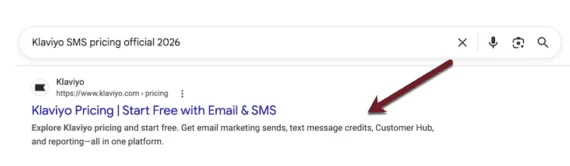
A concrete example illustrating this point comes from Klaviyo’s SMS pricing page. The meta description provided for this page reads: "Explore Klaviyo pricing and start free. Get email marketing sends, text message credits, Customer Hub, and reporting — all in one platform." When a search query like "Klaviyo SMS pricing official 2026" was performed, both Google and even generative AI platforms like ChatGPT reportedly utilized this meta description in their generated snippets. This indicates that when a meta description is well-crafted, relevant, and accurately represents the page’s content, search engines and AI models are inclined to use it, demonstrating its enduring utility. The accompanying visual evidence from the original article further supports this observation, showing a Google search result where the meta description was indeed employed for the snippet.
Crafting Effective Meta Descriptions in the Modern Era
The strategy for writing meta descriptions has evolved from a keyword-stuffing exercise to a more user-centric and persuasive approach. In the past, SEO practitioners heavily emphasized keyword inclusion, aiming to align the description with the terms users were likely to search for. While keyword relevance remains important, the focus has shifted towards creating descriptions that are not only informative but also compelling and encourage a click.
For high-intent pages, such as product pages, service pages, or dedicated landing pages, the goal of a meta description should be to:
- Clearly state the page’s purpose: Users should immediately understand what information or offering they will find.
- Highlight key benefits or unique selling propositions: What makes this page or offering stand out?
- Include a call to action (if appropriate): Encourage users to take the next step, such as "Learn more," "Shop now," or "Get a quote."
- Maintain conciseness and readability: Aim for a length that is likely to be fully displayed in SERPs (generally around 155-160 characters), ensuring it is easy to scan and understand.
- Be unique for each page: Avoid duplicate meta descriptions across your website, as this can confuse search engines and dilute your SEO efforts.
Leveraging Technology for Scalability and Accuracy
For large-scale websites, such as e-commerce platforms with thousands of products or extensive content libraries, manually writing unique meta descriptions for every page can be an insurmountable task. In such scenarios, Google recommends generating meta descriptions programmatically. This is where the advancements in Artificial Intelligence (AI) become invaluable.
Generative AI platforms like ChatGPT, Claude, and various other AI-powered tools can be employed to generate meta descriptions at scale. By providing these platforms with detailed information about a page’s content, target audience, and desired outcomes, webmasters can generate a large volume of unique and relevant descriptions. However, the critical caveat here is the need for careful prompting and, most importantly, manual review.
AI-generated content, while often impressive, is not infallible. It’s essential to have human oversight to ensure that the generated meta descriptions are accurate, reflect the brand’s voice, and are truly compelling. This manual review process is particularly crucial for pages that are strategically important, such as those with higher traffic volumes, top-selling products, or those directly contributing to key conversion goals. A human touch can catch nuances, ensure brand consistency, and refine the persuasive elements that AI might overlook.
Broader Implications and the Future of Snippets
The ongoing evolution of meta descriptions and snippet generation has broader implications for how websites are perceived and how users interact with search results. Search engines and generative AI platforms are increasingly focused on delivering snippets and answers that are directly helpful to users. This trend suggests that the quality and relevance of a page’s content, as summarized by either a meta description or algorithmic extraction, will continue to be a primary determinant of CTR.
The ability of websites to exert some control over their presence in SERPs is diminishing in certain aspects, as algorithms gain more autonomy. However, the continued, albeit conditional, use of meta descriptions offers a valuable avenue for website owners to influence how their content is presented. By understanding Google’s preferences and the capabilities of modern AI, businesses can adopt a strategic approach.
In conclusion, while meta descriptions may no longer be the sole arbiters of search snippets, they remain a vital tool in the SEO arsenal. Their role has shifted from an exclusive control mechanism to a collaborative element that can significantly enhance a website’s visibility and appeal in SERPs. By crafting thoughtful, user-focused meta descriptions for critical pages and leveraging technology for scalability while maintaining human oversight, businesses can continue to optimize their online presence and drive valuable organic traffic in an increasingly dynamic digital landscape. The emphasis remains on providing clear, concise, and compelling information that directly addresses user intent, a principle that meta descriptions, when implemented strategically, continue to serve effectively.

