
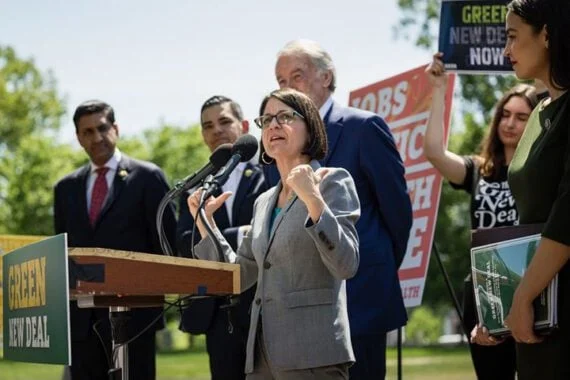
A pivotal piece of legislation, the Online Sellers’ Bill of Rights Act of 2026, was formally introduced in the U.S. House of Representatives last week, signaling a potential paradigm shift in the operational landscape for millions of small and medium-sized businesses that rely on major e-commerce marketplaces. Proposed by Representative Becca Balint (D-Vt.) and a cohort of co-sponsors, the bill seeks to establish crucial protections for online merchants facing the abrupt and often devastating consequences of alleged policy violations. These violations can lead to frozen revenue streams and the immobilization of vital inventory, posing an existential threat to businesses that have built their operations on the vast reach of platforms like Amazon and Walmart.
The immense opportunities presented by e-commerce giants have democratized access to global markets, enabling even the smallest enterprises to connect with a customer base numbering in the millions. However, this dependency on a single or few marketplaces can leave sellers exceptionally vulnerable. When an alleged policy infraction occurs, the resulting disruption to revenue and the inability to access or sell inventory can quickly escalate from a minor inconvenience to a business-ending crisis. The proposed legislation directly addresses this imbalance of power, aiming to introduce a semblance of procedural fairness and transparency into the enforcement mechanisms of these dominant online retail spaces.
Federal Bill Proposes New Merchant Protections
The core of H.R. 9799, as the bill is designated, is its commitment to ensuring that marketplace sellers are afforded a level of due process when confronted with account suspensions or other enforcement actions. Introduced on July 21st, the bill mandates that online marketplaces provide clear explanations for any account suspensions or related enforcement measures. Furthermore, it requires these platforms to respond to seller inquiries and appeals within clearly defined timeframes and, critically, to grant affected sellers a meaningful opportunity to contest decisions. This move is intended to move away from opaque, automated enforcement that can disproportionately impact legitimate businesses.
It is crucial to note that the Online Sellers’ Bill of Rights Act of 2026 is not designed to shield fraudulent actors or enable the proliferation of counterfeit or unsafe products. The legislation explicitly states that it would not impede marketplaces from taking necessary actions to remove counterfeit goods, suspend sellers engaged in fraudulent activities, or enforce critical product safety policies. Instead, the bill aims to establish federal standards that govern inventory holds, the freezing of payments, the implementation of policy changes, the conduct of investigations, and the process for appeals. The hope articulated by proponents is that legitimate sellers will benefit from these protections without compromising the integrity of the platforms or allowing bad actors to operate unchecked. The bill is currently under consideration by the House Judiciary Committee, a significant step in its legislative journey.
Key Provisions Designed to Empower Sellers
H.R. 9799 outlines several specific protections intended to safeguard third-party sellers navigating the often-complex enforcement landscape of online marketplaces. These provisions aim to provide much-needed clarity and time for sellers to rectify issues or appeal decisions.
Inventory Holds: Limiting Stranded Goods
One of the most significant pain points for sellers is the lengthy immobilization of their inventory when marketplaces suspect a policy violation, such as alleged counterfeiting. Under the proposed legislation, any inventory holds or restrictions imposed by a marketplace would be limited to a maximum of 30 calendar days. Following this period, the marketplace would be compelled to release the merchandise unless it could present clear and compelling evidence demonstrating that the goods were indeed counterfeit or otherwise unlawful. This 30-day cap provides a concrete timeframe, preventing inventory from being held indefinitely and allowing sellers to plan their business operations with greater certainty. This is particularly important for businesses with perishable goods or those operating on tight seasonal sales cycles.
Payment Holds: Ensuring Timely Access to Funds
Mirroring the restrictions on inventory, H.R. 9799 also proposes a 30-day limit on the duration for which a marketplace can freeze seller funds. To extend this hold beyond the initial 30 days, the marketplace would be required to provide concrete evidence that the funds in question originated from unlawful transactions. Mere suspicion would no longer be sufficient grounds for withholding a seller’s earnings. This provision is designed to prevent marketplaces from holding onto seller revenue for extended periods based on unsubstantiated claims, thereby safeguarding the working capital essential for business continuity.
Gated Products: Managing Policy Changes
The legislation also addresses the challenge posed by products that become restricted after a marketplace has already accepted them into its fulfillment network. If a platform introduces a new restriction on a specific product or category, the bill mandates that sellers be given at least 30 days’ notice. This grace period would allow sellers sufficient time to sell their existing inventory of the now-restricted item or arrange for the merchandise to be returned to them at no cost. This measure acknowledges that sellers need time to adapt to evolving marketplace policies and avoids penalizing them for changes that occur after their products have been integrated into the platform’s operations.
Notification of Policy Changes: Pre-emptive Communication
Furthermore, H.R. 9799 requires e-commerce marketplaces to provide a minimum of 30 days’ written notice before implementing any material changes to policies concerning product eligibility, listing restrictions, compliance requirements, commissions, or fees. This advance notification would grant sellers invaluable time to adjust their business strategies. They could use this period to modify product packaging, gather necessary documentation, revise pricing structures, or remove inventory that might no longer meet new compliance standards before enforcement actions are initiated. Such proactive communication fosters a more collaborative and predictable operating environment.
Seller Appeals: Ensuring Transparency and Fairness
A cornerstone of the bill is its emphasis on a robust seller appeals process. When investigating a seller, deactivating an account, or suspending a listing, marketplaces would be obligated to provide individualized and specific information regarding the alleged violation. This includes identifying the precise policy that was purportedly breached, disclosing all relevant facts and supporting documents, detailing the proposed penalty, and clearly outlining the steps a seller can take to appeal the decision. The marketplace would also be required to provide an anticipated timeline for the resolution of the matter. Generic or templated responses would no longer suffice, ensuring that sellers receive clear, actionable information tailored to their specific situation.
Commercial Due Process: Balancing Enforcement with Fairness
The overarching intent behind the Online Sellers’ Bill of Rights Act of 2026 appears to be the establishment of a framework that preserves the ability of marketplaces to enforce their policies effectively while introducing a concept akin to commercial due process for sellers. It is widely acknowledged that platforms like Amazon and Walmart require robust authority to combat fraud, eliminate counterfeit products, and shield consumers from unsafe goods. Therefore, the legislation is not intended to grant every merchant an unconditional right to remain on a platform indefinitely.
Instead, the bill focuses on transforming the process by which enforcement actions are taken. Under H.R. 9799, Amazon, for instance, could still suspend a business if warranted. However, it would be legally obligated to provide a transparent and well-supported justification for its decision, allowing the affected seller a genuine opportunity to respond and appeal. This shift aims to create a more equitable playing field, where decisions impacting a seller’s livelihood are made with greater accountability and transparency.
Legal Exposure and Enforcement Mechanisms
Should H.R. 9799 be enacted into law, the Federal Trade Commission (FTC) would be tasked with issuing implementing rules within 180 days of the bill’s enactment. Violations of these rules would be treated as unfair methods of competition under the Federal Trade Commission Act, a significant legal consequence. Furthermore, state attorneys general would be empowered to bring civil actions on behalf of residents affected by violations.
Crucially, the bill also grants injured sellers a private right to sue in federal court, even in cases where marketplace agreements typically mandate arbitration. This provision is particularly impactful, as it bypasses often-criticized arbitration clauses that can limit consumer recourse. Successful plaintiffs in such lawsuits could potentially recover treble damages – three times the amount of damages they suffered – along with court costs and reasonable attorneys’ fees. These substantial remedies are designed to provide a powerful incentive for marketplaces to comply with the new regulations and offer a meaningful avenue for redress for sellers who have been unfairly harmed. The potential for significant financial penalties and the ability for private litigation are expected to lead to strong challenges from major marketplace operators.
Coverage and Potential Ambiguities
A notable aspect of the proposed legislation, and a potential area of contention, is the uncertainty surrounding the precise scope of platforms it would cover. The bill defines a "critical trading partner" broadly as any entity capable of restricting a business’s access to customers or the tools and services necessary to serve them. This expansive definition could encompass a wide array of e-commerce marketplaces.
However, the definition of a "third-party seller" is contingent on operating on a "dominant platform." The legislation notably lacks a specific revenue, transaction volume, user count, or market-share threshold to definitively establish what constitutes dominance. While Amazon and Walmart appear to be the primary targets of this legislation, the applicability to other platforms such as eBay, Etsy, Poshmark, or smaller, specialized marketplaces remains less certain. The FTC’s rulemaking process may address some of these ambiguities, but the absence of a clear, measurable threshold for dominance could also invite legal challenges and create loopholes. This lack of specificity could lead to protracted legal battles over the interpretation and application of the law, potentially delaying its full impact.
The introduction of the Online Sellers’ Bill of Rights Act of 2026 represents a significant moment for the e-commerce ecosystem. It highlights the growing recognition of the challenges faced by independent sellers on dominant online platforms and proposes a legislative framework to address these concerns. As the bill progresses through the legislative process, its provisions will undoubtedly be scrutinized by industry stakeholders, legal experts, and policymakers alike, with the ultimate goal of fostering a more balanced and equitable online marketplace for all participants. The coming months will reveal whether this proposed legislation can successfully navigate the political landscape and translate into tangible protections for the millions of entrepreneurs who form the backbone of the digital economy.

