
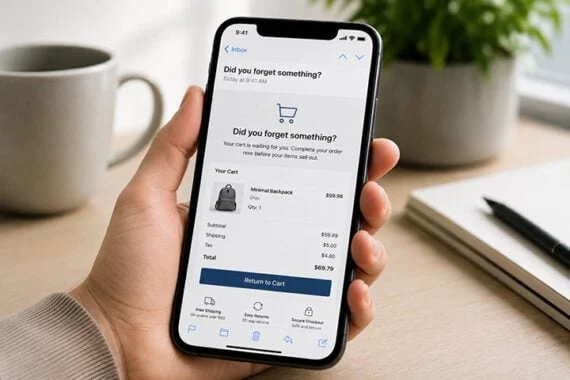
Effective cart abandonment emails and text messages do more than remind shoppers about items left behind. They use product details, reassurance, and incentives to address customer concerns and reopen a conversion path.
For decades, the digital storefront has grappled with a persistent challenge: the abandoned shopping cart. While the e-commerce landscape has evolved dramatically since its nascent stages, the fundamental issue of shoppers adding items to their virtual baskets only to leave them unpurchased remains a significant hurdle. The latest analyses and industry practices underscore that successful cart recovery is not merely about sending a polite nudge. It requires a sophisticated approach that leverages product specifics, instills customer confidence, and strategically deploys incentives to bridge the gap between hesitation and conversion.
The Silent Obstacles to Checkout Completion
The root of the abandoned cart problem often lies in the inability of standard recovery programs to discern the specific reasons behind a shopper’s departure. Most e-commerce platforms accurately record the items left in a cart, but they lack immediate insight into the customer’s underlying motivations. This absence of granular data means that generic recovery sequences often miss their mark, failing to address the precise concerns that prompted the abandonment.
These obstacles can broadly be categorized into several key areas:
- Unforeseen Costs and Pricing Concerns: A significant driver of cart abandonment is the unexpected appearance of additional costs at the checkout stage. This can include high shipping fees, taxes, or other surcharges that were not clearly communicated earlier in the shopping journey. Shoppers may perceive these added expenses as exceeding their budget or the perceived value of the product.
- Complex or Lengthy Checkout Processes: Cumbersome registration requirements, a multi-step checkout that feels too long, or a confusing interface can deter even the most interested buyers. Shoppers today expect a streamlined and intuitive experience, and any friction in this final stage can lead to frustration and abandonment.
- Trust and Security Hesitations: Especially for newer or less familiar brands, customers may harbor doubts about the security of their personal and financial information. Concerns about data privacy, the legitimacy of the website, or the reliability of payment gateways can prevent a transaction from being completed.
- Lack of Immediate Need or Comparison Shopping: Some shoppers add items to their cart as a way to bookmark them for future consideration or to compare prices and features with other retailers. In these instances, the cart acts as a temporary holding space rather than a commitment to purchase.
- Technical Glitches and Website Performance Issues: A slow-loading page, an error message, or a malfunctioning payment processor can abruptly end a shopping session. These technical impediments, though sometimes minor, can be significant deterrents.
- Availability and Delivery Concerns: Uncertainty about product availability, estimated delivery times, or the return policy can also lead to abandonment. Shoppers need assurance that they will receive their order in a timely and satisfactory manner.
Evolving Recovery Tactics to Address Diverse Concerns
In light of these multifaceted obstacles, the evolution of cart recovery messaging has seen a shift from simple reminders to more nuanced strategies. The goal is to mirror the potential reasons for abandonment with corresponding solutions.
- Product-Centric Reminders: These messages go beyond just listing the abandoned items. They often include high-quality images, brief descriptions, and perhaps even links to customer reviews or related products. This aims to re-engage the shopper with the allure of the item itself.
- Urgency and Scarcity Appeals: Phrases like "limited stock" or "offer ends soon" can be employed to create a sense of urgency, encouraging immediate action. This tactic is most effective when genuinely reflecting the product’s availability.
- Incentivized Re-engagement: Offering a discount, free shipping, or a small gift with purchase can be a powerful motivator to overcome price objections or hesitation. The timing and value of these incentives are crucial for maximum impact.
- Addressing Shipping Costs: If shipping fees were identified as a barrier, messages might offer a discount on shipping or highlight free shipping thresholds. Transparency about shipping policies is also key.
- Building Trust and Reassurance: For customers exhibiting security concerns, recovery messages can reiterate security protocols, display trust badges, or link to customer testimonials that speak to the brand’s reliability.
- Personalized Recommendations: Based on the abandoned items or browsing history, these messages might suggest alternative products or complementary items, aiming to broaden the customer’s engagement or offer a more suitable option.
However, it is critical to acknowledge that no single tactic is universally effective. Each abandoned cart scenario is unique, and a rigid, one-size-fits-all approach is unlikely to yield optimal results.
The Vast Opportunity in Cart Recovery
The sheer scale of abandoned carts highlights a substantial, often untapped, revenue stream for e-commerce businesses. Statistics from the Baymard Institute consistently indicate that a significant majority of online shopping carts – often around 70% – never reach a completed purchase. This represents billions of dollars in potential sales that evaporate each year. Consequently, the implementation of automated cart recovery strategies has become a standard practice for most e-commerce marketers.
Traditionally, abandoned cart email sequences have served as the foundational recovery channel. Industry reports suggest an average open rate of over 50% for these emails, with a conversion rate that can reach over 10%. More recently, however, the efficacy of SMS and direct phone outreach has gained prominence. These channels often exhibit higher engagement rates and can demonstrate superior recovery performance compared to email, likely due to their immediacy and personal nature. This surge in interest underscores the ongoing quest for more effective ways to recapture lost sales.
The Limitations of Fixed, Predefined Sequences
A prevalent approach to cart recovery involves automated sequences with predefined triggers and branching logic. Merchants typically set specific delays between messages, craft the content, and establish the conditions under which an offer will be presented. While this makes the recovery process manageable, it necessitates that merchants attempt to anticipate every conceivable customer concern and product variation.
The complexity of large e-commerce catalogs, featuring products with diverse profit margins, varying consideration periods, and a wide array of customer motivations, makes it virtually impossible for a single, static sequence to adequately address every scenario. A predefined sequence might, for instance, offer a discount to a shopper who had no intention of purchasing immediately but was merely bookmarking an item. Conversely, it might focus on product features when the actual barrier to purchase was a prohibitive shipping cost that was revealed late in the process.
These fixed sequences often make broad, and sometimes inaccurate, assumptions about customer behavior. This can lead to inefficient resource allocation and missed opportunities. The core issue is that these systems operate on a predetermined set of rules rather than adapting to the individual circumstances of each abandoned cart.
The Dual Paths to Enhanced Conversion: Manual Optimization vs. AI Decisioning
Marketers looking to significantly improve both initial cart conversions and subsequent recovery rates are largely faced with two strategic paths: meticulous manual optimization or the implementation of artificial intelligence-driven decisioning.
The Rigor of Manual Optimization
For merchants opting for a manual approach, the focus narrows to four key areas of refinement:
- Segmentation and Personalization: Moving beyond generic messages, marketers can segment their audience based on factors such as past purchase behavior, cart value, product category, or even the perceived stage of the customer journey. This allows for the tailoring of messages and offers to specific customer profiles.
- A/B Testing and Iterative Improvement: Continuous A/B testing of subject lines, message content, calls-to-action, offer types, and delivery timing is essential. This iterative process helps identify what resonates most effectively with different customer segments.
- Timing and Frequency Optimization: Determining the optimal window to send recovery messages and the appropriate frequency without overwhelming the customer is critical. Testing different delays and cadences can reveal the sweet spot for engagement.
- Offer Strategy Refinement: Carefully calibrating the types and values of incentives offered is paramount. This involves balancing the cost of the incentive against the potential revenue generated, considering product margins and customer lifetime value.
Manual optimization demands a commitment to rigorous measurement. Key performance indicators such as revenue per recipient provide a direct measure of the financial impact of each recovery sequence. Equally important is the use of control groups – segments of customers who do not receive recovery messages. By comparing the purchasing behavior of these groups against those who receive outreach, marketers can accurately assess whether their recovery efforts are generating incremental sales or simply capturing sales that would have happened anyway. This ensures that resources are being invested in strategies that genuinely drive additional revenue.
The Intelligence of AI Decisioning
A more advanced recovery strategy involves leveraging what customer engagement platforms refer to as "AI decisioning." This approach moves beyond predefined rules to a dynamic, data-driven system.
An AI decision engine evaluates a complex array of customer and cart-specific signals in real-time. It then compares these signals against a pre-approved library of recovery tactics, ultimately selecting the message, offer, and timing that possesses the highest probability of achieving the merchant’s defined objectives.
Under this model, the merchant retains strategic control. They define the overarching recovery strategy and create the various "treatments" or message types – such as simple reminders, product reassurances, free shipping offers, or discount codes. Crucially, merchants also establish critical guardrails, including limits on profit margins, message frequency, and eligibility criteria for promotions.
The AI then takes over the granular decision-making for each individual shopper. It can factor in a multitude of variables, including the value of the abandoned cart, the specific product type, the shopper’s historical purchase data, and their real-time behavior leading up to the abandonment. This allows for a level of personalization and responsiveness that is difficult to achieve with manual rule-based systems.
This is a fundamental departure from conventional email automation. Fixed sequences execute a merchant’s pre-programmed instructions. AI decisioning, however, actively assesses and optimizes those instructions for each unique customer interaction. It learns from the outcomes of each decision – whether a message led to a purchase, was ignored, or resulted in a continued abandoned cart – and uses this intelligence to refine its future choices. While an AI model cannot inherently know a shopper’s precise reason for leaving, it can make highly informed predictions based on the historical success of various tactics for similar shoppers under comparable circumstances.
The Future of Cart Recovery: Intelligent Conversion
Ultimately, the objective of any cart abandonment automation should transcend simple reminders. Whether marketers choose to meticulously optimize sequences manually or adopt the sophisticated capabilities of AI decisioning, the ultimate aim remains the same: to accurately identify the most probable obstacle preventing a purchase and to effectively remove it. By understanding the nuances of customer behavior and employing intelligent strategies, e-commerce businesses can transform abandoned carts from a persistent challenge into a significant driver of sustained revenue growth. The ongoing evolution in this space promises even more personalized and effective solutions, ensuring that the digital checkout process becomes a more seamless and successful experience for both the consumer and the merchant.

