
Google has significantly updated its "Crawling infrastructure" documentation, introducing a vital new section titled "Optimize your crawl budget." This comprehensive update provides website owners and SEO professionals with actionable strategies to enhance how Google’s bots discover and index their content, a fundamental step for achieving visibility in search results. The emphasis on crawl budget acknowledges the immense scale of the web and the necessity for efficient resource allocation by search engine crawlers.
The core of the update revolves around the concept of a "crawl budget," which dictates how many URLs Googlebot can and is willing to crawl on a website within a given timeframe. A poorly optimized website, characterized by disorganized structure and inefficient navigation, can consume a disproportionate amount of this budget on redundant or low-value pages, thereby hindering the indexing of more important content. The implications of this are substantial, as pages must be successfully crawled and processed by Googlebot to be considered for inclusion in the search engine’s vast index and subsequently appear in organic search results.
Understanding the Crawl Budget: A New Frontier in SEO
Google’s decision to formalize and expand upon the concept of crawl budget within its official documentation signals a shift in how the search giant views website accessibility. For years, SEO professionals have discussed and theorized about crawl budget, often inferring its importance through observed indexing patterns and Google Search Console data. The explicit guidance now offered by Google provides a much-needed framework for understanding and actively managing this critical aspect of website health.
The sheer volume of URLs indexed by Google is staggering. Estimates suggest that Google indexes trillions of web pages. Given this scale, it’s understandable that Googlebot cannot crawl every single page on every website with the same frequency. Instead, Google employs algorithms to determine how much time and resources to allocate to a specific site, influenced by a multitude of factors. The "Optimize your crawl budget" section aims to demystify these factors and empower website owners to make their sites more appealing to Google’s automated explorers.
Key Takeaways from Google’s Updated Guidelines
The newly released guidelines offer several key directives for website administrators seeking to maximize their crawl budget and, consequently, their search engine visibility.
Initial Crawl Budget: A Conservative Approach
A critical piece of advice from Google is that "every new site starts with a ‘conservative’ crawl budget." This means that when a website is first launched or when Googlebot begins to explore it, the allocation of crawling resources will be modest. The intention behind this conservative approach is to allow Google to comprehensively cover the essential content of a new site without overwhelming the website’s server resources. This is particularly important for smaller businesses or new ventures that may not have the robust infrastructure to handle a sudden surge in bot traffic.
Gradual Growth: The Importance of Site Size and Updates
Googlebot’s activity on a site is not static. The documentation clarifies that "over time, the crawl budget increases based on the site’s size and updates." This suggests a dynamic relationship where Google rewards websites that are actively maintained and regularly updated. Frequent updates, especially those that are automatically signaled through mechanisms like XML sitemaps, encourage Googlebot to revisit the site more often. This increased revisit frequency can lead to a higher crawl budget.
The advice to update content gradually is also noteworthy. Instead of, for example, launching hundreds of new products simultaneously, a staggered approach—such as adding a few products daily over a month—can be more effective. This gradual introduction of new content allows Googlebot to discover and process these additions over time, preventing a potential bottleneck and ensuring that each new piece of content has a better chance of being indexed. This strategy also aligns with user behavior, as a constant influx of new products or articles might overwhelm human visitors as well.
Site Performance: A Foundation for Efficient Crawling
The correlation between website speed and crawl budget is explicitly stated: "Improving your site’s load time may increase its crawl budget." This reinforces a long-standing best practice in SEO: faster websites are generally better crawled and provide a superior user experience. Googlebot, like human users, benefits from quick loading pages. Slow-loading pages can lead to timeouts or inefficient use of crawling resources. Website owners are encouraged to monitor their site’s performance using tools like Google PageSpeed Insights and strive for continuous improvement in loading speed. This includes optimizing images, leveraging browser caching, minimizing HTTP requests, and employing efficient coding practices.
Popularity and Inbound Links: The Power of Authority
Googlebot prioritizes crawling pages that are deemed more important or authoritative. The guidelines state, "Popular pages receive more frequent crawls." Popularity, in this context, is strongly linked to the number and quality of inbound links a page receives. Both external links from other websites and internal links from within the same website contribute to a page’s perceived authority and importance. Pages with a robust link profile are likely to be discovered and revisited by Googlebot more often, ensuring their content remains fresh in the search index. This underscores the continued importance of a strong backlink strategy and a well-structured internal linking architecture.
Enhancing Crawl Frequency and Speed: Beyond the Basics
While the core guidelines highlight fundamental principles, the practical application of optimizing crawl frequency and speed involves a multifaceted approach. Several additional strategies can contribute to a more efficient crawling process:
- XML Sitemaps: As mentioned, ensuring that XML sitemaps are up-to-date and accurately reflect the site’s structure is paramount. Sitemaps act as a roadmap for Googlebot, guiding it to important pages. Regularly updating sitemaps with new content and removing outdated URLs is crucial.
- Robots.txt: While the robots.txt file is primarily used to instruct crawlers which parts of a website they should not access, it can indirectly impact crawl budget. Overly restrictive robots.txt files can inadvertently block important pages, hindering discovery. Conversely, ensuring that essential pages are not blocked is vital.
- Canonical Tags: Properly implemented canonical tags help Google understand the preferred version of a page when duplicate content exists. This prevents Googlebot from wasting crawl budget on redundant pages and ensures that link equity is consolidated on the primary URL.
- URL Structure: A logical and clean URL structure makes it easier for both users and crawlers to navigate a website. Short, descriptive URLs are generally preferred.
- Broken Links and Redirect Chains: Pages that return 404 errors or are part of long redirect chains consume crawl budget unnecessarily. Regularly auditing a website for broken links and optimizing redirect chains is essential for efficient crawling.
- Structured Data Markup: Implementing schema markup can help Google understand the content of a page more effectively, potentially leading to more efficient crawling and richer search results.
The Nuance of "URL Caching" and 304 Status Codes
A particularly interesting addition to Google’s guidelines is the recommendation to "Support 304 (Not Modified) HTTP status codes." The documentation explains: "If a page hasn’t changed since Google last crawled it, returning a 304 code tells Google to reuse the cached version, saving your server bandwidth and resources."
This recommendation, while technically sound from a server efficiency perspective, warrants careful consideration. A 304 Not Modified status code essentially tells Googlebot that the cached version of the page it already has is still current and no update is needed. While this can indeed save server resources, there’s a potential downside that has been observed by some SEO professionals.
The concern is that by frequently signaling that a page hasn’t changed, a website might inadvertently reduce the perceived freshness or importance of that page in Google’s eyes. For pages that are dynamic or subject to minor content updates that might influence rankings, relying heavily on 304 status codes could, in some instances, lead to a decrease in crawl frequency and potentially affect a page’s visibility in Search Engine Results Pages (SERPs) or even its index status.
Anecdotal evidence and expert opinions suggest a cautious approach to implementing 304 status codes. It might be more prudent to reserve this optimization for pages that are truly static and unlikely to be affected by minor content changes, such as certain policy pages, "about us" sections that rarely change, or potentially expired product listings that are still accessible but no longer actively promoted. For pages that are critical to business objectives and are regularly updated with fresh content, ensuring Googlebot recrawls them frequently by allowing it to fetch the latest version might be a more beneficial strategy, even if it means slightly higher server load.
Tools for Monitoring Crawl Stats
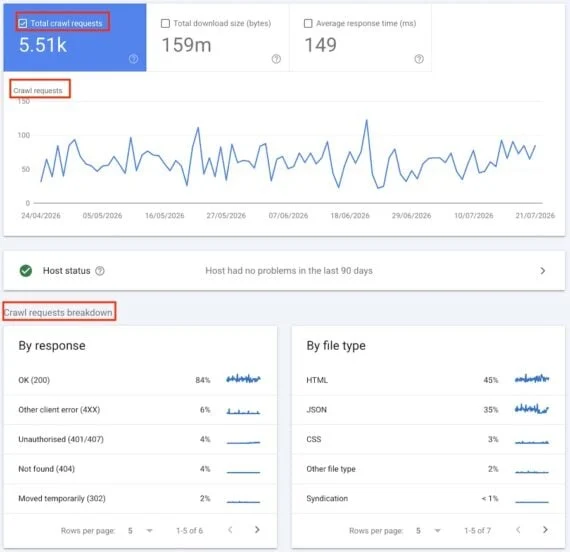
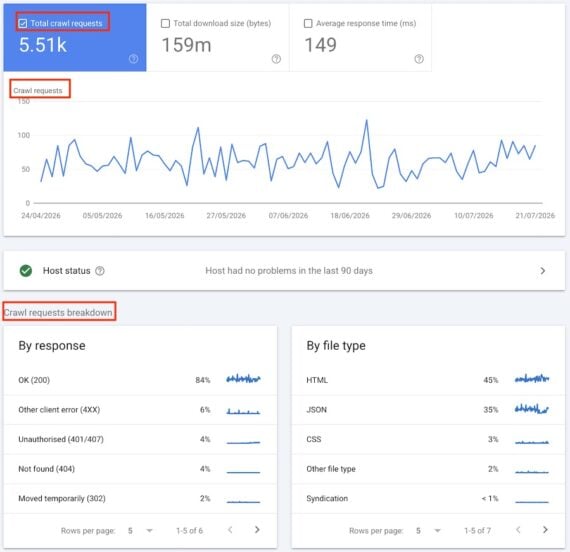
To effectively manage crawl budget and diagnose potential issues, website owners can leverage Google Search Console. The "Crawl stats" report within Search Console provides invaluable data on how Googlebot is crawling a website. This report reveals:
- Total crawl requests: The total number of requests made by Googlebot to the site.
- Crawl requests by status code: Breakdown of requests by HTTP status codes (e.g., 200 OK, 404 Not Found, 301 Redirect).
- Average response time: The average time it took for the server to respond to Googlebot’s requests.
- Average page size: The average size of pages crawled.
- Crawl activity over time: Trends in crawling activity, which can help identify anomalies or patterns.
By regularly analyzing these metrics, website administrators can identify pages that are being crawled too frequently or not frequently enough, diagnose server issues that might be hindering crawling, and detect any crawl errors that need attention. The visual representation of crawl data in Search Console, as depicted in accompanying screenshots, offers a clear overview of the site’s accessibility to Googlebot.
Broader Implications for Website Management and SEO
The Google documentation on optimizing crawl budget signifies a more transparent approach from Google regarding the mechanics of indexing. It empowers website owners to take a more proactive role in ensuring their content is discovered and ranked. For businesses, this means a renewed focus on technical SEO fundamentals, alongside content quality and link building.
The implications are far-reaching:
- Prioritization of Technical SEO: The emphasis on crawl budget elevates the importance of a technically sound website. Issues like slow loading speeds, poor site architecture, and broken links are no longer just minor inconveniences but direct impediments to search engine visibility.
- Content Strategy Alignment: Website owners need to consider not only the quality and relevance of their content but also how that content is structured and made accessible to crawlers. This may influence decisions about website design, navigation, and the frequency of content updates.
- Resource Allocation: Understanding crawl budget helps in allocating development and maintenance resources more effectively. Investments in site speed optimization, server performance, and robust content management systems can yield significant returns in terms of search engine visibility.
- Evolving SEO Landscape: As search engines become more sophisticated, the lines between technical SEO, on-page optimization, and off-page signals continue to blur. Crawl budget sits at the intersection of these disciplines, highlighting the interconnectedness of various SEO factors.
In conclusion, Google’s updated "Crawling infrastructure" documentation, particularly the "Optimize your crawl budget" section, offers a valuable roadmap for website owners. By understanding and implementing the provided guidelines, businesses can significantly improve their website’s discoverability, ensure their valuable content is indexed, and ultimately enhance their performance in Google Search results. The nuances, such as the judicious use of 304 status codes, require careful consideration and a data-driven approach to ensure optimal outcomes.

