
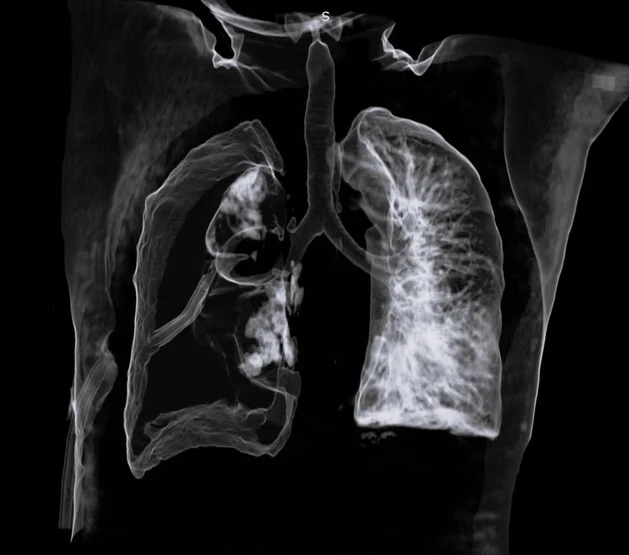
The landscape of pulmonary diagnostics in the United States is facing a critical bottleneck characterized by high procedural volume and a persistently high rate of complications. Every two minutes, an individual in the U.S. receives a lung cancer diagnosis, a statistic that underscores the urgent necessity for efficient, accurate diagnostic pathways. For the vast majority of these patients, the definitive next step is a percutaneous transthoracic needle biopsy, typically guided by computed tomography (CT) imaging. While these procedures are essential for staging and genomic profiling of tumors, they carry an inherent risk that the medical community has struggled to mitigate for decades: the high probability of a collapsed lung, known clinically as pneumothorax.
In the United States alone, more than 800,000 CT-guided lung biopsies are performed annually. Clinical data indicates that up to one-third of these procedures result in pneumothorax. When a lung collapses during or after a biopsy, it often necessitates the insertion of a chest tube and a multi-day hospital stay for monitoring and re-inflation. This complication does more than just endanger the patient; it creates a massive financial burden on the American healthcare system, costing hundreds of millions of dollars each year. From a hospital administration perspective, the financial fallout of a single pneumothorax case requiring inpatient care can effectively erode the profit margins of 20 to 30 uncomplicated biopsies, making the procedure a high-risk endeavor for both the patient’s health and the facility’s bottom line.
Against this backdrop, Selio Medical, a Dublin-based medical technology startup, has emerged with a novel solution that has recently received FDA clearance. The company’s device is designed to transform the standard of care by preventing the complication before it occurs, rather than managing it after the fact. As the company prepares for a significant Series A funding round of €5 million and a commercial launch in the U.S. market this fall, the medical community is closely watching how this technology might redefine the safety profile of lung cancer diagnostics.
The Pathophysiology of Biopsy-Induced Pneumothorax
To understand the significance of Selio Medical’s intervention, one must first understand the mechanics of the procedure. During a CT-guided biopsy, a clinician inserts a long, thin needle through the chest wall and into the lung tissue to retrieve a sample from a suspicious nodule. The lung is encased in the pleural space, a vacuum-sealed environment that keeps the lung expanded. When the biopsy needle punctures the visceral pleura—the membrane covering the lung—there is a risk that air from the lung or the outside environment will enter the pleural space. If enough air accumulates, the pressure causes the lung to partially or totally collapse.
For years, interventional radiologists have utilized various "mitigation" strategies. One common method is the "blood patch" technique, which involves drawing the patient’s own blood and injecting it back into the needle tract as the needle is withdrawn, in hopes that the blood will clot and seal the hole. Another common practice is the "dependent positioning" method, where the patient is rolled onto the side of the puncture immediately after the needle is removed, using their own body weight to compress the site.
According to Colm McGarvey, CEO of Selio Medical, these methods are fundamentally flawed because they are reactive. Speaking at a digital health forum at the Guinness Enterprise Centre in Dublin, McGarvey noted that these approaches attempt to treat a puncture that has already been made and a leak that may have already started. The efficacy of these post-biopsy interventions has historically been inconsistent, leading to the high complication rates seen in modern clinical practice.
A Proactive Approach: The Selio Hydrogel System
Selio Medical’s technology shifts the paradigm from reaction to prevention. Rather than attempting to seal the lung as the needle is being removed, the Selio device applies a seal before the actual tissue sample is even taken. The system utilizes a pre-filled syringe containing a proprietary, biodegradable hydrogel. This syringe integrates seamlessly with the standard introducer tools that clinicians already use in their daily workflows.
The procedural sequence is straightforward: the clinician advances the introducer needle to the edge of the lung. Before crossing the pleural membrane to take the biopsy, the clinician pauses to deliver the hydrogel plug. This hydrogel creates an 8-10 millimeter seal around the intended puncture site. Because the seal is established prior to the biopsy needle entering the lung parenchyma, the integrity of the pleural space is maintained throughout the procedure.
One of the primary advantages of this system is its integration into existing clinical workflows. McGarvey noted that the process adds approximately two minutes to the total procedure time. For interventional radiologists working in high-volume centers, this minimal time investment is a negligible trade-off for the potential reduction in post-operative complications and the associated administrative burden of managing a collapsed lung. Furthermore, the hydrogel is engineered to be visible under CT imaging, allowing the clinician to verify the placement of the seal in real-time. Once the procedure is complete, the hydrogel remains in place, providing a persistent seal while the puncture heals, and naturally biodegrades within the body over a period of approximately two months.
Comparative Performance and Clinical Validation
The medical device market for lung biopsy seals is not entirely vacant, but Selio Medical claims its technology offers a superior mechanism of action compared to existing alternatives. The primary competitor in the space is the BioSentry system, currently marketed by Merit Medical. BioSentry also uses a plug-based system, but Selio’s leadership argues that their preemptive delivery method provides a more robust defense against air leaks.
To support these claims, Selio Medical conducted a head-to-head preclinical study comparing their device against BioSentry. The results of the study indicated that Selio’s technology reduced the incidence of pneumothorax by 70% compared to the competitor. Importantly, the study reported no clinically significant complications related to the use of the hydrogel itself, suggesting a high safety profile.
This data is the cornerstone of Selio’s entry into the U.S. market. By providing a measurable reduction in complications, the company is positioning its device as a "value-based" healthcare solution. In an era where U.S. hospitals are increasingly penalized for readmissions and procedural complications, a device that can reliably prevent a multi-day hospital stay holds significant economic appeal for hospital systems and insurance providers alike.
Strategic Growth and the Irish Medtech Ecosystem
The development of the Selio device is a product of the robust medical technology ecosystem in Ireland. Headquartered in Dublin, Selio Medical has benefited from the support of Enterprise Ireland, the state agency responsible for the growth of Irish enterprises in world markets. The company’s presence at the Guinness Enterprise Centre—a hub for innovation and entrepreneurship—places it at the heart of Ireland’s "Silicon Docks" region, which has become a global center for medtech R&D.
Selio is currently in the process of raising a €5 million Series A funding round. This capital infusion is earmarked for the commercial rollout in the United States, which is the company’s primary target market due to the high volume of lung biopsies and the sophisticated reimbursement landscape. The company has already secured FDA clearance, a major regulatory milestone that paves the way for immediate adoption in American hospitals.
The commercial strategy begins this fall with a pilot launch at two major medical centers in New York. These initial sites will serve as the proving ground for the device’s real-world performance in a high-stakes clinical environment. If the New York launch mirrors the success of the preclinical trials, Selio plans to scale its sales and distribution efforts across the Northeast and eventually nationwide.
Broader Implications for Oncology and Interventional Radiology
The implications of Selio Medical’s technology extend beyond the immediate prevention of a collapsed lung. By making lung biopsies safer, the device could potentially lower the threshold for clinicians to order biopsies on smaller or more difficult-to-reach nodules. Currently, the "risk-reward" calculation for a biopsy often leans toward "watchful waiting" if the patient is frail or if the nodule is positioned in a way that makes pneumothorax more likely. A safer biopsy procedure could lead to earlier definitive diagnoses, which is a critical factor in improving survival rates for lung cancer.
Furthermore, the success of a pre-emptive hydrogel seal in the lungs could open doors for similar applications in other areas of interventional radiology. Procedures such as liver or kidney biopsies, while carrying different risk profiles, also involve the puncture of vascular organs where localized sealing could prevent internal bleeding or other fluid leaks.
As the healthcare industry continues to move toward minimally invasive diagnostics, the demand for "safety-first" tools like the Selio device is expected to grow. For patients, the technology offers peace of mind and the avoidance of a painful, costly hospital stay. For clinicians, it offers a more predictable procedural outcome. And for the healthcare system, it offers a tangible way to reduce the hundreds of millions of dollars currently lost to a complication that, until now, was considered an "acceptable" risk of the diagnostic process.
The upcoming months will be pivotal for Selio Medical as it transitions from a well-funded startup to a commercial-stage medical device company. With a €5 million investment on the horizon and a presence in New York hospitals imminent, the company is poised to address one of the most persistent challenges in pulmonary medicine. As CEO Colm McGarvey and his team move forward, their focus remains on a singular goal: ensuring that the path to a cancer diagnosis does not create a new medical crisis for the patient.

