
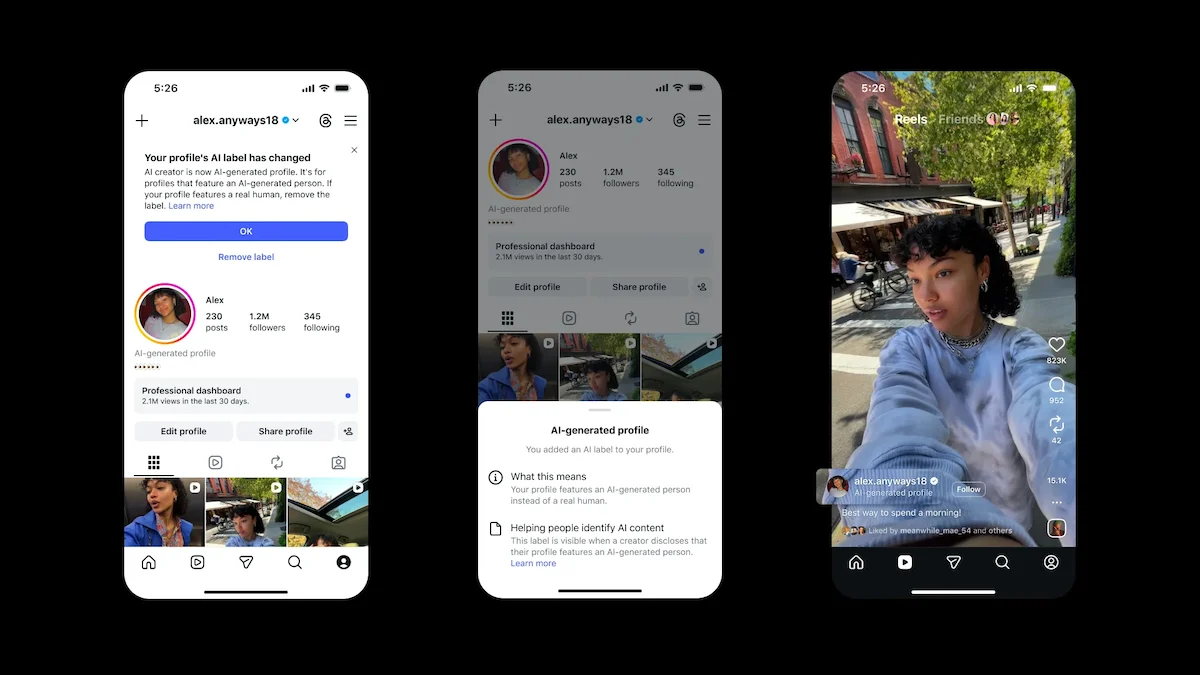
Instagram announced Monday a significant policy update aimed at enhancing transparency around AI-generated content, particularly focusing on profiles featuring synthetic individuals. The social media giant will rename its existing "AI creator" label to "AI-generated profile" and, crucially, will begin limiting the reach of accounts that utilize AI-generated people without proper disclosure. This move signals a proactive step by Meta, Instagram’s parent company, to address growing user concerns and the ethical complexities surrounding generative artificial intelligence on its platforms.
A Clearer Mandate for Transparency
The rebranding of the label from "AI creator" to "AI-generated profile" is designed to provide clearer, more understandable disclosure to users. Instagram explicitly states that the new label is intended to inform users when the person featured on a profile has been entirely generated or substantially created using AI technologies. This distinction is vital in an era where AI-generated images and personas are becoming increasingly sophisticated and indistinguishable from real human counterparts.
Under the revised policy, creators who fail to adequately label profiles featuring AI-generated individuals face potential penalties, specifically a reduction in their content’s algorithmic reach. Conversely, accounts that diligently apply the new "AI-generated profile" label will not be penalized simply for their use of synthetic subjects. This encourages compliance through a system of disincentives for non-disclosure and neutrality for transparent use.
It is important to note that this policy is narrowly focused on profiles depicting AI-generated people. Instagram has clarified that the label is not required for all applications of AI on its platform. Users who employ AI tools for more general purposes, such as editing photos, refining captions, creating graphics, or making other creative adjustments that do not involve generating a synthetic human identity, are exempt from this specific labeling requirement. This distinction aims to prevent over-labeling and ensure the policy targets the most impactful area of potential deception.
Responding to User Feedback and Mitigating Deception
The impetus behind Instagram’s policy shift stems directly from user feedback. The platform has acknowledged a growing discomfort among its community members who have encountered profiles that initially appear to belong to real individuals, only to later discover the person featured is entirely AI-generated. Instagram articulated this sentiment, stating, "As generative AI becomes a bigger part of how people create, we’ve heard that people don’t like seeing a profile that seems human, only to find out later that the person featured is AI-generated. They want to know when a profile features an AI-generated person."
This sentiment underscores a broader societal concern about authenticity and trust in digital spaces. As generative AI tools become more accessible and powerful, the line between reality and simulation blurs, leading to potential confusion, misrepresentation, and even exploitation. Users are increasingly demanding transparency to navigate the evolving digital landscape with confidence.
The Proliferation of AI-Generated Content and Influencers
The timing of Instagram’s announcement is particularly salient given the rapid proliferation of AI-generated content and the rise of "virtual influencers" across social media platforms. The market for virtual influencers alone is projected to reach significant valuations in the coming years, with some estimates placing it in the billions of dollars globally. These digital personas, often meticulously crafted with advanced AI, can amass large followings, promote products, and even engage in seemingly authentic interactions, making it challenging for users to discern their synthetic nature.
Instances of deceptive AI use have become more frequent and alarming. Earlier this year, the gay dating app Goose became the subject of a detailed investigation by Wired magazine. The report uncovered a network of seemingly AI-generated male influencers promoting the app on Instagram. Wired identified over two dozen accounts featuring these synthetic influencers, some of whom allegedly engaged in direct messaging with potential users to encourage sign-ups. Such tactics highlight the potential for AI personas to be used not just for entertainment or branding, but also for targeted outreach that blurs ethical boundaries.
Beyond marketing, the use of AI-generated figures in sensitive domains like health and wellness has raised significant concerns. The New York Times reported in July on hundreds of AI-generated doctors, healers, and wellness personalities populating social media. These synthetic experts were found promoting various supplements or making unsubstantiated health claims, posing a direct threat to public health and consumer safety. The ease with which these personas can be created and disseminated allows for the rapid spread of misinformation, making platforms’ efforts to ensure transparency all the more critical.
Meta’s Evolving Stance and Previous Challenges with AI

Instagram’s new policy comes amidst a broader and often turbulent journey for Meta in navigating the complexities of generative AI. The company has been actively developing and integrating AI tools across its family of apps, but not without facing considerable backlash and needing to adjust course.
Just prior to this announcement, Instagram faced significant criticism over an AI tool that allowed users to generate images using other people’s likenesses without explicit opt-in consent. This feature sparked widespread user outrage, with many objecting to the use of their publicly available Instagram content as training data or source material for AI generation without their direct permission. In response to the outcry, Meta promptly removed the controversial feature, demonstrating its willingness to adapt its AI strategy in response to user feedback and ethical concerns. This incident underscored the delicate balance between technological innovation and user privacy/autonomy that social media platforms must maintain.
Meta’s engagement with AI transparency is also part of a larger trend of increased scrutiny and regulatory pressure on social media companies. Last week, Meta reached an $18 billion settlement with 29 U.S. states over allegations concerning the detrimental effects of Facebook and Instagram on children and teenagers. As part of this comprehensive agreement, Meta committed to implementing sweeping changes, including a default two-hour daily usage limit for teens across Facebook and Instagram, a "Night Mode" block to restrict late-night usage, and muted notifications during school hours, among other restrictions designed to protect younger users. While not directly related to AI-generated profiles, this settlement highlights the intensified regulatory environment in which Meta operates and the broader societal demand for greater responsibility from tech giants regarding platform integrity and user well-being.
Broader Industry Context and Regulatory Landscape
The challenges posed by generative AI are not unique to Instagram or Meta; they are industry-wide. Other major platforms like TikTok and YouTube have also begun implementing their own disclosure policies for AI-generated content, particularly for deepfakes and synthetic media that could mislead users. For example, YouTube requires creators to disclose when realistic synthetic content has been uploaded, especially if it could be confused with real events.
Globally, governments and regulatory bodies are grappling with how to effectively govern AI. The European Union is at the forefront with its proposed AI Act, which aims to classify AI systems based on their risk level and impose strict requirements on high-risk applications. In the United States, various legislative proposals and executive orders are exploring ways to ensure AI safety, security, and transparency. These regulatory pressures add another layer of urgency for platforms to self-regulate and establish clear guidelines for AI content.
The ethical framework surrounding AI-generated content is rapidly evolving. Key debates revolve around authorship, copyright, potential for misuse in disinformation campaigns, and the psychological impact on users encountering increasingly realistic synthetic media. Transparency is often cited as a cornerstone principle for responsible AI development and deployment, and Instagram’s new policy aligns with this broader industry and regulatory push.
Implications for Users and Creators
For users, Instagram’s new policy offers a clearer mechanism to identify synthetic profiles, fostering a more informed and trustworthy online experience. By reducing the reach of undisclosed AI-generated content, the platform implicitly prioritizes authenticity and human-created content, potentially shifting user engagement patterns. This enhanced transparency could empower users to make more conscious decisions about who they follow and what content they consume, helping to mitigate the "uncanny valley" effect often associated with hyper-realistic AI creations and the feeling of being deceived.
For creators, the policy presents both a challenge and an opportunity. Those who leverage AI-generated personas for artistic expression, brand building, or storytelling can continue to do so, provided they adhere to the labeling requirements. This allows for innovation within defined ethical boundaries. However, creators relying on deceptive practices or subtle misrepresentation will find their reach curtailed, potentially impacting their ability to monetize or grow their audience. This could lead to a re-evaluation of content strategies, encouraging a pivot towards more transparent and authentic engagement, even when incorporating AI elements.
The policy also prompts important discussions within the creator community about the future of digital identity and influence. As AI tools become more sophisticated, the distinction between a "human" and "AI-generated" influencer will continue to evolve, making clear labeling essential for maintaining trust.
Challenges and Future Outlook
Despite its clear intent, Instagram’s new policy is likely to face implementation challenges. Accurately identifying all AI-generated profiles, especially those created with advanced, nuanced tools, will require sophisticated detection mechanisms. Creators might also seek to circumvent the rules, necessitating continuous vigilance and adaptation from Instagram’s content moderation teams. The definition of "substantially created with AI" may also require further clarification as AI capabilities advance.
Looking ahead, this policy is likely just one step in a continuous evolution of how social media platforms manage AI-generated content. As generative AI becomes even more integrated into daily digital life, platforms will need to refine their policies, invest in more advanced detection technologies, and potentially collaborate more closely with regulators and ethical AI researchers. The ultimate goal is to foster an environment where the immense creative potential of AI can be harnessed responsibly, without undermining user trust or facilitating widespread deception. Instagram’s move underscores the critical importance of transparency as a foundational principle in building a sustainable and ethical digital future.

