
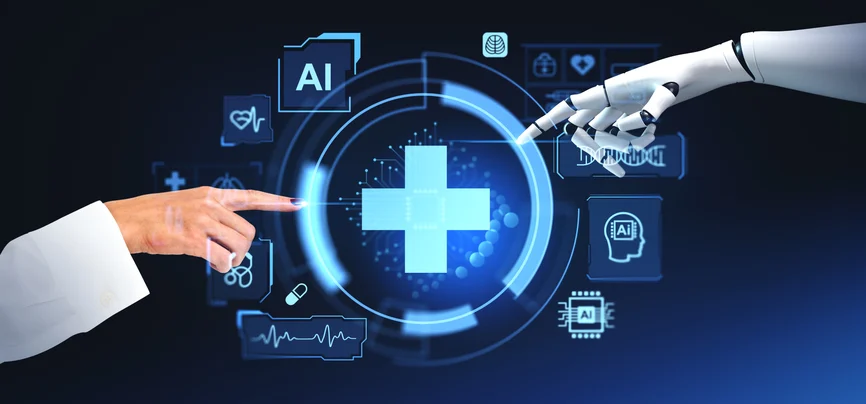
The rapid integration of artificial intelligence into clinical environments has sparked a global debate that oscillates between "AI doomsday" scenarios and the promise of a technological utopia. While high-level warnings about existential threats to humanity often dominate the headlines, the reality within the walls of hospitals and clinics is far more nuanced. As AI systems move beyond administrative support and into the high-stakes arena of clinical decision-making, the healthcare industry faces a critical inflection point: how to balance the undeniable efficiency of machine learning with the essential oversight of human expertise.
For Dr. David Kirk, an Intensive Care Unit (ICU) physician with over two decades of experience, the transition from AI skeptic to advocate was driven by the sheer volume of data inherent in modern medicine. Now serving as the Chief Medical Officer at Regard, a New York-based clinical AI company, Kirk argues that the complexity of patient care has reached a level where human cognition alone is no longer sufficient to ensure optimal outcomes. The challenge, however, lies in how these tools are implemented into existing workflows without eroding the fundamental relationship between physician and patient.
The Evolution of Clinical Decision Support
The journey of AI in healthcare has evolved from simple rule-based algorithms to sophisticated neural networks capable of pattern recognition across massive datasets. In the early 2010s, the focus was largely on "predictive analytics"—identifying patients at risk of sepsis or readmission. Today, the scope has expanded to include generative AI for clinical documentation, image analysis in radiology, and diagnostic support in acute care settings.
Dr. Kirk’s perspective represents a shift in the medical establishment. He posits that having an additional set of digital eyes to sift through electronic health records (EHRs) is no longer a luxury but a moral imperative. "Having an additional set of eyes that can sift through huge amounts of information and identify patterns that might otherwise be missed is so powerful that it is unethical not to use it at this point," Kirk stated. This shift from "optional tool" to "ethical necessity" highlights the growing pressure on clinicians to manage information that exceeds human processing capacity.
However, this necessity does not equate to a hand-off of responsibility. The medical community remains wary of "black box" algorithms where the reasoning behind a diagnostic suggestion is opaque. The transition toward autonomous systems requires a rigorous framework to ensure that AI serves as an augmentative force rather than a replacement for clinical judgment.
Redefining the Human-in-the-Loop Concept
A central pillar of current AI safety discussions is the "human-in-the-loop" (HITL) model. This concept dictates that a human professional must review and approve any output generated by an AI before it affects patient care. While this is often presented as a fail-safe, Kirk argues that the phrase can be an oversimplification of complex clinical workflows. In a high-pressure environment like an ICU or an emergency department, a "loop" that requires a physician to double-check every minor data point can actually increase cognitive load and lead to "alert fatigue."
To address this, Kirk proposes a more sophisticated approach: the degree of AI autonomy should be directly proportional to the degree of risk involved in the task.
In this model, low-risk administrative tasks—such as summarizing a patient’s previous visits or organizing lab results—could be granted higher levels of autonomy. Conversely, high-risk tasks—such as recommending a specific surgical intervention or changing a medication dosage—would require the highest level of human scrutiny. This risk-based hierarchy mirrors the existing structure of healthcare teams, where nurses, pharmacists, and residents operate with varying degrees of independence based on their expertise and the severity of the patient’s condition.
The Cultural Shift: Team-Based Oversight
The integration of AI into healthcare is not just a technical challenge; it is a cultural one. Healthcare systems are built on a culture of shared responsibility and "checking" one another. A pharmacist may flag a physician’s prescription if they spot a potential drug interaction, and a nurse may question an order if a patient’s bedside condition changes.
Kirk asserts that AI must be integrated into this existing culture of team-based oversight. For AI to be safe, it must be treated as a member of the care team—one that is subject to the same checks and balances as any human practitioner. "As AI advances in assisting healthcare, this ability to raise a warning by any member of the team must be protected and encouraged," Kirk said. This means that if an AI identifies a pattern that suggests a rare diagnosis, the physician must be empowered to validate or dismiss that finding based on their real-world interaction with the patient, which the AI cannot replicate.
Supporting Data: The Burden of Modern Medicine
The push for AI integration is fueled by staggering data regarding physician burnout and administrative burden. According to a 2023 study published in the Journal of the American Medical Association (JAMA), physicians spend an average of two hours on EHR tasks and clerical work for every one hour spent on direct patient care. This "pajama time"—documentation done after work hours—has been cited as a leading cause of the 50% burnout rate currently reported among U.S. clinicians.
Furthermore, the volume of medical data is doubling every 73 days. For a clinician managing a dozen patients in an ICU, the task of reviewing every historical lab result, imaging report, and specialist note is physically impossible. AI systems like those developed by Regard are designed to bridge this gap by automatically surfacing the most relevant clinical data, thereby reducing the time spent on "data mining" and allowing more time for clinical synthesis.
However, there is a significant risk that healthcare administrators might use these efficiency gains to increase the expected patient volume. If AI saves a physician 20 minutes an hour, but the hospital responds by adding two more patients to that physician’s schedule, the net benefit to the clinician’s well-being and the patient’s experience is neutralized.
The Efficiency Paradox and the Human Side of Medicine
The most immediate danger of AI in medicine, according to Kirk, is not a "Terminator" scenario but an "Efficiency Trap." There is a high risk that AI will be deployed primarily to maximize billing efficiency, increase regulatory compliance, and navigate the burgeoning complexity of insurance requirements.
"There is an incredibly high risk that AI will be mainly used to maximize efficiency, increase regulations, and magnify complexity," Kirk warned. If AI is used to further automate the "clerical" side of medicine without a corresponding reduction in the total workload, it may leave healthcare providers more mired in regulation than ever before.
The goal of AI implementation should be restorative. By automating the data-heavy, repetitive tasks that currently "bury" clinicians, AI has the potential to restore the "human-to-human" aspect of medicine. The ability to sit with a patient, explain a diagnosis, and build a relationship of trust is something that cannot be automated. When a physician is no longer tethered to a computer screen during a consultation, the quality of care improves.
Regulatory Landscape and Future Implications
As AI moves closer to the point of care, regulatory bodies like the U.S. Food and Drug Administration (FDA) are refining their approach to "Software as a Medical Device" (SaMD). The challenge for regulators is the "learning" nature of AI; unlike a traditional medical device that remains static, machine learning models can change as they are exposed to more data.
Industry experts and legal analysts are also grappling with the question of liability. If an AI system misses a diagnosis, is the hospital, the software developer, or the attending physician responsible? Current legal frameworks generally place the "final say" on the physician, which reinforces Kirk’s argument for robust human oversight. However, as AI becomes more sophisticated, the "standard of care" may eventually shift to include the use of AI, making it a liability not to use the technology—a sentiment echoed in Kirk’s "unethical not to use it" statement.
Chronology of AI Integration in Clinical Practice
The trajectory of AI in healthcare can be viewed through a decade-long timeline of increasing complexity:
- 2012–2015: Early adoption of predictive algorithms for hospital operations (bed management) and simple clinical alerts (sepsis detection).
- 2016–2019: The rise of Deep Learning in diagnostics. The FDA began approving AI-based software for screening diabetic retinopathy and analyzing cardiac images.
- 2020–2022: The COVID-19 pandemic accelerated the adoption of remote monitoring and AI-driven triage tools to manage patient surges.
- 2023–Present: The "Generative AI" era. Large Language Models (LLMs) are being integrated into EHRs to draft clinical notes and provide real-time diagnostic suggestions based on comprehensive chart reviews.
Conclusion: A Balanced Path Forward
The future of AI in healthcare depends on a disciplined implementation strategy that prioritizes the human element. The "doomsday" warnings serve as a reminder of the stakes, but they should not distract from the immediate, practical challenges of clinical burnout and data overload.
As healthcare organizations continue to deploy increasingly autonomous systems, the focus must remain on creating "guardrails" that protect the physician-patient relationship. By ensuring that AI autonomy is tied to risk and that human oversight remains a fundamental part of the team dynamic, the industry can harness the power of technology to make medicine more human, not less. The ultimate success of AI will not be measured by how many decisions it makes on its own, but by how much time it gives back to the people who provide care.

