
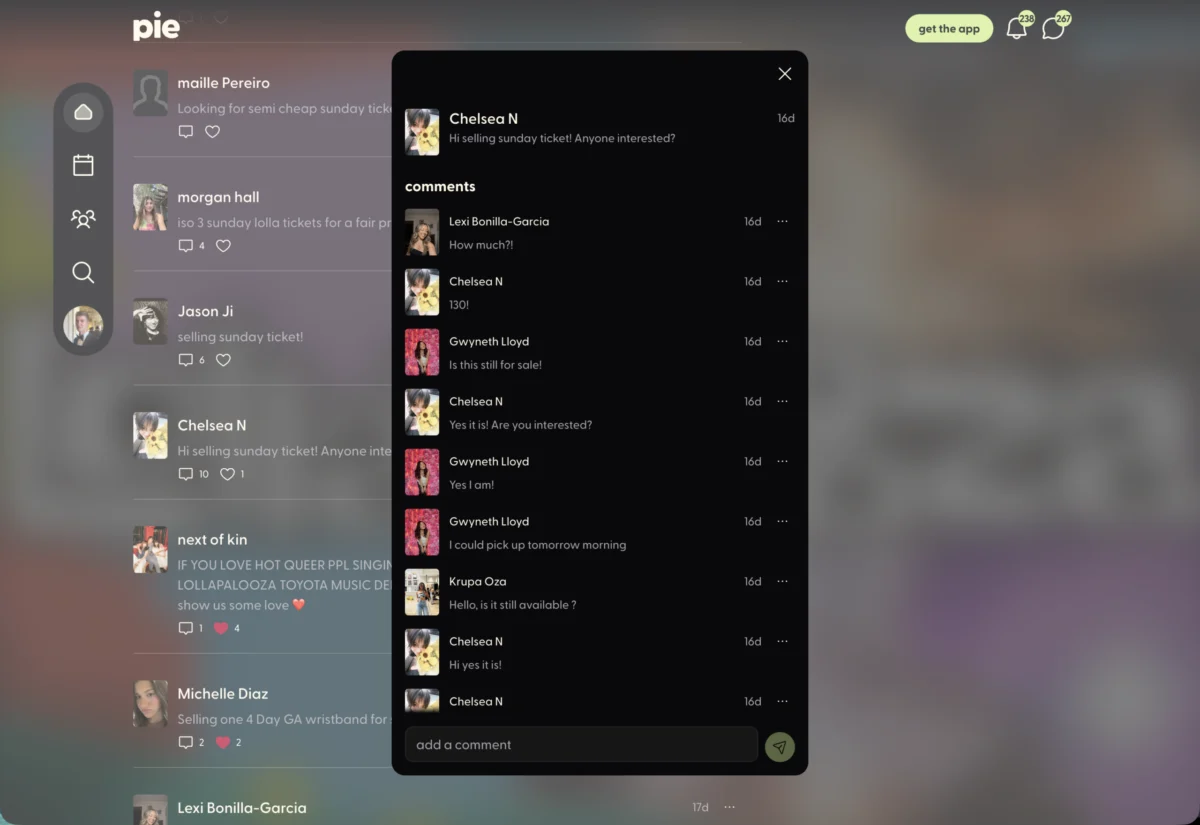
The social application Pie, conceptualized by Bonobos founder Andy Dunn, has taken a significant stride in its mission to cultivate authentic real-life connections by launching its new "Community Homes" feature. This latest innovation, introduced on Tuesday, provides users with dedicated, persistent digital spaces for their social groups, aiming to transcend the limitations of ephemeral group texts, fragmented Facebook Groups, and other prevalent digital communication tools that often fall short in fostering enduring real-world relationships. This strategic enhancement marks a pivotal evolution for Pie, shifting its focus from merely facilitating events to nurturing the underlying communities from which such gatherings naturally emerge.
The Genesis of Pie: Addressing a Modern Malaise
Andy Dunn’s motivation for founding Pie stems from a deeply personal experience with social isolation. After relocating from New York to Chicago, Dunn encountered unexpected difficulties in establishing a new community and forging friendships. This personal challenge resonated with a broader societal trend, particularly exacerbated by years of increased digital interaction and the lingering effects of global events that curtailed physical proximity. The COVID-19 pandemic, in particular, underscored a growing paradox: while digital platforms offered unprecedented connectivity, they simultaneously highlighted a profound hunger for genuine, in-person interaction. Pie was born from the recognition that digital tools could, and should, serve as conduits to real-world engagement, rather than substitutes for it.
The platform initially launched as an events-focused application in Chicago, designed to help individuals discover and participate in local gatherings. This initial iteration quickly gained traction, tapping into a nascent cultural movement among younger demographics, particularly Gen Z, who increasingly express a desire to engage in social clubs, interest-based groups, and organized activities that lead to tangible, face-to-face interactions. Dunn articulated this vision to TechCrunch, observing the rise of "run clubs, art markets, watch parties – all these things that we’re hearing about in terms of the cultural movement towards being together again." He envisioned Pie as the software infrastructure for these burgeoning social clubs, an ecosystem where individuals could "run into other people and belong to communities and start to have deeper connections," likening it to a "Reddit for IRL."
Evolution of an IRL Platform: Growth and Investor Backing
Since its inception, Pie has demonstrated robust growth, amassing approximately 300,000 users. This user base reflects a significant demand for platforms that bridge the digital and physical worlds. The startup has attracted substantial investment from prominent venture capital firms, including Forerunner, Lightspeed, and Accel, signaling strong confidence in its potential to disrupt the social networking landscape. Additionally, angel investors such as Twitter co-founder Ev Williams have lent their support, further validating Pie’s innovative approach to combating social isolation.

Pie’s journey has been marked by a continuous refinement of its features, guided by user behavior and the overarching goal of fostering authentic connections. A notable shift occurred in December, when Pie revamped its activity feed to emphasize who users knew was attending an event, rather than merely announcing events. This seemingly subtle change yielded remarkable results, with the average time spent on the app increasing dramatically from 2 minutes to 10 minutes. This data underscored a critical insight: users were more engaged when the platform highlighted social connections and shared experiences rather than simply serving as an event listing service. More recently, Pie introduced a "favorites" feature, enabling users to enrich their public profiles with their interests, thereby facilitating more meaningful connections based on shared passions. These incremental changes have laid the groundwork for the more comprehensive "Community Homes" feature, which represents a logical progression in Pie’s strategic pivot.
Introducing Community Homes: A Deeper Dive into Connection
The newly launched "Community Homes" feature is designed to serve as a permanent digital anchor for social groups, offering a dedicated space where relationships can evolve beyond single events. The company positions these homes as superior alternatives to the often chaotic and transient nature of group texts or the broad, less intimate environment of traditional social media groups. Each "home" is equipped with its own community feed, providing a central hub for updates, discussions, and shared content relevant to the group.
Key features of Community Homes include robust group management tools, suchprising admin and membership controls, which allow organizers to curate and maintain their communities effectively. A shareable homepage ensures that groups can easily invite new members and broadcast their activities. Crucially, the platform emphasizes democratic participation: while admins have control, any group member can share events to the community feed, fostering a more organic and decentralized approach to event planning and networking. This design choice aims to empower members and encourage spontaneous interaction, rather than relying solely on official organizers.
Looking ahead, Pie has outlined plans to further enhance the "Community Homes" experience. Upcoming features include integrated group chats, which will provide a more direct and immediate communication channel for members. Additionally, Pie intends to introduce a feature allowing members to post more casual "bids for connection." This could manifest as simple prompts like, "Anyone want to hang out and craft together?" or "Who’s watching the Love Island reunion tonight?" Such functionality is designed to facilitate impromptu meetups and strengthen bonds through shared, unplanned experiences, further blurring the lines between digital interaction and real-world spontaneity.
Shifting Paradigms: From Events to Enduring Connections
The introduction of Community Homes signifies a fundamental philosophical shift for Pie. While events remain an integral component of real-world interaction, Pie’s strategy now prioritizes the community as the primary draw, with events serving as the natural outgrowth of those established connections. This contrasts sharply with many other platforms that lead with events, treating them as standalone occurrences. Pie’s approach seeks to build a foundation of ongoing engagement, where members feel a sense of belonging and familiarity before, during, and after any specific event.

This strategic reorientation aligns with a broader societal yearning for deeper, more sustained human connection in an increasingly fragmented world. The rise of loneliness as a public health concern, coupled with a generation’s growing disillusionment with superficial online interactions, has created a fertile ground for platforms that genuinely facilitate face-to-face relationships. Pie aims to differentiate itself by cultivating environments where trust and rapport can develop over time, moving beyond transactional event attendance to foster genuine camaraderie.
The Market Context: A New Era for Socializing
Pie’s expansion arrives at a time when younger demographics are actively seeking avenues for real-world engagement, often feeling overwhelmed by the performative and often isolating nature of traditional social media. A 2023 study by the Pew Research Center indicated that a significant percentage of young adults report feeling lonely, even while highly connected online. This paradox highlights a critical unmet need that platforms like Pie are attempting to address. Instead of passively consuming content or maintaining curated online personas, many young people are leveraging digital tools as a means to an end: to transition from screen time to face time.
The market for "IRL social" applications has seen considerable innovation in recent years, with various platforms attempting to connect people based on interests, proximity, or shared activities. However, many have struggled to foster sustained engagement beyond initial meetups. Pie’s focus on "Community Homes" aims to overcome this challenge by providing a persistent infrastructure that supports ongoing interaction and relationship building, rather than just event discovery. It competes not just with other event apps like Meetup, but also indirectly with messaging apps (WhatsApp, Telegram) and broader social networks (Facebook Groups, Discord) that communities often use, but which may lack the integrated event planning and dedicated IRL focus that Pie offers.
Leadership and Vision: Andy Dunn and Nadya Okamoto
The strategic direction of Pie is significantly shaped by its leadership. Andy Dunn, with his track record of building Bonobos into a successful e-commerce brand, brings entrepreneurial acumen and a deep understanding of consumer behavior. His personal journey into community building underscores the authenticity of Pie’s mission.
Adding to the leadership team is Nadya Okamoto, who has joined Pie as a co-founder and Chief Marketing Officer. Okamoto brings firsthand experience in cultivating vibrant real-world communities through her popular run club, "Zoomies," based in New York. Her practical insights into what makes a community thrive are invaluable to Pie’s development. Okamoto succinctly captured Pie’s refined vision, stating, "I would say [Pie is] more like the original promise of Facebook and Reddit — if it wasn’t anonymous and toxic." She further emphasized the shift: "Rather than leading with events, which is what so many other great platforms do, I think events are more a product of having a great community-building ecosystem on the app." This perspective highlights Pie’s ambition to create a positive, supportive, and active environment where events are a natural manifestation of community life, not merely isolated occurrences.

Competitive Landscape and Differentiators
In an increasingly crowded digital landscape, Pie positions itself as a unique proposition. While Facebook Groups offer robust community features, they often lack the explicit "IRL" orientation and the seamless integration with event planning that Pie provides. Discord, popular among gaming and niche communities, excels in real-time communication but is primarily digital-first, with IRL meetups often requiring external coordination. Traditional group texts, while ubiquitous, are notoriously disorganized for managing large groups, sharing information, and planning complex events.
Pie’s differentiator lies in its holistic approach: combining the permanence and organizational tools of a community platform with a strong emphasis on facilitating face-to-face interactions. By providing dedicated "homes" that are designed from the ground up to support real-world gatherings and ongoing relationships, Pie aims to create a more effective and engaging solution for groups seeking to thrive both online and offline. The ability for any member, not just admins, to propose events further democratizes the process and encourages active participation, fostering a more dynamic and responsive community environment.
Geographic Reach and Future Outlook
While Pie is globally accessible, its current market traction is concentrated in major urban centers such as Chicago, New York, and Los Angeles. These cities, known for their diverse populations and active social scenes, provide fertile ground for the adoption of IRL social applications. The success in these key markets offers a blueprint for potential expansion into other regions as the platform continues to mature.
The long-term implications of Pie’s model are significant. In an era where digital fatigue is a growing concern, and the desire for authentic human connection remains paramount, platforms that can effectively bridge the digital and physical worlds are poised for substantial impact. By providing the tools for communities to form, grow, and interact meaningfully offline, Pie has the potential to become a cornerstone in the evolving landscape of social technology, redefining how people connect and belong in the modern world. Its focus on fostering deeper relationships, rather than superficial interactions, could contribute to a healthier, more connected society.

