
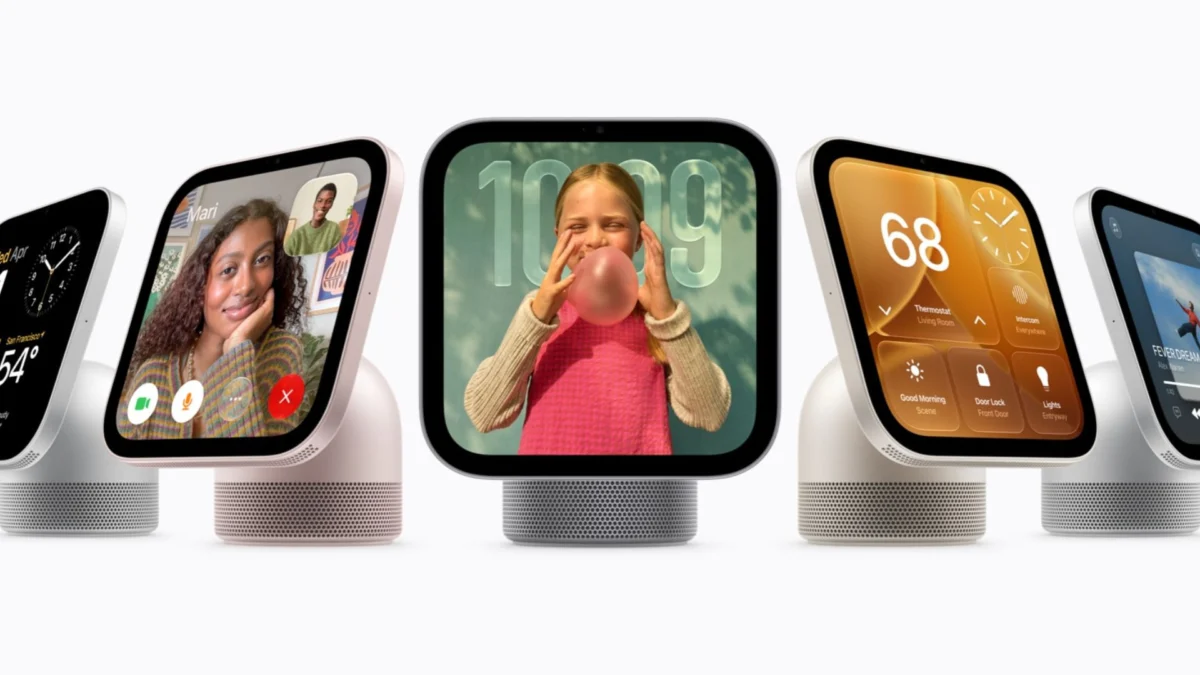
Apple has officially entered the burgeoning smart display market with the unveiling of its HomeView, a 7-inch smart home hub designed to integrate seamlessly into the Apple ecosystem. Priced at £299 in the UK and $299 in the US, HomeView enters a competitive landscape long dominated by Amazon’s Echo Show range, signaling a significant strategic move by the tech giant. This new device is powered by Apple Intelligence and an advanced iteration of Siri, aiming to leverage the company’s established strengths in user experience and hardware integration.
The arrival of HomeView marks a pivotal moment for Apple, which has historically focused on personal devices rather than dedicated smart home hubs with screens. While Amazon has cultivated a loyal user base and a comprehensive ecosystem of smart home devices and AI capabilities over several years, Apple is betting on its unparalleled integration with existing Apple products and services to carve out its niche. The company’s strategy appears to center on delivering a refined, user-friendly experience for its existing customer base, rather than aiming for broad hardware diversity. This article will delve into the key distinctions between HomeView and its primary competitor, the Amazon Echo Show, based on available specifications and Apple’s stated product philosophy.
HomeView: A Refined Approach to Smart Home Interaction
Apple’s HomeView is presented in two distinct form factors, both featuring a 7-inch square display. The standard version is designed for desktop placement and boasts enhanced speaker capabilities, suggesting a focus on audio quality for media consumption and communication. Complementing this is a wall-mounted variant, catering to users who prefer a more integrated and permanent smart home fixture. This dual approach offers flexibility for consumers to choose the setup that best suits their living spaces.
In contrast, Amazon offers a significantly wider array of Echo Show models, catering to various price points and feature sets. These include the compact Echo Show 5, the mid-range Echo Show 11, and the larger, wall-mountable Echo Show 15, alongside the more specialized Echo Hub. While all Echo Show devices feature widescreen displays, the HomeView’s square screen represents a departure from the conventional aspect ratios seen in the smart display market, potentially influencing content display and user interface design.
Interface and Intelligence: A Tale of Two Ecosystems
The user interface of the Amazon Echo Show is largely built around a widget-driven home screen, offering at-a-glance information such as weather forecasts, recipe suggestions, stock prices, and product recommendations. The device’s ability to pull in personal data from calendars and emails allows for a personalized dashboard experience. Newer Echo Show models incorporate facial recognition, enabling different users to see tailored information, though compatibility with all email accounts remains a point of consideration, with limitations noted for paid Google or Microsoft accounts.
At its core, the Echo Show remains a voice-first device, powered by the sophisticated Alexa+ AI assistant. Alexa+ has demonstrated a strong capacity for contextual understanding, learning user preferences over time to refine suggestions, such as personalized recipe recommendations. Its ability to manage routines, book reservations through integrated services like OpenTable, and answer a wide range of queries has cemented its position as a capable smart home command center. The Echo Show also features a touch interface, though it often serves as a secondary control method for adjustments, such as dimming lights after a voice command.
Apple’s HomeView adopts a different philosophy, drawing parallels to a larger Apple Watch designed for a desktop environment. Its primary advantage lies in its deep integration with the curated applications and services already familiar to Apple users. This includes seamless access to Apple Music, Messages, FaceTime, Home, and Calendar. The device supports both voice and touch interactions, allowing users to engage with these applications fluidly. Facial recognition is also a key feature, ensuring personalized content and experiences for each user.
The shared data infrastructure across Apple devices means that HomeView users can expect an immediate and consistent experience with their existing digital tools. The inclusion of FaceTime for video and audio calls is a significant differentiator, as FaceTime’s widespread adoption across Apple’s product line offers a more universally accessible communication platform compared to the more fragmented video calling options on Echo Show devices. Furthermore, all HomeKit-compatible smart home devices are directly accessible through HomeView via a streamlined touchscreen interface, simplifying smart home management.

A notable feature of HomeView is its support for Handoff, allowing users to seamlessly transfer audio or video content, such as music playback or ongoing calls, between their iPhone and the HomeView by simply tapping their phone to the device’s screen. While voice interaction is a core component, Apple is leveraging its GenAI-powered Siri. This advanced version of Siri is expected to offer more comprehensive responses to general queries. Although it currently lacks support for creating custom "Routines," a feature that has long been a staple of Alexa, Apple has indicated that Siri’s capabilities will continue to evolve. For users deeply embedded within the Apple ecosystem, this tight integration is poised to be a compelling factor, potentially giving HomeView a distinct advantage over the Echo Show.
Smart Home Capabilities: Expanding the Connected Household
Both Apple HomeView and the latest Amazon Echo Show models are equipped with support for Thread and Matter, the emerging smart home standards designed to enhance interoperability between devices from different manufacturers. This dual support positions both devices to function effectively as smart home hubs.
The primary distinction in smart home functionality lies in device compatibility and integration methods. Amazon Echo devices can leverage Matter for direct device connections or connect to a vast array of devices through cloud-based integrations. This extensive support network gives the Echo Show a broader reach in terms of compatible smart home products, particularly for third-party cameras and less common smart home accessories. Amazon has also forged specific integrations, such as enabling Echo Show devices to display live feeds from Ring doorbells when a visitor arrives, allowing for immediate interaction without the need to access a smartphone.
Apple’s HomeView, conversely, is limited to devices that are compatible with Matter or Apple’s own HomeKit framework. While this ecosystem is growing, it is generally considered more restricted, especially concerning third-party camera manufacturers, although device support has seen considerable improvement in recent years. Apple’s strength in this domain lies in the superior user experience of its Home app, which offers more intuitive and direct device control across iPhones, iPads, and Macs compared to the Alexa app. Apple has also collaborated with LG to develop a range of smart home products, including locks, cameras, doorbells, and thermostats, further expanding its integrated offerings.
Price, Availability, and Strategic Positioning
The Apple HomeView is positioned as a premium smart home device, with a retail price of £299 in the UK and $299 in the US. It is available in a tabletop version offered in four color options and a wall-mounted version available in two colors. Pre-orders for HomeView have commenced, with the device scheduled to go on sale on November 13th in the UK, US, and several other international markets.
Amazon’s Echo Show range offers a significantly wider spectrum of pricing, with models starting as low as £99.99 for the Echo Show 5. This broad price range makes Amazon’s offerings more accessible to a wider consumer base with varying budget constraints.
The strategic positioning of HomeView appears to be a deliberate move to consolidate and enhance the experience for existing Apple users. For households already invested in Apple products, the seamless integration with services like FaceTime, Apple Music, and HomeKit, coupled with features like Handoff, could present a compelling argument for choosing HomeView. However, the ultimate success of the device will hinge on the performance of its advanced Siri AI and the overall user experience, which have yet to be rigorously tested through independent reviews.
Amazon’s Echo Show, on the other hand, benefits from its established presence, a mature AI assistant in Alexa+, extensive smart home compatibility that is hardware-agnostic (supporting both Android and iPhone users), and a more diverse range of devices at competitive price points. While HomeView aims for a refined, integrated experience, the Echo Show continues to offer broad appeal through its versatility, affordability, and established ecosystem. The introduction of HomeView signals Apple’s intent to capture a significant share of the premium smart display market, challenging Amazon’s long-standing dominance by leveraging its core strengths in user experience and ecosystem integration. The market will be keenly watching how these two distinct strategies play out in the evolving landscape of connected homes.

The Broader Implications of Apple’s Smart Display Entry
Apple’s foray into the smart display market with HomeView is more than just the introduction of a new gadget; it represents a strategic expansion of its ecosystem and a direct challenge to Amazon’s established dominance in the smart home space. Historically, Apple has approached smart home technology through its HomeKit framework, primarily focused on enabling device control through iPhones, iPads, and Macs, with the HomePod acting as a voice assistant. The HomeView signifies a more tangible and visual representation of Apple’s smart home ambitions, aiming to bring the intelligence and connectivity of its digital life into a dedicated, interactive display.
The timing of HomeView’s launch is also significant. The smart display market, though still maturing, has seen consistent growth, driven by consumer demand for convenient access to information, entertainment, and home automation. By entering this market, Apple is not only capitalizing on this trend but also reinforcing its commitment to a holistic connected living experience. The emphasis on Apple Intelligence and a smarter Siri suggests a long-term vision to integrate advanced AI capabilities more deeply into the fabric of its devices, moving beyond basic voice commands to more sophisticated, context-aware interactions.
From an industry perspective, Apple’s entry is likely to spur further innovation and competition. Companies like Google, with its Nest Hub devices, and Samsung, with its Family Hub refrigerators and SmartThings platform, are also key players in the broader smart home market. The increased competition driven by Apple’s participation could lead to improved features, more robust AI development, and potentially more competitive pricing across the board. For consumers, this heightened competition generally translates to better product choices and enhanced value.
Furthermore, the HomeView’s integration with Apple’s existing suite of services, such as FaceTime, Apple Music, and the Home app, is a powerful differentiator. This tight integration is a hallmark of Apple’s product strategy, aiming to create a seamless and intuitive user experience that is difficult for competitors to replicate. For users who have invested heavily in Apple’s ecosystem, the HomeView offers a natural extension of their digital environment, promising a unified and efficient way to manage their smart home, communicate, and consume media.
The pricing strategy, while at the higher end of the market, aligns with Apple’s typical positioning of its products as premium offerings. This suggests a target audience that values design, user experience, and ecosystem integration over sheer device variety or the lowest possible price point. The existence of both a tabletop and a wall-mounted version also indicates Apple’s understanding of diverse consumer needs and installation preferences.
The comparison with Amazon’s Echo Show highlights the fundamental differences in their approaches. Amazon’s strategy has been characterized by broad market penetration, a vast array of devices, and an open approach to third-party integrations, making Alexa a ubiquitous presence in many smart homes. Apple, on the other hand, appears to be focusing on a more curated and integrated experience for its loyal customer base. This "walled garden" approach, while potentially limiting for some, ensures a high level of control over the user experience and product quality.
As HomeView rolls out, its real-world performance will be crucial. The effectiveness of its AI, the reliability of its smart home integrations, and the overall user satisfaction will determine its success. However, its mere presence is a significant development, signaling Apple’s intent to play a more central role in the connected home of the future. The long-term implications include a potential shift in market dynamics, a renewed focus on AI-driven user experiences, and continued advancements in smart home technology, all of which will ultimately benefit consumers.

