
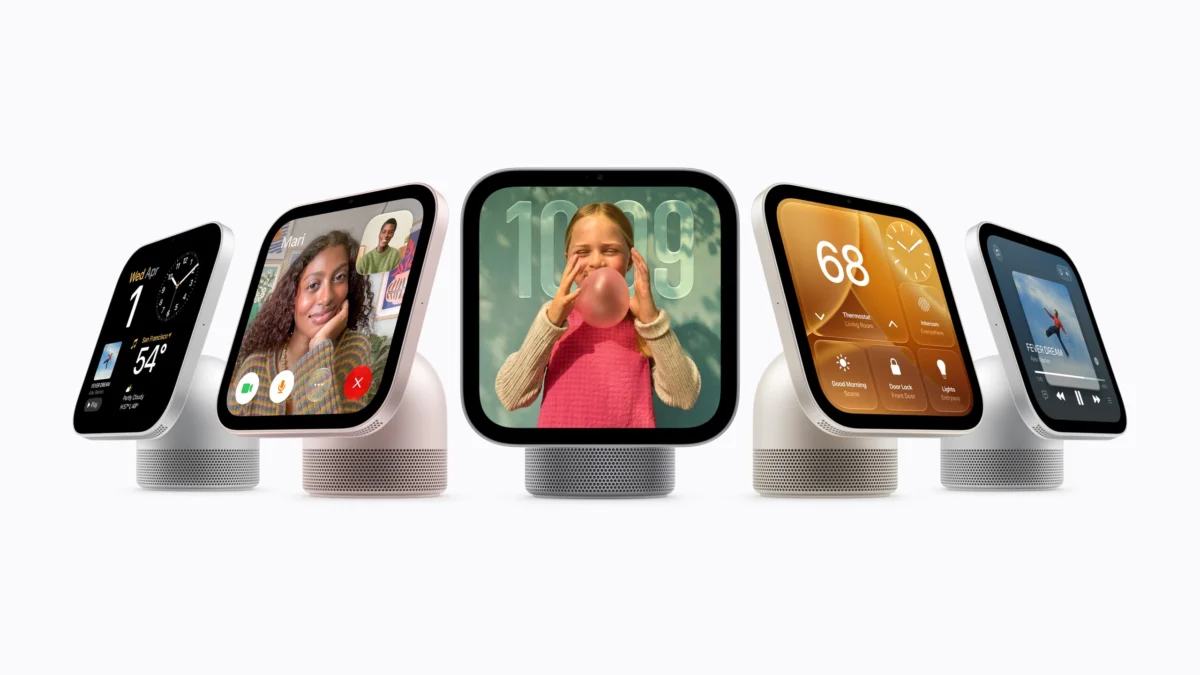
Apple has officially entered the smart display market with the highly anticipated HomeView, a device long sought after by dedicated HomeKit enthusiasts. This launch arrives at a pivotal moment, as Google’s smart display offerings, most notably the Google Nest Hub (2nd gen), have seen no significant updates since 2021. The introduction of HomeView signals Apple’s intensified focus on integrating its ecosystem more deeply into the home environment, prompting a comprehensive comparison of features, pricing, and design with its primary competitor. This analysis, based on released specifications and available information, aims to illuminate the strengths and potential drawbacks of each device.
Price and Design: A Tale of Two Aesthetics and Investment Levels
The HomeView enters the market with a premium price tag, set at $299 / £299 for both its tabletop and wall-mounted configurations. Pre-orders are currently open, with shipments slated to commence on November 13th in key markets including the US, UK, Canada, Australia, New Zealand, and India. Notably, the device will not be available in the European Union at launch due to limitations with the current iteration of Siri AI in that region. For those opting for the wall-mounted version, additional costs are incurred for specialized Schneider Home mounts. The USB-C variant is priced at $59.95, the AC wired version at $79.95, and a Power over Ethernet (PoE) option is anticipated in early 2027 for $129.95. This brings the total investment for a wall-mounted HomeView closer to the $360 mark.
In stark contrast, the Google Nest Hub (2nd gen), despite its age, remains a viable and supported option at a significantly lower price point of $99.99 / £89.99. While Google has not officially announced a successor, the appearance of a device labeled "Google Home Display" in the Google Home app in May suggests that a new generation may be on the horizon.
The design philosophies of the two devices are dramatically different. Both feature 7-inch displays, but their visual presentations diverge significantly. The HomeView boasts a distinctive square Liquid Retina display elegantly positioned atop a domed aluminum speaker base. This unit is supported by a stainless steel tilting hinge, offering a sophisticated aesthetic available in silver, starlight, rose pink, and space grey finishes. A key design element is its adaptive brightness, capable of dimming from a vibrant 500 nits down to a subtle 0.3 nits for nightstand use. Furthermore, the interface dynamically simplifies itself when viewed from a distance, enhancing usability.
The Google Nest Hub, on the other hand, presents a more understated design. Its screen is housed in a fabric-covered base, and it notably lacks a camera. This absence of a camera makes it a more privacy-conscious choice for bedrooms, where its integrated Soli radar technology enables features like Sleep Sensing and Quick Gestures for controlling media and alarms with simple hand movements.

The presence of a camera on the HomeView is a significant differentiator. Apple has integrated a camera for FaceTime calls, enhanced by Center Stage technology, which automatically keeps the user in frame. This camera also facilitates personalized user recognition for up to six household members, enabling tailored Home Screens, widgets, and private access to Messages and Calendar content. Apple asserts that all camera and microphone data is processed locally on the A18 chip within isolated Secure Enclaves, aiming to assuage privacy concerns. However, for users prioritizing an environment free from a visible lens, the Nest Hub’s camera-less design offers a distinct advantage.
Features: Sound, Intelligence, and Ecosystem Integration
Under the hood, the HomeView showcases a more advanced audio architecture. The tabletop variant incorporates two full-range drivers directly within the display itself, engineered to deliver Spatial Audio. This is complemented by a down-firing woofer and two passive radiators integrated into the speaker base. The HomeView also supports multiroom audio playback in conjunction with other HomePod and AirPlay speakers. The wall-mounted model, however, features a reduced driver count, comprising two drivers.
The Nest Hub’s audio capabilities are more modest, relying on a single 43.5mm full-range driver. While Google claims this offers 50% more bass than its predecessor, its primary function is geared towards podcasts, timers, and background music rather than immersive room-filling sound.
The most significant feature upgrade for the HomeView is the inclusion of Siri AI, a significantly re-engineered version of Apple’s virtual assistant. This new iteration promises more natural, conversational interactions and an expanded capacity to answer a broader spectrum of queries. When paired with an Apple Intelligence-enabled iPhone or iPad, Siri AI can leverage personal data such as calendars, messages, and playlists to provide more contextually relevant responses. The HomeView will launch with Siri AI in beta, and initial setup requires an iPhone or iPad.
Beyond Siri AI, the HomeView seamlessly integrates with existing iCloud data, including FaceTime, HomeKit devices, and Calendar events. This integration positions the HomeView as an extension of the Apple ecosystem, akin to a larger, more interactive Apple Watch for the desktop.
The Google Nest Hub, meanwhile, now operates with Gemini for Home, Google’s own conversational AI. It is designed to work across both Android and iOS devices via the Google Home app. In contrast, the HomeView’s functionality is largely tethered to Apple devices. While Siri AI shows potential, early assessments of Gemini for Home have been less conclusive. Industry observers often point to Amazon’s Alexa+ as the current benchmark for smart AI assistant performance.

For smart home control, both devices function as hubs for Matter devices via Wi-Fi and Thread. The HomeView is compatible with Matter accessories, "Works with Apple Home" certified products, and Apple’s new Home Collection, which includes cameras, thermostats, and a lock developed in partnership with LG and Schneider, expected to roll out from December. Its dedicated Home Camera interface can display up to nine live feeds simultaneously. An iCloud+ subscription further enhances this by enabling encrypted recognition of people, pets, and packages, and can provide alerts for detected smoke or carbon monoxide alarms.
The Nest Hub also serves as a Thread border router and Matter controller, making it a natural central point for Nest cameras and doorbells. However, certain advanced features, such as alerts for unusual sounds, require a Google Home Premium subscription.
The user interface experience also differs. The Google Nest Hub is primarily voice-driven, with touch functionality reserved for fine-tuning operations, such as adjusting the brightness of a smart bulb. The HomeView adopts a more hybrid approach, offering a suite of touchscreen apps (akin to those on an iPhone, including Home and Phone) with the added convenience of voice control.
Implications and Future Outlook
The introduction of the Apple HomeView marks a significant strategic move by Apple to solidify its presence in the smart home arena. For households deeply invested in the Apple ecosystem, the HomeView appears to be the long-awaited smart display that addresses a clear demand. Features like face-based user profiles, integrated FaceTime, a more robust speaker system, and deep HomeKit control offer compelling advantages that could justify the premium pricing. However, the beta status of Siri AI and the substantial initial investment warrant careful consideration and likely a wait-and-see approach for reviews before a final purchase decision.
For users not exclusively tied to Apple devices, the Google Nest Hub (2nd gen), despite its age, remains a budget-friendly option. However, its aging hardware and software, coupled with the evolving landscape of smart home technology, might lead some consumers to consider alternatives. The article’s concluding remark suggests that for general users seeking a capable smart display, an Amazon Echo Show might present a more compelling contemporary alternative, particularly given the ongoing development and competitive performance of Alexa.
The broader implication of Apple’s entry is the potential for increased innovation and competition within the smart display market. As Apple integrates its hardware, software, and AI capabilities more cohesively, it sets a higher bar for user experience and ecosystem synergy. This could pressure competitors like Google to accelerate their development cycles and introduce more advanced features to maintain market share. The ongoing development of AI assistants, such as Siri AI and Gemini, will be crucial in determining the long-term success and user adoption of these devices. The industry will be closely watching how these platforms evolve and how effectively they can integrate into the increasingly complex and interconnected smart homes of the future. The HomeView’s success will likely hinge on its ability to deliver on its promise of a seamless and intelligent home experience, while the Nest Hub’s continued relevance will depend on Google’s strategy for updating its smart display lineup and enhancing its AI capabilities.

