
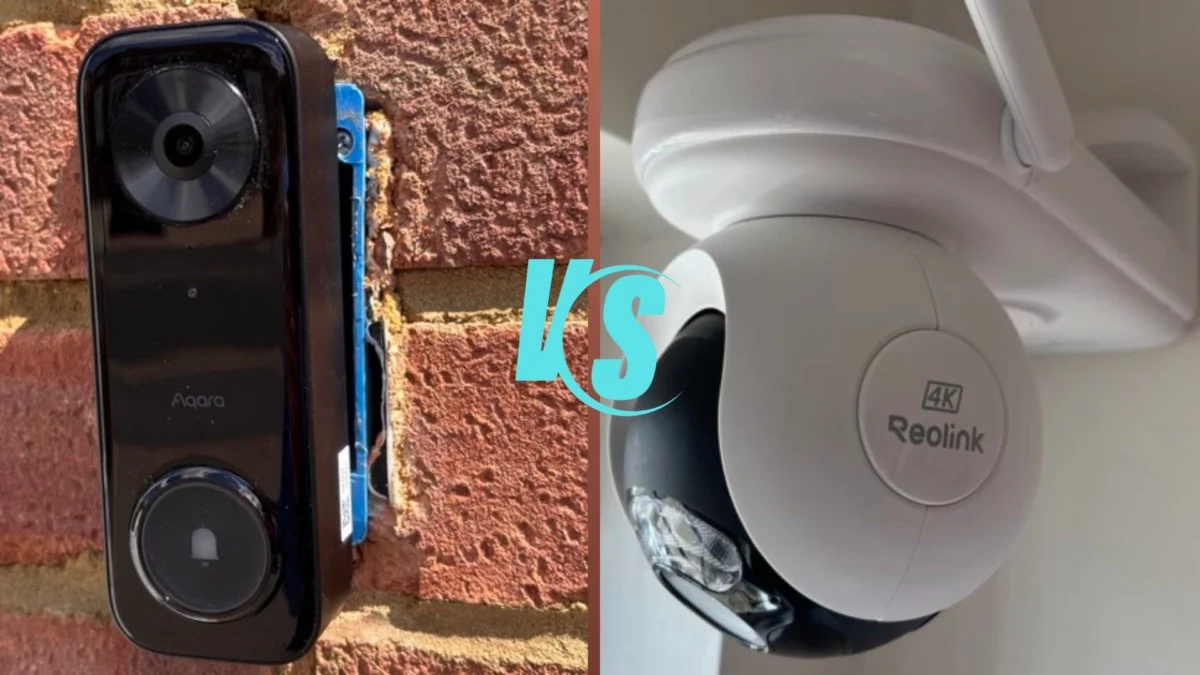
The landscape of smart home security is rapidly evolving, with consumers increasingly seeking alternatives to subscription-heavy camera systems. Two prominent players, Aqara and Reolink, offer compelling options, yet they approach the market with fundamentally different philosophies. Aqara integrates its doorbells and cameras into a broader smart home ecosystem, emphasizing connectivity and automation, while Reolink positions its devices as standalone, high-performance security solutions with a strong focus on local storage and open standards. This comparison delves into their latest offerings, specifically the Aqara G4, G410, and G400 Wired doorbells, against Reolink’s Video Doorbell WiFi and Video Doorbell PoE, to help consumers navigate the crucial decision between a smart home linchpin and a dedicated security workhorse.
The core difference, often more significant than technical specifications suggest, lies in their strategic intent. Aqara aims to make its doorbells a central component of a connected home, capable of orchestrating various smart devices. Reolink, conversely, treats the doorbell as a primary security asset, providing users with maximum control over data storage and system integration. Understanding this divergence is key to making an informed choice, especially when considering how these devices interact with platforms like Apple Home, Google Home, Home Assistant, and Network Video Recorders (NVRs).
Testing Methodology: A Real-World Approach to Smart Home Devices
At The Ambient, our evaluation process for smart home products, including video doorbells, transcends mere spec sheet comparisons. We believe that a device’s true value is realized through prolonged, real-world usage. This involves meticulously assessing the setup experience, day-to-day reliability, the efficacy of notifications, the clarity and utility of video quality, the seamlessness of smart home integrations, and the continued performance of the product as an integral part of a functioning household.
While Aqara and Reolink may appear comparable in terms of price and headline features, the actual user experience can vary dramatically based on an individual’s existing smart home infrastructure. Whether one primarily utilizes Apple Home, Google Home, Home Assistant, an NVR, or relies on the companies’ proprietary ecosystems, the choice between Aqara and Reolink will profoundly shape the overall functionality and integration capabilities of the chosen doorbell.
Aqara vs. Reolink Doorbell Features: A Comparative Overview
| Feature | Aqara G4 | Aqara G410 | Aqara G400 Wired | Reolink Video Doorbell WiFi | Reolink Video Doorbell PoE |
|---|---|---|---|---|---|
| Resolution | 1080p | 2K | 2K, 1536 x 2048 | 5MP, 2560 x 1920 | 5MP, 2560 x 1920 |
| Field of View | 162° | 175° | 165° diagonal | 180° diagonal | 180° diagonal |
| Power | Battery or wired | Battery or wired | Wired / PoE | Wired | PoE / wired |
| Wi-Fi | 2.4GHz | 2.4/5GHz | Wi-Fi 6 | 2.4/5GHz | No Wi-Fi |
| Local Storage | microSD up to 512GB | microSD up to 512GB | microSD | microSD up to 256GB | microSD up to 256GB |
| RTSP | Limited | Wired mode | Yes | Yes | Yes |
| ONVIF | No | No | Not listed | Yes | Yes |
| HomeKit | Yes | Yes | Yes | No official support | No official support |
| Home Assistant | Via integrations | RTSP when wired | Yes | Yes | Yes |
| Smart-Home Hub | No | Zigbee/Matter/Thread | Chime/hub functionality | No | No |
| Weather Resistance | IP-rated | IP-rated | IP-rated | IP65 | IP65 |
Aqara’s Ecosystem-Centric Approach
Aqara’s product line is designed to build a comprehensive smart home. The Aqara G4, the most versatile battery-powered option, utilizes six AA batteries and offers a 162-degree field of view. It can also be powered via a wired connection (12-24V AC or 8-24V DC). Its accompanying indoor repeater not only provides the network connection but also supports local microSD storage of up to 512GB, offering a substantial local recording capacity.
The Aqara G410 represents a significant upgrade for those looking for a more advanced smart home integration. It retains the flexibility of battery or wired power but elevates video quality to 2K resolution. It also boasts dual-band 2.4GHz/5GHz Wi-Fi, an expanded 175-degree field of view, and an integrated mmWave radar sensor for enhanced presence detection. Crucially, its indoor chime doubles as a smart home hub, supporting Aqara’s Zigbee devices, Matter, and Thread protocols, positioning it as a central nervous system for a connected home.
For users prioritizing a wired setup, the Aqara G400 is the dedicated solution. It delivers 2K video resolution (1536 x 2048), a 165-degree diagonal field of view, Wi-Fi 6 connectivity, and Ethernet support with 802.3af PoE capabilities, ensuring robust power and data transfer.
Reolink’s Security-First Design
Reolink adopts a more direct and focused approach, prioritizing robust security features. The Reolink Video Doorbell WiFi operates on dual-band Wi-Fi, powered by a 12-24V AC or 24V DC transformer, and features a 5MP sensor for high-resolution video capture (2560 x 1920).
The Reolink Video Doorbell PoE offers the same impressive 5MP resolution but streamlines installation by transmitting both power and data over a single Ethernet cable. This makes it an ideal choice for homes already equipped with network cabling at the front door or those planning to integrate it into a larger wired camera system. For users without existing Ethernet infrastructure, the WiFi model is the more relevant comparison to Aqara’s offerings. The PoE version, however, is particularly suited for users who intend to connect it to an NVR or a pre-existing wired security camera network.
Pricing and Availability: Value Beyond the Sticker Price
When evaluating the cost, it becomes clear that Reolink often presents a more compelling value proposition for users whose primary concern is the camera hardware and local recording capabilities. Conversely, Aqara’s G410 justifies its price point if the integrated smart home hub functionality adds significant value to an existing Aqara or Apple Home ecosystem.
As of the latest available information, Aqara’s US store lists the G410 at $144.99. Pricing for the older G4 and the newer G400 can vary significantly based on market and retailer. Reolink’s pricing also fluctuates, influenced by the choice between WiFi and PoE models, and whether bundled accessories like a chime or storage solutions are included.
It is crucial for consumers to compare the exact package and feature set rather than focusing solely on a headline price. A significant advantage shared by both brands, and a primary driver for consumer interest, is the absence of mandatory ongoing subscription fees, a stark contrast to many competing video doorbell solutions.
Smart Home Ecosystem Integration: Aqara’s Differentiated Strategy
Aqara’s most significant differentiator is its ability to seamlessly integrate into and enhance a smart home ecosystem. The G410, in particular, is a powerhouse of connectivity, featuring built-in Zigbee and Thread support, acting as a Matter controller, and functioning as a Thread border router. This means the doorbell, situated at the front door, can actively connect and manage other smart devices throughout the house, extending its utility far beyond simple security monitoring.
The G410’s broad compatibility extends to major smart home platforms including Apple Home, Amazon Alexa, Google Home, and Samsung SmartThings. It also offers support for Apple HomeKit Secure Video, providing encrypted cloud storage and advanced features within the Apple ecosystem. Aqara’s local face recognition capability can be leveraged to trigger custom automations, and the doorbell’s presence detection can intelligently differentiate between various activities occurring around the entrance.
The G4 also aligns with this ecosystem-first philosophy, especially for Apple Home enthusiasts. Its 162-degree field of view offers extensive coverage, and its battery-powered operation provides installation flexibility where running new wiring might be impractical.
In contrast, Reolink deliberately avoids positioning its doorbells as smart home hubs. Instead, it focuses on providing users with direct, unhindered access to the camera’s functionality. This is exemplified by its robust support for RTSP (Real Time Streaming Protocol) and ONVIF (Open Network Video Interface Forum) standards. These protocols allow Reolink doorbells to feed video streams into compatible Network Video Recorders (NVRs) and a wide array of third-party surveillance systems. This open architecture is particularly beneficial for users of platforms like Home Assistant, who seek to aggregate cameras from multiple manufacturers into a unified system.
In essence, Aqara embeds more smart home functionality within the doorbell itself, while Reolink empowers users with greater control and flexibility over how their footage is managed and integrated.
Video Quality and Night Vision: A Clear Distinction
For consumers prioritizing image quality, Reolink typically holds a stronger initial advantage. Its Video Doorbell utilizes a 5MP sensor, enabling it to record at a resolution of 2560 x 1920 at frame rates up to 20fps. The 180-degree diagonal field of view is also notably expansive, though the precise horizontal and vertical coverage may differ from Aqara’s stated metrics.
Independent hands-on reviews have often highlighted Reolink’s superior sharpness compared to the 1080p Aqara G4 during daylight hours, showcasing finer detail and improved dynamic range. Night vision footage from Reolink has also been characterized by greater clarity, making it easier to identify individuals. However, the effectiveness of the infrared illumination can be installation-dependent, potentially creating bright spots on nearby surfaces if not optimally positioned.
While higher resolution is a significant factor, optimal night vision performance also relies heavily on proper camera placement.
Aqara has significantly narrowed the resolution gap with its G410 and G400 models. Both now offer 2K video resolution. The G410’s 175-degree view and 4:3 aspect ratio are designed to capture a broader area around visitors, including packages placed near the ground. The G400 follows a similar approach with its 3:4 aspect ratio and 165-degree diagonal field of view.
Despite these improvements, for a direct, straightforward camera comparison, Reolink generally maintains an edge. The 5MP sensor provides a higher pixel count than the 2K Aqara doorbells, and Reolink’s camera-centric software offers more granular control over video settings, appealing to users who want to fine-tune image parameters.
Local Storage and Subscription Freedom
A key selling point for both Aqara and Reolink is their commitment to offering robust local storage options, thereby eliminating the need for recurring monthly subscription fees for core camera functionality.
Aqara devices support local microSD card storage, with both the G4 and G410 accommodating cards up to 512GB, providing ample space for recorded events. The G4 additionally offers free event-based cloud storage, while the G410 supports both local and cloud storage options.
Reolink’s doorbells are equipped with microSD card slots supporting up to 256GB. Beyond local storage, they are designed to seamlessly integrate with Reolink NVRs. The crucial advantage here is their support for RTSP and ONVIF protocols, which liberates users from being confined to Reolink’s proprietary recording hardware. This is particularly advantageous for individuals building comprehensive local security systems that incorporate devices from multiple manufacturers.
A Reolink doorbell can thus become a component within a larger NVR setup, alongside Reolink outdoor cameras, third-party cameras, and other compatible devices. Its integration capabilities also extend to popular platforms such as Frigate and Home Assistant, offering extensive customization for self-hosted security solutions.
The independence from cloud storage for recording is a significant benefit for Reolink. In testing scenarios, even when the doorbell’s internet connection was severed, continuous recording and playback functionality remained operational. This provides a substantial advantage for users who prioritize keeping their security footage entirely local.
Home Assistant, HomeKit, and Third-Party Platform Integration
Aqara emerges as the clear frontrunner for users deeply invested in the Apple Home ecosystem. The G4 and G410 models offer official Apple Home integration, with the G410 further enhancing this with HomeKit Secure Video support. Its compatibility extends to Alexa, Google Home, and SmartThings, providing a well-rounded smart home experience.
Integration with Home Assistant presents a more nuanced picture for Aqara. While the G410 now offers RTSP integration when operating in wired mode—a significant improvement—this functionality is lost when the device is powered by batteries.
Reolink’s doorbells, conversely, maintain consistent RTSP and ONVIF support regardless of their power configuration, offering uninterrupted integration capabilities.
The Reolink Video Doorbell is adept at exposing key data points to Home Assistant, including live video streams, doorbell press events, motion detection, and person detection alerts. Its RTSP and ONVIF support ensures compatibility with a broad spectrum of third-party NVR software and surveillance platforms.
The Reolink ecosystem is particularly attractive to users already employing platforms like Frigate, Blue Iris, a Reolink NVR, or other self-hosted camera management solutions. The trade-off for this flexibility is Reolink’s lack of official HomeKit support. While HomeKit users can leverage bridges like Scrypted to integrate Reolink devices, this adds an extra layer of complexity to the setup. Therefore, the choice is often dictated by primary platform preference: Aqara for Apple Home-centric setups, and Reolink for Home Assistant or NVR-focused environments.
Reliability and Build Quality: Design Considerations
The physical dimensions of Aqara’s G4 and G410 are notably larger than Reolink’s doorbell models. This difference can be a critical consideration for homeowners with existing, tightly fitted doorbell installations. The G410 measures 141.5 x 65 x 30.4mm, which, while not exceptionally large, might present challenges in constrained spaces. An advantage of Aqara’s design is that its chime/repeater unit performs multiple functions beyond audio alerts; with the G410, it serves as the smart home hub. Its placement within the home can also contribute to maintaining a more stable connection between the doorbell and the network.
Reolink’s doorbell is considerably more discreet. Independent measurements place it at 133 x 48 x 23mm, making it significantly smaller and potentially less intrusive than its Aqara counterparts. This smaller form factor can facilitate easier installation in a wider range of locations.
Furthermore, Reolink’s design often involves fewer intermediary components between the camera and the network. The Reolink WiFi model connects directly via 2.4GHz or 5GHz Wi-Fi, while the PoE model bypasses Wi-Fi entirely, relying on a wired Ethernet connection for both power and data. This means Wi-Fi signal strength is a more critical factor for the WiFi version. In situations where the front door is at the periphery of the wireless network’s coverage, the G410’s integrated hub/repeater approach can prove beneficial in ensuring a consistent connection.
Neither brand is entirely immune to installation challenges. Reolink’s doorbell may necessitate specific wiring configurations depending on the existing doorbell transformer. Similarly, Aqara’s larger physical footprint can make installation awkward in confined areas.
Conclusion: Choosing the Right Doorbell for Your Needs
While Aqara produces capable security devices, Reolink ultimately presents the stronger overall proposition for most consumers. This is not to diminish the Aqara G410, which stands out as a remarkably versatile smart doorbell. Its fusion of a 2K camera with integrated Zigbee hub, Matter controller, and Thread border router capabilities makes it an exceptional choice for homes already invested in the Aqara ecosystem or those prioritizing deep integration with Apple Home. In such scenarios, the G410 can eliminate the need for an additional smart home hub and offers functionality extending beyond mere security monitoring.
However, for individuals whose primary motivation for purchasing a video doorbell is security, Reolink’s camera-first philosophy aligns more effectively. The 5MP doorbells capture higher-resolution video, and both the WiFi and PoE models support RTSP and ONVIF, with the PoE version offering the added advantage of a wired network connection. The inclusion of local microSD recording and NVR support empowers users to construct a security system centered around their own storage infrastructure, rather than relying solely on a manufacturer’s cloud services.
This emphasis on user-controlled storage becomes increasingly significant as security systems expand. A Reolink doorbell can be seamlessly integrated with outdoor cameras and an NVR, without forcing users into a single, potentially costly cloud subscription. This approach also provides Home Assistant and self-hosted platform users with considerably more operational freedom and customization options.
The decision boils down to priorities:
- Choose Aqara G410 if: Your primary goal is to build a comprehensive Apple Home or Aqara smart home, and you value the doorbell doubling as a central smart home hub.
- Choose Reolink if: Your priority is superior camera quality, robust local recording, deep integration with Home Assistant, RTSP/ONVIF compatibility, or building an NVR-based security system.
For the broader consumer base, the recommendation leans towards Reolink. The brand offers a more diverse range of camera options and, crucially, grants users greater control over their video footage and system configuration. This commitment to openness and user control positions Reolink as the more adaptable and future-proof choice for a dedicated home security solution.

