
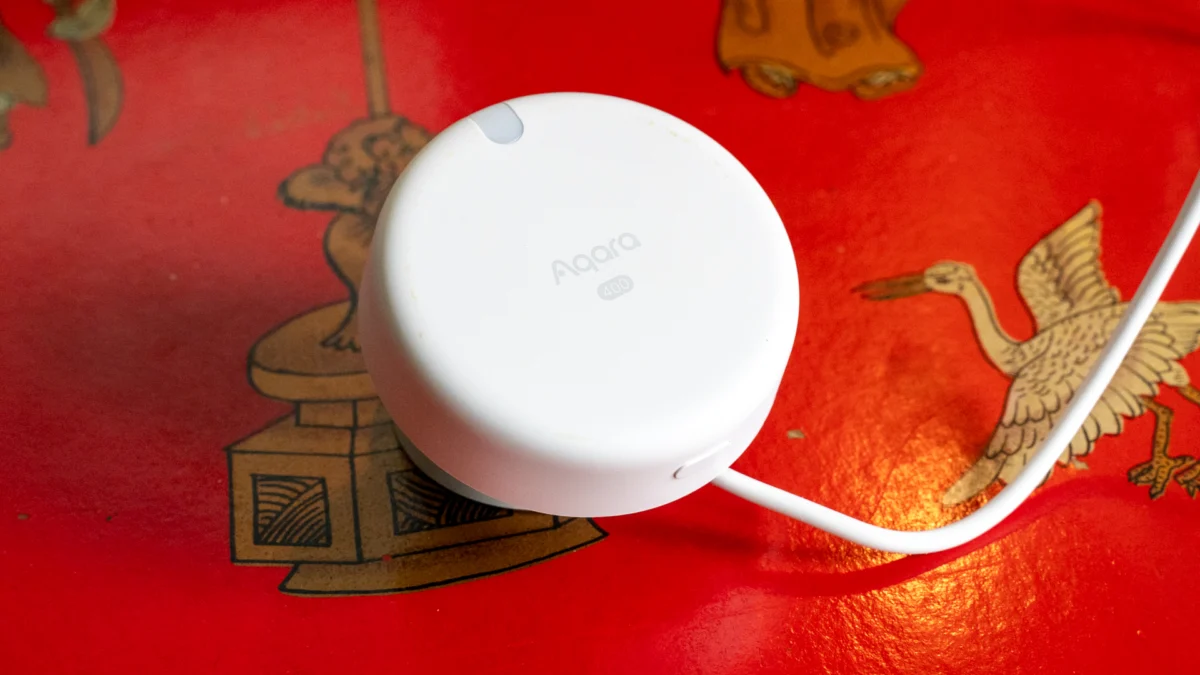
The Aqara Spatial Multi-Sensor FP400 emerges as a significant contender in the increasingly sophisticated smart home sensor market, offering unparalleled presence detection capabilities. This advanced device is engineered to identify up to ten individuals within a room and segment the detection area into as many as eight distinct zones, effectively functioning as multiple motion sensors within a single unit. While its accuracy and power are undeniable, the high cost and continuous power requirements present a notable barrier for widespread adoption, positioning it as a premium solution for complex smart home setups.
Introduction to Aqara’s Evolving Presence Sensing Technology
Aqara has established a strong reputation for delivering high-quality presence sensors that blend advanced features with robust performance. The Spatial Multi-Sensor FP400 represents the zenith of their current offerings in this category. Its ability to track multiple occupants and delineate specific zones within a space opens up new avenues for home automation, enabling more nuanced and responsive smart home experiences. The ease of configuration is a significant plus, however, the reliance on USB-C power, rather than battery operation, introduces a degree of inflexibility that may deter some users. For those with expansive and intricate living spaces, the FP400’s capabilities could be transformative. Conversely, users with simpler needs or budget constraints might find more accessible and battery-powered alternatives more suitable.

Design and Installation: Balancing Form and Functionality
The evolution of mmWave presence sensors has seen a notable shift towards battery-powered models, exemplified by Aqara’s own Multi-Sensor FP300. The Spatial Multi-Sensor FP400, however, harkens back to earlier designs, such as the Wi-Fi enabled Aqara FP2, by requiring a constant USB-C power source. This necessity for a wired connection can complicate placement, as finding an optimal location that also allows for convenient cable routing can be challenging. Battery-powered options generally offer greater flexibility in this regard.
Despite the power constraint, the physical installation of the FP400 is facilitated by its thoughtful design. The sensor comes with a small, extendable stand, allowing for precise angling of its detection field. Included in the box is a magnetic mount, which can be affixed to walls or ceilings using screws or adhesive, catering to various installation preferences. Aqara recommends mounting the sensor between 150cm and 200cm from the floor.
For installations requiring corner placement, an optional corner mount is available, which is included with the Kit version of the sensor. This attention to detail in providing mounting solutions underscores Aqara’s commitment to user-friendly installation, even with the added complexity of a wired power source.

Advanced Features: Connectivity and Intelligent Detection
As with its predecessors, the FP400 supports both Zigbee and Thread connectivity. Utilizing Thread allows the sensor to integrate with any compatible hub, liberating users from the exclusive reliance on an Aqara ecosystem hub. A physical button on the rear of the device initiates pairing mode, streamlining the connection process.
However, opting for Thread connectivity may result in a reduction of available features compared to a Zigbee connection to an Aqara hub. For the full suite of functionalities, connecting the FP400 via Zigbee to an Aqara hub is recommended. This setup then allows for broader integration with other smart home systems through Matter. It is important to note that switching between Zigbee and Thread protocols requires a firmware reset of the FP400, necessitating a complete re-setup of the device.
The integration process within the Aqara app is notably straightforward. Users are guided through an installation wizard that assists in correctly positioning the sensor. Following this, a brief setup routine involves walking the perimeter of the room to define the sensor’s detection area. This method ensures that presence detection is confined to the intended space, preventing false triggers from outside the room.

A key feature is the AI setup routine, which optimizes the sensor’s performance by tuning out interference. This process, which requires the room to be empty, takes approximately 30 seconds to complete, offering a smooth and efficient calibration. Compared to the setup process for some competing devices, such as the Meross Thread Smart Presence Sensor MS605, Aqara’s approach is considerably more user-friendly.
Once configured, the FP400 operates as an advanced presence sensor. The Aqara app displays a room map, visually indicating the location of detected individuals, with support for up to ten tracked people. The "AI Enhanced Person Detection" option is highly recommended, as it helps to filter out detections of pets or non-human movement.
The true innovation lies in the ability to define custom motion zones within the room map. Users can designate specific areas, such as a seating area or a desk, as individual detection zones. These zones are then exposed as separate motion sensors in third-party platforms like Apple Home or Homey. This granular control enables highly personalized automations. For instance, a reading light could be activated upon entering a designated reading chair zone, or a fan could be turned off when leaving a sofa zone. This capability effectively transforms a single sensor into multiple, offering a level of precision that surpasses many competitors. Unlike the Meross MS605, where detection zones are based on range, Aqara’s zones are tied to specific spatial locations.
Automation capabilities vary across platforms. In Apple Home, triggers are limited to detecting or not detecting occupancy. Platforms like Homey offer more advanced options, including timed delays. For example, heating could be programmed to switch off only after a person has been absent from a detected zone for ten minutes. Both platforms can leverage the integrated luminance sensor, allowing for context-aware automations, such as activating lights only when it is dark. While the FP400 can count the number of occupants, this specific data point is not currently exposed as a trigger option in most third-party platforms.

Performance: Precision and Responsiveness in Real-World Scenarios
During testing, the Aqara Spatial Multi-Sensor FP400 was integrated with an Aqara M200 hub and subsequently bridged to both Apple Home and Homey. The sensor demonstrated remarkable accuracy in detecting presence, reliably registering movement upon entering the test office and accurately pinpointing the user’s location within the room.
Crucially, the FP400 maintained its detection even during periods of stillness. Unlike conventional motion sensors that might cease detecting movement after a short interval, leading to potential false alarms or deactivated automations, the FP400 continued to register presence, ensuring consistent operation for applications like maintaining lighting or climate control.
Test automations performed exceptionally well. While there was a slight delay of up to 20 seconds for presence detection to register in third-party systems, this was deemed acceptable and did not significantly detract from the overall user experience. A routine designed to activate lights when motion was detected and ambient light levels were low functioned flawlessly.

The efficacy of the custom detection zones was particularly impressive. Setting up a zone around a reading chair allowed for the automatic activation of a reading lamp upon entering that specific area. While the compact size of the test office limited the number of zones that could be practically implemented, it was evident that in larger, more complex spaces, these zones would unlock their full potential for highly tailored automation scenarios.
Verdict and Broader Implications
The Aqara Spatial Multi-Sensor FP400 stands out as an exceptionally powerful and accurate presence detection device. Its ability to track up to ten individuals and segment a room into eight distinct zones makes it a compelling option for users seeking granular control and sophisticated automation. However, its premium price point, coupled with the persistent requirement for USB-C power, positions it as a specialized device rather than a universally accessible one.
For individuals managing large or complex spaces where precise occupancy monitoring and multi-zone automation are paramount, the FP400’s capabilities are likely to justify its cost and power dependency. For those with less demanding requirements or a preference for battery-powered convenience, alternative solutions, such as Aqara’s own FP300 or other leading presence sensors on the market, might offer a more balanced and cost-effective choice.

The implications of such advanced presence sensing extend beyond simple convenience. In larger homes or offices, it can contribute to energy efficiency by ensuring that lights and climate control systems are only active when and where they are needed. For security purposes, it can provide more nuanced alerts, distinguishing between human presence and other forms of movement. Furthermore, as smart home ecosystems continue to mature, the ability to create highly specific automation triggers based on precise location within a room will become increasingly valuable, paving the way for truly adaptive and intelligent living environments.
The ongoing development of presence sensing technology, particularly with the integration of AI and advanced spatial mapping, signals a future where our homes are not just connected, but intuitively responsive to our presence and activities. The FP400, despite its limitations, is a significant step in that direction, pushing the boundaries of what is possible in home automation.
How We Test: A Commitment to Rigorous Evaluation
Our reviews are built upon extensive, long-term testing methodologies. Presence sensors, by their nature, are integrated into complex smart home ecosystems and are designed to offer a range of detection options. Therefore, a cursory week-long test is insufficient to provide a comprehensive verdict. Our team dedicates considerable time to "living with" these devices, understanding their performance in real-world scenarios, and comparing them against a wide array of alternatives. This ensures that our assessments are objective, thorough, and reflect the practical user experience. We prioritize identifying what truly matters to users and how a specific product stacks up against competitors. Our commitment is to deliver fair, unbiased, and informative reviews, and we do not accept direct payment for reviewing devices.

Frequently Asked Questions (FAQs)
-
Does the Aqara Spatial Multi-Sensor FP400 require an Aqara hub?
No, the FP400 can function with any compatible hub when connected via Thread. However, connecting it via Zigbee to an Aqara hub unlocks a broader range of features and allows for integration with other platforms through Matter. -
Is the Aqara Spatial Multi-Sensor FP400 battery-powered?
No, the FP400 requires a continuous power supply via USB-C. A USB-C cable is included in the box, but a power adapter is not. -
Can the Aqara Spatial Multi-Sensor FP400 create multiple motion zones?
Yes, users can define up to eight distinct motion zones within the room map. Each of these zones is then recognized as a separate motion sensor in compatible smart home platforms like Apple Home and Homey.
Aqara Spatial Multi-Sensor FP400: Technical Specifications
- Type: mmWave presence and motion sensor
- UK RRP: £79.99
- US RRP: $79.99
- Dimensions: 64 x 64 x 29.5mm
- Smart Home Ecosystems: Amazon Alexa, Apple Home, Google Home, Home Assistant, Homey, SmartThings
- Connectivity: Zigbee 3.0, Thread, Matter
- Power: USB-C (5V 1A)
- Detection Range: Up to 10 x 8m (when wall-mounted)
- Field of View: 120° horizontal, 100° vertical
- People Tracked: Up to 10
- Detection Zones: Up to 8

