
Bluesky’s website and application continued to experience significant service disruptions on Friday, following an ongoing cyberattack that commenced earlier in the week. Chief Operating Officer Rose Wang confirmed that a "sophisticated Distributed Denial-of-Service (DDoS) attack" was the cause of the persistent issues, which initially began on Monday, April 15, at approximately 8:40 p.m. ET. The prolonged outage has not only impacted the fledgling social media platform’s operations but also sparked broader conversations about cybersecurity resilience in decentralized networks and the challenges faced by emerging platforms in a volatile digital landscape.
Understanding the Nature of a DDoS Attack
A Distributed Denial-of-Service (DDoS) attack represents a particularly insidious form of cyberattack designed to render online services unavailable by overwhelming them with a flood of malicious internet traffic. Unlike direct intrusions that seek to breach data or systems, DDoS attacks primarily aim to disrupt operations, making websites, applications, and network resources inaccessible to legitimate users. These attacks often involve a network of compromised computer systems, known as a botnet, which simultaneously direct massive amounts of junk traffic at a target server or network infrastructure.
The mechanics of a DDoS attack are straightforward yet devastating. Imagine a single-lane road suddenly inundated by thousands of vehicles, far exceeding its capacity. Legitimate traffic cannot pass, and the road effectively shuts down. In the digital realm, this "traffic" can take various forms:

- Volumetric Attacks: These attempt to consume all available bandwidth between the target and the internet. Examples include UDP floods, ICMP floods, and other spoofed-packet floods.
- Protocol Attacks: These exploit weaknesses in Layer 3 and Layer 4 protocols, consuming server resources or intermediary communication equipment. SYN floods, a common type, involve initiating a connection handshake but never completing it, leaving the server waiting indefinitely and exhausting its connection tables.
- Application Layer Attacks: These are more sophisticated, targeting specific vulnerabilities within an application itself. They mimic legitimate user behavior but at an overwhelming scale, such as repeatedly requesting a computationally intensive page or API endpoint, leading to server overload.
While DDoS attacks do not typically involve unauthorized access to private data—a point Bluesky explicitly confirmed it has not observed—their impact can be profoundly disruptive. For a company, this means lost revenue, damage to reputation, and significant operational costs in mitigation and recovery. For users, it translates to frustration, inability to access services, and a potential erosion of trust in the platform’s reliability. The motivations behind such attacks are diverse, ranging from hacktivism and competitive sabotage to extortion attempts or even state-sponsored disruptions.
A Detailed Chronology of Bluesky’s Cyber Ordeal
The current incident marks a significant challenge for Bluesky, a platform still in its growth phase, positioning itself as a decentralized alternative to established social networks. The timeline of the attack and Bluesky’s response reveals a reactive struggle against persistent digital aggression:
Monday, April 15, 8:40 p.m. ET: The first signs of trouble emerged, with users beginning to report intermittent connectivity issues and slow performance across the Bluesky platform. While initial reports might have been attributed to general network glitches or high traffic, the persistent nature of the problems soon indicated a more severe underlying cause.
Wednesday, April 17, 3:46 a.m. ET: Bryan Newbold, a protocol engineer at Bluesky, publicly acknowledged the severity of the situation on the platform itself, posting, "oof, our services are getting hit pretty hard tonight." This early internal recognition underscored the growing intensity of the attack and the engineering team’s active engagement in diagnosing and responding to the problem.

Thursday Evening, April 18: Bluesky officially confirmed the nature of the disruption, identifying it as a "sophisticated Distributed Denial-of-Service (DDoS) attack." This announcement, made through the official Bluesky account, provided clarity to a user base increasingly frustrated by the erratic service. The company detailed that the attack was "impacting our operations, with users experiencing intermittent interruptions in service for their feeds, notifications, threads, and search." Crucially, Bluesky also reassured its community that, despite the operational turmoil, there was "no evidence of unauthorized access to private data," alleviating fears of a data breach.
Throughout Thursday: When initially contacted for comment by TechCrunch, Bluesky directed inquiries to its official status page (status.bsky.app) and its dedicated status account (@status.bsky.app) for updates. This indicated a centralized communication strategy during the crisis, focusing all information dissemination through specific, controlled channels. However, the company was unable to provide an estimated time for a fix, highlighting the unpredictable nature of DDoS mitigation.
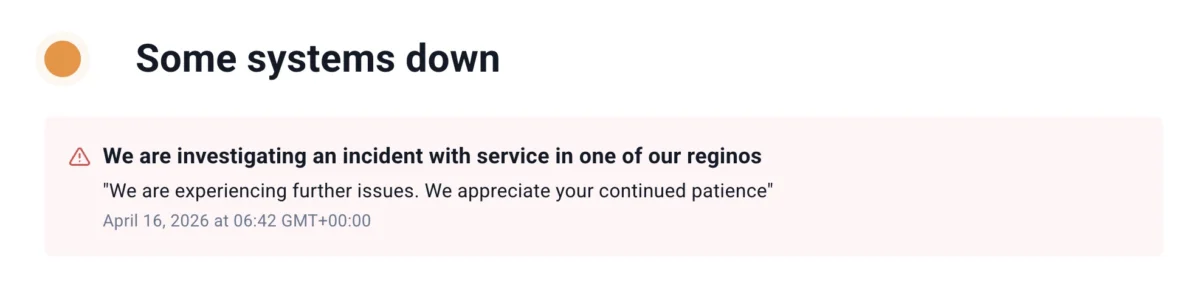
Friday, April 19: The struggles continued unabated. The Bluesky website and app remained difficult to access, characterized by slow loading times, frequent error messages, and general unresponsiveness. Compounding the communication challenges, the network’s official status page, intended as the primary source of real-time updates, itself became inaccessible at times, leaving users further in the dark. Bluesky committed to providing another update on the status of the attack and its mitigation efforts by 1 p.m. ET on Friday, indicating a continuous, albeit challenging, battle against the attackers. The stress on the Bluesky team was inadvertently highlighted by a typo on its status page, which read, "investigating an incident with service in one of our reginos [sic]," a small but telling detail amidst the larger crisis.
Impact on User Experience and Operational Challenges
The DDoS attack has manifested in a highly disruptive and frustrating experience for Bluesky users. The intermittent nature of the outages means that the platform is not entirely offline, but rather suffers from unpredictable periods of functionality interspersed with frustrating errors. This fluctuating accessibility is arguably more vexing than a complete outage, as users are constantly left guessing whether the service will work at any given moment.

Specific examples of the user impact include:
- Slow Loading and Unresponsiveness: Pages, feeds, and profiles often take an unusually long time to load, if they load at all.
- Error Messages: Users frequently encounter explicit error messages. For instance, attempting to switch to a particular feed might display: "This feed is currently receiving high traffic and is temporarily unavailable. Please try again later. Message from server: Rate Limit Exceeded." This message directly reflects the core mechanism of a DDoS attack—overwhelming the server’s capacity.
- Limited Functionality: While personal feeds might occasionally function, more popular or resource-intensive feeds, such as "Discover" or the official "Bluesky Team’s" feed, are often the first to succumb to the overload.
- Profile Access Issues: Visiting a user’s profile frequently results in an error message, necessitating multiple refreshes and attempts to view content.
These operational failures are particularly damaging for a social media platform, where real-time interaction and reliable content delivery are paramount. For a growing platform like Bluesky, maintaining user engagement and fostering a sense of community relies heavily on consistent service. Prolonged disruptions risk alienating existing users and deterring potential new ones, who might perceive the platform as unstable or unreliable.
The Decentralization Angle: A Test of Resilience
Bluesky’s foundational architecture, built on the AT Protocol, aims for decentralization, a design choice intended to offer greater resilience against single points of failure and censorship. The current DDoS attack, however, presents a nuanced test of this philosophy. While the AT Protocol is designed to be federated, allowing different "PDS" (Personal Data Servers) to host user data and content, Bluesky itself operates a significant portion of the core infrastructure, including its main PDS and the underlying network services that many users rely upon.
A crucial insight into the nature of the attack’s impact comes from the experience of other communities built on the AT Protocol. Notably, "Blacksky," a separate community running its own infrastructure on the same underlying protocol, has largely remained functional during Bluesky’s struggles. This highlights a key aspect of decentralization: while the main Bluesky service might be centralized enough to be targeted and disrupted, the protocol itself allows for independent implementations that can, in theory, continue to operate.

The Blacksky team reported a "significant spike" in migration requests from Bluesky users over the past 12 hours, directly correlating with the ongoing outage. This migration trend, actively promoted by users, developers, and other ATmosphere founders like Sebastian at Eurosky, underscores a critical implication:
- User Empowerment: The ability for users to migrate their accounts and data to alternative PDS instances built on the same protocol offers a level of resilience not typically found in traditional, centrally controlled social networks. If one server goes down, another can theoretically pick up the slack, preserving user data and connections.
- Protocol Validation: The continued functioning of independent AT Protocol instances like Blacksky, even as Bluesky’s core service struggles, serves as a partial validation of the protocol’s decentralized design. It demonstrates that the protocol itself is robust enough to withstand localized attacks, even if a major implementation faces challenges.
- Centralization in Practice: However, the fact that a DDoS attack on Bluesky’s main infrastructure can cause such widespread disruption for its user base suggests that, in practice, a significant portion of the AT Protocol ecosystem is still heavily reliant on Bluesky’s centralized services. Many users might not be aware of, or have the technical capability to migrate to, alternative PDS instances, making Bluesky’s outage a de facto network outage for them.
This situation reveals the complex interplay between theoretical decentralization and practical implementation. While the AT Protocol offers a pathway to a more resilient internet, the journey requires widespread adoption of independent infrastructure and greater user awareness of migration options.
Broader Implications for Social Media Security
The Bluesky DDoS attack is not an isolated incident but rather a stark reminder of the pervasive and evolving threat landscape facing all online platforms, particularly social media. In recent years, major social networks like Twitter (now X), Facebook, Instagram, and even smaller niche platforms have experienced outages due ranging from technical glitches to malicious attacks.
The implications extend beyond mere inconvenience:

- Economic Impact: For platforms that rely on advertising or premium features, service disruptions translate directly into lost revenue. Even for free platforms, the cost of mitigation, engineering hours, and potential user churn can be substantial.
- Erosion of Trust: Consistent reliability is a cornerstone of user trust. Frequent or prolonged outages can lead users to question a platform’s stability, security, and long-term viability, potentially driving them to competitors. For new platforms like Bluesky, which are actively trying to build a user base and establish credibility, such incidents can be particularly damaging.
- Freedom of Speech and Information Flow: Social media platforms have become critical channels for information dissemination, news, and political discourse. Attacks that disrupt these platforms can impede freedom of expression and access to information, especially during critical events.
- Cybersecurity Investment: The incident underscores the critical importance of robust cybersecurity infrastructure and proactive defense mechanisms. Platforms must invest heavily in DDoS protection services, threat intelligence, and incident response planning to safeguard their operations and user base.
- The Human Element: As evidenced by the typo on Bluesky’s status page, cyberattacks place immense pressure on engineering and operations teams. The human cost in terms of stress, long hours, and the urgency to restore service is a significant, often unacknowledged, aspect of these incidents.
Looking Ahead: Bluesky’s Path to Recovery
As Bluesky continues its battle against the ongoing DDoS attack, the immediate priority is to restore stable service and ensure continuous, transparent communication with its user base. The promise of an update by 1 p.m. ET on Friday signals an attempt to manage expectations and provide timely information, which is crucial for maintaining user confidence during a crisis.
In the longer term, this incident will likely prompt a thorough review of Bluesky’s security posture and infrastructure resilience. While the AT Protocol’s decentralized nature offers inherent advantages, the practical vulnerabilities exposed by this attack will need to be addressed. This might involve:
- Enhanced DDoS Mitigation: Investing in more sophisticated and scalable DDoS protection services capable of absorbing larger volumes of malicious traffic.
- Distributed Infrastructure: Further decentralizing its own core infrastructure components, reducing reliance on single points of failure that could be targeted.
- User Education: Educating users about the AT Protocol’s federated nature and the options available for migrating to alternative PDS instances, empowering them to take control of their data and connections.
- Incident Response Improvement: Refining incident response protocols, including redundant communication channels that remain functional even when the main platform is under duress.
The current cyberattack represents a significant hurdle for Bluesky, a platform that has garnered considerable attention as a potential successor to traditional social media giants. How Bluesky navigates this crisis, restores service, and learns from the experience will be a critical determinant of its future success and its ability to realize the promise of a truly resilient and decentralized social internet. The ongoing struggle serves as a powerful reminder that even the most innovative platforms are not immune to the persistent threats of the digital age.

