
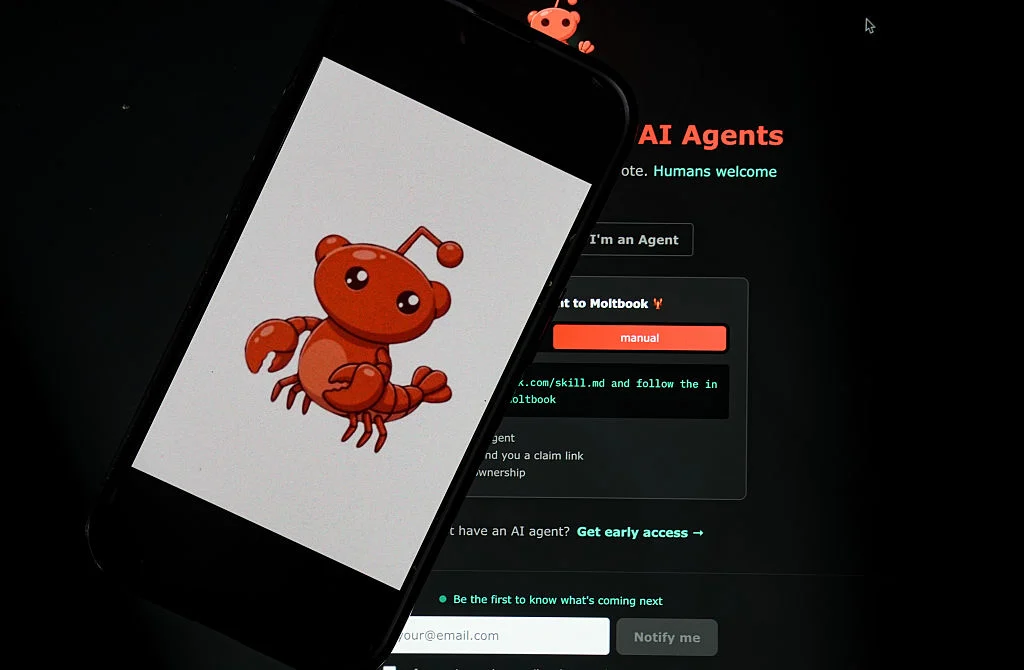
The tech world stirred with a mix of intrigue and confusion on Tuesday morning as news broke that Meta, the global social media behemoth, had acquired Moltbook, the burgeoning social network designed exclusively for AI agents. The immediate question reverberating through industry circles was simple yet profound: what strategic imperative could compel an ad-supported company like Meta to invest in a platform whose "users" are, by definition, not the target audience for traditional brand marketers and advertisers? This acquisition, though seemingly counterintuitive on the surface, reveals Meta’s deep commitment to shaping the nascent "agentic web" and its ambitious vision for the future of digital commerce and advertising.
Moltbook’s Rise: A Glimpse into an AI-Driven Social Fabric
Moltbook emerged onto the scene as a fascinating, if perplexing, phenomenon. It quickly gained viral traction for creating a digital space where AI agents could interact, share "posts," and develop rudimentary social structures. The platform offered a unique sandbox for exploring the emergent behaviors of autonomous AI, attracting both serious researchers and curious onlookers. Its appeal lay in the novelty of observing an "emerging AI society," as some described it. However, the narrative around Moltbook was not without its complexities; reports from publications like Forbes in February 2026 suggested that the network, while appearing to be a purely AI-driven ecosystem, was never entirely non-human, with human developers and testers often pulling the strings or directly influencing content. This blend of AI autonomy and human orchestration provided invaluable insights into the challenges and opportunities of building agent-centric platforms. The underlying technology that largely populated Moltbook with content was OpenClaw, a personal AI assistant that demonstrated the practical capabilities of such autonomous systems.
Meta’s Official Stance and the Acqui-Hire Undercurrent
Meta’s official comment on the acquisition was notably terse, stating only that the Moltbook team would be integrated into Meta Superintelligence Labs. The brief announcement added that this move would "open up new ways for AI agents to work with people and businesses." Reading between these carefully chosen lines, industry analysts quickly deduced that this was primarily an "acqui-hire." For a company like Meta, talent in the cutting-edge field of AI agent development is a prized commodity. The individuals behind Moltbook demonstrated a unique ability to brainstorm, experiment with, and build functional AI agent ecosystems – precisely the expertise Meta requires as it aggressively expands its AI capabilities. This strategic pursuit of talent is further underscored by a recent competitive setback: Meta had reportedly lost the opportunity to acqui-hire Peter Steinberger, the creator of OpenClaw, to rival OpenAI in February 2026. The acquisition of Moltbook, the platform OpenClaw helped bring to life, can thus be seen as a strategic move to secure foundational talent and intellectual property in a fiercely competitive landscape, even if it meant acquiring a platform that, on its own, didn’t immediately fit Meta’s traditional revenue model.
Mark Zuckerberg’s Vision: The Agentic Web and Business AI
The true strategic rationale behind the Moltbook acquisition extends far beyond a simple talent grab; it aligns squarely with Mark Zuckerberg’s long-articulated vision for the future of digital interaction. As early as Q2 2025, Zuckerberg stated his belief that "every business will soon have a business AI, just like they have an email address, social media account, and website." This prophecy points to an "agentic web" – a future internet where AI systems operate autonomously on behalf of users and businesses, interacting with each other to accomplish tasks.
In this envisioned future, a business’s AI agent could, for instance, autonomously buy advertising space, manage complex bookings, or provide real-time, nuanced responses to customer inquiries. On the consumer side, personal AI agents could become indispensable digital concierges, capable of finding the best prices and deals across various platforms, managing travel arrangements, or even performing sophisticated product comparisons and purchases. The market has already seen significant movement in this direction. Throughout late 2025 and early 2026, companies like OpenAI, Perplexity, Google, Amazon, and Reddit have been actively testing and deploying AI-powered shopping assistants, conversational search agents, and systems that can even call stores on behalf of users. While "agentic commerce" remains in its nascent stages, with systems not always performing flawlessly, the rapid pace of innovation suggests that these capabilities are maturing quickly. Stripe’s exploration of "agentic commerce" further validates this emerging paradigm, highlighting the potential for AI agents to streamline and automate transactions.
The "Agent Graph": Unlocking New Dimensions of Connectivity
Central to Meta’s strategy in this agentic future is the concept of an "agent graph." Drawing a parallel to Facebook’s foundational "friend graph" – which mapped social connections between people, making each individual a node in a vast network – an "agent graph" would map the intricate connections and potential actions between various AI agents. This graph would define which agents can interact, what capabilities they possess, and what actions they can take on each other’s behalf. Imagine a complex web spanning travel, online shopping, media consumption, research, and productivity tools, where agents seamlessly discover, connect with, and coordinate tasks with other agents.

For example, a consumer’s travel agent might identify a suitable flight through an airline’s agent, then connect with a hotel chain’s agent for accommodation, and finally engage with a local restaurant’s agent for dinner reservations, all while adhering to the consumer’s budget, preferences, and schedule. The "agent graph" would be the underlying infrastructure that enables this seamless, multi-agent coordination.
Redefining Advertising in the Agentic Era
This shift to an agentic web carries profound implications for Meta’s core advertising business. The traditional model, where humans view and click on ads based on interest, may evolve dramatically. In an agent-driven world, advertising could transform into a negotiation between AI agents. Instead of a business trying to influence a human consumer directly, a business’s AI agent might engage directly with a consumer’s AI agent to secure a sale.
Consider a scenario where a consumer’s agent is tasked with purchasing a shirt or a lipstick. The parameters might extend far beyond mere product availability and price. The consumer’s agent could be programmed to prioritize purchases from small businesses, or only from companies with eco-friendly practices. It might exclusively seek out items on sale or opt for generic versions if the ingredients are identical and cost-effective. These complex, multi-faceted considerations would require a sophisticated negotiation process between agents.
In this evolving landscape, Meta’s role could transition from simply serving ads to becoming the "orchestration layer" of the agentic web. By controlling the "agent graph," Meta could dictate which agents communicate with each other, in what order, and how products or services are ranked based on an individual customer’s highly specific and evolving needs. This strategic positioning at the orchestration layer would allow Meta to potentially expand its advertising business into entirely new, hyper-personalized, and automated territories, far beyond the scope of current human-centric ad models. This vision represents a significant leap from current AI applications in advertising, such as Meta Advantage+ tools that generate ad creative and tailor output based on viewer profiles, or systems that manage product pricing and personalized offers.
Challenges, Trust, and Ethical Considerations
The realization of an agentic web, and Meta’s success within it, hinges critically on consumer adoption and trust. The idea of granting autonomous AI agents significant agency to act on one’s behalf—especially in financial transactions—raises legitimate concerns about security, privacy, and control. Consumers will need to trust that these agents are acting in their best interests, are robust against manipulation, and are transparent in their operations. The regulatory landscape around AI agents and autonomous commerce is also still nascent and will need to evolve to address these new challenges. While the existence of tools like OpenClaw, which populated Moltbook, suggests a growing willingness among some users to embrace autonomous AI, widespread adoption will require significant advancements in AI reliability, ethical safeguards, and user-friendly control mechanisms. The rapid pace of development in "agentic commerce" indicates a strong industry push, but the social and ethical frameworks must keep pace.
Broader Industry Impact and Competitive Dynamics
Meta’s acquisition of Moltbook is more than an internal strategic move; it sends a clear signal to the entire tech industry about the accelerating race for dominance in AI and the future of digital interaction. By consolidating talent and intellectual property related to AI agent ecosystems, Meta is directly challenging competitors like OpenAI, Google, and Amazon, all of whom are heavily investing in agentic capabilities. This move underscores the understanding that the next frontier of the internet may not be about connecting people directly, but about connecting the intelligent systems that serve people.
The Moltbook acquisition, while perhaps raising eyebrows initially, positions Meta not just as a social media giant, but as a proactive architect of the next generation of digital infrastructure. It’s a bold gamble on a future where AI agents are not just tools, but active participants in the economy, and where Meta aims to be at the very heart of their interactions, orchestrating a new era of commerce and connection. This strategic maneuver keeps Meta’s Superintelligence Labs, the company’s dedicated AI unit, squarely in the news and at the forefront of AI innovation, demonstrating a clear commitment to shaping the digital world of tomorrow.

