
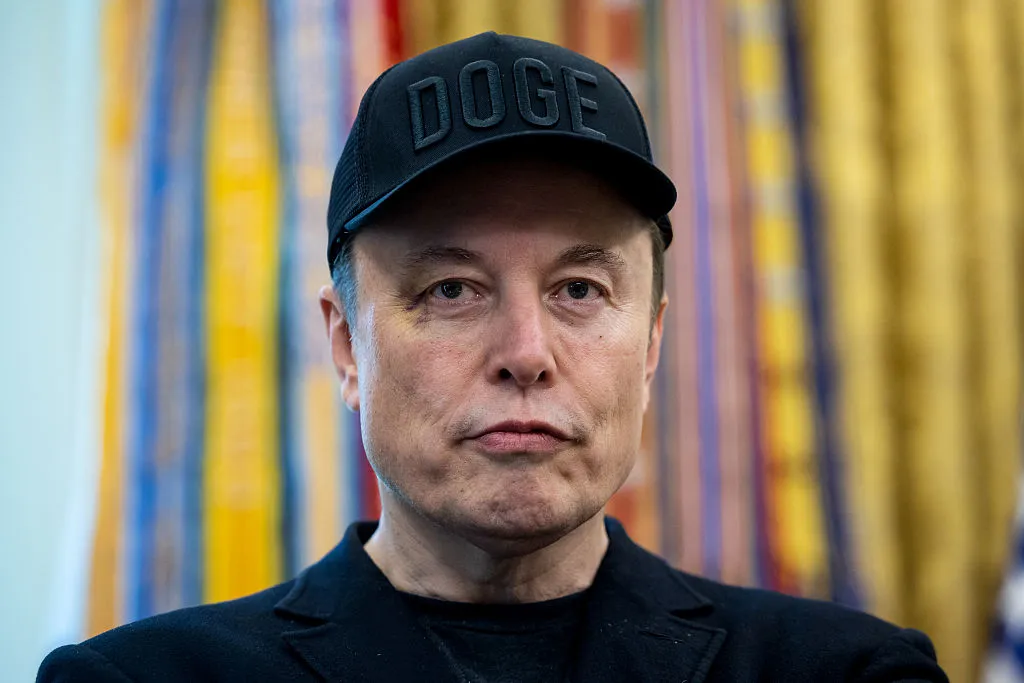
Following initial reports of widespread rejections, major social media platforms Meta and YouTube have reversed their stances and will now accept advertising for acclaimed director Alex Gibney’s upcoming documentary, "Musk." This development comes after a period of uncertainty where promotional efforts for the film’s trailer were reportedly denied across several prominent digital platforms, citing various content policy concerns. The decision by Meta and YouTube marks a significant shift, though Elon Musk’s own platform, X (formerly Twitter), continues to refuse to run the advertisements, underscoring the complex and often contentious landscape of content moderation and advertising in the digital age.
Initial Rejections Spark Concern Among Filmmakers
The controversy first surfaced with a report by The Hollywood Reporter on Friday, detailing that TikTok, Meta (parent company of Facebook and Instagram), YouTube, and X had all declined to host paid advertisements promoting the trailer for "Musk." This broad rejection immediately raised eyebrows within the film industry and among free speech advocates, particularly given Gibney’s reputation for producing incisive, critically acclaimed documentaries on powerful and often controversial figures and institutions. The stated reasons for the rejections from Meta, TikTok, and YouTube largely revolved around categorizing the documentary trailer as "political content," a classification that triggers specific restrictions or outright bans on advertising across these platforms.
For instance, TikTok has a well-documented policy against running political advertising, stating its commitment to keeping its platform free from partisan content. Meta, while historically accepting political ads, announced last year its intention to cease accepting political advertisements in the European Union from October, indicating a broader trend towards stricter controls, though a blanket ban on all political content globally has not been fully implemented. YouTube also maintains policies regarding political advertising, requiring specific disclosures and adherence to local laws, often leading to temporary restrictions during initial review processes. The application of these rules to a documentary trailer, rather than a direct campaign advertisement, became a central point of contention for the film’s distributor.
Bleecker Street, the U.S. distributor for "Musk," confirmed to The Hollywood Reporter that it had appealed these rejections, arguing that a documentary trailer does not constitute campaign advertising. The implications of such broad rejections extend beyond a single film, potentially setting a precedent that could hinder the promotion of investigative journalism and critical examinations of public figures through documentary film on platforms vital for audience reach.
Rapid Reversals by Meta and YouTube
The narrative shifted swiftly over the weekend as both Meta and YouTube moved to rectify their initial decisions. TechCrunch reported on Saturday that upon inquiry, a spokesperson for Meta stated, "This was an error and the ads are being restored." While Meta did not immediately provide further detailed explanations regarding the nature of the "error," the swift reversal suggests an internal review process or an acknowledgment that the initial classification was misapplied. This incident highlights the challenges faced by automated content moderation systems, which often flag content based on keywords or perceived themes, sometimes inaccurately, especially when dealing with nuanced cultural products like documentaries.
Concurrently, YouTube also issued an update via its official X account on Saturday. The platform clarified, "the trailer has always been available on YouTube." This distinction is crucial: the content itself was not removed, but its promotion as an ad was temporarily restricted. YouTube elaborated, "When submitted as an ad, it was temporarily restricted by our system. Following review the ad has been cleared to run." This explanation points to an algorithmic flag that temporarily halted the ad, which was then overturned by human review. Such incidents are not uncommon on platforms that process millions of ad submissions daily, where automated systems act as the first line of defense against policy violations. However, for a high-profile documentary, even a temporary restriction can cause significant disruption to carefully planned marketing campaigns.
These rapid reversals by two of the largest advertising platforms in the world underscore the delicate balance platforms attempt to strike between enforcing their content policies, avoiding accusations of censorship, and facilitating legitimate advertising, especially for cultural content that might touch upon sensitive topics.
X’s Unwavering Stance and Elon Musk’s Direct Intervention
In stark contrast to Meta and YouTube, Elon Musk’s social media platform, X, has maintained its rejection of the "Musk" documentary ads. This stance, while consistent with the initial reports, is largely unsurprising given Musk’s very public and acrimonious relationship with director Alex Gibney. Musk, who acquired X in 2022 and has since reshaped its content moderation policies, previously expressed his disdain for Gibney. He posted on X, "Dogshit is worth more respect than Gibney," a scathing personal attack that makes X’s refusal to run promotional material for a film critical of its owner entirely predictable.
This situation on X illustrates a unique challenge in the digital advertising landscape: when the subject of a documentary also owns one of the primary platforms for its promotion. X’s policy, under Musk’s ownership, has become notably more permissive regarding certain types of content, often described as a commitment to "free speech absolutism." However, the platform’s decision here demonstrates a clear exception when the content directly targets its owner, raising questions about the consistent application of its stated principles. The financial implications for Bleecker Street are significant, as X remains a powerful platform for reaching tech-savvy audiences and those interested in current affairs, many of whom are undoubtedly interested in a documentary about Musk himself. The absence of X from the promotional strategy forces the distributor to rely more heavily on other channels or organic reach, which can be less predictable.
The Film: Director, Subject, and Critical Reception
"Musk" is the latest work from Alex Gibney, a documentarian celebrated for his rigorous investigative approach and unflinching examinations of complex subjects. His distinguished filmography includes "Going Clear: Scientology and the Prison of Belief" (2015), which delved into the controversial Church of Scientology; "The Inventor: Out for Blood in Silicon Valley" (2019), a gripping account of Elizabeth Holmes and the Theranos scandal; and a 2015 documentary on Apple co-founder Steve Jobs. Gibney’s films are known for their depth, extensive research, and often critical perspective, earning him an Academy Award for "Taxi to the Dark Side" (2007).
His latest venture, "Musk," premiered to considerable acclaim at the Venice International Film Festival earlier this month. The nearly four-hour documentary has garnered almost universally positive reviews from critics. On Rotten Tomatoes, it currently holds a rare 100% "fresh" rating, while Metacritic reports overwhelmingly favorable scores. Vulture’s Bilge Ebiri described the film as a "terrifying" and "fascinating" character study, offering a revealing look at Musk’s tech career, his controversial alliance with former President Donald Trump, and intimate details of his personal life. The film features interviews with key figures, including Musk’s ex-wife Justine Musk and former right-wing influencer Ashley St. Clair, who recently had a child with Musk and now describes him as "a nuke." This critical reception signals a powerful and impactful film, making its promotional hurdles all the more notable. The film is slated for theatrical release in the United States on October 9, aiming to capitalize on its festival buzz and critical momentum.
Challenges Beyond Advertising: Distribution Concerns
The advertising controversy is not the only hurdle "Musk" has faced. The Hollywood Reporter also previously reported on Universal Pictures’ initial wavering in its commitment to distribute the film internationally. This hesitation was reportedly driven by fears within the studio of potentially angering the Trump administration, with whom Musk has had a complex relationship, and given the documentary’s critical portrayal. Such concerns underscore the broader political and economic pressures that can impact the distribution of films touching on sensitive political figures or themes.
However, Universal subsequently clarified its position, stating it would indeed release the documentary in theaters but was still finalizing its international release strategy. This episode further highlights the multifaceted challenges faced by distributors and filmmakers when dealing with powerful subjects and their associated political and economic influence. The decision to distribute a film, especially internationally, involves navigating a complex web of geopolitical considerations, potential boycotts, and the financial risks associated with controversial content.
Broader Implications: Content Moderation, Free Speech, and Public Figures
The "Musk" advertising saga casts a spotlight on several critical issues at the intersection of media, technology, and free expression. First, it brings into sharp focus the often-opaque and inconsistent nature of content moderation policies on major social media platforms. The initial classification of a documentary trailer as "political content" by algorithmic systems, followed by human reversals, reveals the inherent difficulties in applying broad policy guidelines to diverse content forms. This raises questions about the training of AI models, the clarity of policy definitions, and the transparency of the review processes. For filmmakers and content creators, navigating these unpredictable rules can be a significant barrier to reaching audiences.
Secondly, the incident underscores the growing power of social media platforms as gatekeepers of information and cultural discourse. In an era where digital advertising is paramount for a film’s success, the ability of a few dominant platforms to accept or reject promotional content holds immense sway. This power is particularly amplified when the subject of the content is a powerful public figure, raising concerns about potential censorship or bias. The contrast between X’s direct rejection, influenced by its owner’s personal views, and the more bureaucratic, though still flawed, processes of Meta and YouTube, illustrates different facets of this gatekeeping power.
The situation also reignites debates about freedom of expression in the digital sphere. While platforms are private entities with the right to set their own terms of service, their near-monopolistic control over public discourse grants them a unique responsibility. When a documentary about a prominent public figure, made by an acclaimed director, faces promotional roadblocks, it naturally leads to questions about the health of independent journalism and critical inquiry in a highly mediated environment. The ability of powerful individuals, whether through direct ownership or indirect influence, to affect the visibility of content about themselves presents a significant challenge to the principle of a level playing field for information dissemination.
Finally, the episode serves as a reminder of the financial stakes involved in film distribution. Documentaries, particularly those with critical or investigative themes, often rely on strong initial publicity and widespread advertising to build momentum and attract audiences. Any impediment to this promotional phase, even temporary, can have a tangible impact on box office performance and overall reach. Distributors like Bleecker Street must now carefully strategize how to maximize exposure for "Musk" while navigating a digital landscape that has proven to be both essential and unpredictable.
The Landscape of Digital Advertising for Documentaries
Promoting documentaries in the current media landscape is an increasingly complex endeavor. Unlike commercial blockbusters with built-in fanbases, documentaries often rely on critical acclaim, word-of-mouth, and targeted advertising to find their audience. Social media platforms, with their vast user bases and sophisticated targeting capabilities, have become indispensable tools for reaching specific demographics interested in niche or thought-provoking content.
The "political content" classification, while intended to prevent undue influence in elections or public discourse, inadvertently creates hurdles for films that tackle politically charged subjects, even when presented in an investigative, journalistic format. This ambiguity forces filmmakers and distributors to either dilute their messaging to avoid algorithmic flags or engage in protracted appeals processes, diverting resources and delaying critical marketing timelines.
This incident concerning "Musk" could prompt further discussions within the film industry and among digital rights advocates about the need for clearer, more nuanced guidelines from platforms regarding content that is journalistic or artistic in nature but touches on political themes. The goal would be to protect platforms from genuine misuse while ensuring that critical and important documentary work can still reach the public effectively.
Conclusion
The saga of advertising rejections and subsequent reversals for Alex Gibney’s "Musk" documentary highlights the ongoing tension between technological platforms, content creators, and the complex dynamics of public discourse. While Meta and YouTube have corrected their initial "errors," allowing the critically acclaimed film to proceed with its digital advertising campaigns, X’s continued refusal, driven by its owner’s personal animosity, stands as a stark reminder of the individual power wielded in today’s digital ecosystem. As "Musk" prepares for its theatrical release, its journey to screens is now intertwined with a broader narrative about content moderation, the role of platforms as gatekeepers, and the enduring challenges of promoting impactful, yet sometimes controversial, cinema in the modern age. The episode serves as a powerful case study for how the interplay of algorithms, human review, and personal influence can shape the visibility and ultimate impact of significant cultural works.

