
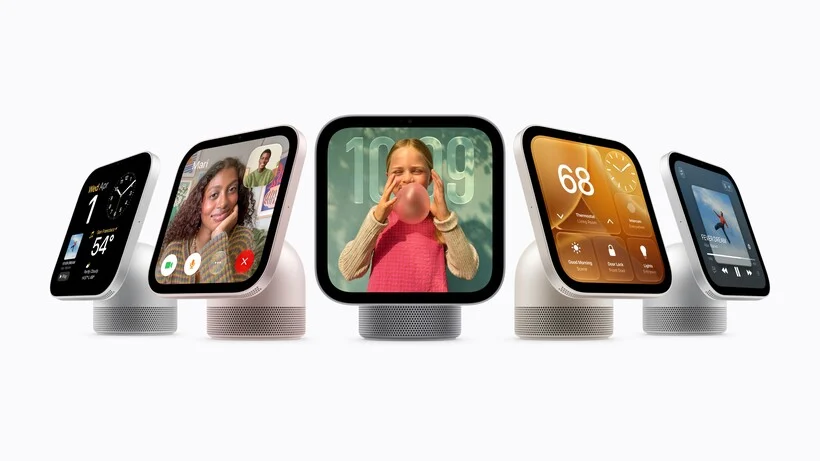
The burgeoning ecosystem of smart home technology is poised for a significant expansion with the collaborative release of a detailed guide by SwitchBot and Nanoleaf, outlining how users can integrate a wide array of their devices with Apple’s newly announced HomeView smart display. This joint publication signals a proactive approach from third-party manufacturers to leverage the capabilities of Apple’s first-party smart display, which doubles as a Matter controller and Thread Border Router, thereby opening up new avenues for cross-brand interoperability.
Apple officially unveiled HomeView on October 13th, a move that has been widely anticipated within the tech industry. Priced at £299 / $299, the device features a 7-inch touchscreen and is designed to serve as a central hub for smart home management. Its inclusion of Matter controller and Thread Border Router functionalities is particularly noteworthy, as these protocols are foundational to the future of connected homes, promising enhanced reliability, security, and interoperability between devices from different manufacturers. The introduction of HomeView marks Apple’s direct entry into the smart display market, a space previously dominated by competitors like Amazon and Google.
The joint guide from SwitchBot and Nanoleaf serves as a practical roadmap for consumers, detailing the compatibility of numerous products from both brands with Apple HomeView. This proactive disclosure aims to demystify the integration process and empower users to make informed decisions about their smart home setups. The comprehensive nature of the guide underscores the growing trend towards an open smart home standard, facilitated by protocols like Matter.
SwitchBot’s Contribution: A Broad Spectrum of Home Automation
The majority of the guide is dedicated to detailing the integration of SwitchBot’s extensive product line with HomeView. This includes:
- Curtain Automation: Products like the Curtain 3 and Blind Tilt are highlighted, allowing users to control window coverings through touch commands on HomeView or via Siri voice commands. This feature offers convenience and can contribute to energy efficiency by optimizing natural light and insulation.
- Smart Locks: The Lock Vision Series locks are listed as compatible, enhancing home security and providing keyless entry solutions that can be managed remotely or through the HomeView interface.
- Sensors and Meters: A range of sensors, including motion, contact, and environmental sensors, along with various meters (e.g., for temperature, humidity), will be controllable. These devices are crucial for creating responsive and automated home environments.
- Smart Plugs and Switches: Existing SwitchBot plugs and switches will enable users to bring non-smart devices into the HomeView ecosystem, offering control over lamps, appliances, and other electrical items.
- Air Care Products: SwitchBot’s air purifiers and humidifiers will also be manageable, allowing for integrated control of home climate and air quality.
- Robot Vacuums: Selected models of SwitchBot’s robot vacuums are included, enabling users to initiate cleaning cycles or schedule maintenance directly from HomeView.
Nanoleaf’s Integration: Illuminating the Smart Home Experience
Nanoleaf, renowned for its innovative and aesthetically pleasing smart lighting solutions, contributes its compatible lighting panels and bulbs to the HomeView ecosystem. This integration allows users to control brightness, color, and dynamic lighting scenes through HomeView, enhancing ambiance and personalization within their living spaces. The ability to synchronize lighting with other smart home actions further elevates the user experience.
Synergy in Action: Apple Home Scenes and Routines
A key highlight of the guide is the demonstration of how SwitchBot and Nanoleaf devices can work in concert within Apple Home scenes and routines. This allows for sophisticated automation sequences triggered by a single command or event. For instance, a "Good Morning" routine could simultaneously open SwitchBot curtains, adjust Nanoleaf lights to a preferred morning setting, and perhaps even activate a SwitchBot plug connected to a coffee maker. Similarly, "Movie Night" or "Good Night" routines can be programmed to dim lights and adjust curtains with a simple tap or voice instruction to HomeView.
This cross-brand routine functionality has been a staple on platforms like Amazon Echo Show and Google Nest Hub for some time. However, the inclusion of Matter support in HomeView significantly broadens its potential reach, extending beyond Apple’s own HomeKit accessories and initial partners like LG and Schneider Electric, to encompass a wider array of certified devices.
Historical Context and the Rise of Matter
The development and adoption of smart home standards have been a long and often fragmented journey. Early smart home systems relied on proprietary protocols and closed ecosystems, leading to interoperability challenges for consumers. The emergence of standards like Zigbee and Z-Wave offered some improvements, but a truly universal standard remained elusive until the advent of Matter.
Matter, an open-source standard developed by the Connectivity Standards Alliance (formerly the Zigbee Alliance), aims to simplify smart home connectivity by providing a unified framework for devices to communicate with each other, regardless of manufacturer or platform. It leverages existing networking technologies like Wi-Fi and Thread, and incorporates Bluetooth Low Energy for commissioning.
Apple’s commitment to Matter, particularly through its integration into the HomeKit framework and now HomeView, is a significant endorsement of the standard. By positioning HomeView as a Matter controller and Thread Border Router, Apple is not only enhancing its own smart home offerings but also actively contributing to the broader adoption and success of Matter. This move is expected to accelerate the development of Matter-certified devices and encourage more manufacturers to embrace the standard, fostering a more cohesive and user-friendly smart home experience.
The timeline leading up to this announcement has been marked by Apple’s increasing focus on the smart home. While HomeKit has been a part of iOS for years, the introduction of dedicated hardware like HomeView signifies a more substantial investment in the space. The protracted development and eventual release of Matter itself, following several delays, have also played a crucial role. The initial launch of Matter in late 2022, followed by the announcement of HomeView in October 2023, shows a strategic progression towards a more integrated smart home future.
Connection Requirements and Setup: Navigating the Technical Landscape
The joint guide meticulously outlines the connection requirements for each device, acknowledging that integration methods can vary. Products that natively support Matter over Wi-Fi or are already HomeKit-compatible will generally offer a more straightforward setup process with HomeView.
However, a significant portion of SwitchBot’s accessories, particularly those relying on Bluetooth for their primary connectivity, will necessitate additional hardware to seamlessly integrate with Apple Home. This often involves a compatible SwitchBot Matter Hub. For users who do not already own such a hub, this represents an additional cost. The guide’s clear delineation of these requirements is crucial for managing consumer expectations and ensuring a smooth setup experience. The need for a dedicated hub highlights the ongoing evolution of smart home networking and the different approaches manufacturers are taking to bridge existing technologies with newer standards.
The guide further enhances usability by categorizing compatible products by room. This practical approach allows users to easily identify which devices are suitable for specific areas of their home, such as the bathroom, bedroom, entryway, home office, kitchen, laundry area, and living room. This room-based organization simplifies planning and implementation, making it easier for consumers to build out their smart home system room by room.
Regional Availability and Launch Details
HomeView is set to launch in the UK on November 13th, with both tabletop and wall-mounted models retailing at £299. Notably, Apple has indicated that HomeView will not be sold in the European Union while Siri AI remains unavailable in that region. This decision underscores the integral role of voice control and AI capabilities in the HomeView experience and highlights the regulatory complexities surrounding AI technologies in different markets.
The availability of the compatibility guide prior to the UK launch is a strategic move by SwitchBot and Nanoleaf. It allows potential buyers to thoroughly review the information, ascertain the compatibility of their existing devices, and determine if any additional hardware, such as a Matter Hub, is required before making a purchase. This proactive communication is vital in a market where technical specifications and compatibility can often be a point of confusion for consumers.
Broader Implications for the Smart Home Market
The collaboration between SwitchBot and Nanoleaf, and their joint effort to provide clear integration guidance for Apple HomeView, carries significant implications for the broader smart home market:
- Accelerated Matter Adoption: By actively supporting and guiding users through Matter integration, these companies are contributing to the growing momentum behind the standard. This can encourage other manufacturers to prioritize Matter certification for their products.
- Enhanced Consumer Confidence: The availability of such detailed guides reduces uncertainty for consumers, making it easier for them to invest in smart home technology without fear of obsolescence or compatibility issues.
- Increased Competition and Innovation: As platforms like HomeView become more open and interoperable, it fosters a more competitive landscape, driving innovation in device capabilities and user experience.
- Shift Towards Ecosystem Integration: The focus on seamless integration and cross-brand routines signals a shift away from siloed smart home solutions towards a more unified and intelligent ecosystem, where devices work harmoniously to enhance daily life.
- The Importance of Software and Standards: This development underscores the critical role of software and open standards in the evolution of the smart home. While hardware innovation is important, the ability for devices to communicate and cooperate is paramount.
In conclusion, the joint guide from SwitchBot and Nanoleaf, coupled with the launch of Apple HomeView, represents a pivotal moment for the smart home industry. It signifies a collective move towards greater interoperability, enhanced user experience, and a more integrated future for connected living, driven by the adoption of robust standards like Matter. Consumers are now better equipped than ever to build sophisticated and personalized smart home environments, seamlessly controlled through a central, user-friendly interface.

