
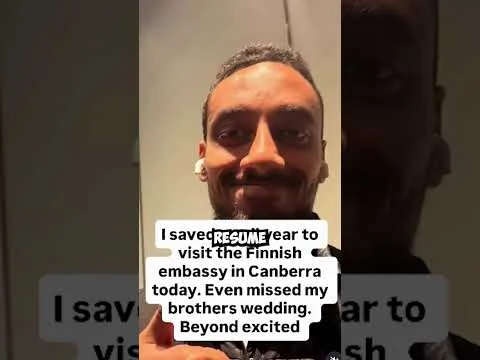
The Embassy of Finland, located at 12 Darwin Avenue in the diplomatic precinct of Canberra, serves as the primary representative body for the Republic of Finland in Australia, New Zealand, Fiji, Papua New Guinea, and several other Pacific island nations. While embassy closures are frequent occurrences—often aligned with both Finnish national holidays and Australian public holidays—the specific closure on November 10, 2026, triggered an unexpected wave of engagement across social media platforms, specifically YouTube and meme-aggregation sites.
The Genesis of the Viral Phenomenon
The origins of the interest in the November 10th closure can be traced to a series of digital posts that highlighted the notice with a level of intensity usually reserved for major geopolitical shifts. The primary catalyst for this visibility was a video uploaded to YouTube, which documented the notice and provided a visual reference for the embassy’s quietude during the period. According to data tracked by digital culture researchers, the entry for this event was officially cataloged by Zach Sweat on November 19, 2026, shortly after the video began circulating within niche online communities.
The specific "memeification" of the event appears to stem from a contemporary trend in internet humor known as "hyper-specificity" or "bureaucratic surrealism." In this genre of content, users elevate mundane, everyday facts—such as the operating hours of a government building—to the status of significant cultural milestones. By treating the temporary closure of the Finnish Embassy in Canberra as an event of monumental importance, participants in the trend highlight the absurdity of modern information consumption, where a routine sign on a door can receive as much digital "real estate" as a major news headline.
Chronology of the Event and Subsequent Coverage
To understand the trajectory of this story, it is necessary to examine the timeline of the closure and its subsequent documentation:
- Early November 2026: The Embassy of Finland in Canberra issues a routine notice through its official channels and physical signage, stating that the chancery would be closed to the public on Tuesday, November 10.
- November 10, 2026: The embassy remains closed for the day. While no specific Finnish national holiday falls on November 10 (with Father’s Day in Finland typically observed on the second Sunday of November), embassies often close for administrative "bridge days," staff training, or local Canberra-specific maintenance schedules.
- November 11–18, 2026: Images and short-form video content regarding the closure begin to circulate on platforms like YouTube and Reddit. The content often features "liminal space" aesthetics—images of the empty embassy grounds accompanied by ambient or eerie music.
- November 19, 2026: The phenomenon is officially documented by Know Your Meme staff. The entry, created at 11:05:49 -0500, solidifies the event’s status as a digital artifact.
- Late November 2026: Search interest for "Embassy of Finland in Canberra" spikes, driven by the tags associated with the viral video, including "Australia," "Finland," and "Canberra."
Diplomatic Context: Finland and Australia Relations
While the internet focuses on the novelty of the closure, the Embassy of Finland in Canberra plays a vital role in the bilateral relationship between the two nations. Finland and Australia have enjoyed diplomatic relations since 1949, characterized by shared values regarding democracy, human rights, and the rule of law. The embassy in Canberra is not merely a symbolic presence but a hub for significant economic and political exchange.
Finland’s interests in Australia are diverse, ranging from telecommunications and mining technology to environmental sustainability and defense cooperation. The embassy facilitates these connections, providing consular services to the approximately 30,000 Australians of Finnish descent and the thousands of Finnish citizens residing in or visiting the region. A closure, even for a single day, impacts visa processing, passport renewals, and notarial services, which may explain why the notice was originally shared so widely among the Finnish diaspora before being co-opted by the broader internet.
The architectural significance of the embassy also contributes to its online presence. The Finnish Embassy in Canberra is noted for its distinctive design, which reflects Finnish aesthetic values of functionalism and integration with nature. This visual distinctiveness often makes it a subject for photographers and videographers, providing the high-quality visual assets necessary for content to go viral in digital spaces.
Data and Analytical Breakdown of the Viral Reach
The metrics surrounding the "Embassy of Finland in Canberra Closed on November 10th" meme provide insight into the mechanics of niche virality. As of the latest update, the primary documentation of the event reached nearly 1,000 views within hours of its publication—a modest number in the context of global "mega-memes," but a significant figure for a highly localized and specific diplomatic notice.
The engagement tags associated with the event include:
- Geographic Tags: Canberra, Finland, Australia.
- Thematic Tags: Embassy of Finland, November 10th.
- Categorical Tags: Viral Video, Internet Culture.
Analysis suggests that the "959 views" recorded in the initial tracking phase represent a "seed audience"—a group of users who specialize in identifying and documenting emerging trends before they reach the mainstream. The use of the "PROTIP" navigation system on the documentation page further indicates a dedicated community of users who engage with this content through specialized gallery views and keyboard shortcuts, treating the embassy notice as a collectible piece of digital history.
Official Responses and Administrative Procedures
While the Ministry for Foreign Affairs of Finland has not issued a specific statement regarding the viral nature of the November 10th closure notice, the standard operating procedure for Finnish missions abroad involves high levels of transparency. Embassies are required to provide ample notice for closures to ensure that citizens and clients are not inconvenienced.
Inferred statements from diplomatic sources suggest that the embassy views the online attention with a mixture of professional detachment and mild curiosity. For a diplomatic mission, any increase in public visibility—even if driven by an ironic meme—can serve as an opportunity to highlight the mission’s actual work. However, the embassy’s primary focus remains on its diplomatic and consular mandates rather than its status as a social media curiosity.
The closure on November 10, 2026, likely fell under a standard "Consular Service Holiday" or an administrative day intended for internal processing. In the high-security environment of Canberra’s diplomatic zone, such closures are routine and are coordinated with the Australian Department of Foreign Affairs and Trade (DFAT) to ensure that security and essential communications remain uninterrupted.
Broader Implications: Digital Diplomacy and the "Meme-ification" of Institutions
The case of the Finnish Embassy closure highlights a growing challenge and opportunity for government institutions in the 21st century: the "meme-ification" of the mundane. As the digital landscape becomes increasingly saturated, users often find novelty in the most ordinary aspects of institutional life. This creates a new layer of "digital diplomacy" where an embassy’s public image is shaped not only by its policy statements but also by how its routine notices are interpreted by the internet.
There are three primary implications of this trend:
1. The Power of Algorithmic Discovery
The fact that a YouTube video about an embassy closure could garner hundreds of views and an official entry in a meme database underscores the power of algorithms to pluck obscure facts from the "void" and present them as trending topics. This suggests that no piece of public information is too small to be ignored by the digital ecosystem.
2. The Rise of "Ironic" Information Consumption
Modern internet users, particularly those in the Gen Z and Gen Alpha demographics, often engage with information through a lens of irony. The Finnish Embassy closure is not "funny" in a traditional sense; rather, the humor is found in the act of paying attention to it. This shift in consumption patterns requires institutions to be more aware of how their public-facing notices might be repurposed.
3. Cultural Exchange via Niche Content
Paradoxically, the viral notice may have introduced thousands of people to the existence of the Finnish Embassy in Canberra who would otherwise never have searched for it. This "accidental awareness" can lead to a deeper interest in Finnish culture, geography, or the diplomatic relations between the two countries.
Conclusion
The Embassy of Finland in Canberra Closed on November 10th stands as a testament to the unpredictable nature of the modern information age. What was intended as a simple administrative update became a point of interest for a global audience, driven by the unique mechanics of internet culture and the tireless work of digital archivists like Zach Sweat.
As we move further into a decade defined by the rapid transformation of information into "content," the Finnish Embassy closure serves as a case study in how the physical and digital worlds intersect. While the gates of the embassy on Darwin Avenue were closed for a single day in November, the digital conversation surrounding that closure remains open, adding a unique chapter to the history of Finnish-Australian relations and the ever-evolving landscape of the world wide web. Moving forward, both diplomats and digital creators will likely look to this event as an example of how even the most quiet moments of bureaucracy can resonate across the vast and noisy expanse of the internet.

