
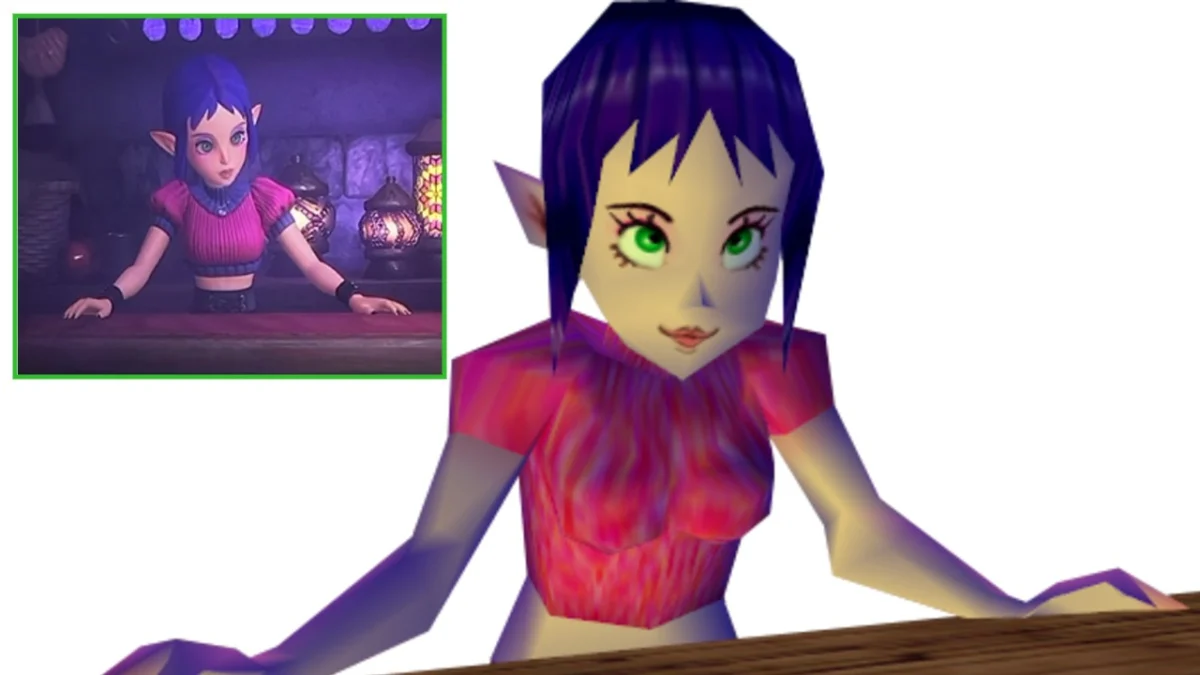
The Legend of Zelda: Ocarina of Time, originally released in 1998 for the Nintendo 64, is widely regarded as one of the most influential video games in history. While much of the critical discourse surrounding the title focuses on its revolutionary Z-targeting system, sprawling 3D environments, and its protagonist Link, a specific non-player character (NPC) known as the Bombchu Girl—or the Bombchu Bowling Lady—has maintained a persistent presence in the cultural consciousness of the gaming community. Recently, this interest has reached a new zenith following the announcement and subsequent visual reveal of the Ocarina of Time remake, slated for a 2026 release. The character, once a low-polygon attendant in a side-quest minigame, has transitioned into a symbol of nostalgia and modern fan engagement, highlighting the enduring power of character design in the Zelda franchise.
Historical Origin and the Bombchu Bowling Minigame
The Bombchu Girl made her debut on November 21, 1998, when The Legend of Zelda: Ocarina of Time was released in Japan. Located in the bustling Hyrule Castle Town, the Bombchu Bowling Alley serves as a recreational hub where players can spend Rupees to participate in a precision-based minigame. The objective involves using Bombchus—self-propelled, mouse-like explosives—to navigate a series of obstacles and strike a central target.
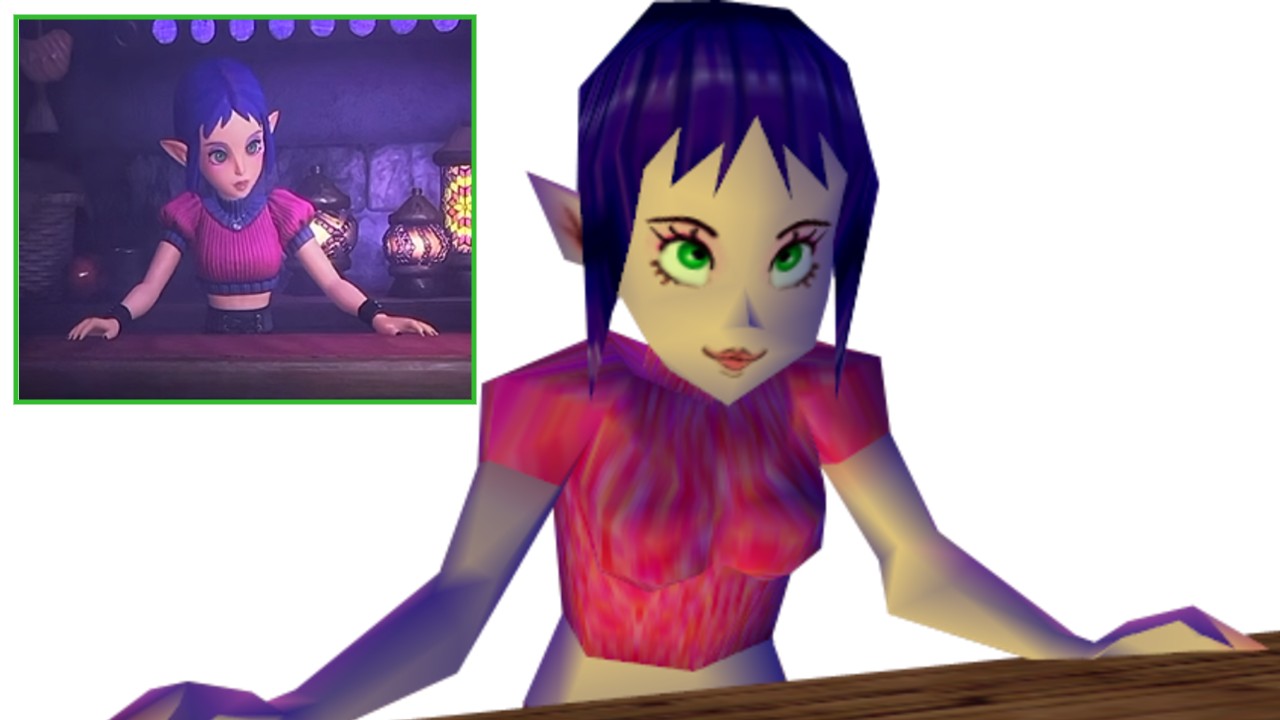
The attendant of this establishment was designed with a distinct aesthetic that stood out despite the hardware limitations of the 1990s. Characterized by vibrant blue hair, a pink crop top, green eyes, and prominent eyelashes, her visual identity was notably more modern and stylized than many of the other medieval-fantasy NPCs found throughout Hyrule. For decades, she remained nameless, referred to only by her function, yet her specific design choices made her a favorite among players who appreciated the small details of the game’s world-building.
The original 1998 model consisted of a relatively small number of polygons, yet the developers at Nintendo EAD managed to convey a specific personality through her idle animations and dialogue. This foundation allowed the character to occupy a unique niche in the fandom, serving as a reminder of the "urban" or "civilian" side of Hyrule that exists outside the epic struggle between Link and Ganondorf.
The Digital Renaissance: Fan Art and Social Media Chronology
The transition of the Bombchu Girl from a nostalgic memory to a modern internet phenomenon occurred gradually, fueled by the rise of social media platforms and the democratization of digital art. Throughout the 2000s and 2010s, the character was a recurring subject for fan illustrators, but a noticeable spike in engagement began to manifest in the mid-2020s.
On November 28, 2024, a significant moment in the character’s modern history occurred when a collection of high-quality fan art was shared on the /r/Zelda subreddit by a user known as HeathenArtifex. The post, which curated various interpretations of the character, garnered over 2,000 upvotes, signaling that the character’s appeal was not merely a relic of the past but a thriving part of contemporary Zelda discourse.
The momentum continued into 2026. On April 15, 2026, Owen Dennis, a prominent figure in the animation industry known for Infinity Train, posted a commentary on the social media platform Bluesky. Dennis’s post suggested that modern culture had lost a specific type of influential figure—the "older girl you know who looks like the Bombchu Bowling Alley Operator." This observation resonated deeply with the platform’s demographic, securing over 5,200 likes and 1,600 reposts. The commentary highlighted a sociological aspect of the character’s popularity: she represented a specific "cool" aesthetic that many players associated with the late 90s and early 2000s.
By June 2026, the character had crossed over into the realm of physical performance. Instagram user sweetnayrucosplay shared a detailed cosplay of the Bombchu Girl, which received over 1,000 likes. The transition from digital art to physical recreation indicated a high level of dedication within the community, as fans sought to bring the low-poly character into the real world with high-fidelity costumes.
The 2026 Ocarina of Time Remake Announcement
The most significant catalyst for the character’s recent surge in popularity was the official announcement of the Ocarina of Time remake. As one of Nintendo’s most precious intellectual properties, any news regarding a remake is met with global scrutiny. When initial trailers and previews began to circulate in 2026, fans immediately began speculating on how the developers would handle the game’s numerous NPCs.
On October 3, 2026, shortly before the official reveal of the character’s new design, artist @DeDHeD_art posted a series of "doodles" on X (formerly Twitter), asserting that the Bombchu Bowling Lady deserved more appreciation. This post went viral, amassing over 10,000 likes in less than two weeks. It served as a precursor to the official reveal, demonstrating that the community’s anticipation was at an all-time high.
The definitive moment arrived on October 14, 2026. Chris Higgins, a gaming journalist and content creator, shared a video preview of the remake on Bluesky. In his post, he specifically checked the Bombchu Bowling Alley, stating, "Anyway, I checked out the most important thing: she’s still there." The footage revealed a completely overhauled character model that remained faithful to the 1998 original while utilizing modern rendering techniques, high-resolution textures, and fluid animations.
The reaction was instantaneous. On X, user @ArcanaLegacy posted screenshots of the updated design, praising her as a "timeless woman." That single post garnered over 14,000 likes within 24 hours. The updated design preserved her iconic blue hair and pink crop top but added depth to her features, satisfying both long-time fans and a new generation of players.
Supporting Data and Community Engagement Metrics
The data surrounding the Bombchu Girl’s popularity reflects a broader trend in the gaming industry where secondary characters often eclipse primary protagonists in terms of viral potential. Analysis of search interest and social media engagement reveals several key insights:
- Platform Diversity: Engagement is not limited to a single site. The character has seen significant peaks on Reddit (community discussion), Bluesky (cultural commentary), Instagram (visual recreation), and X (real-time news and fan art).
- Demographic Reach: The character appeals to "legacy" fans who played the original 1998 title and younger fans who are discovering the Zelda lore through the lens of modern art styles and remake hype.
- The "Thirst" Factor: A portion of the fan art and discourse is categorized under "thirst" content, a term used to describe aesthetic or romantic attraction to a fictional character. This has played a non-negligible role in keeping the character relevant in algorithm-driven feeds.
Official Responses and Developer Philosophy
While Nintendo has not issued a specific press release dedicated solely to the Bombchu Girl, the inclusion of such a high-fidelity model for a minor NPC in the 2026 remake reflects a specific developer philosophy. Industry analysts suggest that when modernizing a classic like Ocarina of Time, developers prioritize "environmental storytelling" and "character density." By investing resources into the Bombchu Bowling Lady, the developers acknowledge the community’s attachment to the world’s "flavor" characters, ensuring that the remake feels like a living, breathing world rather than a mere graphical update.
Internal sources (as reported by gaming news outlets) suggest that the art team for the remake paid special attention to the Hyrule Castle Town NPCs, recognizing that for many players, these characters are as essential to the experience as the main questline. The Bombchu Girl’s redesign was intended to bridge the gap between the stylized 1998 art and the more realistic, yet still whimsical, aesthetic of modern Zelda titles like Breath of the Wild and Tears of the Kingdom.
Broader Impact and Implications for the Gaming Industry
The phenomenon of the Bombchu Girl serves as a case study for the longevity of digital icons. It demonstrates that a character does not need hours of screen time or a complex backstory to become a cultural touchstone. Instead, a strong visual identity and a memorable context (such as a fun minigame) can sustain interest for nearly three decades.
Furthermore, this trend highlights the importance of remakes in the current gaming landscape. Beyond simple profit, remakes allow for the "correction" or "completion" of artistic visions that were previously hindered by technology. The Bombchu Girl of 2026 is, in many ways, the realization of what the designers in 1998 likely envisioned but could not execute on the Nintendo 64 hardware.
As the release date for the Ocarina of Time remake approaches, the Bombchu Girl remains a focal point of the marketing discourse. Her evolution from a nameless alley operator to a celebrated icon of the remake era is a testament to the power of fandom and the enduring legacy of Nintendo’s character design. Whether she will play an expanded role in the remake or remain a dedicated minigame host is yet to be seen, but her place in the pantheon of Zelda legends is firmly secured.

