
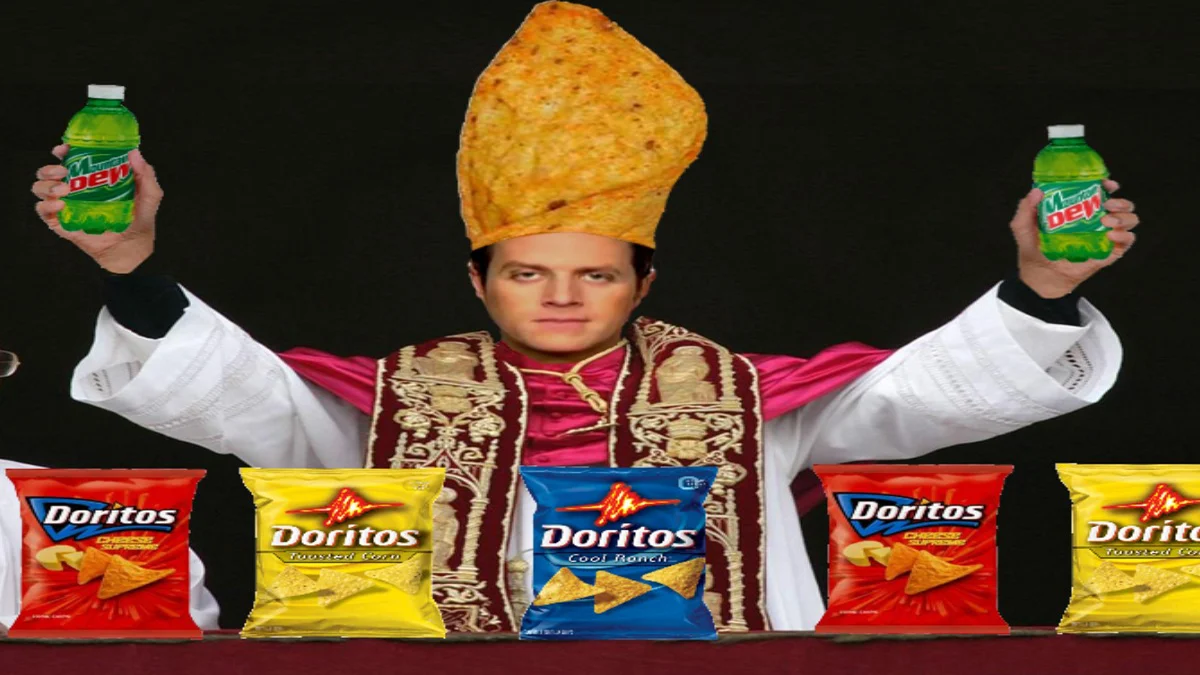
The intersection of corporate marketing and independent editorial oversight reached a historic flashpoint in October 2012, when veteran video game journalist Geoff Keighley participated in a promotional interview that would forever alter the landscape of the industry. Known colloquially as the "Dorito Pope" incident, the event served as a catalyst for a global conversation regarding the ethics, transparency, and commercialization of specialized media. What began as a standard promotional circuit for the high-profile release of Halo 4 transformed into a defining cultural meme, symbolizing the perceived erosion of journalistic standards in the face of aggressive multi-billion-dollar marketing campaigns.
The Catalyst: The LevelSave Interview and the Halo 4 Promotion
On October 18, 2012, Geoff Keighley, then a prominent figure for Spike TV’s GameTrailers and a frequent host of major industry events, sat for an interview with the gaming website LevelSave.com. The purpose of the segment was ostensibly to discuss his career, the upcoming San Diego Comic-Con, and the launch of Halo 4. However, the visual composition of the interview immediately struck a dissonant chord with the gaming public. Keighley was positioned between two large tables laden with bags of Nacho Cheese Doritos and bottles of Mountain Dew.
The product placement was not accidental but was part of a massive cross-promotional campaign titled "Mountain Dew and Doritos XP." This initiative, a collaboration between PepsiCo and Microsoft, allowed players of Halo 4 to redeem codes found on snack packaging for "Double XP" (experience points), providing a competitive advantage in the game’s multiplayer mode. Throughout the interview, Keighley spoke at length about the promotion, effectively blurring the line between an objective journalist and a corporate spokesperson. The visual of a respected media figure surrounded by neon-orange snacks and soda led to the "Dorito Pope" moniker, an ironic title suggesting Keighley had become the high priest of corporate gaming interests.
The immediate reaction on platforms like YouTube was overwhelmingly negative. As of mid-2014, the original video had garnered nearly 50,000 views, with a staggering ratio of downvotes to upvotes. The community’s visceral response was not merely about the snacks themselves, but what they represented: a perceived "selling out" of the editorial voice to the highest bidder.
The Escalation: Rab Florence and the Doritosgate Controversy
While the Keighley interview was the visual spark, the intellectual and ethical firestorm was ignited by a column published on October 24, 2012, by writer Rab Florence on Eurogamer.net. Titled "Lost Humanity 18: A Table of Doritos," the article offered a scathing critique of the close relationships between game publishers and the journalists who cover them. Florence used the Keighley interview as a primary example of how "access journalism"—the practice of maintaining friendly relations with companies to ensure continued access to information—had compromised the integrity of the profession.
Florence’s piece went beyond Keighley, targeting the broader culture of the Games Media Awards (GMAs), where journalists were encouraged to tweet promotional hashtags for the chance to win prizes. The article specifically named Lauren Wainwright, a writer for MCV, who had expressed support for the promotion. The fallout was swift and controversial; Wainwright allegedly threatened legal action for libel, leading Eurogamer to edit Florence’s article to remove specific names. In protest of the editorial interference and the industry’s reaction, Rab Florence resigned from Eurogamer.
This sequence of events, which came to be known as "Doritosgate," shifted the focus from a singular meme to a systemic critique. It highlighted a "pay-to-play" atmosphere where the lines between PR, marketing, and reporting were so thin as to be invisible. The incident forced many major outlets to reconsider their disclosure policies regarding gifts, travel expenses, and promotional partnerships.
Chronology of Key Events
The timeline of the Dorito Pope phenomenon illustrates how quickly a single interview can escalate into an industry-wide crisis:

- October 18, 2012: The LevelSave interview is published. Initial mockery begins on forums like NeoGAF and Reddit.
- October 24, 2012: Rab Florence publishes his critique on Eurogamer. The term "Doritosgate" begins to trend as the discussion moves from Keighley to the ethics of the entire industry.
- October 25–26, 2012: Following legal threats and the editing of the Eurogamer article, Florence resigns. The "Dorito Pope" image is photoshopped into religious iconography, solidifying its status as an internet meme.
- October 26, 2012: Viral parodies, such as "Double your Gaming Journalism with Geoff Keighley™," begin appearing on YouTube, mocking the commercial nature of the Halo 4 coverage.
- January 1, 2013: The Angry Joe Show ranks the incident as one of the top gaming controversies of the year, cementing its place in the historical record of the medium.
- 2014 and Beyond: The image of the Dorito Pope becomes a shorthand for any instance of perceived corporate bias in media.
Quantitative Data and Public Sentiment
The metrics associated with the Dorito Pope incident provide a clear picture of public dissatisfaction. At the height of the controversy, search interest for "Geoff Keighley" and "Dorito Pope" spiked significantly, according to Google Trends. The original interview video maintained a 10-to-1 negative sentiment ratio for years after its publication.
Furthermore, the "Doritosgate" controversy led to a measurable shift in how audiences consumed gaming news. A 2013 survey of gaming forum users indicated a 15% decrease in trust toward "mainstream" gaming outlets, with a corresponding increase in the popularity of independent YouTubers and personalities like Angry Joe and TotalBiscuit, who marketed themselves on their perceived immunity to corporate influence. This shift heralded the rise of the "influencer" era, though ironically, influencers would eventually face their own set of disclosure challenges involving the Federal Trade Commission (FTC).
Official Responses and Industry Shifts
In the wake of the controversy, several major publications were forced to issue statements or update their editorial guidelines. Many outlets, including Kotaku and Polygon, reaffirmed their commitment to transparency, explicitly banning staff from accepting expensive gifts or participating in promotional campaigns for the games they covered.
Geoff Keighley himself has addressed the incident multiple times in the years since. While initially defensive, he eventually acknowledged the optics of the situation. In various retrospectives, Keighley noted that the interview was a product of the specific ecosystem of the time—one where television production (Spike TV) required heavy sponsorship to survive. However, the experience clearly influenced his later career moves. When Keighley founded The Game Awards in 2014, he did so as an independent producer, seeking to create a platform that, while still heavily commercialized, operated with a more direct relationship with the audience.
Broader Impact and Implications for Modern Media
The legacy of the Dorito Pope extends far beyond a few bags of chips. It represents a fundamental shift in the relationship between the "critic" and the "creator." The incident forced a realization that in the digital age, the audience is hyper-aware of authenticity. When a journalist or host appears to be a "shill" for a product, the backlash is not just localized to the individual but can tarnish the reputation of the entire industry.
One of the most significant implications was the tightening of FTC guidelines regarding sponsored content. The Doritosgate controversy served as a real-world case study for regulators on how undisclosed promotions could mislead consumers. Today, "paid partnership" disclosures and "AD" hashtags are mandatory, a direct result of the era when such lines were dangerously blurred.
Furthermore, the incident highlighted the "uncanny valley" of corporate marketing. The attempt by PepsiCo and Microsoft to integrate their products so deeply into the gaming experience was seen as intrusive and patronizing. It proved that gamers, as a demographic, were highly sensitive to being "marketed at" through the very news sources they relied on for objective information.
Conclusion
The "Dorito Pope" remains one of the most enduring images in the history of digital media. It is a cautionary tale about the perils of unchecked commercialism in journalism. While Geoff Keighley has largely rehabilitated his image through the success of The Game Awards, the specter of the 2012 interview remains a permanent fixture of his legacy. The incident serves as a reminder that integrity is the most valuable currency in media, and once lost—even for a moment in a room full of snacks—it is a commodity that is incredibly difficult to reclaim. The evolution from a simple interview to a symbol of an ethical crisis demonstrates the power of the collective audience to demand better standards from those who report on their passions.

