
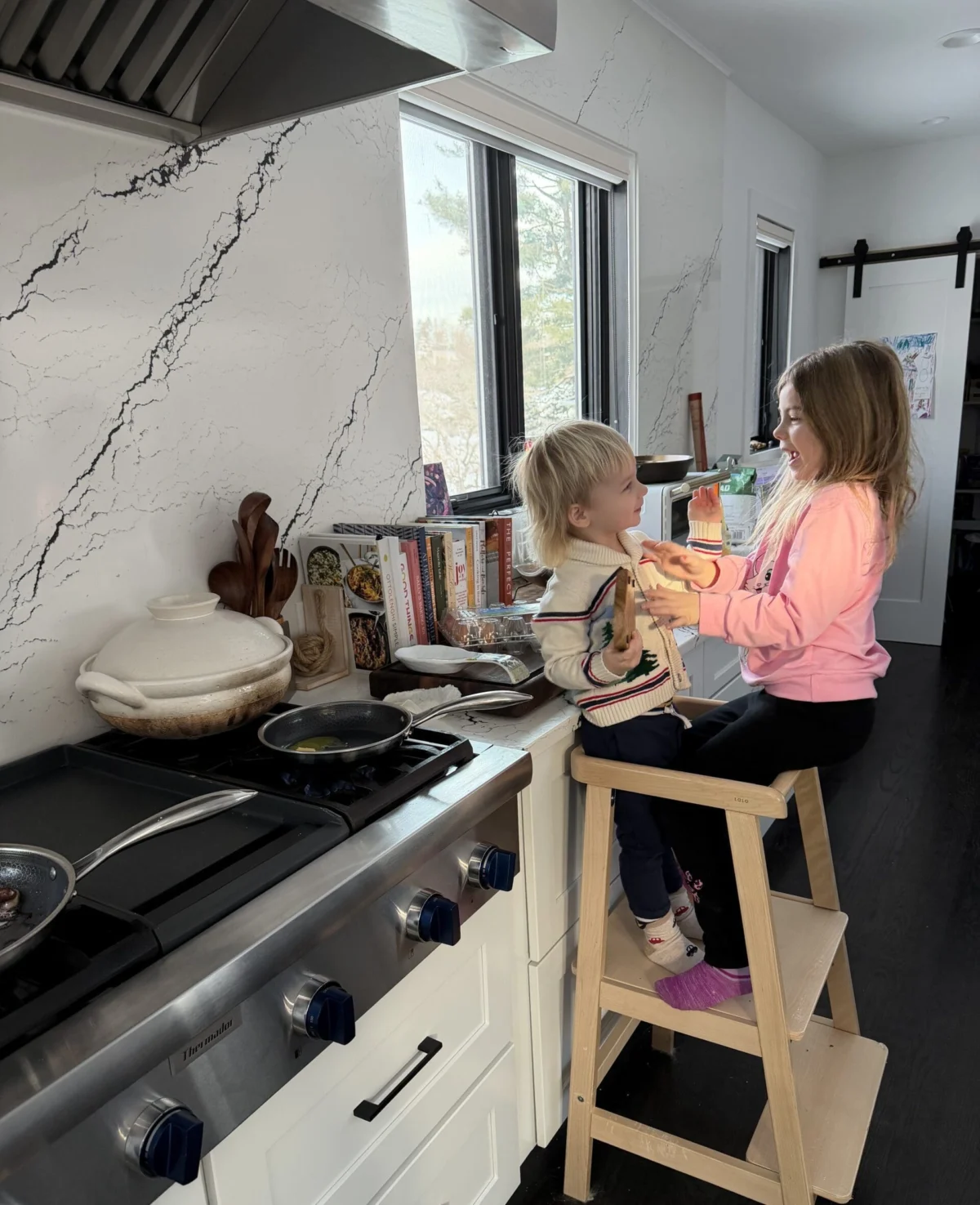
The simple act of cooking, often perceived as a mundane household chore, is increasingly recognized by child development experts, nutritionists, and parenting advocates as a profoundly enriching activity for children and families alike. This burgeoning understanding highlights how shared kitchen experiences extend far beyond mere meal preparation, fostering essential life skills, strengthening family bonds, and positively impacting children’s physical and emotional well-being. Public figures, such as ESPN anchor Laura Rutledge, have openly shared their personal journeys, underscoring the universal resonance of these benefits and providing relatable anecdotes that align with broader research findings. Rutledge’s experiences, frequently recounted through her interactions with her children, Reese and Jack, illuminate how the kitchen can transform from a functional space into a vibrant classroom and a hub for natural, unpressured connection.
The Transformative Power of Shared Kitchen Experiences
For many parents, the initial thought of cooking with young children conjures images of insurmountable mess, prolonged timelines, and potential hazards. However, a growing body of evidence suggests that these perceived inconveniences are far outweighed by the significant developmental advantages. Rutledge herself recalls her earliest days of cooking with her daughter Reese, often with the infant on her hip, demonstrating an intuitive understanding that the kitchen was a space for togetherness from the very beginning. This sentiment is echoed by countless parents who, despite demanding professional lives—like Rutledge’s role anchoring NFL Live and navigating extensive production meetings—find immense value in making culinary activities a cherished family routine. The shift from viewing cooking as a solitary task to a collaborative endeavor marks a pivotal change, elevating it to a cornerstone of family life.
The seemingly "mundane" aspects of kitchen work—the flour dusting every surface, the sauces splattering—are reframed as integral parts of a dynamic learning environment where chaos transforms into creativity. This perspective encourages parents to embrace the imperfection inherent in cooking with children, liberating both themselves and their offspring from the pressure of achieving restaurant-quality results. Instead, the focus shifts to the process itself, allowing for spontaneous moments of joy, such as breaking into song and dance, which reinforce the idea that the kitchen is a space for joyful exploration and uninhibited expression.
Cultivating Connection: Beyond the Recipe
One of the most profound benefits of involving children in cooking is its unparalleled ability to foster quality family time that feels organic and unforced. Unlike structured activities or direct interrogations about their day, the shared rhythm of stirring, measuring, and pouring at the kitchen counter creates a natural conversational flow. Children, often more relaxed when engaged in a hands-on task, are more inclined to share their thoughts, recount their daily adventures, or voice their latest "big ideas." This low-pressure environment, free from a specific agenda, allows for genuine dialogue and strengthens emotional bonds.
Child development experts emphasize that these informal interactions are crucial for building strong parent-child relationships. Dr. Sarah Johnson, a family therapist, notes, "When parents and children engage side-by-side in a shared task like cooking, it creates a unique opportunity for connection. The focus is on the activity, not on direct questioning, which can make children feel more comfortable opening up. It’s a powerful antidote to the fragmentation of modern family life." This sentiment is further supported by studies on family mealtime, which consistently link regular shared meals to improved communication, enhanced emotional well-being, and reduced behavioral problems in children. By actively participating in the preparation, children develop a deeper appreciation for the entire meal experience, extending the benefits beyond the cooking itself. Furthermore, involving children in kitchen tasks can serve as an effective strategy to reduce screen time, redirecting their attention towards interactive, real-world engagement that stimulates multiple senses and cognitive functions.
From Picky Eaters to Eager Participants: The Psychology of Ownership
A common challenge for parents is encouraging children to eat a diverse and healthy diet, especially when faced with picky eating habits. The kitchen offers a surprisingly effective solution: the principle of ownership. When children actively participate in preparing a meal, they develop a sense of investment and pride in the final product, significantly increasing their willingness to taste and consume what they’ve made. This psychological phenomenon, rooted in the concept of effort justification, suggests that individuals value something more if they have invested effort into it. For a preschooler, stirring a soup or sprinkling cheese can transform an intimidating dish into a personal accomplishment.
Nutritional science supports this anecdotal evidence. Research published in the Journal of Nutrition Education and Behavior indicates that children involved in cooking activities are more likely to consume fruits and vegetables and exhibit healthier eating patterns overall. This hands-on involvement demystifies food, allowing children to interact with ingredients in their raw state, fostering curiosity rather than apprehension. Parents are encouraged to identify at least one age-appropriate task for their child, no matter how small—from washing vegetables to tearing lettuce or pouring pre-measured ingredients. This seemingly minor contribution can be a powerful motivator, transforming a child who previously "swore they didn’t like vegetables" into an enthusiastic consumer of their own culinary creation. The exposure to different textures, colors, and aromas during preparation also expands their sensory palate, making them more adventurous eaters in the long run.
A Culinary Classroom: Developing Essential Life Skills
Beyond fostering connection and encouraging healthy eating, cooking with children serves as an invaluable, informal educational platform, seamlessly integrating a wide array of real-life skills into everyday routines. Without even realizing it, children are engaging in practical applications of mathematics, science, language, and fine motor skills. Measuring ingredients teaches fractions and volume; following a recipe develops reading comprehension and sequential thinking; mixing and pouring enhance fine motor control and hand-eye coordination.
Rutledge observes her children learning gentleness when cracking an egg, and her daughter Reese developing confidence in her ability to follow a recipe and create something special for the family. While initial attempts might be messy—like Jack crumbling eggshells into the bowl—these experiences are crucial for learning and mastery. Educators frequently advocate for experiential learning, and the kitchen provides a rich environment for this. Dr. Emily Carter, an early childhood education specialist, states, "Cooking is a multi-sensory learning experience that promotes cognitive flexibility, problem-solving, and independence. It’s a practical application of concepts they might learn abstractly in a classroom, making the learning more concrete and meaningful."
To maximize these learning opportunities and ensure safety, investing in appropriate tools is essential. Kid-safe knives, sturdy mixing bowls with handles, and reliable step stools empower children to contribute effectively and safely. Once parents move past anxieties about sharp edges and hot surfaces by providing suitable equipment and supervision, the joy of sharing a love for cooking becomes paramount. This also teaches children about responsibility and safety protocols in a practical context, preparing them for greater independence as they grow.
The Unhurried Pace: A Sanctuary for Busy Parents
In the fast-paced world of modern life, characterized by constant demands and relentless schedules, finding moments of genuine deceleration can be challenging. For professionals like Laura Rutledge, whose work at ESPN demands quick thinking and constant readiness, the kitchen offers a much-needed counterpoint. Cooking with children inherently forces a slower pace, demanding patience and presence. It is impossible to rush a toddler meticulously spooning tomato sauce into a pot, one tiny spoonful at a time. This enforced slowness, far from being a hindrance, becomes a profound benefit.
This deliberate slowing down acts as a form of mindfulness for parents. When observing and celebrating a child’s small victories—like remembering to "stir slowly" all by themselves—parents are pulled away from external pressures and into the present moment. The mental chatter of upcoming deadlines, unanswered emails, or professional anxieties recedes, replaced by a focus on the immediate interaction. This mindful engagement is not just beneficial for the parent-child bond but also serves as a crucial stress-reduction technique for the parent. Psychologists often recommend mindfulness practices for improving mental well-being, and engaging in focused, hands-on activities with children can serve this purpose organically. Rutledge herself acknowledges this need, cherishing "those tiny wins—trying a new food, mastering a small skill—are the moments I want to collect." These documented moments, often captured on phones, serve as tangible reminders of the joy and connection found amidst the "chaos" and "mess" that ultimately makes cooking with kids "so dang fun."
Empowerment in the Kitchen: Fostering Confidence and Contribution
The act of contributing meaningfully to a household task instills a powerful sense of pride and competence in children. When a child like Reese slices fruit for a salad or Jack enthusiastically squeezes tomatoes for a sauce, they are not merely playing; they are genuinely assisting in the creation of a family meal. This tangible contribution differs significantly from pretend play, offering real-world validation of their capabilities.
Giving children real responsibilities, even if their execution isn’t perfect, is fundamental to building self-confidence. A plate of slightly overcooked scrambled eggs, prepared by a child beaming with pride, is often more satisfying than a flawlessly executed dish made solely by an adult. The lesson here is not about culinary perfection but about acknowledging effort, valuing contribution, and fostering a sense of agency. This empowerment extends beyond the kitchen, teaching children that their efforts have an impact, that they are valued members of the family unit, and that they possess the skills to contribute effectively. This early exposure to responsibility lays the groundwork for developing independent, capable, and confident individuals who are willing to take on new challenges and believe in their ability to succeed. The kitchen, therefore, becomes one of the most accessible and effective environments for cultivating these essential attributes.
Broader Societal Implications and Expert Perspectives
The growing emphasis on involving children in cooking reflects a broader societal shift towards healthier living, family engagement, and holistic child development. Research from organizations like the American Academy of Pediatrics consistently highlights the long-term health benefits of family meals, including reduced rates of obesity, improved dietary quality, and better academic performance. When children participate in meal preparation, these benefits are amplified.
Educational institutions and public health initiatives are increasingly incorporating culinary education into their programs, recognizing its potential to combat rising rates of childhood obesity and foster a generation with greater food literacy. The trend is supported by a proliferation of kid-friendly cookbooks, cooking classes, and online resources, all designed to make the kitchen more accessible and enjoyable for young chefs. Experts universally agree that these early experiences are foundational. Dr. David Miller, a public health researcher, concludes, "Teaching children to cook is not just about teaching them a skill; it’s about empowering them with knowledge about nutrition, fostering creativity, and building resilience. It’s an investment in their physical health, mental well-being, and future independence."
The experiences shared by individuals like Laura Rutledge serve as a powerful testament to these findings, demonstrating that despite the demands of modern life, the benefits of cooking with children are profound and far-reaching. It transforms a daily necessity into an opportunity for growth, connection, and joy, forging memories and skills that last a lifetime. Ultimately, the kitchen, when shared with children, becomes a vibrant microcosm of life itself—a place where learning, laughter, and love are always on the menu.

