
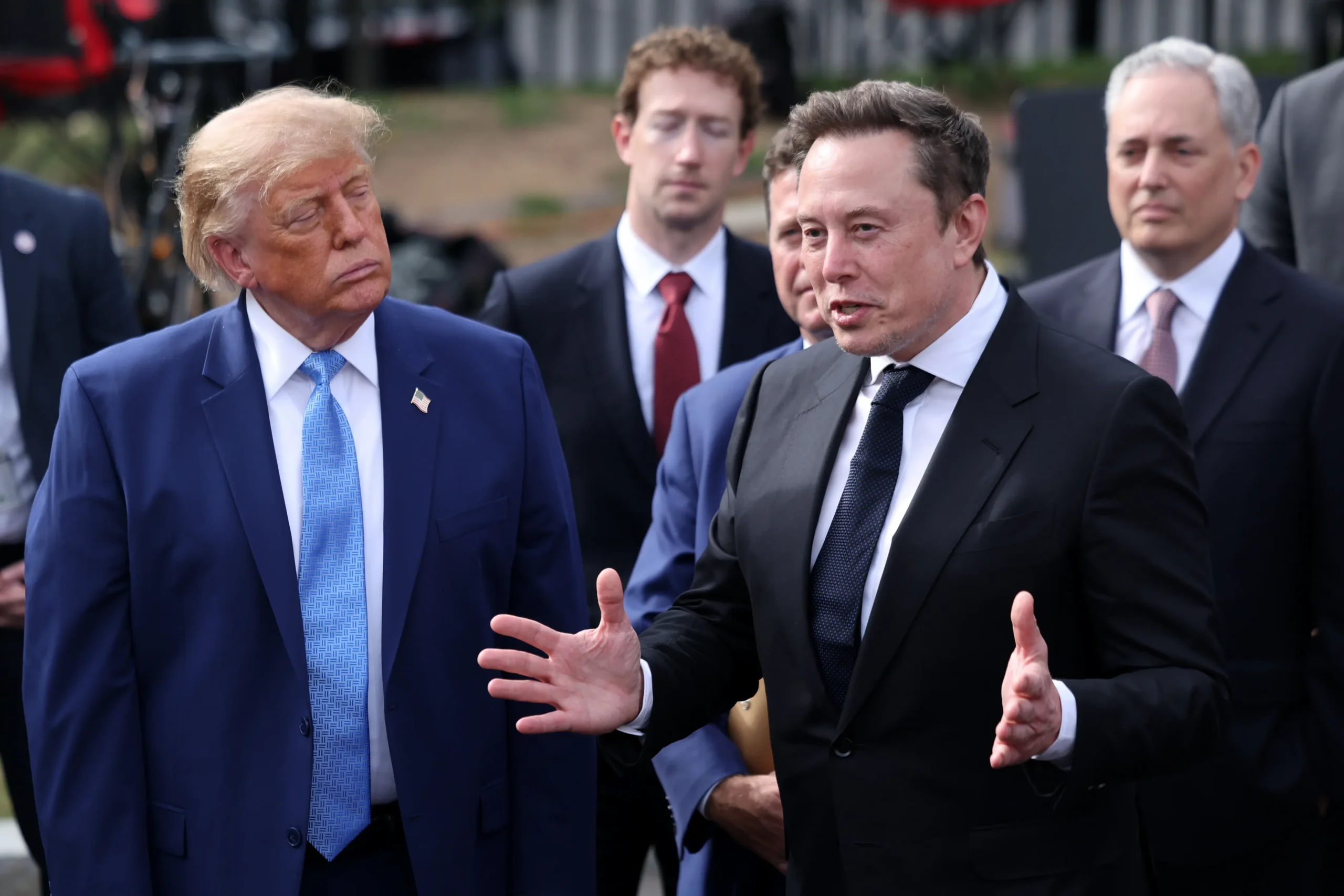
The highly anticipated four-hour documentary "Musk," helmed by Oscar-winning filmmaker Alex Gibney, continues to encounter significant resistance from major social media platforms in its efforts to promote the film, culminating in a permanent advertising ban from TikTok. This latest development follows a pattern of initial rejections and subsequent reversals from other tech giants, raising critical questions about content moderation policies, the influence of powerful corporate figures, and the delicate balance between free speech and platform control in the digital age.
TikTok Imposes Permanent Ban Amid Broader Platform Scrutiny
On October 17, 2026, the documentary’s distributor, Bleecker Street, received notification from TikTok that its advertising account had been permanently suspended. The stated reason for this drastic action was the film’s "political content," a classification that has become increasingly contentious across the social media landscape. TechCrunch, among other outlets, has reached out to TikTok for an official comment regarding the specifics of this determination and the criteria applied, but as of publication, no response has been provided. This move by TikTok represents the most severe advertising blockade the film has faced, effectively cutting off a crucial channel for reaching younger, digitally native audiences. The decision comes at a pivotal time for the documentary, which recently began its limited theatrical release and is preparing for a broader rollout, ahead of its scheduled streaming debut on HBO next year.
A History of Resistance: Meta, YouTube, and X
The TikTok ban is not an isolated incident but rather the latest chapter in a series of promotional hurdles for "Musk." The documentary’s trailer previously faced initial rejections from Meta (Facebook and Instagram) and YouTube, two of the world’s largest advertising platforms. Both platforms cited concerns regarding the content, which typically triggers a review process for what is deemed "political." However, in a notable reversal, both Meta and YouTube eventually allowed the ads to run. Meta attributed its initial rejection to "an error," a statement that left many observers questioning the robustness and consistency of their automated and human review processes for political content. This backtracking by two industry titans underscored the complexities and potential inconsistencies in applying content policies, particularly when dealing with high-profile subjects and potentially controversial material.
The social media platform X, formerly Twitter, which is owned by the subject of the documentary himself, Elon Musk, has maintained a steadfast refusal to carry any advertisements for "Musk." This decision by X is particularly noteworthy, as it directly involves the individual at the center of the film and raises concerns about a platform owner’s ability to control content related to their own public image. Critics argue that such a refusal, especially from a platform that Musk frequently champions as a bastion of free speech, creates a perceived conflict of interest and undermines the very principles of open discourse it claims to uphold.
The Film and Its Acclaimed Director
"Musk" delves into the life and career of Elon Musk, a figure whose ventures in electric vehicles (Tesla), space exploration (SpaceX), brain-computer interfaces (Neuralink), and social media (X) have made him one of the most influential and often polarizing individuals of the 21st century. The documentary, running approximately four hours, promises an in-depth, critical examination of Musk’s ascent, his business practices, his public persona, and the significant impact he has had on technology, culture, and global discourse.
The film’s director, Alex Gibney, is renowned for his investigative documentaries that tackle complex and often controversial subjects with rigorous journalistic integrity. Gibney’s impressive filmography includes an Academy Award for "Taxi to the Dark Side" (2007), which exposed the U.S. government’s interrogation practices. Other notable works include "Enron: The Smartest Guys in the Room" (2005), a scathing indictment of corporate malfeasance; "Going Clear: Scientology and the Prison of Belief" (2015), which critically examined the Church of Scientology; and "The Inventor: Out for Blood in Silicon Valley" (2019), detailing the rise and fall of Theranos founder Elizabeth Holmes. Gibney’s reputation for unflinching scrutiny and meticulous research adds significant weight to the "Musk" documentary, making the advertising blockades even more conspicuous and concerning for advocates of independent journalism.
Unpacking "Political Content" and Ownership Stakes
The designation of "political content" by platforms like TikTok is at the heart of the ongoing controversy. While platforms often implement policies to prevent misinformation, election interference, or hate speech, the broad categorization of a documentary about a prominent public figure as "political" warrants closer examination. Elon Musk, through his ownership of X and his outspoken views on politics, technology, and society, has undeniably become a significant political figure. His public endorsements, particularly his notable support for former President Donald Trump, further entangle his persona with the political sphere. Therefore, a documentary scrutinizing his life and influence could reasonably be perceived as having political implications.
However, the question remains whether the mere presence of political implications should automatically trigger an advertising ban, especially for a journalistic work. Critics argue that such broad interpretations risk stifling critical discourse and limiting public access to information about powerful individuals whose actions inherently affect public life.

Further complicating the narrative is the ownership structure of TikTok’s U.S. operations. Oracle co-founder Larry Ellison holds a significant stake in TikTok’s U.S. business. Ellison, like Musk, has been a vocal supporter of former President Donald Trump. This shared political alignment between a partial owner of a platform and the subject of a critically examined documentary, whose advertising is subsequently banned, raises legitimate questions about potential conflicts of interest and the influence of personal politics on platform content policies. While there’s no direct evidence linking Ellison’s political views to TikTok’s specific decision regarding the "Musk" documentary, the convergence of these factors fuels speculation and amplifies concerns about the politicization of content moderation.
Distribution Woes and HBO’s Future Role
The challenges for "Musk" extend beyond social media advertising. Gibney recently confirmed that Universal, the film’s international distributor, had initially wavered in its plans for a broader release. Such hesitation from a major distributor underscores the commercial and logistical difficulties faced by films that become entangled in controversy, even those from acclaimed directors. However, Gibney also confirmed that Universal is now moving forward with its distribution plans, suggesting that the film’s artistic merit and the importance of its subject matter ultimately prevailed over initial anxieties.
"Musk" premiered in a limited release in just four theaters last weekend, a common strategy for documentaries to build buzz and qualify for awards before expanding to more screens. The film is now rolling out more broadly across the country, hoping to reach a wider audience despite the advertising roadblocks. The ultimate destination for the documentary is streaming, with a planned release on HBO next year. This is particularly interesting given the recent shifts in the media landscape. HBO is now part of the newly formed Paramount/Skydance entity, following a significant acquisition. This combined media powerhouse is notably led by David Ellison, son of Larry Ellison. The eventual streaming of "Musk" on a platform overseen by the son of a prominent Musk/Trump supporter, while another platform partially owned by the elder Ellison bans its ads, adds another layer of complexity to the film’s distribution saga, prompting further discussion on the intertwining of media ownership, personal relationships, and content availability.
Broader Implications: Free Speech, Censorship, and Media Accountability
The ongoing struggle to promote "Musk" highlights several critical implications for the media landscape, free speech, and the role of powerful individuals in contemporary society.
Firstly, it intensifies the debate around platform neutrality and content moderation. Social media platforms wield immense power as gatekeepers of information and public discourse. Their policies regarding "political content" are often opaque and appear inconsistently applied. When a documentary by an acclaimed filmmaker about a globally influential figure faces such advertising hurdles, it begs the question of whether these platforms are acting as neutral arbiters or are susceptible to pressures, biases, or the personal affiliations of their owners and stakeholders. The "error" cited by Meta, and the lack of detailed explanation from TikTok, contribute to a sense of arbitrary decision-making that erodes trust in platform governance.
Secondly, the situation raises serious concerns about censorship and the chilling effect on investigative journalism. If films critical of powerful individuals or corporations face significant obstacles in reaching audiences through mainstream digital advertising channels, it could deter filmmakers from pursuing challenging subjects. This has profound implications for media accountability and the public’s right to information. In an era where influential figures increasingly control vast media empires (as Musk does with X), the ability to block critical narratives from reaching audiences through advertising mechanisms poses a direct threat to the independent media ecosystem.
Thirdly, the intertwined relationships between Elon Musk, Larry Ellison, and their political affiliations underscore the growing influence of wealth and power on information dissemination. The concentration of media ownership and technological platforms in the hands of a few wealthy individuals creates vulnerabilities where personal biases or political agendas could subtly, or overtly, impact what content is amplified or suppressed. This scenario highlights the need for greater transparency in platform decision-making and potentially independent oversight mechanisms to ensure equitable access for diverse voices and perspectives.
Finally, the distribution challenges faced by "Musk" speak to the evolving nature of film distribution in the digital age. While theatrical releases remain important, digital advertising and streaming platforms are crucial for reaching broad audiences, especially for documentaries. When these channels are compromised, it forces distributors to innovate and adapt, but also adds significant financial and logistical burdens. The eventual streaming on HBO, under the new Paramount/Skydance leadership, will be a critical test of the film’s reach and impact, demonstrating whether high-quality, critical content can ultimately overcome initial resistance.
Looking Ahead
As "Musk" continues its theatrical run and prepares for its highly anticipated HBO debut, the controversy surrounding its advertising will likely persist. The film’s journey through the labyrinthine world of social media content moderation and corporate influence serves as a potent case study. It forces a critical examination of the power wielded by tech giants, the often-ambiguous nature of their content policies, and the potential for personal and political interests to shape the information landscape. For audiences, filmmakers, and policymakers alike, the saga of "Musk" offers a stark reminder of the ongoing struggle to safeguard free expression and journalistic integrity in an increasingly centralized and digitally mediated world. The questions raised by these blockades are far-reaching, touching upon the very foundations of public discourse and the future of independent media.

