
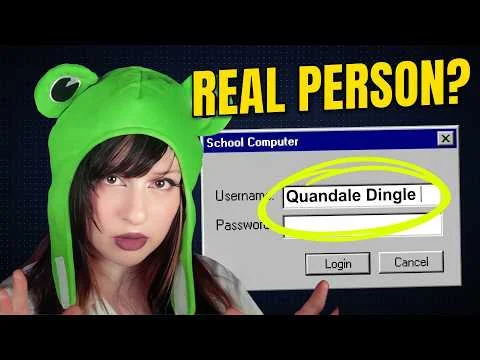
The digital landscape of the 2020s has been defined by the rapid ascent of "absurdist" humor, a genre characterized by surrealist imagery, distorted audio, and non-sequitur narratives. At the epicenter of this movement stands Quandale Dingle, a name that transitioned from a mundane school computer login screen to a global cultural touchstone. What began as a simple photograph shared in September 2021 evolved within months into a complex multimedia character featuring a distinct visual identity, a lore-heavy backstory, and a pervasive influence on the TikTok "Goofy Ahh" subculture. This report examines the origins, the synthesis of the character, and the broader sociological implications of the Quandale Dingle phenomenon.
The Genesis of a Name: September 2021
The Quandale Dingle phenomenon originated on September 13, 2021, when a TikTok user captured a photograph of a PC login screen at a high school. The screen displayed the name "Quandale Dingle," a rhythmic and phonetically unusual moniker that immediately captured the attention of the platform’s user base. The initial appeal was rooted in the name’s unique cadence, which resonated with an internet audience primed for "random" humor.
While many internet memes are entirely fabricated, investigative efforts by social media users and digital historians later confirmed that Quandale Dingle is a real individual. He was a student and a football player at Pennsauken High School in New Jersey. The transition from a real-life identity to a digital caricature represents a modern form of "digital folklore," where a factual element is stripped of its original context and rebuilt into a shared mythos by the collective internet consciousness.
The Synthesis of a Digital Icon
Following the initial viral success of the name, the internet community began the process of "character building." By early 2022, the meme had evolved through several distinct layers of creative contribution:
Visual Identity and the Distorted NBA YoungBoy
Because the original meme was merely a text-based name, the community sought a face for the character. Users eventually settled on a heavily distorted image of the professional rapper Kentrell DeSean Gaulden, known professionally as NBA YoungBoy. The image was edited using "content-aware scale" filters, resulting in a warped, surreal appearance that matched the "Goofy Ahh" aesthetic—a style of editing characterized by low-resolution graphics and exaggerated features.
The Auditory Signature
The character gained its voice through creators such as TickleTipson, who utilized a deep, growling, and rhythmic vocal style. The standard introduction—"Hey guys, it’s me, Quandale Dingle"—became a recognizable audio trigger across TikTok and YouTube. This was often accompanied by a specific palette of sound effects, including cartoonish slipping sounds, car horns, and the "Vine Thud," which defined the "Goofy Ahh" genre of sound design.
Narrative Expansion and Fictional Lore
The most complex stage of the meme’s evolution was the creation of "Quandale Dingle Lore." Creators began producing videos formatted as news reports or personal confessions in which the character detailed a series of increasingly absurd criminal activities. These fictional narratives included claims of "placing a pipe bomb in a mailbox," "biting a chunk out of a police officer," and various escapades involving a fictionalized family, including "Juandale Dingle" and "Quandale Dingle Ling."
Chronology of Viral Expansion
The timeline of the meme’s growth illustrates the speed of modern digital saturation:
- September 2021: The original login screen photo is posted to TikTok, gaining millions of views within days.
- Late 2021: The name begins appearing in "shitposting" circles on Twitter and Reddit, often used as a punchline for unrelated videos.
- February 2022: The distorted NBA YoungBoy image becomes the official "face" of the meme.
- March – April 2022: The voice acting component is solidified. Catchphrases like "What’s up guys, it’s Quandale Dingle here" begin trending.
- May 2022: The "Quandale Dingle" hashtag reaches over one billion views on TikTok. The character is integrated into the "Daniel Larson" multiverse, a crossover event involving another prominent TikTok personality, creating a complex web of "internet lore."
- June 2022 – Present: The meme transitions into a permanent fixture of internet slang, often used to describe anything perceived as bizarre or "goofy."
Statistical Impact and Platform Dynamics
The scale of the Quandale Dingle meme is reflected in its engagement metrics. As of mid-2022, search interest for "Quandale Dingle" on Google surpassed many mainstream celebrities. On TikTok, the primary incubator for the trend, videos tagged with #QuandaleDingle have collectively garnered billions of views.
This growth was facilitated by TikTok’s recommendation algorithm, which prioritizes high-retention, high-energy content. The "Goofy Ahh" soundscape—of which Dingle was the figurehead—was particularly effective at maintaining user engagement through "sensory overload" editing techniques. This style of content represents a shift away from traditional narrative humor toward a more visceral, stimulus-driven form of entertainment.
The Real-World Connection: Response and Reality
The intersection of the fictional meme and the real individual provides a unique case study in digital privacy and the "right to be forgotten." The real Quandale Dingle, a Pennsauken High School graduate, eventually acknowledged his newfound fame. In various social media appearances and interviews, he expressed a mix of confusion and amusement regarding the situation.
Unlike many subjects of viral memes who face negative repercussions, the real Dingle largely embraced the humor, even participating in graduation photos that referenced the meme. His response highlights a growing trend among Gen Z individuals who find themselves the subject of "main character" memes: rather than litigating the use of their name, they often opt for a level of detached participation that allows them to reclaim some control over their digital narrative.
Broader Cultural Implications and "Goofy Ahh" Aesthetics
The Quandale Dingle phenomenon is more than a fleeting joke; it is a primary example of the "Goofy Ahh" movement. This aesthetic is a reaction to the polished, high-definition content that dominated the previous decade of social media. It celebrates:
- Lo-Fi Production: Intentionally poor audio and video quality as a stylistic choice.
- Post-Irony: Humor that is so layered in irony that the original intent is obscured, leaving only a surreal shell.
- Collaborative World-Building: A decentralized process where thousands of independent creators add "canon" to a character without any central authority.
This movement mirrors historical art movements like Dadaism, which arose as a response to the perceived logic and aesthetics of the time. In the digital age, Quandale Dingle serves as a mascot for the chaotic, unpredictable, and often nonsensical nature of information flow.
Fact-Based Analysis of Future Implications
The longevity of the Quandale Dingle character suggests that the era of the "static meme" (a single image with text) has been replaced by the "dynamic character meme." These entities function more like intellectual properties owned by the public domain.
From a journalistic and sociological perspective, the Dingle phenomenon raises questions about the blurring lines between reality and fiction. When a real person’s name becomes a vessel for a fictional criminal mastermind, the traditional boundaries of identity are challenged. Furthermore, the commercialization of such memes—through unofficial merchandise and licensed "shout-out" services—demonstrates how digital folklore can quickly transition into a micro-economy.
In conclusion, Quandale Dingle represents a landmark moment in internet history. It is a testament to the power of a single phonetically interesting name to trigger a global wave of creative expression. While the peak of "Dingle-mania" may fluctuate, the character has secured a permanent place in the lexicon of the 21st-century digital age, serving as a blueprint for how characters will be born, developed, and memorialized in the hyper-connected future. The transition from a New Jersey high schooler to a digital legend is a quintessential story of the modern era, proving that in the age of the algorithm, anyone—and any name—can become an icon.

