
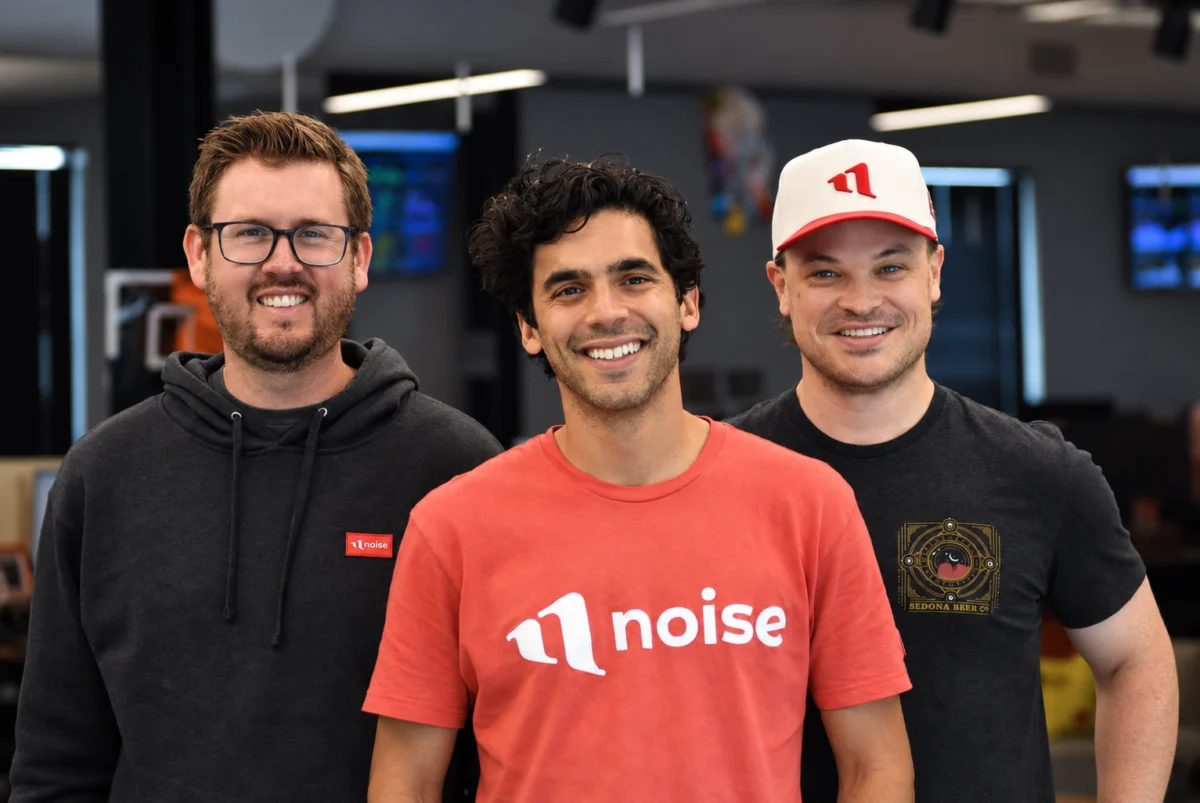
In a significant development for the burgeoning creator economy, Noise, an innovative marketing platform, has successfully closed a $5.5 million seed funding round, bringing its total capital raised to $7.2 million. The investment, led by Capital Midwest, M25, and Grishin Robotics, with participation from Capitalize VC and strategic operators from industry giants like DoorDash, underscores a growing investor confidence in models that democratize content creation and offer brands scalable, cost-effective marketing solutions. Noise distinguishes itself by connecting brands with an extensive network of "everyday people" content creators, compensating them based on performance rather than traditional flat fees, thereby challenging the conventional high-cost influencer marketing paradigm.
The core premise of Noise is elegantly disruptive: to enable brands to access a vast pool of authentic content creators without the prohibitive expenses or operational complexities associated with traditional influencer campaigns. Unlike platforms that primarily target macro or even micro-influencers with established follower counts, Noise opens its doors to anyone with a smartphone and a desire to create content, regardless of their current audience size. This philosophy aims to unlock a new tier of genuine advocacy, transforming ordinary consumers into brand champions who produce organic, relatable content for platforms like TikTok, Instagram, Facebook, and YouTube.
A New Paradigm for Brand-Creator Collaboration
Noise’s operational model is designed for efficiency and scalability. Brands register on the platform, submitting their content brief requests and allocated budgets. Noise then streamlines the entire campaign lifecycle, from matching brands with suitable creators to managing client relationships and processing payments. This end-to-end service allows brands to execute marketing campaigns simultaneously across thousands of creators, eliminating the significant operational headaches traditionally associated with sourcing, vetting, and managing individual content producers. The pay-per-view compensation structure is a cornerstone of this model, aligning creator incentives directly with campaign performance and offering brands a transparent, ROI-focused approach to content marketing. This contrasts sharply with the flat-fee model prevalent in traditional influencer marketing, where brands often pay upfront regardless of the content’s eventual reach or engagement.
Diego Kafie, CEO of Noise, highlights the platform’s ability to foster deep, widespread engagement: “Our top brands work with several thousand creators on autopilot. This gives brands an unprecedented level of content diversity and reach at a fraction of the cost of other traditional marketing playbooks.” Kafie emphasizes that the initial customer base largely consists of mobile apps and startups operating with constrained budgets, who are keenly interested in reaching a broad spectrum of potential customers. These companies, he notes, are "prime users for something like Noise, where they can easily recruit a small army of people to become their biggest users and advocates." The long-term vision, however, extends to serving companies of all sizes, from agile startups to multinational corporations.
The Strategic Significance of the Seed Round
The successful $5.5 million seed round is a testament to the perceived value and market potential of Noise’s model. In a competitive venture capital landscape, securing substantial early-stage funding indicates strong investor belief in the company’s vision, technology, and leadership team. Capital Midwest, known for investing in high-growth technology companies, and M25, a prominent early-stage VC firm, signal a strategic alignment with Noise’s disruptive approach to a mature industry. Grishin Robotics’ involvement further underscores the platform’s technological innovation, suggesting an appreciation for its automated processes and potential for scalable growth. The participation of operators from companies like DoorDash adds a layer of strategic insight, bringing real-world experience in scaling technology-driven platforms and managing vast networks of independent contractors.
This capital injection will be instrumental in Noise’s ambitious expansion plans. Key priorities include enhancing product capabilities, particularly the refinement of its creator matching algorithms and analytics tools, and expanding its engineering and operational teams. The funding also supports the recent launch of Noise’s "Organic-to-Ads" program, a strategic feature that allows brands to repurpose content created by Noise creators for paid advertising campaigns on platforms like Meta and TikTok. This initiative effectively transforms authentic user-generated content into high-performing ad creatives, offering brands a dual-pronged approach to content amplification. Kafie explains, "The creators still post to platforms. But in addition, the brands can now put paid ad spend behind those creatives to reach more people." This capability not only maximizes the utility of creator-generated content but also provides brands with a continuous stream of fresh, diverse ad creatives that resonate deeply with target audiences.
Tapping into a Booming Creator Economy and Influencer Aspirations
Noise’s emergence is perfectly timed with the explosive growth of the creator economy and the widespread aspiration to become an influencer. Industry reports consistently value the global creator economy in the hundreds of billions of dollars, with projections for continued exponential growth. This growth is fueled by the democratization of content creation tools, the ubiquity of social media platforms, and a cultural shift towards valuing authentic, peer-to-peer recommendations over traditional advertising.
The platform directly addresses the findings that a significant portion of the population, particularly younger demographics, harbors ambitions of becoming content creators. According to CNBC, 57% of Gen Z individuals express a desire to be influencers, a sentiment echoed by over 40% of U.S. adults overall. This represents an enormous, largely untapped talent pool that Noise is uniquely positioned to harness. While many aspire to influencer status, the path to building a substantial following and monetizing content can be arduous, requiring significant time, effort, and financial investment. Noise offers a streamlined entry point, enabling aspiring creators to generate income from their passion without the pressure of achieving viral fame independently.
Addressing the Challenges of Traditional Influencer Marketing
The traditional influencer marketing landscape, while effective for some, is plagued by several challenges that Noise seeks to overcome. High costs are a primary barrier, with top-tier macro-influencers commanding exorbitant fees that are out of reach for many small and medium-sized businesses. This often leads to a skewed distribution of marketing budgets, limiting broader market penetration. Moreover, the authenticity of traditional influencer content has come under scrutiny, with consumers becoming increasingly adept at identifying overtly sponsored posts, leading to "ad fatigue" and diminishing trust.
Scalability is another major hurdle. Managing individual relationships with a diverse portfolio of influencers, negotiating contracts, tracking performance, and processing payments can be a logistical nightmare for brands looking to run large-scale campaigns. Noise’s platform-centric approach and automated processes directly tackle these inefficiencies, allowing brands to manage thousands of creators simultaneously through a single interface. This operational agility not only reduces costs but also significantly expands the potential reach and diversity of content.
Competitors in the content creator infrastructure space, such as Billo and JoinBrands, also aim to streamline content creation for brands. However, Noise differentiates itself by emphasizing the "everyday person" creator model and its performance-based payment structure. This focus on cultivating a vast network of micro-influencers, who often boast higher engagement rates and more niche, dedicated audiences, positions Noise to deliver more authentic and cost-effective campaigns. Micro-influencers, by virtue of their smaller, more intimate communities, tend to foster greater trust and perceived authenticity, leading to higher conversion rates for brands.
The Genesis: From Playbite to Noise
The genesis of Noise is rooted in the practical experiences of its co-founders, Diego Kafie, Stu Feldt, and Nic Weber. Their journey began with the development of Playbite, a mobile game app. In their efforts to scale Playbite, the team experimented with various creative marketing strategies, ultimately stumbling upon a powerful, unconventional method: recruiting their own gamers and teaching them how to create social content to promote the app.
Kafie recounts, “We started with five, ten, 25, then 100 people. Before we knew it, our installs were skyrocketing as this small army of people went to places like TikTok and posted engaging content daily about mobile games and our app specifically.” This organic, grassroots approach proved remarkably effective, and, crucially, it was achieved “at a fraction of the cost of traditional marketing playbooks.” The key insight was that by training regular individuals to become content creators from scratch, they could bypass the exorbitant rates charged by established influencers with large followings. “Had we gone to established creators with big followings and clout, their rates would’ve been cost-prohibitive for our scrappy startup budget,” Kafie noted. This profound realization laid the groundwork for what would become Noise. The company was founded with the intent to productize this highly effective, scalable, and cost-efficient content creation model, officially launching its platform to the broader market, and now boasts 1.5 million creators.
Empowering Creators and Ensuring Fair Compensation
Noise’s model not only benefits brands but also provides a significant opportunity for individuals looking to enter the creator economy. The platform currently touts 1.5 million creators, with top performers earning upwards of six figures annually. Noise generates revenue by taking a fee from the payments brands make to creators once views are delivered, creating a sustainable ecosystem for all participants.
Kafie addresses the question of creator compensation directly, stating that brands set their rates for campaigns, and creators retain the autonomy to accept or decline opportunities. He emphasizes that Noise’s primary focus is on "everyday people and turning them into brand-new creators." For many, becoming a successful influencer independently is an increasingly challenging endeavor, fraught with stress, time commitments, and financial outlays. Noise aims to mitigate these barriers by offering structured training modules that teach new users how to create compelling content for brands. Early-stage creators gain access to specific campaigns, and as they gain experience, complete more training, and secure additional work, they unlock higher-paid opportunities.
This tiered system not only fosters skill development but also provides a clear pathway for progression within the creator economy. "By democratizing ‘becoming a creator’ to literally anyone with a smartphone," Kafie asserts, "we’re bringing costs down for brands, but enabling millions of people to make their first dollar on the internet.” This dual benefit—cost efficiency for brands and income generation for aspiring creators—positions Noise as a pivotal player in the evolving digital marketing landscape.
Broader Implications for the Digital Marketing Ecosystem
Noise’s model carries significant implications for the broader digital marketing ecosystem. For brands, it heralds an era of unprecedented content diversity and authenticity. By tapping into a vast network of diverse voices, brands can generate content that resonates with myriad subcultures and demographics, achieving a level of genuine connection that traditional advertising often struggles to replicate. The performance-based payment structure also shifts risk away from brands, ensuring that marketing spend is directly tied to tangible results.
For creators, Noise represents a lower barrier to entry into a highly competitive field. It offers a structured environment for learning, earning, and building a portfolio, providing a viable alternative to the often-stressful path of independent influencer growth. This empowerment of "everyday creators" could lead to a more equitable distribution of opportunities within the creator economy, fostering a more inclusive digital space.
The marketing industry itself stands to be transformed by the widespread adoption of such platforms. The emphasis on user-generated content, micro-influencers, and performance-driven campaigns suggests a continued shift away from glossy, high-production advertising towards authentic, peer-to-peer communication. This evolution aligns with consumer preferences for transparency and relatability, promising a more engaging and effective future for digital marketing. As Noise continues to expand its product capabilities and creator network, it is poised to play a crucial role in shaping this future, enabling brands to build genuine connections at scale and empowering millions to monetize their creativity.

